Why Does Khalid Sheikh Mohammed Have an Orange Beard?
Khalid Sheikh Mohammed showed up to Guantanamo Bay hearings with a beard dyed bright orange because he was not allowed a real dye. Detainees cannot access chemical hair dyes, which are treated as contraband that could be turned into a weapon or an irritant, so he used what was on his breakfast tray instead. Pentagon officials confirmed in 2012 that fruit juice and crushed berries were the source of the color.
By the Conspiracy Podcast team | Last updated: September 2026
The image stuck because it is genuinely strange: a man charged with planning the deadliest attack on American soil, sitting in a military courtroom looking like he raided a smoothie bar. The self-proclaimed 9/11 mastermind has been in pretrial proceedings for well over a decade, and the beard is one of the few details from those hearings that regularly resurfaces online. Here is what is actually documented, and what still is not.
Why does Khalid Sheikh Mohammed have an orange beard?
Because Guantanamo bars detainees from using chemical hair dyes, which fall under contraband rules meant to keep anything with weapon or poison potential out of the cells. Reporters covering his 2012 arraignment noted the color and asked Pentagon officials about it directly, and the answer that came back was food, not cosmetics.
According to that 2012 reporting, Mohammed had been saving fruit and berries from his meals and using the juice to dye his facial hair before court appearances. It is a workaround, not a statement smuggled past the guards. The same restriction applies to every detainee held there, which is why the story reads as an odd byproduct of prison policy rather than a plot of any kind.
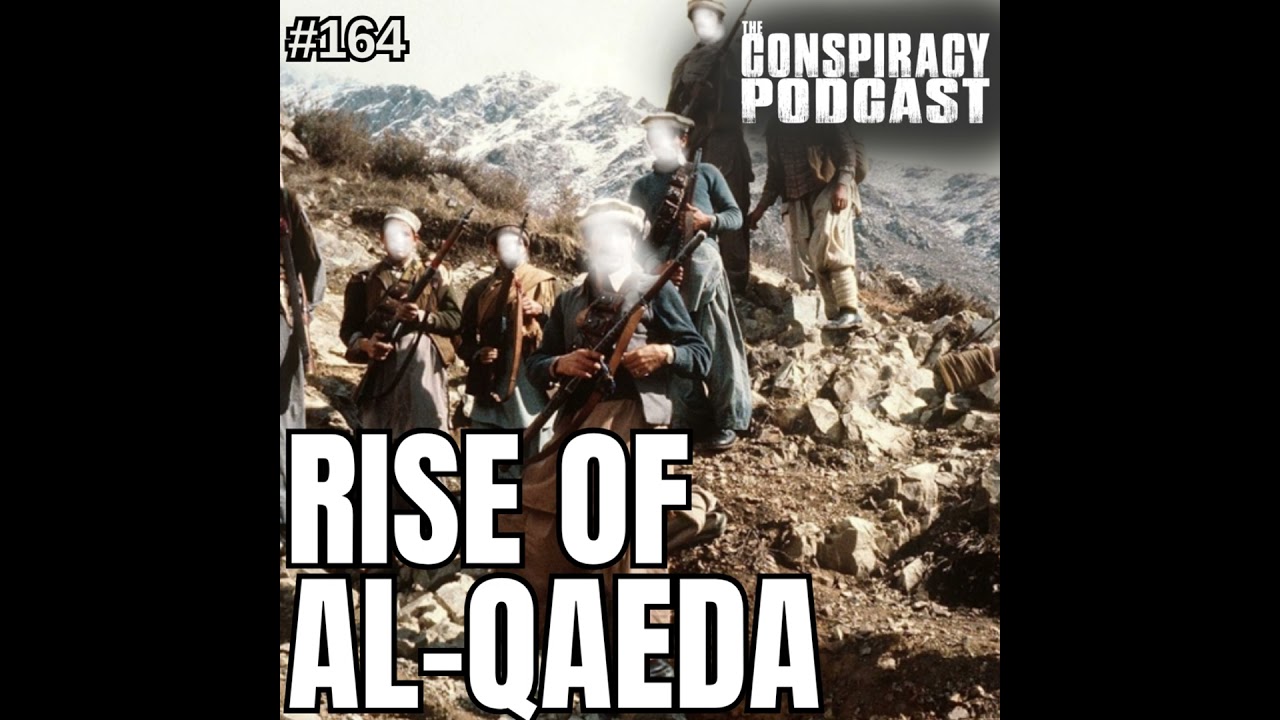
The detail traveled because it is visually jarring on camera, an orange beard on a man being tried for mass murder, and because it is one of the very few lighter facts to come out of a legal process that has otherwise dragged on for years. Episodes like our own deep dive on the rise of Al-Qaeda cover how he went from a minor financier to that courtroom in the first place.
Is Khalid Sheikh Mohammed’s beard dyed with henna?
No. Henna is a plant dye with a long history in some Islamic grooming traditions, but that is not what produced the orange color at Guantanamo. Officials attributed it to fruit juice and crushed berries saved from his food, an improvised substitute rather than a religious or cultural dye brought in from outside.
The henna assumption is an easy one to make, since dyed beards do carry cultural meaning in parts of the Muslim world and henna is the traditional material for it. But actual dye, henna included, still counts as a substance detainees are not permitted to bring into or use inside the facility, for the same contraband reasoning that keeps out chemical hair color.
What makes the fruit juice detail credible rather than speculative is where it came from: Pentagon spokespeople answering press questions after journalists in the courtroom flagged the color, not an unverified rumor passed around online. That is a meaningfully different level of sourcing than the guesses that spread about most Guantanamo details.
Who is Khalid Sheikh Mohammed?
Khalid Sheikh Mohammed, often shortened to KSM, is the man charged as the principal architect of the September 11 attacks. He is the uncle of Ramzi Yousef, the convicted 1993 World Trade Center bomber, and he formally joined Al-Qaeda in 1998 after years operating on the edges of earlier plots.
Before that, KSM was easy to overlook. He wired a few hundred dollars to help fund his nephew’s 1993 bombing and then stepped back into the shadows, a low-profile financier rather than a public figure. He later brought Osama bin Laden a much larger operational plan, one that had grown out of an earlier scheme involving multiple hijacked airliners that had already collapsed once a laptop containing it was seized by investigators.
He was captured in Pakistan in 2003 and eventually transferred to Guantanamo Bay in 2006, where he has remained in military custody since. Our episode on the rise of Al-Qaeda traces that path in detail, including the FBI leads that piled up before anyone in Washington connected them.
What is Khalid Sheikh Mohammed’s connection to 9/11 and Al-Qaeda?
KSM has been charged as the principal co-defendant in the September 11 case before the military commission at Guantanamo Bay. He has self-proclaimed responsibility for planning the attacks in his own statements and tribunal testimony, telling military panels he organized the operation, though he has never been convicted of the charges against him.
His path into the plot ran through Al-Qaeda’s formal structure rather than around it. He joined the group in 1998, largely because it offered money and infrastructure his earlier, independent schemes lacked. What he brought to bin Laden was already a mature concept by then, refined after an earlier, broader version of a hijacking plot fell apart when a laptop tied to it was seized overseas.
None of that self-proclaimed responsibility is the same thing as a legal finding of guilt. A defendant’s own statements, even repeated ones, are evidence a court weighs, not a substitute for a verdict. Guantanamo’s military commission process exists precisely because those statements, and how they were obtained, have to be tested before any conviction can stand.
| Theory | What the record shows |
|---|---|
| It was a deliberate protest aimed at the court. Some coverage speculated the color was a pointed gesture at the tribunal. | Pentagon officials attributed it to fruit juice and berries saved from meals, a practical workaround, not a statement filed or claimed by Mohammed himself. |
| It was traditional henna dyeing. Dyed beards have cultural roots in parts of the Muslim world, so some assumed that custom was behind it. | Reporting points to improvised food dye, not henna, since any actual dye is barred as contraband at the facility regardless of its source. |
| It reflected neglect or mistreatment in custody. The odd color led some to assume poor conditions or health issues. | Officials described it as a self-applied cosmetic workaround using his own food, not a documented medical or custodial complaint. |
The simplest explanation keeps winning here, which is part of why the story holds up. Nobody involved, including Mohammed’s own defense team, has disputed the food dye account, and no competing version has ever produced documentation of its own. Our roundup of famous conspiracy theories covers plenty of cases where the boring answer is also the correct one.
A man who in ’93 was nobody’s idea of a mastermind. His name was Khalid Sheikh Mohammed.
the guys, on the record
Has Khalid Sheikh Mohammed been convicted of a crime?
No. Mohammed has been charged as a co-defendant in the September 11 case before the Guantanamo military commission, but he has not been convicted of those charges. The case has moved through more than a decade of pretrial hearings without reaching a verdict or a final sentence.
In 2024, a plea agreement was reportedly reached in the case, which would have resolved some of the charges without a full trial. The government then moved to withdraw that agreement, and litigation over whether it stands has continued since. No outcome beyond that ongoing dispute has been settled.
That gap between the widely reported self-proclaimed confession and the absence of a conviction is exactly why coverage of him uses careful language: charged, alleged, self-proclaimed. It is a legal distinction with real weight, not a technicality, and it is the same distinction our Part Three episode on the physical case against the towers applies throughout that series.
Why is Khalid Sheikh Mohammed’s case still unresolved?
The case has been slowed by years of pretrial litigation, much of it over how evidence was gathered during his years in CIA custody before he reached Guantanamo, along with procedural disputes and changes on the tribunal bench. A 2024 plea deal that the government later moved to withdraw added another layer of unresolved legal argument on top of that.
Military commission cases involving evidence tied to interrogation methods used in the years after 2003 face a harder legal road than an ordinary criminal trial, since defense teams can challenge whether statements made in that custody are usable at all. Those fights, plus repeated turnover among judges assigned to the case, have stretched the timeline far beyond what a civilian court case of similar size would take.
There is no set date for when, or whether, a trial concludes. What is settled is narrower than people assume: he has been charged, he has claimed responsibility himself, and neither of those things is the same as a court finding him guilty. Whatever comes next in that process is still being litigated, not decided.