Who shot Osama bin Laden?
Nobody can say for certain, because the US government has never officially named the shooter. Two former members of the SEAL team that raided the Abbottabad compound on May 2, 2011 have given different accounts. Matt Bissonnette and Robert O’Neill describe the final seconds differently, and the Pentagon has not confirmed who fired the fatal shot.
By the Conspiracy Podcast team | Last updated: October 2026
It sounds like a question with a one line answer. The most famous special operations raid in American history was planned for months and watched from the White House Situation Room. Yet more than fifteen years later, the public record still holds competing versions of what happened in one bedroom, over a few seconds, in the dark. Here are the questions people actually search, answered as neutrally as the record allows.
Who really shot bin Laden?
The honest answer is that it has never been officially established. Both main public accounts agree that a SEAL known as the point man fired first from the hallway. They disagree on whether that shot hit bin Laden, and therefore on who fired the shots that killed him. The Pentagon has confirmed only that Robert O’Neill was on the raid.
The team that went into the compound came from SEAL Team Six’s Red Squadron, about two dozen operators plus a translator, flown in from Jalalabad, Afghanistan on two modified stealth Black Hawks. The team moved through the guest house and the main house before climbing to the third floor, where bin Laden lived with his youngest wife, Amal, and several of his children.
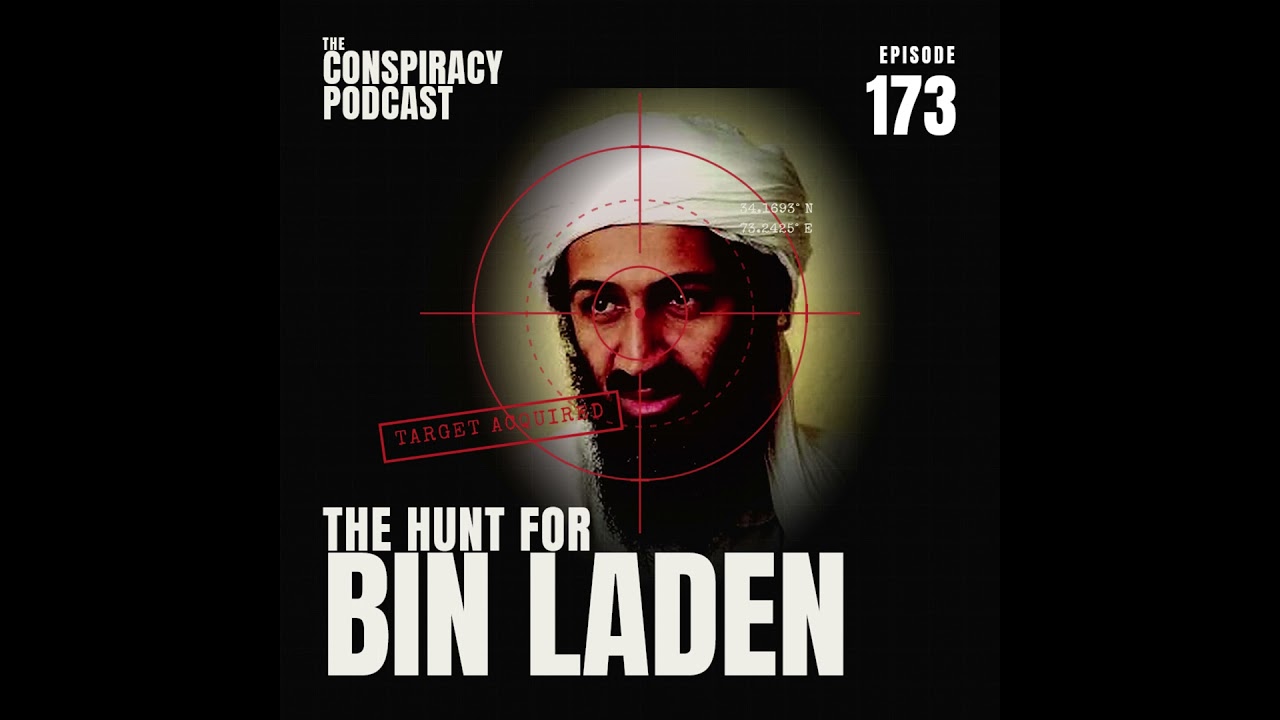
That third floor is where the accounts split. The episode lays the versions side by side and notes that the Pentagon will confirm O’Neill’s presence but not what happened in the room. As one of the hosts puts it, the result is that the public still does not know who fired the shot. If you want the full minute by minute reconstruction, from takeoff to the radio call, the guys walk through it in The Hunt for Bin Laden episode.
What did Matt Bissonnette say happened on the third floor?
Writing under the pen name Mark Owen in his 2012 book No Easy Day, Matt Bissonnette said the point man saw a head look out of the bedroom door and fired, and that this shot hit bin Laden in the head. He wrote that he and another SEAL then fired into bin Laden’s chest as he lay on the floor.
No Easy Day was the first insider account of the raid, published about sixteen months after it. In Bissonnette’s version, by the time the following SEALs entered the bedroom, bin Laden was already down and fatally wounded. In his telling, the shots fired after that came while bin Laden was already on the floor, which is why he credits the first shot from the hallway.
His version has some outside support. According to the episode, CNN national security analyst Peter Bergen spoke with a serving SEAL who backed Bissonnette’s account of the sequence. That is one reporter’s source, not an official finding, and the Pentagon has not endorsed either version. A second account from someone in the room matters, and O’Neill has stood by his own version.
What does Robert O’Neill say happened?
Robert O’Neill, who came forward publicly in 2014, says the point man’s first shot missed. In his account, he entered the bedroom, saw bin Laden standing with his hands on a woman’s shoulders, and fired two shots into his forehead, then a third after bin Laden fell. He has described himself as the SEAL who killed him.
O’Neill has told this account in interviews and in his 2017 memoir, The Operator. In his telling, the decisive moment happened inside the bedroom rather than from the hallway, which is the single point on which the two versions cannot both be right.
The Pentagon’s position is narrow. It has confirmed that O’Neill took part in the raid, and it has not confirmed who fired the fatal shot. The episode is careful on this point too. Two men who were in that house remember the final seconds differently, and the government that could settle it has chosen not to.
How many times was Osama shot?
There is no official count. No autopsy report has been released, and the two SEAL accounts describe different sequences. Bissonnette describes a head shot from the hallway followed by shots to the chest. O’Neill describes two shots to the forehead and a third after bin Laden was on the floor. Both describe more than one shot.
What the government does say it has is photographs. Officials have said they hold 52 images of the body and the burial, including images of the head wound. President Obama declined to release them, and when the watchdog group Judicial Watch sued, federal courts sided with the government in 2012 and 2013. The evidence that could show the wounds has never been seen outside government.
The identification that followed is part of the same gap. According to the episode, his wives and a daughter identified him at the scene, facial recognition was reported at around 90 percent, and DNA was taken. The questions about that DNA, and about the burial at sea within roughly 24 hours, are covered in our explainer on why bin Laden was buried at sea.
Was bin Laden armed when he was shot?
According to the White House’s own corrected account, no. On May 3, 2011, spokesman Jay Carney said bin Laden was not armed. Weapons were in the room: an AK-47 and a pistol were reported on a shelf by the door. Peter Bergen reported for CNN that bin Laden never reached for them.
The first official version said something different. On May 2, counterterrorism adviser John Brennan described a firefight, said bin Laden resisted, and said a woman was used as a human shield. A day later Carney read the correction. Bin Laden was unarmed, his wife Amal had rushed a SEAL and was shot in the leg, and the woman who died was the courier’s wife, not bin Laden’s.
By May 4, NBC was reporting that three of the four men killed in the compound were unarmed, and US officials told NBC the courier was the only person who fired a shot. The White House described the changes as the fog of war. The episode accepts that explanation as plausible, while noting that a story corrected within days is how lasting doubt starts.
| Theory | What the record shows |
|---|---|
| Bissonnette’s account. The point man’s hallway shot hit bin Laden in the head, and follow up shots went into his chest. | Published in No Easy Day in 2012 under a pen name. CNN’s Peter Bergen reported a serving SEAL backed it. The Pentagon has not confirmed it. |
| O’Neill’s account. The point man missed, and O’Neill fired the fatal shots inside the bedroom. | Made public in 2014. The Pentagon confirms O’Neill was on the raid but has not confirmed who fired the fatal shot. |
| The firefight story. Bin Laden resisted and a woman was used as a human shield. | The White House’s first version. It was corrected within days: bin Laden was unarmed and the woman who died was the courier’s wife. |
| The SEALs were silenced. The August 2011 Chinook crash in Afghanistan killed members of SEAL Team Six. | The crash killed 30 Americans. US officials said at the time that none of the dead had taken part in the bin Laden raid, and the hosts themselves question the link. |
Conflicting accounts do not require bad faith. The episode makes this point itself: the raid was about as high stress and adrenaline heavy as a human situation gets, and eyewitness memory under those conditions is notoriously unreliable. For the bigger question, whether the man in that room was bin Laden at all, see our piece on whether Osama bin Laden is really dead.
to this day, we don’t know who fired the shot that killed Osama bin Laden.
the guys, on the record
Was the killing of Osama legal?
The US government says yes. Attorney General Eric Holder told Congress in May 2011 that the raid was lawful as an act of national self defense against an enemy commander. Critics, including two United Nations special rapporteurs, asked the US to disclose the facts so its legality could be judged. No court has ruled on the question.
The government’s argument, also set out in 2011 by the State Department’s legal adviser Harold Koh, rested on the idea that the United States was in an armed conflict with al Qaeda and that bin Laden, as its leader, was a lawful military target. Holder added that a surrender would have been accepted if it had been feasible.
The critics focused on two things. One was the use of lethal force against a man later described as unarmed, which the UN rapporteurs said should be a last resort. The other was sovereignty, since Pakistan was never told about the raid and its government objected to the unilateral operation. This blog does not take a legal position. For the wider story of the hunt, from Tora Bora to Abbottabad, our full breakdown of the hunt for bin Laden covers all of it, and our famous conspiracy theories list has more.