What Is the Oak Island Money Pit?
What Is the Oak Island Money Pit?
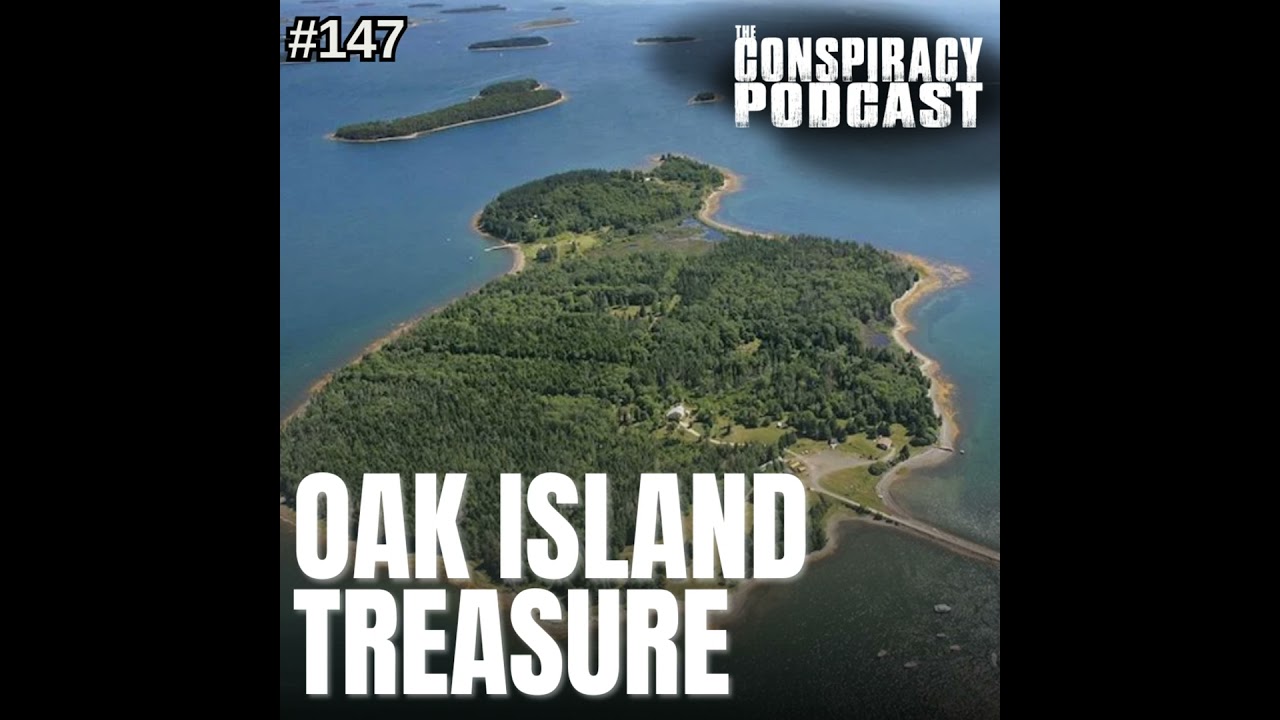
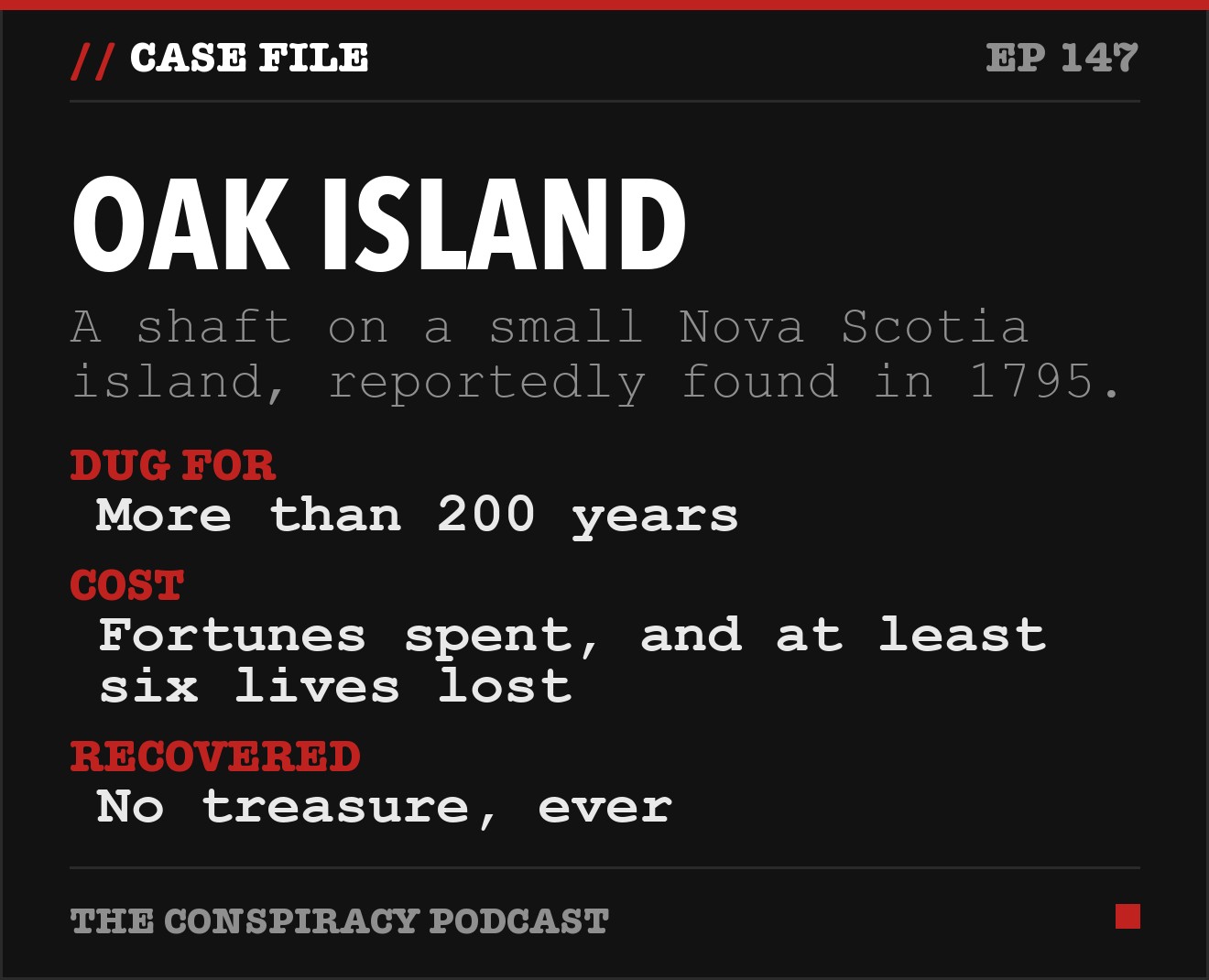
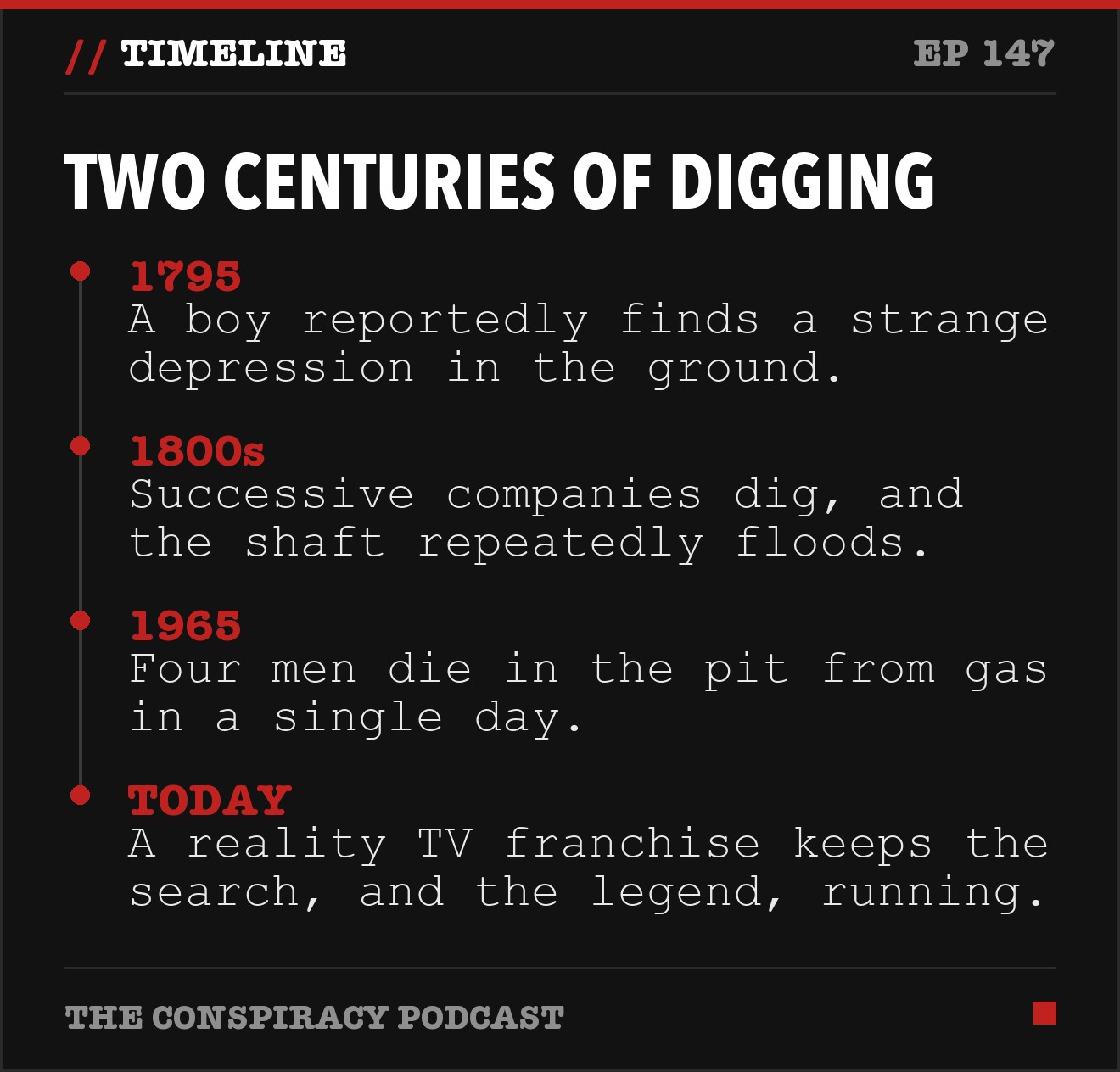
The Oak Island money pit is a mysterious shaft on a small Nova Scotia island where a boy reportedly found a strange depression in 1795. Treasure hunters have dug there for more than 200 years, spending fortunes and losing at least six lives, without ever recovering a treasure.
By the Conspiracy Podcast team | Last updated: August 2026
The pit has swallowed money, time, and lives since the first shovel went in, yet the debate over what is actually down there, or whether anything ever was, has never fully settled. A History Channel series has now run 13 seasons chasing the same hole. Here is what the record actually supports, and where it runs out.
What is the Oak Island money pit?
The Oak Island money pit is a shaft on Oak Island, Nova Scotia, that treasure hunters have dug and redug since 1795, when a boy named Daniel McGinnis reportedly found a round depression under an oak tree and dug down through layers of wooden planks. No one has ever confirmed what, if anything, was originally buried there.
By the account handed down over the years, McGinnis noticed a depression under an oak tree that looked too perfectly round to be natural, with a branch above it worn smooth as if a rope and pulley had once hung there. He returned with two friends to dig. At 10 feet they hit wooden planks. At 20 feet, more planks. At 30 feet, still more, spaced too evenly to be accidental. That layered wood convinced people someone had built something there on purpose, then buried it to keep it hidden.
Treat the founding story with some caution. The earliest known written accounts of the McGinnis discovery were not published until decades after 1795, so the specific details, the exact depths, the worn branch, arrived through retelling before they reached paper. That gap does not make the story false, but it does mean the legend rests partly on memory and word of mouth, not a contemporary written record. The full Oak Island episode walks through the discovery story and how it evolved from there.
Has anything ever been found on Oak Island?
Yes, but nothing close to a treasure. Over more than two centuries, diggers and the modern History Channel crew have pulled up old coins, hand-forged tools, fragments of parchment, buried wooden structures, and a lead cross believed to date between 1200 and 1600 AD. No treasure vault has ever been located or opened.
The first hint of something real came in 1849, when a drill brought up bits of wood, a small piece of chain, and traces of actual gold. That was enough to turn a local curiosity into a serious, funded search, because it suggested something was down there worth finding, not just an old, empty hole. A carved stone slab reportedly pulled from 90 feet in 1805 added to the legend. It carried strange symbols that someone later claimed translated to a message about buried wealth, though the stone itself was lost long ago and cannot be examined today.
The modern search is led by brothers Rick and Marty Lagina, whose show The Curse of Oak Island has aired on the History Channel since 2014, running 13 seasons and more than 200 episodes. Their team uses drilling rigs and sonar scanning to keep working the site, and their finds, coins, tools, parchment fragments, and a lead cross, are real artifacts confirming people were on the island and digging or settling there centuries ago. What those finds do not confirm is a treasure vault. Everything recovered so far fits old activity on the island, not a hidden fortune.
What is the Oak Island curse?
The Oak Island curse is a piece of local legend claiming seven people must die before the treasure can be found. No one knows where the saying originated or when it was first said. It persists because real deaths have happened on the island, with six commonly counted so far across more than a century of digging.
The best documented deaths came in 1965, when Robert Restall, who had been living on the island while working the dig, descended into one of the shafts and did not come back up. His son went down after him, then two friends followed. All four died. An autopsy found the cause was not the collapse people expected but toxic gas that had built up in the shaft, a second, hidden hazard layered on top of the dig itself. It remains the deadliest incident in the pit’s history and the reason later crews treat the shafts with real caution.
The line seven must die before the treasure is found has no known author and no written origin. It spread by word of mouth over the decades the digging continued, the kind of saying that attaches itself to any place where danger and mystery overlap. The count usually starts with an 1861 accident, when a platform collapsed on workers in the pit, and runs forward through later accidents to the 1965 Restall deaths, landing at six total. Whether the number is exactly right matters less than this: the legend survives because the danger behind it is real.
Who supposedly buried treasure on Oak Island?
No one knows, and no evidence names anyone for certain. Over 200 years, theories have credited pirates like Captain Kidd, the Knights Templar, British military engineers hiding wartime gold, and even Francis Bacon supposedly hiding proof he wrote Shakespeare’s plays. Every name attached to the pit is speculation. None has documentary support.
Pirates were the first guess, in the late 1700s, when Captain Kidd’s missing fortune was already legend and buried treasure felt like the obvious answer for a mysterious hole. But the pit turned out to be engineered, with layered planks and flood tunnels, far beyond what a pirate crew burying loot would bother building. That gap pushed later theories toward groups with real resources: a secretive medieval order, the British military, or a conspiracy about who really wrote Shakespeare’s plays. None of them has ever been backed by a document or an artifact that settles anything.
| Theory | What the record shows |
|---|---|
| Captain Kidd’s pirate treasure. The original 1700s guess, tied to Kidd’s already-legendary missing fortune. | No pirate ship, crew, or log has ever been tied to the island. The pit’s engineering goes far beyond a simple burial. |
| The Knights Templar. A wealthy, secretive order with the resources and engineering skill to build something this elaborate. | The order was dissolved in the 1300s, centuries before the pit’s earliest known activity. No physical evidence ties them to Nova Scotia. |
| Francis Bacon’s manuscripts. A theory that proof Bacon wrote Shakespeare’s plays lies sealed below, tied to a supposed cipher in the First Folio. | Rests on a disputed cipher, not a verified document. Parchment fragments found on site do not confirm any manuscript. |
| Marie Antoinette’s jewels. A claim that jewels smuggled out during the French Revolution were hidden on the island. | No shipping record, inventory, or physical jewel has ever surfaced to support it. |
None of these names are new, and none of them explain the same detail cleanly: an engineered pit with layered planks and flood tunnels built by someone with real resources and a reason to hide something valuable. What they share is the same shape, a group or person mapped onto a hole nobody can fully explain, with nothing but the shape itself as evidence. The full episode on Oak Island walks through how each theory took hold and why the engineering keeps ruling out the simplest answer, pirates burying loot and moving on.
Literally just because there was a hole, and there was wood, and homies dug a hole. It could have been a failed mining expedition.
the guys, on the record
Is there really anything down there?
Probably not anymore, if there ever was. The honest answer, after more than 200 years of digging, is that no treasure has been found, several people have died searching, and the costs have been enormous. Geologists say the pit itself may be explained by a natural sinkhole rather than by buried treasure at all.
The least dramatic explanation is also the one geologists take most seriously. This part of Nova Scotia sits on gypsum bedrock, prone to dissolving underground and forming natural sinkholes, cavities, and channels that can look engineered even when they are not. A naturally formed depression could explain the round shape at the surface, and natural voids and water channels underground could explain both the buried wood debris and the flooding that has defeated every attempt to reach the bottom. Under this reading, there was never a vault to find, only a geological feature that generations of diggers mistook for one.
The hosts reach a similar verdict to the geologists, by a different road. Their conclusion, after two centuries of theories, is that something may well have been buried on the island long ago, but it is almost certainly gone now, taken by earlier diggers or lost to shifting ground, leaving folklore stacked on folklore. That is a less satisfying ending than a vault full of gold, but it fits what the record actually shows. If you like tracing one mystery through every theory attached to it, our roundup of famous conspiracy theories covers plenty more like this one.