Secrets of Antarctica – EP 139


Secrets of Antarctica
The guys trace Antarctica’s mystery back to Aristotle, who guessed a southern landmass had to exist purely to balance the globe, centuries before anyone actually saw it. Old maps like the 1531 Oronce Fine map and the 1513 Piri Reis map show coastlines that some claim resemble an ice-free Antarctica, though mainstream historians say it is just a distorted South America. Captain Cook hit a wall of ice in 1773 and figured there was nothing beyond it. He was wrong. Real sightings followed in 1820, and the first confirmed landing came in 1821.
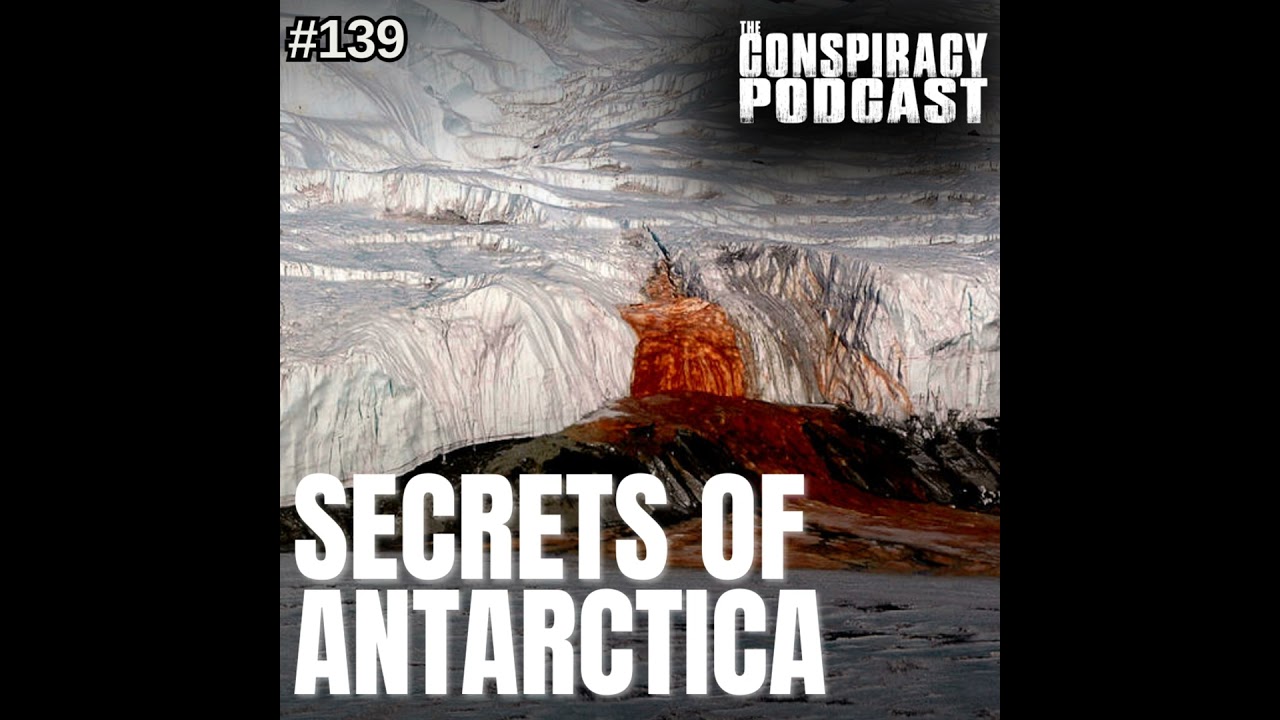
From there the discussion moves into the continent’s reputation for breaking explorers’ minds, including the story of Ernest Shackleton’s 1916 Endurance disaster and the recurring “third man” phenomenon, where stranded explorers sensed an unseen fourth presence guiding them. Decades later Sir Edmund Hillary claimed he saw Shackleton’s figure sitting inside an old expedition hut. The guys also cover Blood Falls, a startling red waterfall caused by iron-rich water oxidizing on contact with air, and Lake Vostok, a subsurface lake where scientists found DNA from microorganisms that do not match anything in existing databases.
The back half digs into the geopolitics: Nazi Germany’s 1938 expedition that claimed a section of Antarctica as New Swabia, Nazi submarines surfacing in Argentina after WWII, and the US response, Operation Highjump, led by Admiral Richard Byrd in 1946 to 1947. Byrd warned of future wars involving the polar regions, and shortly after, the Antarctic Treaty banned military activity, weapons, nuclear tests, mining, and territorial claims across the entire continent. The hosts run through the resulting theories, hidden Nazi tech, hollow earth entrances, alien bases, before Jorge lands on his own idea that Antarctica might function as a refueling waypoint for a more advanced civilization passing through.
- The Greek philosopher Aristotle proposed over 2,000 years ago that a southern landmass, later called Terra Australis, must exist to balance land in the northern hemisphere
- Captain James Cook crossed the Antarctic Circle in 1773, hit a massive wall of ice, and concluded no one would ever get further south
- Ernest Shackleton’s ship the Endurance was crushed by pack ice in 1916, and he later described sensing a fourth, unseen presence guiding him and two crewmen on their 36-hour march for help
- Sir Edmund Hillary, the first man to climb Everest, said he saw the figure of Shackleton sitting inside an old expedition hut when he visited it in 1958
- Blood Falls, discovered by geologist Griffith Taylor in 1911, is caused by iron-rich saltwater trapped under a glacier that turns red when it oxidizes on contact with air
- Nazi Germany sent an expedition in 1938 that claimed a section of Antarctica as New Swabia, and in 1959, 12 nations signed the Antarctic Treaty banning military activity, weapons, nuclear tests, mining, and territorial claims there
Read the full transcript
Hey guys, welcome back to the Conspiracy Podcast. Glad to have you here again. If you don’t know who we are, because I realized we stopped saying who we are. We did stop saying that, huh? This is Jorge. What’s up, everybody? I’m Sean. Hello. And I’m Eric. Welcome back to the show. Hope you guys are doing good.
And keeping with the new tradition of shout outs, because we want to show the love to the people who are showing the love to us. I’m going to be shouting out some new Patreon members. I’m going to not say the last names because I feel like that may be like invasion of privacy, like a HIPAA violation or something. So we got Jordan M. And this was a couple days ago, so you know who you are, Jordan M. He did a founding crew. We have Cammy H, who just popped in the Discord too, and she did a yearly.
Huge shout out for the yearly. Cammy, my girl. We got Kyra, another founding crew member. And then we’ve got Andrew H. Big boy did a big boy conspirators yearly. Hella props to you, Andrew. And yes, like you said in the message to us, we’re stuck with you for a year, my man. And we’re happy to have you, brother. And then we have another founding crew yearly with Crayons with a Z. Crayons with a Z. It’s not crayons, it’s crayons with a K and a Z. Okay.
And then lastly, I want to do a quick little shout out on a cool comment we got. So this is Upstate Britney. She said, “Longtime silent listener. I’ve listened to every episode, and I love how much you guys insert humor into these heavy topics. Your broad overviews help me discover new rabbit holes to go down with my own eyes. Thank you for your service. Keep rocking up.” Say, Britney, you keep rocking, dog. Love you. Hell yeah. Awesome. Thank you guys.
And a really cool part is we’re just about at 300 Patreons. Ooh, baby. Again, if you are a listener, if you are a secret stalker and you do consume some of this podcast, there is a cheap Patreon that you can get in there. It’s only two bucks a month, but honestly, just get a year. You get a little disc, too. The more that you guys do, the more the show goes, and the more episodes we put out, the more minis come out. All of this, it supports everything. So there you go. Thank you. Appreciate you guys.
And what do we got on the docket today, baby? So this one is, it’s not actually on our normal schedule list, but it was something that I had watched a couple documentaries on and I got really into it. And it’s the mysteries of Antarctica. Dude, I’ve seen so I’ve done like so many 2 a.m. ones. Yeah. I smell like aliens coming on here. Like it’s aliens. Let’s be honest. So this one’s weird because half of it is like ghost too. What do you mean? Like paranormal. Oh, I see. Like it’s unexplained, this. Yes, exactly.
So long before Antarctica had a name, before it had a flag, before anyone had ever even seen it, people already believed it existed. Really. Not because they’d been there, not because anyone had proof, but over 2,000 years ago, the Greek philosopher Aristotle proposed a strange idea that the world must be balanced. If there was land in the north, Europe, Asia, Africa, then logically there must be also land in the far south, counterweighing the globe.
I’m saying it’s funny, like he was right, but he wasn’t right. I know. Like the earth isn’t a weight. What’s strange though is, and we’ll go into it a little bit more, but he’s guessing. I know. Think about it. There’s no expedition at this time coming back going, “Hey, we found a land mass.” He’s literally just guessing. No, but you know, hypothesizing.
You know what happens when you’re a dude like Aristotle where you make one major breakthrough and you just coast. You just start making stuff up. You’re like coasting on the greatness. That’s a fantastic point. So he’s like, you know what, people are like, dude, this just got to be real. This has to be goat. He’s like, goat it, dude. It’s like, dude, I got hair on my head, I got hair on my feet, it’s got to be balanced. It’s got to be balanced.
Dude, that’s one of the best points he’s brought up in a long time. Like, homie’s just riding the people who do get something right. Right, forever. Yeah, and then the theories they come up with later even if they’re psycho. Here, look, I’ll give you the perfect example. And I love Elon Musk. I think he’s a genius. Obviously a great businessman. Yeah. But I follow this guy on Instagram and he’s a nuclear physicist, and he’ll look at people on podcasts and stuff and what they’re saying, and then he stops it in the comments like, this is impossible, and then he explains why it’s not possible.
And I was watching one and it was two different clips from when he was on Rogan, and he was talking about A, having the solar farms that could power the entire US, and then B, creating an atmosphere on Mars. And it was just, he sounds so good and you’re like, yeah, 100% we can do this. This guy, this nuclear physicist, is like, this is literally the most impossible thing. It literally is impossible. So I just think it’s funny that we just take everything he says to be fact because he’s been right so many times. He’s constantly right. You get the benefit of the doubt forever. I know, right? Exactly.
So anyways, or the opposite is when somebody’s wrong. Never trust Alex Jones. It’s like, I don’t care if he’s right, he’s wrong. Yeah. Okay. So his theory was that there must be land far south counterweighing the globe, like invisible scales. He called it a theoretical landmass, a necessity of symmetry. Not a place, a concept. This imagined land came to be known as Terra Australis, the southern land. Yeah, that’s what it meant in old Greek. Yeah.
And once the idea existed, it refused to die. For centuries, medieval and Renaissance map makers filled the bottom of the world maps with a vast, shadowy continent. Like, yeah, TBD. Sometimes it was enormous, stretching from South America to Australia. Sometimes it was broken into fragments. Sometimes it had mountains. Sometimes it had rivers and even cities that were just drawn in like a child’s coloring book. It’s like the Lord of the Rings map. It’s like, this looks great. Yeah. Or the Game of Thrones one. 100%. He’s like, fuck it. It’s symmetry. Yeah.
But here’s the weird part. No one at this time had ever been there. Everyone drew it though. Trust me, Aristotle said, this has got to be legit. What a weird line between science or not science, like cartography, and make believe. And everyone takes a map, like when you see a map you take it as fact, like it has to be real. It almost became, just imagine you’re making this huge massive map and then you get to the bottom and you’re like, it’s so empty, okay, there’s got to be something, could just be water. So they just drew it anyways.
It was the ultimate blank space, the edge of the known world, and into that blank space people poured their fears, hopes, and fantasies. On some maps Terra Australis was labeled as a land of monsters. On others it was a paradise. On a few especially strange ones, it connected to older myths. Atlantis, lost civilizations that were swallowed by time. One of the most unsettling maps appeared in 1531, drawn by a French mathematician. His name was Orontius Finaeus. And I probably butchered that because it’s French, not Italian. Yeah, exactly. Or pronounce half the letters in it.
His world map depicted a massive southern continent with a coastline that disturbingly looks like the real shape of Antarctica. Just like, what the. In 1531. Now, it wasn’t perfect, but if you go look at the 1531 map, it does raise your eyebrow, like resemble it. You’re like, what the fuck? I guess you miss 100% of the shots you don’t take. Yes. Like, fuck it, let’s do it.
So the problem with that map is Antarctica wouldn’t officially be discovered for 300 more years. Holy shit. Even stranger is the famous Piri Reis map created in 1513 by an admiral in the Ottoman Empire. It shows parts of South America, but also what some researchers claim looked like the coast of Antarctica drawn without ice. An ice-free Antarctica. I mean, also, how do you draw ice on an ancient map? Like little daggers, like little sharp bones on it. Like, that’s ice, bro.
A continent that today is buried under miles of frozen water shown then as a temperate shoreline. So my little weird historical antennas are going up here in regards to they must have known something. Well, this also ties into the theory of there being like an Arctic wall, and it’s like beyond the wall it’s this paradise and we’re being lied to. Yeah. Maybe they’re just ancient sailors and they’re on, they’re by like Brazil and they’re like, this is Antarctica, this place is tight. That’s where I was kind of going with it, is like what if there was a couple sailors who met in a bar and, oh, I’ve seen that land down there, brother. They’re like, I don’t know, give me a good seven, me a couple IPAs later.
Crazy story, I was sailing down the chute and I was with this French, this land, and you know, anyways. You had to think there were hella tales. Yeah, even if it was rumor. And then everyone, it’s like, you’re trying to get, let’s say imagine you’re trying to get a job as a sea captain in the 1500s. Yeah. You’re going to probably about what you’ve done. Yeah. Oh, I’ve discovered lands. Of course. I didn’t get credit for it because you know, the government, the man. Yeah. But that was me. Yeah.
Even Han Solo does it, dude. Remember at the beginning, what does he say? He goes, I’m the only pilot who’s done the, he’s done the whatever run, the Kessel Run in 14 parsecs. What? I don’t think I’m saying it right. It’s okay. Some theorists argue that the must have copied older maps. So it’s a copy of a copy of a copy. Maybe he’s just saying I made it. And ancient source documents from a forgotten civilization that once charted the world before the last ice age. So maybe Atlantean explorers put a map together, civilization wiped, ice age happened, a map survived. And then the map was copied and then another copy and then another copy.
And the thing is, it’s pretty much scientific fact that there was an ice age x amount of years ago. Yeah. And so theoretically, if there was an ice age, before there wasn’t an ice age, what should it look like back then? Yeah, that’s right. Mainstream historians say nonsense. Of course they do. The Antarctica portion is just a distorted South America on a map. Cartography coincidence. Multiple coincidence. It just coincidentally. Well, what do we say? If it’s more than one, it’s just conspiracy. Is that really what we say? Two or is it three? I think it’s if we go back more than two. Two is fine. Two is like a coincidence. Coincidence. Three. It’s like three and up, it’s sketch. Yeah. Write it down, folks. Book it. I am Aristotle. There needs to be balance. Three and up is sketch. As a reminder, three coincidences, it’s not a coincidence, guys.
But this idea stuck because it taps into something deeply uncomfortable, which is, what if someone knew about Antarctica long before we were supposed to know about it? By the 1700s, the mystery had only grown. European explorers were mapping the globe at an insane pace. Africa, the Americas, Australia, everything was being filled in in the mystery map. Everything except for the bottom. The south remained a white void. So cold.
And in 1773, British explorer Captain James Cook sailed farther south than any human in history. He crossed the Antarctic Circle and smashed into a wall of ice so vast it felt like the edge of the world. And they didn’t have the icebreaker ships back then. That was like a wood boat. Yeah. Yeah. Towering ice cliffs, endless pack ice, a frozen ocean with no visible land. Cook turned back and he wrote, and I quote, “The ice here is so high and extensive that no man will ever venture further.” He believed that he had proven Terra Australis didn’t actually exist, but he, because he thought it was just ice. He didn’t think it was an actual land mass.
But he was wrong, because what Cook had encountered wasn’t nothing. It was the gate, and behind it was an entire continent no human had ever touched. So we thought, or so we think. Yeah. In 1820, different ships, Russian, British, and American, all reported seeing the same thing within months of each other. A shimmering white coastline. Not an iceberg, not a cloud. Land. The Russian expedition led by Fabian von Bellingshausen. Dude, what a, that guy sounds like a champ. Holy shit. Fabian von Bellingshausen. I mean, I think I might have a name for my firstborn son. Fabian von Bellingshausen might be my 2027 fantasy football team. Dude, it’s pretty gangster.
He described a ghostly horizon of ice and mountains. British officer Edward Bransfield charted what is now the Antarctic Peninsula. American sealer Nathaniel Palmer claimed similar sightings. No one could land though. I was going to say, why didn’t they just turn around. They just saw it and they’re like, sightings. Now granted, of course, you could be on the deck, seven months deep, freezing your balls off, you got scurvy, and you’ve been at sea for 98 days, you know, only dudes, and you see something. Oh, for sure. A shadow or whatever, right?
But nobody could land. The ice was too thick, the sea too violent. But they said they saw it. The phantom continent was real, and it was worse than anyone imagined. The first confirmed landing in 1821 when American sealer John Davis, when I say sealer, they’re hunting seals. John Davis claimed he stepped onto an Antarctic ice shelf. His journal entry was brief, almost dismissive, no glory. He didn’t even know what it was. Whatever, like, yeah, it’s there. He didn’t plant a flag or any of that stuff. He just said he saw it. Yeah.
From that moment on, Antarctica became a magnet for the most extreme humans on Earth. It became the gung-ho survivalist destination, to the brink, where most of the population would go, why the hell would you go to Everest? You know? Yeah, I’m no interest. Have you seen those documentaries about Everest? Dude, they’re sad. You know how many people die, and they’re just sitting there, just dead there. They find frozen bodies up there still. And imagine being the sherpa. That’s like your job. The only way you survive is you take homies up them mountains.
I watched a movie recently and it was so good but it was so horrible because the whole time I’m like, why are they there? It’s, I think it’s called Everest. Okay, it was an Everest movie. Is it a documentary or a movie? No, it’s a movie but it was based on a true story. It’s Jared Leto and another guy. Anyways, but the whole time, I haven’t seen this one. It’s pretty good, I would watch it. Well, even look at the major rock climber, like you’ve seen Free Solo. Yeah. It’s a great documentary. But the whole time you’re like, what the fuck is wrong with you? Seriously. Why do you have to do it without ropes? I don’t understand. I don’t get that concept. I know.
And apparently they pay 25 grand to go up Everest. It’s not cheap. Yeah. Actually, when I was reading more about this, there’s a new expedition that you can do and I think it’s thanks to Will Smith. Oh, he’s doing that thing on History or whatever, the poles or something. But for 12 grand, we could go and do an expedition to Antarctica. Half the price. It’s a bargain. Wait, 12 grand total for all three of us? Each. I mean, 36 grand. We could get a lot of good content.
I just can’t see that getting, no, dude, I got a four-year-old, bro. Yeah, sorry, you guys go. You guys have fun. No, but once my kid’s out of the house, I’d probably do it. Or like 15. No, I need her to be, I mean, you’re almost, I need her to be like an adult, because I can’t, 16 in case you go. This is not the 1500s, Atlanta. Jesus Christ, you sick fuck. No, but seriously, I just wouldn’t feel right unless I had a gangster insurance policy. Like, does my insurance policy even cover that? Yeah. Well, actually no, they consider that suicide when you go on a trip to Antarctica.
It might be a cool idea though. I do follow a podcaster who’s decently big and it’s pretty good. If you want to check it out, it’s called Fake History. And he’s going to do it. Well, he’s not going to Antarctica, but he’s doing a podcast Patreon’s trip to Greece. That’s cool. And so he put together with a travel agency a discounted package that whoever listens to his show goes with him. Oh, that’s cool. Yeah, and he’s going to go to like the part that would be awesome.
Guys, we’re going to do this in the next, like give us a year or two to get it all sorted. I think he’s got a good amount of listeners for it. But anyways, so we’ll go to Antarctica as a podcast. You guys are coming with us. We’ll bring the backpack. Who’s in the Discord’s coming. I’m here. It’s a bit windy. Welcome to this update episode of Antarctica. I know we have no power, no Wi-Fi. Sean just looks at me like, this sucks. I literally hate you for this. The worst trip ever. Anyway, sorry, we digress.
From that moment on, Antarctica became a magnet for the most extreme individuals, explorers, whalers, naval expeditions, men willing to freeze, starve, and disappear just to push a little further into the white. What they found wasn’t just brutal. It was, for all, it was wrong. Compasses started behaving strangely. Because you’re on the pole, there’s a lot of magnetic field action. Yeah. The magnetic readings started to drift. The sky started to play tricks. There were mirages forming cities of ice on the horizon that then vanished when you got closer. There were mirages like in the desert. Yeah, in Antarctica. Well, it’s also, the entire continent is a reflective surface. So probably weird light tricks. Yeah, it’s probably weird.
I used to snowboard a lot, and because of these laser blue eyes. No, I mean your eyes are legit like ice. So what would happen is, it would snow and then it would pack, right? And it would get a little icy and then it would be a sunny day, and what happens is the sun bounces off the ground, the snow itself, and burns your eyes. If you spend too much time out, it’ll actually crush your retinas. Yeah, and you’ll get sunburns on your actual eyeballs. Oh, fuck. So I can only imagine. Yeah. I’m just talking about Boreal, you know, and they didn’t have legit gear. No, for sure. The homies are wearing flannels.
Explorers described a phenomenon called the white darkness where the snow, sky, and ice blend into one seamless void, erasing all sense of what was up, what was down, the distance, the direction, like chaos. This is also like that weird light cycle too. Yes. Like where it’s, oh, it’ll just be dark for three months and you’re like, what? Men walked straight into crevices because they couldn’t see them. Others became convinced that they were being watched, not by animals, but by something else, some mysterious thing in Antarctica. Aliens. Yes.
By the early 1900s, Antarctica had earned a reputation among explorers as a place that broke the mind as much as the body. Oh, dude. I mean, I just got a thought, imagine you’re just sitting there, white everywhere around you, solitude. There’s nothing else but this white or snow or ice or whatever, right? Like it would just be so, what’s the word again? Out of this world. No, like where you can’t put your location. You have no idea where you are. Very dispersed and very, yeah, like you don’t know what’s going on. It’s the same thing, it’s like if you were in, imagine just being in a plain white room for like a week, you would lose your mind. Yes. Yeah, you would, like a white world and there’s nothing, like maybe you see a polar bear if you’re lucky. But that’s when the ghost stories started.
In 1916, people going crazy up there, like you just let your mind loose. In 1916, the legendary explorer Ernest Shackleton found himself stranded in Antarctica after his ship, the Endurance, was crushed by pack ice. And this is actually ironic. This is a very famous story and they’ve done horror movies based on this. Oh my god. So he found himself stranded in Antarctica after his ship, the Endurance, was crushed by pack ice. After months trapped on drifting ice floes, Shackleton and two men made a desperate escape in a tiny lifeboat across the southern ocean. No fucking way. And they survived. How the fuck do you survive months, dude?
This goes down as one of the most dangerous sea journeys ever recorded. And they reached South Georgia Island half dead. Yeah. I mean, I’m surprised they didn’t eat each other. Straight up. But they weren’t safe. To get help, they had to cross an unmapped mountain range in freezing fog without equipment and with almost no food. It was a 36-hour death march. Fuck that. I would just die. I’d be like, fuck it, I’m done. I’m not walking anymore. Fuck you.
Later, Shackleton wrote something that stunned historians. He said that during the most exhausting moments when they were close to collapse, he felt a fourth presence walking behind him. Not a hallucination, not a shadow, but a companion. I mean, when you’re half dead, I feel a presence. It’s called the grim reaper. I know, legit. Hey, brother. But when he spoke to the other two men later, they admitted they felt it, too. Oh, okay. So we have a group experience here. So all three believed that there had been four people on the march, not three. Damn. Okay, maybe it’s like their homie they ate on the boat there.
Shackleton described it as a guiding force. Something calm, intelligent, and protective. But why is he behind them though? If he was guiding, don’t you guide from the front? Keep walking. He’s not leading. Don’t look back at me. Don’t look back. Don’t look. He called it Providence. Others called it the third man. Ooh. Or the fourth man. Yeah, I know, right? A recurring psychological event where people near death sense an unseen companion, and it became a phenomenon called the third man.
Maybe, dude, what if that’s how you break and you’re like, I can’t do this, and you have to create another force to push you. Maybe you have to create survival. You have to create a driving force. And this thing is like, well, something is pushing me. It’s not me because I can’t do it. So you have to manifest another thing to make you go. Or if you believe in spirits and stuff like that, maybe your body is so checked out that it’s kind of what you’re saying, where then your quote unquote spirit pops out and is the one who’s driving the, do not die, survive. Make a left at the next light. Trust me. Avoid the accident. I know exactly where we’re going.
Yeah. But here’s the disturbing part. The third man shows up again and again in Antarctica history. Ooh. So maybe this is specific to Antarctica. Interesting. So this happened on different expeditions. I’m definitely not going now. In different decades, but the same experience, which was an invisible presence walking with them, watching them, helping them survive. I wonder if this was on the same island that you mentioned or on the mainland. The mainland. Yeah. I mean, the thing is, Antarctica is huge. It’s massive. It’s not like, I just looked at South Georgia Island, it’s this tiny little island. Yeah, and it’s not, just so we’re all clear, everybody, it’s not like off Savannah. No, Georgia. No, it’s off of Alaska. It’s off of Antarctica, sorry. Yeah, it’s down, I guess you would say, close to Patagonia or Argentina. Yeah, it’s in between, it’s in between the bottom tip of South America and that big peninsula of Antarctica. Yeah, exactly.
So, further weird. You see how this is kind of more like ghosty? Yeah. It’s kind of like, maybe there’s, yeah, maybe there’s some like, I don’t know, something, some entities that evolved, and like the only way to survive in Antarctica over thousands, millennia, you had to become sort of like that. Yeah, right. So maybe it’s not aliens, it’s just like evolution. Yes.
Some further creepy things. Antarctica is littered with frozen relics of early expeditions. So if you went down there now, there’s frozen wooden huts. Preserved perfectly in the cold. Yeah, because it’s like it’s time, but they’re creepy as fuck, basically. Yeah, like the supplies still sit on the tables exactly where they left them, untouched like a game of Monopoly. There’s even food, books. Oh, that’s terrifying. Made beds just sitting there. And that is so creepy. I’m definitely not going. Dude, you keep making the case to never go.
Yeah. In 1911, survivor Apsley Cherry-Garrard spent the night in one of the huts. Oh, bad move. He described, yeah, for sure, hearing voices outside, footsteps, knocking on the window. Oh, no. When he opened the door, nothing there. Why would you open the door? Endless ice. Why would you open the door? You’re in Antarctica. If I’m in Antarctica, I’m like, oh, who’s at the door? Yeah. Uber Eats. Dude, why would you open the door? Domino’s. I got a hot and ready. I would be so scared. Like, no way. I’m not opening that door.
Decades later in 1958, Sir Edmund Hillary, he was the first man to climb Everest, so he’s, oh, this guy’s super famous. Yeah, he’s like the explorer’s explorer. He’s like the goat. Yeah, he’s the goat. Or the original goat. He’s like Babe Ruth, but not drunk. Yeah, probably not very fat either. If you’re climbing, he’s climbing. He visited that hut, and when he opened the door, he later said he distinctly saw the figure of Ernest Shackleton sitting at the table, looking up and welcoming him. I remember Ernest Shackleton was the guy who got stuck in the ice. And then what happened, the confusing part is, remember Shackleton got out. Yeah. But then he blinked and he was gone. Like, what the fuck? Or did he get out?
Hillary admitted he wasn’t prone to visions. He was a practical man, a climber, a rationalist, but he insisted it happened. Well, see, now it makes it more, when there’s a convincingly sane dude saying it, it’s not like some rando. Yeah. Other explorers describe similar experiences across the continent. Feeling watched in the empty rooms, hearing voices in the blizzards, seeing figures at the edge of vision, sensing something standing behind them. At Argentina’s Esperanza Station in the 70s, multiple crew members independently reported seeing a silent male figure appear and disappear in the same building.
This is why I don’t watch, this is the of my nightmares. Yeah. I mean, this place is a terrifying place. I think this might be now, when you first mentioned the Will Smith thing, I’m like, I could go. No. No. I’m convinced. No. Will can go do it for us. I’m sure. Have fun, buddy. I’m sure Will had like six helicopters. Yeah. Oh, for sure. Like a military team. The USS Olympus. I know, it’s like a giant military craft. I’m sure he’s fine. Cannons and shit.
By the way, what’s funny about that is, and good for him, I guess, he was, you know, the whole thing happened with him, Smith, and then he’s like, fuck it, I’m going to Antarctica. Dude, he’s like, fuck it, I’m out. Good for him. Good for him. I’d much rather him be doing this than rapping. I’d much rather him be doing some History Channel shit than making himself look like an ass. I like pretty girls, dude. Oh my god. I like pretty girls. And then he was like, what was that one he did? He was like, oh, this is a comeback. I was like, dude, you got to stop. You got to stop this. This is getting bad. I couldn’t get past 15 seconds of that. Turn it off.
Yeah. Later, psychologists suggested the station’s generator created strong electromagnetic fields that triggered hallucinations. Yeah, so is this like a generator from the upside down? Like what kind of, no, that doesn’t make any sense. That doesn’t make any sense. But it does not explain why everyone saw the same thing. See, that’s the thing. It’s the consistency. Yeah. It would be different if it was like, holy shit, there’s a bear talking to me, but it’s the same. And it’s also not just consistency. It’s the same thing in a time where there wasn’t social media where everyone sees it, like, oh, TikTok trend to see ghosts in Antarctica. People do that. So this is independent, like they don’t know. They’re not reading the journals of these randos in the 1500s.
In 1911, a geologist named Griffith Taylor made one of the most disturbing discoveries in Antarctica history. A blood red waterfall. What the fuck. It was pouring out of a glacier. No, for real. The explorers initially thought it was algae or pollution or some sort of unknown organism. But how would it be so freaky? This gets freaky. I’m never going to this place. Appropriately, they called it Blood Falls. Yeah. How could you just be like, oh, this is so interesting. Be like, we’re getting the fuck out of here right now.
Decades later, scientists say they discovered the truth, which was a hidden lake of saltwater trapped under the glacier that was extremely rich in iron. So when the water hit oxygen, it rusts immediately and turned bright red. And then it appeared as though the glacier was literally bleeding. Yeah. I don’t know if I buy that. Even today, how much iron has to be in that glacier, bro? Even today, the Blood Falls looks unnatural. It’s like a cut wound in the ice. Like the continent itself is injured. And it’s not alone.
I got to look. We’re going to look this up. Look up Blood Falls. You found it. Is this really what it looks like there? It can’t look like that. Okay, it looks kind of like this. Is it just like, yeah, it looks like, okay, it’s like, that’s terrifying. If you went there in 1911. Yeah. It does look, it does look a little rusty. Yeah, like a monster was cut open. Yeah, for sure. It almost makes you think, what if Antarctica itself is some ancient beast? This looks better. Like some giant leviathan beast. Yeah, dude. We got to post this. Yeah. I mean, that doesn’t look real. That looks like, that looks like it could be maybe legit.
And we’re going to get so many comments like, you posting AI bullshit. I know. People, and then you see the same pictures, and then people edit the pictures to make it more red than it actually is. Emphasize it. Yeah. It’s not this red. These are all edited to make them look more red. But still it’s still sketch as fuck. Still wild. Yeah. You guys should definitely check it out, but make sure, just like Jorge pulled up one, he was like, man, this looks so cool, and then at the end it’s like, Grok. Yeah. So make sure you’re looking at the real ones. It’s more of a brown rusty red. It’s not a vibrant Kool-Aid red.
But Blood Falls is not the only one. Under Antarctica lie more than 140 hidden lakes sealed under miles of ice. Yeah, are they like liquid lakes or frozen? Both. Oh, both. Yeah, some are a little mix, like slush kind of thing. Yeah. The largest, which is called Lake Vostok, is the size of Lake Ontario, has been isolated from the surface of Earth for millions of years. Dude, can you imagine how crisp that water must be? Nothing will hydrate you better than this. Imagine doing an ice bath with Joe Rogan down there. Never, I don’t even want to imagine doing an ice bath. I’m like, you guys are psychos.
When researchers drilled into it, they found DNA from thousands of unknown microorganisms that we have no idea what they are. Dude, sketch. Like this is when you, yeah, but even, you get some weird disease and shit. Yeah. But even today, they keep exploring the deep deep sea and we keep finding new creatures. Do you realize that the ocean is like 98% of the biosphere of Earth, where the biosphere is places where life can inhabit. Did we ever look up, I think we did a couple episodes, but did we ever look up how much of the ocean has been explored? It’s probably like 0.001%. You think so? It’s probably, I guarantee you it is, like not even a full percent. Really? It’s possible. Yeah, dude.
Because if you think of it, imagine you’ve traveled all of the known water on top of it. Yeah, okay. That is literally like 0.01%. Because you would think you’re doing like an area equation. So like length times width times height. So it’s like, cool, it’s, you know, at some places it’s six miles deep and wide, and then there’s water underneath the continent, like, dude, it’s zero fucking percent. So some DNA sequences that they found, they didn’t match anything in any database that we have on Earth. Ooh. See. It’s terrifying actually. Yeah. Like, alien earth. I’m going to take some melatonin tonight. Eric’s like, I want no dreams. I just want to sleep. I just want to wake up tomorrow. Babe, grab the Benadryl bottle. Like, I wonder if this Corona Premier will go well with this Benadryl.
So these are life forms that evolved in pure darkness, pure isolation, for a million years. Yeah, that’s, dude, that’s a crazy concept to even just consider, to survive without light. Yeah. And then these guys are just chilling. I say these guys, I don’t know if they have like a bacteria, but they’ve been, yeah. Meanwhile, we’re concerned about our mortgage and shit. Literally, I’m like, my escrow payments. Then there are these volcanic caves beneath Mount Erebus and they’re warm tunnels inside the ice where temperatures reach room level. Oh, so like 70 degrees. So it’s like, what is it, like from volcanic activity? Yeah. And it’s kind of like its own ecosystem underneath it. Okay. Cool. Warm little pockets, hidden little worlds underneath the coldest place on Earth.
See, strange. That’s why things like this make me, because I love science. I love it. But I also on the flip side hate science because it’s like they try to make it so finite. And it’s like, well, obviously no other planet can support life because it can’t support our life. And, well, we don’t, you can’t deduce that only life can survive in our conditions. And we’ve been tricked to believe that only life can survive with water, with oxygen, with heat, with light, like all these things. You’re kind of saying something that bugs you about science is they put a cap on the belief of what is possible. It’s the finality of it, because you’re basing, and I understand the scientific method, you’re basing stuff off of things you can prove. And what we’ve proved is, okay, we’re alive, got it. But then to make the statement that, oh, life can’t be on that planet because there’s no water on that planet, well, why does life require water? It only requires water for what we know. How can you say without a shadow of a doubt, with 100% certainty, that there can’t be life without water? Like, how can you? You can’t. We don’t know. We’re on a grain of sand on a beach that’s the size of a galaxy. It’s like, we’re that small. It’s like, come on, bro. You can’t make that conclusion. Yeah.
By now, and we’re now into the 1930s, 1940s, by now Antarctica had become more than a scientific curiosity. It had become a hiding place. No cities, no civilians, no permanent population, no military access, strictly controlled, like there’s nothing happening there. There’s no radio towers there. No cell phone. And then came along World War II. Oh, that’s right. Didn’t the Germans go like, what’s, what do we, I should have said it at the beginning. This story has aliens, DNA from millions of years, politics, German hiding places. There’s everything. Monster, Blood Falls. There’s everything in this story. This is crazy. This is the peak conspiracy story.
So in 1938, Nazi Germany sent a secret expedition to Antarctica and claimed a massive section of it and they claimed it as New Swabia. What? They dropped swastika markers from planes and they said they flagged it and they mapped the territory. They took thousands of photographs, etc. And what their intentions were, we don’t totally know. I think they were just trying to take, well, but then it leads, if you circle back, wasn’t Hitler notoriously about the occult and all this weird, like, you know, this mysterious energy power, how can you find some different mysterious way to use, harness, superpower the war, they need to win the war. So they need to find a superpower item like the ark or the whatever.
And we also talk about, and we did another episode about Hitler escaping, or no, it was some city or some civilization that was up in the North Pole or some shit. Don’t you remember? Oh, we did one that was like there was a hole, there was like, oh yeah, the hollow earth. Hollow earth. There it is. Yeah. So maybe that’s where they found that DNA. They’re like, who are these brokis down here? Like, what’s going on? So, but then the war ended. Germany collapsed, and suddenly several Nazi submarines appeared in Argentina three or four months after the war ended. Which we did do that. And if you look at the map, Argentina is very close. It’s not terribly far. I mean, it’s probably the closest country. Well, maybe the bottom tip of it. Chile. Yeah, maybe Chile on the other side, but you know, it’s pretty damn close. No, I would say Argentina if you look at the map. Yeah, there you go. Right. Argentina. Patagonia is the bottom like ice tip. Oh, you’re saying maybe they had like officers on some Antarctic base. I don’t know. Yeah.
This is just the truth of it. They did a major expedition. The war then ended and then submarines showed up in Argentina. I mean, that’s a little too perfect. No clear explanation, no official records of where they’d been. And then just one year later, the United States of America decided to launch the largest military expedition to Antarctica. Okay. I would have loved to be on that expedition. And it was called Operation Highjump. They sent 13 ships, 23 aircraft, and 4,700 men. Damn, that’s a big mission. That’s a big mission. And this, maybe they were just, the war is over and they’re like, we ain’t got shit to do. We got to spend this budget.
This was led by Admiral Richard Byrd and the official reason given by the United States was training and research. But the mission ended early because aircraft crashed, men died, and Byrd returned, warning the world that future wars would involve attacks coming from the polar regions. Oh, wow. Okay. What does that mean though? That’s very cryptic. Immediately thereafter, the Antarctic Treaty was signed. Oh, that’s where no one can go. Nobody can go. It’s off limits. It’s off limits. Oh, fuck. No militaries are allowed. No weapons are allowed to be there. No nuclear tests are allowed to be there. No territorial claims by any country. They found something, dude. No resource exploitation by any country. They can’t go down there and be, they what, what if they found the fortress of solitude. It’s like legit Superman’s fortress, that, dude, they found something. They found something that they couldn’t fuck with, and they were like, we got to leave it alone.
So the entire continent has been locked away, and that’s forever. It’s still to this day, dude. There’s got to be, that is, but you can still go there if you pay cash and they direct you where to go. Yeah, you can’t go, and it’s probably just on the outskirts. Yeah. That tip that’s the closest to the little peninsula. That’s all you get. You get the little peninsula. I’m not saying we’re going to do this, but let’s just say that’s what you get. Let’s just say we got tired of the US shenanigans and we wanted to go start our own community there. Nobody owns it. But you can’t claim it. Not even you. You can’t claim it. I know. Exactly. So why, dude? I’m telling you, mankind says we can’t do this, dude. They found something. The only explanation is that, yeah, there’s something there that they can’t even try to control. Yeah. And then so if they, they don’t want anyone else to try to control it. So it’s like no one can control it.
Yeah. So this is the point that conspiracy theories jumped in hard. Okay. Here are the following main conspiracies of Antarctica. Hidden Nazi bases. No, they wouldn’t block it all. No, because the US was there. No, I mean with everything going on with Greenland and being a military positioning. Kind of would lend to that concept where, let’s just not say it’s supernatural, but let’s just say it’s a hub of a military point. Okay, they’re really close to South America. No, but the thing is, why would every country on earth agree to not fuck with if there was Nazi bases there? That’s why I’m saying I don’t think there’s Nazi bases, because everyone’s like, yeah, we agree. If there was, you know that the US would be like, yeah, we’re sending some carriers over.
Here are a couple other ones. There are underground cities for the elite. That seems like a place to have underground. Alien technologies that they found. Dude, that’s what I’m saying. I like that. I’m on that. I like that. There are UFOs found. Same thing. It’s the entrance to a hollow earth situation. See, that’s, you know what, but then why would they, I don’t know about that. Yeah, why would they block it off though? Maybe they’re advanced. I don’t know. This lends to government coverups that there are actually not UFOs, but there are nonhumans living there who are, that’s alien. No, they’re from Earth. They’re from Earth. They’re just not human.
See, I like this because, remember I said, what if it was an ancient civilization that evolved? And what if on that ancient civilization, what if back in the hizzy before this last ice age we shared the earth with, you know, Lord of the Rings, there’s dwarves or elves or some shit, I don’t know. Hobbits. I mean, it’d be weird to see a bunch of hobbits running around. I know. Like the little tiny Bigfoot guys. Although I know a couple hobbits, if you know what I mean. It doesn’t make any sense. I know. That’s so funny.
Anyways, so because the question is, if you had to hide something on Earth, where would you hide it? The bottom of the world. Yeah, of course. The one place that you can’t go to. Yeah. On a continent no one’s allowed to own, guarded by international law, surrounded by storms, darkness, and death, in a place that is almost impossible to get to or to return from. So you think there’s some secret military bases down there? What if there’s a Stargate there? Yeah. What if there’s a gateway, dude? And it’s like they can’t risk. I love Stargate. The gateway. I’m going to go with, I love Stargate too. I like that. I like that too.
Because Antarctica is the last place on Earth where it could be, if you think about it. It’s not like North St. Louis. No, but also, what if it’s some way like they had it there because it’s harnessing the magnetic pole effect, and you’re able to harness that energy to create some sort of rift to, I don’t know, go do something. Also, maybe it’s a path of least resistance type of thing. Maybe from that you’re at the edge of the earth. Like it’s just the easiest way, I don’t know. It’s like the waypoint, it’s easier to just escape.
I wonder if, now let’s get real crazy. Let’s say you are an alien civilization with ships and all. Okay. Is the landing point easy to do in comparison to say landing in Roswell? Meaning like where it is, and also there’s nothing there. Yeah, you can even crash land, like you’re pretty much good. But also, like what Sean was saying before, life doesn’t have to be just this kind of body that we have here, like what if these other aliens, whatever, they can land there, cold, that doesn’t matter. What if, I remember, you know there’s a big theory that what if the UFOs and the things that we think are aliens weren’t actually aliens, they’re just humans who left and are coming back? And that’s, that’s a wild thought.
See, but that would be, I think that would be a big coverup. Like you don’t want people to know the capability because obviously I think that it shatters the power structure. It forces people to, I think people would become far more, be like, hey, you need to be doing what we want you to do, and they’re like, no, no, no, your taxes, shut the fuck up, like budgets, it’s all good. So like what if they found advanced humans and they’re like, oh shit, we got to make this go away. Also, it’d be so easy for them to blend in. No, they’re just humans. No, I don’t necessarily think they’re even, because the thing is if there were advanced humans, why would they stay there? Yeah, unless they’re, why would you be like, let me just go check out the rest of the spot, because it would be so easy to win. So I think that, I think they were just dead. I think they found the artifacts of all this and was like, no, you gotta, this is, no more. So they’re not there. But they were. They were. Okay. Yeah. Maybe I’ll tell you my full theory at the end. Finish formulating it.
This was 1947. It was before intercontinental missiles, before modern jets, before satellites. To conspiracy theorists, Byrd had just admitted something extraordinary, that the US encountered unknown aircraft in Antarctica. Not Soviet, not American, but they encountered something else. UFO. From that point on, the legend exploded. According to fringe historians, which is what I definitely strive to be, changed my LinkedIn to fringe historian. According to fringe historians, in classified leaked mythology, Operation Highjump was not a research mission. It was a military assault. The US Navy, they claim, went to Antarctica to destroy a hidden Nazi base that was built three years earlier. Yeah. Okay.
Sometimes called Base 211, built deep under the ice in what the Germans dubbed New Swabia. New Swabia. But per the theory, what they found wasn’t just Germans. They found the technology that the Germans found. Some sort of flying disc, anti-gravity craft, advanced propulsion systems. Some versions say the Nazis had developed UFO-like vehicles. Other versions say they were given to them by nonhuman intelligence. Others say they discovered them under already buried ice, which were relics of an ancient civilization the Nazis found and then brought up. In these stories, Byrd’s forces were attacked by these flying machines that came out of the polar clouds, destroyed some aircraft, and forced Byrd and his mission to retreat. I mean, they did say that the mission ended early. That’s right. And then after that they were like, nobody can come here. Let’s make an agreement. This is for nobody.
Historians dismiss this completely. Of course. That’s why we’re on the fringe. Fringe historians. Yeah. There is no official evidence of a battle. No. No evidence of anything. No documentation of UFO combat and no physical proof that Nazis were even there. Oh my god. See, this is why it’s so annoying. Well, there’s no proof. Okay, well, of course there’s not, because why would they let the proof get out? That’s how they’re hiding it.
The theories then even go deeper. And I, yeah, literally deeper. Long before Nazis or UFOs, there was an older idea that the Earth itself is hollow. Okay, we went over this a little bit. That a massive internal cavern existed within the planet. That an entire civilization could live beneath the crust. That entrances to this inner world exist at the North Pole and the South Pole. The theory dates back to the early 1800s and was popularized by John Cleves Symmes Jr., who claimed the Earth had giant openings at the North and the South Poles. He begged governments to fund polar expeditions. And he believed Antarctica wasn’t just a continent, it was a gateway. I mean, now that I think about it, because I was always like, well, why wouldn’t they come out and try to, but you got to think, if you’ve had generations living underground, you probably wouldn’t have good survivability outside of that. Yeah. Like the sun hits you, you’re like, oh my god, like just getting crisped. Yeah.
Later, science fiction picked up this idea and ran. Jules Verne, Edgar Allan Poe, Lovecraft, they all wrote about hidden polar worlds. And then conspiracy culture fused it with modern myth. These stories kept going forward, that Admiral Byrd didn’t just encounter enemy craft, that he flew into the Earth itself. And there’s a so-called lost diary that’s attributed to Byrd. And it’s claimed that in his lost diary he entered a lush warm inner world during a polar flight, met advanced beings, and was warned about humans and their nuclear weapons. Okay. I kind of like that. Yeah. I mean, that was legit, but I kind of like it. Do you remember those movies like Journey to the Center of the Earth? Land of the Lost. Yeah, like where there’s dinosaurs underneath it. Even Will Ferrell did a movie where he goes in and there’s like a portal into the sub civilization. Anyway.
I mean, if you think of it, like I said, there’s a lot of land mass and we’re only on the top crust. So theoretically, if you could inhabit that, there’s a lot more livable space. There’s surprisingly far more livable space. Yeah. In 1959, and we went over this a little bit earlier, the world did something it has never done before or since, and it’s 12 nations, including the United States and the Soviet Union, signed the Antarctic Treaty. And again, they agreed, no military activity whatsoever. No weapons to be put there, no nuclear tests are allowed, no mining, no ownership, no borders. You see, that’s why I think there’s very key points in that which actually fuel my theory. The key things are no nuclear test, no mining, no mineral exploitation.
So, you know, there’s this fascination, and you see it with a bunch of movies, with gold, you know? Yeah, that aliens are here for gold and all those things, this whole thing, a hot item across the galaxy, not just here, right? So if you think of it, okay, it’s like spice. Exactly. Yeah. Exactly. It’s like spice. So what if there’s massive mineral deposits in this huge continent that are just being exploited by other, they’re like, we don’t want your, you live your lives, we don’t want your crap, we don’t want the world, we just want this, we just want this and we’ll get the, don’t fuck around here. Don’t try to nuke this because we’ll kill you. And we better not see not one back here. Like, they’re like, okay, you know what, we’re leaving right now.
But it almost seems to me that everybody’s afraid of it. They are. That’s the point. More so than a valuable thing. No. Because if it was valuable, humans would be, no, but, there’d be wars down there. No, but the thing is, that’s why I’m saying it has to be a level of threat that you cannot, there’s nothing you can do about it. Like if some intergalactic being is like, hey, Eric, there’s a pile of cash here, right? But if you come and get it, I’ll literally wipe out your entire species. Yeah. But you’d be like, you know what? I’m fine.
I don’t know if we went over what year that treaty was signed, but over the years, 59. 59. Okay. So it’s been however many, and we signed it with the Soviets, which we were literally cold war. That is a great point too. But, you know, just over all those years, there’s not going to be a new president that’s like, fuck that, I’m not holding up this treaty, I’m going to go down there. Well, see, that’s something, you think you’re the president, you have unlimited access. The president doesn’t actually have access to everything. There’s things that are above even his pay grade, which is weird. Compartmentalized, like need to know. Exactly. It’s like, oh, we don’t need to know. So I guarantee it’s probably something like that. Like, oh, I want to do that. There’s this little folder here that says that you can’t, right? And if you violate this, there’s probably some small fine print that you instantly get impeached. Yeah. And everyone’s on the take, so you’re just going to get impeached. So shut the fuck up.
You think somebody like Trump wouldn’t want to go after that? I think he wouldn’t want to get impeached if there was a thing that was like, this is an agreed upon thing and you’re instantly out. I think he wouldn’t give a fuck about that. What if it was so terrifying though? You know, he’s the kind that would just blow the lid on this. But what if, like Eric was saying, what if it’s, this is, we have an intergalactic species that has the ability to literally eradicate the entire planet, like proven, like we’ve seen the capabilities. Would curiosity get to him though? Yes, that’s what I’m saying. Yeah. I mean, would curiosity kill the human race? Like, no, would you really, like we watched a plane literally just liquefy without anyone, anything touching it, and you’re like, oh yeah, we can still do it. Yeah. In 1959. Like, I’m just saying, a lot has changed since then. Yeah, but that hasn’t changed so much that to combat abilities that are so far beyond, or maybe, and this is, Sean has brought this up in many episodes, which is compartmentalized intelligence, right? Like maybe there is some need to know basis and there’s not very many people who know.
Well, yeah. They don’t need to know. It just stays quiet. The highest security clearance that we know about, obviously as civilians, I guarantee there’s higher because why would they let you know about it, but it’s called a top secret, it’s called a TS/SCI, which is a top secret special compartmentalized, and dude, because I had worked on some contract jobs where guys had to have a TS/SCI, and it’s like, you get a handful of them, dude, you get data and the data you get, no, it’s like you, your boss, and then your boss’s boss, the only people they know. Yeah. And in order to get one, dude, they interview your old neighbors, your fifth grade teacher. They interview everyone. It takes like six, seven months to get through this. And then they give you polygraphs. They give you these weird psycho interview. It’s really difficult to get this level of clearance. Yeah. But I guarantee there’s something probably even higher than that where it’s like, you live on the base. You don’t go, this is what you do now, and sorry, but you sign up for it. Like if you’re willing to take the hit for the team, you know, flying some hookers for you, you’re ours now, like for life.
So to the conspiracy theorists, the treaty isn’t about peace, it’s about containment. There he goes. A global agreement to keep something sealed, something discovered, something dangerous, something not meant to be accessed. Otherwise, why else would every major power agree to stay away from the same place? Yeah. Yep. Especially powers that are legit in military conflict. Yeah. Right.
Now, here are just some other things that are a little bit strange and they might answer some questions that maybe some listeners have, which is that nowadays we have satellites everywhere. Yeah. The problem with Antarctica is it refuses to behave in the way that the rest of the earth behaves. Meaning with the magnetic poles, etc., you don’t know exactly what you’re seeing. So we have satellite images of things that look perfectly symmetrical, but non-conspiracy theorists say they’re just mountains, but they look like pyramids. Yes, I heard of this. Right. So, I’ve heard of the Antarctic, there’s massive circular structures that are under the ice. There’s dark holes that appear and then they vanish with later satellite imagery. Well, see, don’t you think they’re fucking with the, they’re switching the samples on you? They know that there’s something up there. Yeah. Well, no. It’s like, dude, come on. If you’re an advanced thing, even if you’re not an alien and you’re some advanced thing, you would know like, okay, cool, they have the capability of taking satellite imaging, it’s so basic.
And I’ll get into something that kind of ties into this point, because I got randomly into it. It was on the, remember I brought up the thing with the nuclear physicist guy. Yeah. So he theorized the advancement of civilization. So I’m going to just read them to you. So it’s called the Kardashev scale. Okay. So there’s a Russian guy named Nikolai Kardashev. He was a Soviet astronomer. And so he theorized this scale that civilization goes through. So there’s a type one civilization which is a planetary civilization. So it’s able to access all the energy available on its planet and store it for consumption. So like, okay, oil, you’re burning. Yeah. Exactly. Well, then there’s a type two civilization which is a stellar civilization. So a type two can directly consume a star’s energy, most likely through the use of what’s called a Dyson sphere. So a Dyson sphere is like a theorized thing where you’re able to have all of these in essence around your star, you’re able to have all these energy, they suck it in, and they literally absorb, like imagine a super solar panel in essence that’s on a satellite, and they’re literally surrounding entire, complete energy consumption of your star. Yeah.
So there’s a type three civilization. Definitely not even to type two. No, exactly. We’re, I mean, our solar panels right now can barely even cook my, yeah, my tater tots. So then you get in a type three civilization where they’re able to, it’s a galactic civilization. You’re able to capture all the energy emitted by the galaxy itself because, you know, a galaxy is rotating around a supermassive black hole. Yeah. And you’re able to harness energy from all the stars, all the everything. So it keeps going through and then you get into the scale continues and you get into like a universe. It keeps going. Yeah, you get into a type four like a universal, then there’s like a multiversal, and you’re able to harness energy from, so my point is, it’s not a crazy concept because, isn’t that the point, doesn’t life expand, keeps advancing, like at the root of life it is to recreate and expand. Even look at bacteria. Yes. Recreate and expand. If you get that basic, yeah, but even like us, type one, look at how much technology has advanced in the last 15 years. We need to get out. We need to get more because eventually, in a thousand years we’re going to need more space. We’re going to have to figure it out where we’re going to rage through all the energy that we have here. We’re going to need energy from elsewhere. We’re going to need it from the star.
So my point is, if you really think about it, if there was something there, yeah, and it’s on the capability of getting there from out here, like could they avoid a picture from a satellite? Right. Right. Yeah. Of course they could, sure. It’s not an issue. Yeah. Totally true. I just always thought, when I read about the Kardashev scale I always thought it was super interesting because it is the natural progression over obviously extended periods of time of a civilization. Yeah. Like you need to eventually, like, yeah, we get like 80 billion people, we need more space, we need more energy. Let us survive. That’s right.
Anyways, well, I mean, in summation, Antarctica is the only place left on Earth where no one truly controls anything. Including the narrative. There’s no indigenous history. There’s no ancient ruins that we know of. There’s no cities. There’s no borders. There’s no witnesses that tell tales. It’s the largest blank space still available to human imagination. So of course, those blank spaces we try to fill with stories. And historians. Yeah, exactly. But the question remains, what exists there? Why do these ghost stories exist? And why are they similar to each other? Are they monsters? Are they gods? Are they Nazis of old, or is it like you said, is it a government going like, do you follow the alien series? You know the alien movies. And in one of them there’s a liquid weapon that is built to destroy civilization and/or humanity. So is there something like a halo, like the Halo series, it’s like the halo is meant to literally eradicate all life. Yeah. So that’s the question, is, it is the most terrifying place that I’ve read about recently, and so that’s the question that we end off on here, which is, what is there, and what’s going on, and will we ever figure it out? I don’t know the answer.
I actually thought of the most plausible thing in my mind. Yeah. Okay. I have the most plausible answer now, because it makes sense. When I think about everything we talked about, okay, if there was some ancient civilization there, why aren’t they spreading? Why isn’t there more? If they had been there for a long time, there should be something, anything more. Yeah. If aliens are coming here and they were trying to colonize or whatever, they would have spread out, right? And so why is it like you just can’t go there, and nothing will come out, but it’s just there. Refueling station. A refueling station of an alien civilization, dude. Imagine, okay, so we’re like some podunk star backwards. We’re in the back rows, dude. We’re like a 7-Eleven in the boonies. Like, homies, oh shit, I got to refuel. Like they go, not a bad idea. Like we have a place for you that no one’s going to fuck with. No one. The only charging station within, yeah, 17 parsecs.
I’m serious. So it’s like, hey, come here. We got it set up for you. It’s been set up for a long time. We’ve got the licensing deal with the, the government’s going to bother you. Exactly. Go there. It’s like playing, there’s nothing there. Land your, doesn’t matter how big it is, the continent. Just land your there and get it the fuck out. We’re good. Satellites, and some of them have kind of flown away from there, and that’s maybe how they come to, whether it be United States or other parts of the world, where we caught them. Yeah, we caught them because they’re on their way out or on their way in. The reason I thought of that is because, remember we talked about, when we did the pyramids episode, I thought the pyramids were just some ancient charging station. They landed here, they’re like, fuck, we got to get these homies to build some shit. So maybe they’re like, well, we built that, but what if we built something away? And it’s a self-service, like pay at the pump, just swipe at the pump. It’s like, yeah, you don’t need staff. Just, I think alien charging station and we just can’t fuck with it because they happen to go there and they’re filling up and then they’re like, hey, let’s go get the shit. And they’re like boom. And they’re like, look, here’s the deal, this is what’s happening here, don’t come back. All right. All right. That’s what I think.
I like that theory, but I just don’t think that it would hold through so many years. I think somebody, some president, some country somewhere is going to be like, what, why am I honoring this treaty? They’re going to go and explore. But on that same note, I think it’s a government coverup. But something like military bases down there. Oh, okay. So you think maybe there’s some joint military sketch operation they’re doing, like some zombie, it’s like an Umbrella, Umbrella Corporation, or it’s where they do tests. Exactly, weapons. Yeah. They test weird weapons. Yeah. Something along those lines.
Like, you know, an interesting part of just everything is, I don’t know if you know this, because I do have a relative in the space program. Yeah. And so when things got a little weird with Putin, and then we kind of separated and then they invaded Ukraine, or they tried to invade Ukraine and all that sort of thing, the only thing that continued in our relationship was our NASA program. Oh, they’ve still, with Russia. Oh, yeah. So we actually literally our NASA teams went to Russia to train. During this whole thing. Oh, so it’s still confident. That’s the only thing that they still are like fully working together. Yeah. And I just thought that was interesting because that means that there are some things that we still supersede the international conflict. That’s right. So it’s possible, it actually backs up your collaboration there. There probably are still things that we are collaborating on, on the major super. Well, dude, eventually, think about it, eventually if we do colonize the solar system, you have to, everyone’s got to be on board. Even if they’re like, hey, we hate you, it’s like we still need to collab to do this. Yeah.
All right. So that’s what you think’s going on down there. Yeah, that’s my theory. I like that. That’s good. That’s a good one. I actually, I’m not mad about that theory. Yeah. I mean, I agree kind of with Jorge, but I do want to add in, I do think there’s something going on weird down there. There’s some weird. Oh, yeah. There’s definitely something science does not explain because our science is not advanced enough to understand it. So what if it’s even like, I still like the idea of maybe a mythical, like a, you know, when I saw the blood thing I’m like, dude, yeah, what if it’s some ancient beast or some, I don’t know, dragons or some shit down there. I don’t know.
The only thing I would like about Sean’s theory that you didn’t really touch on, or you kind of did, I don’t know, but the pyramid stuff, that’s what I thought about, a civilization that has gone by the wayside. The charging station, pyramid charging station. Yeah. Me and Sean have always subscribed to the whole alien civilization and specifically around the pyramids. And, I mean, if you have a spare six hours, go back, listen to our pyramids. Yeah, go listen to our pyramids episodes. Very in-depth. But yeah, okay. No, I was just going to say, with the satellite imagery, yes, can it be kind of manipulated, distorted, whatever? Yes, it could be, of course. But who wants to settle? I like to think that there is some pyramids down there and some ancient, not now, but I think that there were some ancient civilizations that were not from this world.
You know, I’m telling you guys, you know how easy it is to have some fine print in a contract like, oh, we’re going to give you government funding, oh yeah, like SpaceX, we want you to launch satellites, babe, government funding, but you got to sign this document that says, you can’t show certain shit, or we get to edit, we get to view, or it’s almost like a director’s cut, like they have final say on what gets put out to the masses, because, hey, well, if you want the money, which you do, obviously everyone does, right? You don’t want to fund a dying, it’s so expensive to do anything that has to do with space. Very true. Very true.
All right. Well, then the last question though is, what about all those sightings of, that’s, of what? Of the third man and all that. And then like the guy, because that has nothing to do with. Dude, what about the one guy, the guy who climbed Everest who opened the door and saw, dude, but obviously, Shackleton, yeah, he obviously was not there. I would chalk that up to this mad hallucination, like you’re at the, yeah, because, but it’s from the guy who already went to Everest in the 50s. Like he went with a leather rope or belt. He didn’t, it’s not like he had hand warmers and electrolytes. Like he just went up. You know what I mean? I’m not trying to take away from his credibility, but what I’m saying is that when you’re on the brink of dying, starvation, he wasn’t, disorientation. He just went to the shed. He was like a normal, the other guys for sure, that’s true. The other guys, 100% agree with you. If you’re on the brink, you’re going to think there’s some presence, but this guy legit saw. And I do think that there is something to do with the group. No, it’s, I know, I think it’s like you go there, you’re by the poles, you’re freezing, the light’s always playing tricks on you and you’re disoriented. It’s in extreme conditions. And I think there’s something to do with that.
Yeah. Also, there’s the idea too of like, say us three go to a cabin in the middle of the woods. Oh yeah. You’re like, you hear that? And I’m freaked out for some reason. I’m like, dude, there’s some sort of thing out there. Yeah. Okay. And I’m like, you need to go check it out. Dude, there’s a funny, are you going to be a little bit more on edge because I’m doing that? Of course. My wife had woke me up, I heard something. Yeah. And I’m like, there’s nothing, you’re like, I’m with my gun, I’m like, what is going on? And you’re like at DEFCON 2 now because of that. I know. There’s nothing, like, cool, there’s nothing. So maybe somebody’s freak out can definitely influence you and you just start hallucinating, even if it gets to that point.
But have you ever seen YouTube videos or even TikToks, whatever, like the guys that go out camping, middle of nowhere, solo camp and stuff, and then they hear, and this is on video, and then you can hear the like outside the tent. Like the thing is, somebody, I’m like, are they doing that for the clicks or is that right? I’ll say this for the clicks. I always question the clicks. I always question the clicks because we all want clicks. That too. I know. I think I hear something, guys. There’s someone here. I feel the presence. Click that. Click that. Five star right now.
Actually, I didn’t tell you guys, but I’ll tell everybody. Working on a Bigfoot episode. Oh, nice. Hell yeah. What a classic. And we might even have some special guests. No way. Okay. Oh, this is exciting. I’m not going to, we haven’t done it yet, so I don’t want to spoil it, but there’s another podcast out there that I’m trying to do it with. We got to figure that, they’re all about Bigfoot, so we’ll see. We’ll see what happens. Yeah. Okay. All right. There you go. That’s Antarctica, guys. I don’t know. Let us know what you think. Honestly, I want some theories. In the comments, especially Spotify, you could leave a comment in the show. Love to hear, after listening to this, where do you, what do you guys think’s going on down there? 100%. You know, I want to know. So if you think you know, tell me, please. Absolutely.