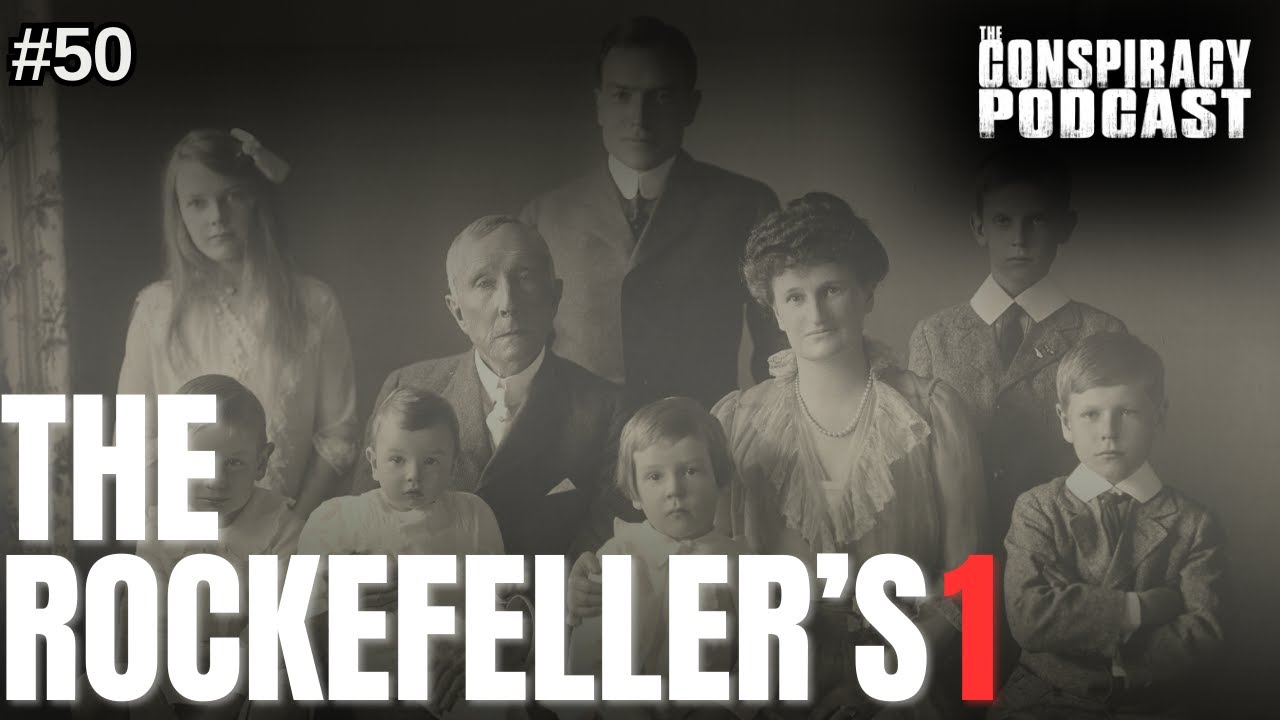
Rockefeller Part 1: Big Papa John D – Episode #50


Rockefeller Part 1: Big Papa John D
This episode opens the hosts’ two-part look at John D. Rockefeller with his rise from a modest Cleveland, Ohio upbringing to founder of Standard Oil. Born July 8, 1839, in Richford, New York, Rockefeller was raised by a traveling patent-medicine salesman father and a disciplined, religious mother who taught him to work and save. He started as a young bookkeeper in Cleveland before entering the oil refining business during the Pennsylvania oil boom that followed Edwin Drake’s 1859 oil strike.
The hosts walk through how Rockefeller built Standard Oil into a dominant monopoly: buying out the Clark brothers in 1865, partnering with Henry Flagler in 1868, vertically integrating refining, transport, and barrel-making, and using control of railroad shipping costs to pressure smaller refiners into selling out to him. By 1879 Standard Oil controlled 90 percent of US oil refining, and by 1904 roughly 80 percent of Americans were using oil from his company, a dominance that eventually drew government antitrust scrutiny and forced Standard Oil into a trust structure and later a breakup into multiple companies.
The episode closes on Rockefeller’s peak wealth, an estimated $1.2 billion in 1912, and the hosts’ case for why he is often called the richest American ever, along with his late-life philanthropy, including major gifts to the University of Chicago and what became the Rockefeller Foundation. The hosts frame the giving as a mix of genuine philanthropy and savvy tax and estate planning, setting up a more skeptical look at Rockefeller’s influence on American medicine in the next episode.
- John D. Rockefeller was born July 8, 1839, in Richford, New York, and moved with his family to Cleveland, Ohio, in 1853, according to the hosts.
- The hosts describe Rockefeller’s father, William Avery Rockefeller, as a traveling patent-medicine salesman who sold elixirs at traveling shows for around $25 a bottle, while his mother, Eliza, taught him to work, save, and give to charity.
- By age 12, Rockefeller had saved $50 from odd jobs and, at his mother’s urging, loaned it to a local farmer at 7 percent interest, an experience he later credited with teaching him to let money work for him rather than the other way around.
- In February 1865, at age 24, Rockefeller bought out the Clark brothers for $72,000 to gain full control of his Cleveland oil refining business, and in 1868 he partnered with Henry Flagler to form what the hosts describe as the largest oil refiner in the world.
- According to the hosts, Rockefeller expanded by buying up the railroads that transported oil and using control of shipping costs to pressure smaller refiners into selling their businesses to him; by 1879 Standard Oil controlled 90 percent of US oil refining, and by 1904 about 80 percent of Americans were using oil from his company.
- The hosts state Rockefeller’s wealth peaked at an estimated $1.2 billion in 1912, and they argue he is considered the richest American ever because that sum represented roughly 2 percent of US GDP at the time; they also note he later gave away a large share of his fortune, including $75 million to the University of Chicago and gifts that became the Rockefeller Foundation, though they speculate this giving also served tax and estate-planning purposes.
Read the full transcript
Let’s talk about Rockefellers now, so what do you guys, what’s your initial perception of the Rockefellers? I mean, there’s a lot there. Go first. Yeah, there’s a lot there that’s been, you know, passed around and especially us conspiracy theory guys of conspiracy theorist, uh, uh, you know, just how, how it relates to New World Order. I mean, we’re going to get into a whole bunch of these details, right? But yeah, just the whole new New World Order, control banking systems, five, five families, five families, one of those. Yeah, I mean, yeah. What I’ve always, I mean, since I was probably my early teens, was that he is, he is part of the cabal to to create a new world order.
Okay, like it’s, he’s been, this is, this is long-term endgame planning, multiple generations and indoctrination, really. Creating this, cuz this is not, it’s not something you can logically do in one lifetime. It’s not, no. Despite how much money you have, how much influence you have, you can’t do it. It is a longterm game, it’s a long game, it is a long G. Yeah, well, um. If you don’t know who the Rockefellers are, and you’re not on earth, like, you can clearly, you have no idea what’s happening. And we’re going to start with John D, right? John D is the guy, he’s the original, he’s, he’s the patriarch, he’s the guy.
Yeah, yeah. And just to start you off, John D is considered, now it’s debatable, he’s considered the richest American that’s ever lived. Mhm. Yes, because they, they try to factor for inflation, and they also try to other things, did they know all of his assets, like you know? That’s right, so he was worth 1.2 billion, and that was in like, that was in like the 20s. Yeah, in the 20s. Yeah, so the inflation is about 20 times since the 20s. So right now, there are people who today who have more than that in assets, but it’s all relative, and there’s some that you don’t even know about.
Some of these [bleep], because here’s the CRA from whatever, like ABAB, and like, and you don’t know the shakes, cuz if you were the richest person on Earth, would you? Hell no, I’m not, I’m not letting Forbes, like, here, here’s my net worth, here’s my worth. I wouldn’t tell anybody about, first of all, that’s [bleep] too, that net worth, like you could just make it. I know, honestly, they pay for that, another thing, they pay for, to be on the Forbes 100, it’s so arbitrary, because I, I feel like real, real wealth is what you have, in like liquid cash, like what you can, like, really?
No, for sure. No, absolutely not. No, because why not? Okay, here, let me give you classic example, hypothetically, hypothetically, just straight up. No, no, hypothetically, listen. Right now, let’s say hypothetically, let’s say the EPA is like, oh my God, like lithium ion batteries are actually causing the, the sole cause of cancer worldwide, all electric calls are dead. Tesla price goes to zero, Elon Musk is instantly down 150 billion. Okay, true. So, like, how can, how can that be, like a real, real estate, so let’s say, so say you owned Texas, exactly, say you just own the entirety ofex, real estate is a different thing. But most of the guys who are on the top, most of the guys who are on the top forms list, it’s because of their Equity.
With, by the way, that would actually be liquid too, like you could just sell. Not, no, you can’t. Yeah, you can, bro. You can’t, you can’t legally sell all your stock. You can’t, you can definitely, somebody can buy out Tesla, somebody can buy out Tesla, or it’s a different thing, I like where we’re starting off. List, listen, in terms of buying out Tesla, it’s completely different than Elon Musk liquidating all of his shares, right? Right, CU, if Elon Musk liquidates all of his shares, it would crash the entire Market, the enti market. It’s not like something tomorrow where he’s like, oh, here’s all my money.
No, you’re actually, legally, you, he can’t legally sell of his shares immediately. Well, he could sell Tesla, like Twitter, they, Twitter off Market. No, but he could sell the company, and that person would then, that person would then have his shares. Yeah, but he can’t be like, Oh, I’m selling on right now. But here’s the thing, is there, there are rules. There are rules, rules, and I think the number is 4% of your worth. Yeah, you’re allowed to, like, you can sell in a 30 30day Peri. You want to buy Tesla, you can buy it right now. Sure, you could sell it, cuz like he bought Twitter, exact, exactly, he bought Twitter for total, am, 100% easily can do that.
So you’re both right on that. Yeah, both, you’re both right. And this is not Financial advice, we’re not series seven. Well, play, well play, sir. Final, sell all your shares. Meanwhile, we’re like eating at chip Chipotle, talking about buying Tesla. Here, where’s, where’s my spicy chicken sandies, like, and like, p, p, p, give me that $2, $2, please, like I got bills. I know, I know. Anyways, so the, but the point of the whole conversation, way off, is that, is that he is considered to be the wealthiest americ. This is also before, like the monopoly laws, that’s right. And he had, he had a monopoly on oil, and he was the only [bleep] who had it, so like, that’s why he had so much money.
So, as we do on this podcast, we’d like to provide a bit of a story, a bit of a backdrop of what happened, of course, what he, you know, what I mean, helps you got, know this guy a little bit. Little, it helps to formulate your decision at the end. We have not won any awards for historical accuracy. Hell, but we’re working on it. We almost won, we almost won an award for best male host, we came up short. Goddamn. I’ll, I’ll, I’ll take the nomination. No, but we came up to the person who’s won it three years in a row. Yeah. And come on, like, it’s not like, we like Leo, I mean, I know, right?
It’s, we’re going to, it’s our eighth year, we’re going to finally win. Yeah. John D Rockefeller, he was born July 8th, 1839, in New York. Jesus Christ. He was born, between, somewhere between, it’s Richford, Richford, which is between bingamon and, and itha. Okay, right, so a little bit on the outside of New York City, North New York. His father was named William Avery Rockefeller, and he was what was known as a pitch man. You’re going to love this gu, a weird salesman, like, so he would go around to, yes, he would go around to festivals, fairs, and, and he would say, this is go silver and this will cure your cancer, and they’re like, no, for real?
Is like, watch. Yes, cured, absolutely. And that was the father of John D Rockefeller. He would go out around, and he was, he was a sleazy salesman, salesman, and he would just, a lot, I know, it all, it’s you, it’s all formula, it’s all going into place. And so, at that time, there was no American Medical Association, and at the time there was no, no, there was no regulations, no regulations. Yeah, and it was right after, honestly, it was right after the Civil War ended, so it was like, Hey, you know, you have cayenne pepper and that will handle your gentor WS. I know it’s gu, like, I got, I got, I got, making notes.
Yeah, making notes, making really, so it’s a little spicy. So he would go to the, these traveling shows, or whatever, these traveling medical tents, like cir Circ Sal, he would charge, he would charge $25 for bucks back in the day. Holy [bleep], crazy money. If you, if you calculate for inflation, that’s about 400 bucks. Dude, that’s [bleep], that’s a lot of cash for some like fake ass treatment. Say you had some major ailment, and you’ll do whatever it takes, like, it was so common to just be able to go to the doctor, like, and you probably didn’t even know what it was, you’re like, some shit’s happening to me.
So here’s, here’s the scenario, you have massive migraines, massive migraines, there’s no Advil, no, there’s no Ty, you, they have, they have like cocaine. Yeah, no chiropractors. Yeah, and she, you see a guy, and he’s in a tent, and he’s like, you know, he’s a great salesman, and he sells the [bleep] out. You got MC’s dog, why don’t you sit, you sit down, and he’s like, here’s something called opium, step right up, here we got some opium, I feel no pain, what’s happening right now? Yes, and tired. So what would happen is, is he would, would go out of town, and then he would come back with cash, like a trunk full of cash.
Yeah, a trunk full of cash. But he was on the edge of being morally cracked. I was say, on the edge, on the edge, right before you said that, I was like, man, I wish I was a travel and salesman back in, back in the 18s, like making that Fetti. Yeah. So his dad was not, uh, necessarily A Savory, or he wasn’t, he wasn’t the The Rock Feller name that we know, he was upstanding business Enterprise. Yeah, so what’s funny, on a side note, is upstanding is debatable. Yeah, well, I don’t think he’s upstanding, I’m saying like the perception, sorry. What’s funny is, on this research, I listened, to somebody sent me the autobiography of John D Rockefeller, and so I listened to it on audiobook, and I got, I don’t know, four or five hours in, it was the most boring.
It’s like, I then I woke up, and then I went to work, and then I fell asleep, and I went to work again. People that read it, and, like, that’s the worst. And it was also an autobiography, so it was, there was nothing bad, and there was no, he’s like, I was amazing. Yeah, and it was just like, ah, with the, the, the way of business, the way of business is this, you have to respect the man in front of you, and then provide the respect back, but you have to take the opportunity that you know and crasp hold of it. He like, and it’s just like a, the key is, if you own different subsidiaries, and it’s not one company, it’s multiple companies, but you own the market, and you can rape the [bleep] out of them, un pressing.
And there was just one point where he was just, you know, the railroad, I noticed, into Cleveland, going into, uh, Cincinnati, was, uh, open for crabs, and, you know, I grabbed it. Yeah, and you’re like, okay, like, what does that have to do with. Now, there’s no, I guess, take, take hold of your, the moment, I, you know, I was trying to find something. DM, yeah, it was this a little weird. SE the railroad, I’m glad that was you, not me. Yeah, I did not listen to the audiobook. Okay, so, uh, we established that his father was a bit of a, uh, snake oil salesman.
Y, and um, but he, he was crushing it then. Yeah, but he would return home with substantial amounts of cash. And his mother Eliza was very religious, and she was disciplined, and she was the one who taught John how to work and how to save and how to give to Charities. So his dad was not necessarily the person, his dad was going to go in the titty bars, shaped him much, his dad, like, buying below, and he’s like going of the titty, he’s like [bleep] Wolf of Wall Street. His mom’s like, save. Although, keep in mind, this is like 1850, so there’s not, I guess, what would you do, go to the brothel?
Yeah, you go, you go to the tavern. Honey, I’m going to, I’m going to the docks. Yeah, you go to the tavern, the docks. Yeah, Abigail the Wench, the W. There was 100% wenches back then, dog. 100%. But so, by the age of 12, he had saved $50 from working for neighbors and raising some turkeys for his mother, and, at the urging of his mother, loaned a local farmer $50 at 7% interest. Damn, it’s good, that’s a good interest rate for a [bleep] young blood. So already he was kind of starting to do the whole banking life. Already he was a criminal. Yeah, 27% interest.
So this is what he said, so when the farmer paid him back with the interest, Rockefeller said, the impression was gaining ground with me that it was good thing to let the money be my servant and not make myself the servant to the money, meaning, it’s like, I’m gonna let my money make money and not me have to make money. Send your money out there, make some babies, and come back. I like that, actually, it’s actually so far so good, I mean, that’s actually a smart play. Hey guys, are you obsessed with us? That’s, I am. Can you just not get enough? That’s all right, we don’t blame you.
We just launched a patreon, patreon and Spotify exclusive content. There are two ways you can sign up for exclusive content. The first is through Spotify, there’s a link in our profile description that links you to the Spotify Premium page, and that’s only $2.99 a month, and it gets you an adree experience, and it gets you extra episodes that come out every month. The other way is through our patreon, all you got to do is go to patreon and search The Conspiracy podcast, and you’ll find us. There are many different levels there, all giving different amounts of content, and you get a lot of bennies with this, like maximum bennies.
No, no ads, you get some exclusive discounts on our merch. Oh yeah, you get access to our, we got, we had a Discord, you want to like talk to us in real time, do you want to yell at us constantly, live? Yeah, do you want to have free access to cuss us out without any repercussions whatsoever, or just simply suggest a new episode that we got to do? There you go. And on top of it, you get five free mini episodes right out the gate, and then one a month from then on. What is a mini episode, real quick? A mini episode is basically a conspiracy or a mystery where it just doesn’t warrant a full hourlong episode.
So go to conspiracy podcast.com, patreon. Lie, that’s actually really smart. So from 1852, Rockefeller attended AO Academy in oo New York, where the family had moved in 1851, and Rockefeller excelled in what was called mental arithmetic, so just doing math in your mind. So you do math in your head, 2 plus two, four, got it. Yeah, got them, yeah. And, uh, he wasn’t super great at anything else, but he was great at mental arithmetic. Okay, so it’ be like, hey, uh, Jorge, what is, uh, a billion Time 5 divided by two? Yeah, hell no. 2.5 billion. Yes. And then it’s, well, 5 billion divid by two, 25 billion, vomit, times 1,654, that I can’t do.
Let me get my ti 83 here, I can do that math. Okay, so in 185 three, The Rockefellers move to a place called Cleveland, Ohio. God, the [bleep] [bleep] stain of America, I’m sorry guys. In Cleveland, you know, it’s, nothing good comes out of Ohio. Okay, just kidding, what about the Browns? Oh, gross. I’m just saying, like, well, clearly, I, you guys don’t know, no, clearly I took the Rockefeller path. Yeah, sure. No, I was, I was born in New York, I was, I was born in Manhattan, New York. Yeah, and then I’m, I moved to, I don’t know where the [bleep] I moved to, but I, I ended up in Ohio.
In Ohio, yeah, I am, I am the son of a rock, I’m a rockfill, sha D rockfeller, sha D Rockefeller. Do know, none of the money, zero of the, zero of the power. INF, can I get a quick loan real quick? I have no money, 23%. I’ll give you $7 at 27%. I’m not even kidding, if he said, hey, I’ll give you a billion at 23%, I’d be like, I’ll take it. Oh yeah, you’re instantly default. Yeah, exactly, he’s like one of those that just like swipes the card, and like, like, yeah, I’ll pay you back, I’m going to start a crypto firm, no big deal, [bleep] meme coin, yeah, coin.
Okay, one of those alien coins for the conspiracy, coin, yeah, Bigfoot coin. Oh dude, BFC, big Bigfoot coin, BFC, honestly, would you guys buy that? You know our Discord would. Oh, 100%, they would, they’d be, they’d be in, we, especially gamer Dave, gamer Dave, and he buy the [bleep] out of that coin. I think, I think the Duke would [bleep], would go diamond, diamond hands, D, the Duke would go deep on that [bleep], on the Bigfoot coin for sure, 100%. Okay, so he attended High School from 1853 to 1855, the, the school encouraged his public speaking, but he was only average at that, so he didn’t really do that great.
And then, only do mental M, he finished high school, and in 1864 he married somebody named Laura Spelman. Al married young. Yeah, a little bit young. Yeah, a little bit, it was super common, like, make babies, make babies now, immedately you’re 12, you’re 16, pregnant. So eventually Laura would bear four daughters and one son. Oh, the golden, the Golden Child. Yeah, the one son. So in 1859 there was a man by the name of Edwin Drake, and he struck oil in Pennsylvania, and he set off a frenzy and an oil boom, and then what soon became known as, known as, the oil regions of Northwest Pennsylvania.
Drake was the employee of a group of New Haven Connecticut investors, and it was called the Pennsylvania Rock oil company, and they obtained a sample of that oil, and they sent it to Yale University to analyze the oil itself. The chemist determined that the Pennsylvania Oil was high quality and could be refined into a variety of useful products. So if you, if you like Vaseline, so if you bring up oil, it’s not just gas. No, because what happens is, like, the, the refining process, you, you actually take away, you, you’re like stripping it down, and then, and then you use the byproducts to then make other products.
That’s right, that’s right. So there’s petroleum, so oils petroleum, and then you, then you make, like, you know, Vaseline, petroleum jelly, and then you make like a variety of lubricants and like all other kind of things. Yeah, so up to that time, the technology for, or bringing oil, or things was, was based on drilling oil, and like extracting it, that was based on the mining of salt and other things, that it was not oil. No, cuz like, I think they hit oil by accident, they’re like, what the [bleep] is this? So what is this, what is this, black? Yes, exactly, exactly. Oh my God, that’s so match of it, holy [bleep], but it’s everywhere.
But here was the good news, is that they had a technology already developed for something else to drill, and they, they basically just transplanted it to oil, correct? Okay, does that Mak sense? Yeah, this is where he became Rich, became rich like rich, like rich rich, this is why he became rich, and this is how he became Rich, right? By continent, and there was a Dr Abraham guzner, a Canadian, and he patented a method for distilling kerosene right from coal. So in 1850, a Scottish industrialist named James Young patented a method for obtaining burning oils from petroleum, right, through a form of distillation. Yeah, you pretty much like take all the [bleep] off.
And so they basically combined those patents, and they developed and figured out how to do that, right? So in 1856, Samuel Downer bought out Atwoods and started producing 650,000 gallons of refined oil a year. Nice, wow. Okay, so by 1861, coal oil lamps became the hotness, the normal, right? So before 1861, [bleep] candles. Yeah, so before 1861 there was nothing, it was actually candles, straight candles, cand. Oh, bedtime, you’re like, hey baby, like [bleep] candles on, [bleep], get another one. Yeah, it’s [bleep] dark, I can’t read. Yeah, and so that’s when everybody was going to bed at 6:30 p.m., like, well, it’s dark, so we’re [bleep] sleeping.
So then the development of this oil, and they’re like, whoa, this shit’ll last for like hours, bro. Yes, Forever. Yes, and like a light bulb, but it’s a lamp. And then we can have absent until 4: in the morning, you know, it’s not night yet. So, but then Rockefeller began to investigate, he had a thing where he was like, there’s too much waste, he’s, you, you take out oil from the ground, and then only 60%, give or take, was usable. Us, you’re, so he’s like, this is [bleep], we’re doing hundreds of thousands of barrels, we could be doing a milli Barr. So he started to investigate oil refining.
Okay, that’s where he became the man is oil refining. Yeah, and at this point, he’s working with this other company, or he owns it? None of the above. Oh, okay. Yeah, so he was an accountant, he’s, dude, he’s like a dude, he was basically doing bookkeeping, got it, got it. For and M was about it, he’s trying to figure out, like, what’s the come up? Yeah, 40, 40% waste. I mean, that’s a huge opportunity, honestly. This time is probably more, it might have been more than 40%, honestly. And keep mind, he was 23, H, already married. Yeah, got [bleep] kids, know, he’s like old, he’s old as [bleep], 23, oh, a deathbed essentially, in Cleveland.
He then started to invest, and, and put efforts into a refining business. So this is the time of the railroads, so there were only x amount of railroads to x amount of cities, that’s where he started, started on the railroads. Yeah, so then he was like, oh [bleep] it, so if I buy, build some on the [bleep] railroads, dog. So he’s like, if I own the oil refineries, and I own the transport of that oil, of the oil refineries, and how they get there, ch- Ching. That’s like, that’s like triple the cash, that’s right. So instead of charging a dollar a barrel, I can charge seven, cuz you can control everything, because, I mean, you pretty much can say, yeah, you can say, well, technically the route doesn’t go to you, so, exactly, that’s right, that’s what, that’s what we call them, Monopoly.
Yeah, this is actually what we call Monopoly. So essentially what he SED to do, cuz he was also meticulous in this whole Endeavor, and he would find that 60% was for, uh, Illuminating oil, they called it, right, that was for Burning Lights. And, uh, lamps, illumin, Illuminati, illumination, that’s where it started, the Illuminator. Yeah, then he found the original illuminor, the original. Then he found out that 10% of it could be for gas, right, for mechanical purposes, cuz at the time there were no cars, but there were vessels, there were Industrial Equipment, you go. Right, then the other 10% he found could be in shampoos, soap, oh for sure, cleaning products, Etc, so you just kept finding what the waste was.
Well, you look, I mean, soap, the main contributor of soap is, is, is fat, which is in essence oil, so fat in essence is just oil, that’s what it is. So whether that oil comes from petroleum, or it comes from like more organic sources, it’s still, it’s still oil, it’s fat, right? Yeah. God damn it, why is Sean so smart? I don’t know. Okay, so in February of 1865, now 1865 is when Lincoln was assassinated, yes, just to give you a place. Yeah, a little place, right. So in February of 1865, at the age of 24, Rockefeller bought out a company called Clark Brothers. He’s buing out companies at 24, man.
[bleep] ball. Dam, I have not bought out one company. One, he paid 7, $72,000. Oh, I thought you say 75 bucks. I’m like, d, damn it, no, why was it on B of the 1800s? No, it was $72,000 for complete control of the business, at that, translated for, uh, inflation, it’s 1.3 million. That’s okay, decent, that’s a good amount. Yeah, that’s good. So he was still kind of killing it. Already he’s 24, he’s crushing it, he’s dominating. Yeah, so but the Clarks had resisted borrowing money in order to expand, right? Yeah, he disagreed. He so believed in this oil refining business that he’s like, I’m going to borrow, borrow, borrow, borrow, borrow, borrow, until I make it.
Yes. F, well, no, he’s already made it in a way, he’s just saying, like, he’s so confident in that. It’s in a crazy, look at this, [bleep] [bleep], somebody give me money, and I’ll 10x this. So when he bought out the company, he just started bwing, he’s like, give me, give me the cash, give me the cash. Yeah, yeah, he was convinced of the correctness of a course. Um, well, he was obviously right. Yeah, he borrowed, he borrowed heavily and plowed all of the profits back into the business to expand it further. In 1866, he brought his brother on board, which is, his brother’s name was William Rockefeller, and they built another refinery in Cleveland, which they named Standard Works.
They also opened a New York City office, and they handled the export business. So basically what rockfeller did was, he then, he took control of every aspect of it. So, so he was oil refiner, yes, but he also transport, transport and Export. Yeah, so every aspect, not only that, he bought the barreling company. Oh, he’s like, he’s like, I package it, I, I refine it, I package it, I ship it, I [bleep] exported. So he was taking out all middlemen of every aspect of his business. The whole, the whole, he actually runs the pipeline, like he, the whole, that’s right, the whole Logistics. He’s, I’m, I am the logistics.
Yeah, so instead of needing to buy the barrels for a dollar each, he was making them for 50 cents each, and packaging them. And so he starts cutting out every profit Center, or I guess cost center, well every cost center, because, like, anything that you would need to, for example, you get, like, people go to a co-packer, and so it’s, I don’t have enough money to have my own manufacturing facility, so go to a co-packer, they’ll, they’ll manufacture it, they’ll package it, and they’ll ship it, but I’m paying, or, just like look at Amazon, I mean, they [bleep] buy out everything, and they’re legistics companies, their FBA companies, their, their music compan, video company, Lord of the Rings companies, D, the, the Amazon web is like, no, Amazon web services, they’re, they’re literally their hosting company, that’s 30% of their income now.
Oh, it’s most of it, dude. So I mean, same, same thing, they start buying out and kind of starting to monopolize everything. Yeah. How do we, uh, equate this to our [Laughter] podcast? We buy out the microphones, and, uh, I, we’re like, I’m G to buy out Spotify. What, actually, we’re just going to buy out the listeners. Yeah. L, can we just borrow to buy out Spotify? I mean, yeah, sure, sure, sure. No, I guess it would, I mean, if you think about it, I guess it would be like if we started our own, just give me a love for, like, say started our own app, but no, [bleep] Apple controls that, and, like, you know, they’re like, yeah, you’re off the, you’re off the Apple Store, exactly, you’re gone, sorry, it’s true.
Yeah, I mean, so we’ll figure that out. John, John D, John, John D figured it out. So in 1868, Rockefeller joined a group with Henry flager. I love this guy, flag flatulum. So he became, he became the partner, together with Rockefeller, and they created something called Rockefeller Andrews and flager, and it became the largest refiner in the world. Holy [bleep], on the planet, just instantly. Yeah, but here’s one thing that he, he realized was a problem, because with just 10 grand, you and I could start a Refinery, and so all of a sudden, any, any [bleep] hair could start a Refinery with 10 grand. Mhm.
You know, I mean, obviously it’s not for poor people, but, but there was a lot of competition. I mean, seriously, we should just, you know, create a time machine and we just go back and own this. Mother, what his concern was, was, what his concern was, his bread and butter was easy entry for, for any, anybody else. So say we had a, a business, and then anybody could just do it immediately, and so your competition was never ending, like, you, you never had a moment’s rest, because there was always some new [bleep] on the [bleep]. Yes, with 10 grand, here we go, St Louis Refinery, know, here we go, you, Jim Stevens Refinery.
So that’s when he started to buy up the railroads, and he go, okay, good. He’s like, well, I can’t transport your [bleep], John, sorry, that’s right, I can only transport mine. So here’s an example, here’s an example, I’m John D Rockefeller, of course I am, of course I am, and, like, and me and J are, are lowlevel, just so we’re clear, of course I am, slaves. Okay, good, moving on from that. Of course you start, you started a refinery in St Louis, okay. Yeah, you started refinery in Atlanta, MH, okay. I own the railroads that transport your oil to those cities, and you just go by, you’re like, seats taken, can’t sit here, honestly.
And you start it up, you put all the money in, you started doing it, you get the contracts, and I’m like, sorry bro, it’s $7 a barrel, but I, I paying one. He’s like, but it doesn’t matter, he’s like, I S, I sell my barrels for six, he’s like, sorry D, like, why don’t you buy a railroad, you should just railro. That’s the thing about it, that he was just such a [bleep], like, I know, right, like he’s already, like, manip. After a year, after a year of you struggling because of that, and he’s like, I’ll buy your company, I’ll buy your company, literally, you say, here’s, here’s a cash offer, it’s fair, take it, you, you’ll be fine for the rest of your life, cuz I, by that time, I already, I already put in all this investment to build up the refy.
It wasn’t like a [bleep] up offer, no, he’s like, he’s, he was like, hey, you’re going to be set, like a fair. Yeah, it was a fair offer, it’s like, look, it’s either this or you’re poor for the rest of your life. Yeah, you were not John D Rockefeller. No, no, but It was like, hey, here’s a couple Millie. Yeah, like, just, just, just think about it, walk away, that’s [bleep] up, man. Yeah, and that was basically the modus operand of John D Rockefeller, that’s how he kept expanding, he just kept buying everybody out, just kept buying them after he like put the stronghold on them, or, yeah, whatever, that’s.
Yeah, I have a statistic here, by 1879, Standard Oil owned 90% of all refining in the US. Damn. Yeah, definition of a [bleep] Monopoly. Yeah, and that’s not counting the Monopoly on the railroad, on the bar Monopoly, and everything, he like [bleep] owned it all. And of that 90%, 70% of it was exported overseas, so this is the beginning of us exporting. Oh wow, the oil that was in the US, he want this [bleep], you want, I’m the only [bleep] got this [bleep], that’s right. By 1904, 80% of Americans were using oil from John D rockefeller’s company. Yeah, not to mention, like 70% of the [bleep] every other country.
Yeah, right, I mean, don’t get me wrong, I talk [bleep] now, but if I was him, I’d be really happy. I know, right, I’m a [bleep] genius. Okay, so at a certain point, though, in time, the US government realized, there was, this is a little bit unfair, little thing called Monopoly. Yeah, it’s a little bit, well at the time they didn’t even have that term. No, the terine exists, but like the whole point of it is, you can, it’s, it’s not fair, because you set the market price, right, because if you, if you control all the oil, you be like, well, it’s, it’s a ,000 a barrel, yeah, sorry, you want it or not, including the government.
Yeah, exactly, government, that was the thing, at a certain point it gets to be where you’re controlling the decisions of the people within the government. You’re like, you know what, I know you want to go to, I know you want, you want to go to war, but, man, I mean, well, that was the other thing, right, like he would have politicians in his pocket, he would have, of Governors and senators and all this [bleep], because he’s not going, you’re not going to pass regulations on my [bleep], exactly. So they passed a law where he was not, he was, he could not control one entity, so it then broke off into multiple entities, of which he then created a trust, and this is one of the first trusts that were created.
And so he created a trust that he owned 30% of, and his brother earned 13, Flagler earned 16, uh, a couple other guys owned all these other parts, but they were still owning the umbrella of it. Yeah, and that was in the late 1800s. Well, that’s why they came out, like, the, the Monopoly law is actually called the Anti-Trust law, and it’s literally for that exact reason. And that, and when this whole, and that was a little bit later, because they realized he did like some slippy slipp ass [bleep] move, he’s like, I don’t own the company, he’s like, the trust does, I don’t own [bleep], I, I’m must a trustee.
And what’s crazy is it took 20 years for them to get figure out, figure it out. Yes, yes, so it’s the Anti-Trust law, so you can’t use, you can’t use a trust as a scapegoat to then have a monopoly. So what’s crazy, in 1897, that’s when John D Rockefeller backed up from working essentially, right, that law is that. Yeah, but not the law he’s talking about. The law I was talking about, yes, exactly. So he, it was still a trust, okay. Yeah, yeah, yeah, and then, like, I’m good [bleep]. Yeah, and he backed up, and he became not part of the daily, daily. Yeah, so then he apparently, he had a bit of a nervous breakdown, he, he got something called alapa, you ever heard of Al?
Yeah, my friend, my friend has it, you don’t have any hair on your whole body. That’s right, and so some people, yeah, some people think it’s stress related, some people think it’s autoimmune, it’s, it’s pretty much autoimmune. Yeah, I mean usually stress will trigger autoimmune. Yeah, I, yeah, that’s why I say it’s a bit of a debate, especially in the 1890s. Yeah, you’re like, God knows what, it, what they thought, it only one, that the only one that knew was John’s dad, he had some [bleep] for you. And, like, see these little droplets, it got so, it got so much that his eyebrow hairs even fell out, nothing, you know.
So, so he backed up from the life, basically, as that, like, was to stressed kind, like being the CEO running the show. Yeah, yeah, so he backed up, basically. You know what’s funny, sorry, just a quick injection, like, I feel like this whole story is like, I don’t know if you’ve seen the movie, it’s a spectacular movie called There Will Be Blood. Yes, it’s [bleep], dude. Oh my God, Daniel de lewi, Daniel de Lewis, one of the greatest actors has ever Liv. I’m pretty sure, seen it, he’s, he’s an oil tycoon. I mean, I would, I would put in the top, dude, it’s, what we top, it’s in my top 20, easy top 20.
Top, yeah, top 20 movies, might even be my top 10. It’s a bit, it’s a bit long, it’s a three-hour scenario, so [bleep] crazy, got the end. Oh my God, and this, it is [bleep] bowling alley, dude. It’s, it’s an amazing movie, the oil. Yeah, he, he’s an oil, he’s an oil tycoon, yeah, and like finds oil, like, dude, it’s [bleep]. I haven’t seen it’s crazy. Yeah, it’s worth, it’s worth to listen. Dan Le is like, watch. M, he’s like, unbelievable. Yeah, it, it’s probably when is Peak, I mean, this one, he, he just couldn’t, he just can’t miss, like. So anyway, so he, he backed up from things, and what’s crazy is that in the late 1800s and the early 1900s, he now had so much money that it became a problem for him, of how to spend it, like, or how do I bank with, like, how do I put the money, like.
Yeah, so, so, so just imagine, you have, you have so much money, like billions of dollars, what, what do you do, go buy a house? Nothing, got to control the bank, especially back in the, back in the 1800s, were like, the house is like 60 bucks, like [bleep], buy so many of them. So what do you do? So he literally hired a guy, buy everything, to be his money manager. Yeah, yeah, his name was Frederick Gates. Now, I’d love to be that guy, this is the job of the jobs, this, this is the, the ultimate job, buy everything. And he was, and this is what he’s called, he’s the full-time manager of his fortune.
I want to be, that’s what I was going to, make you guys, if I won the Power Ball, by the way. Oh dude, I will manage the [bleep] out of that fortune, [bleep], 1.7, my fingers, man. California [bleep] again. You, you know what sucks, is I got zero numbers, right, I, no, all the numbers, I got zero, right, I, I got two, yeah, I didn’t even check. So I think, I think I got like, I think I got 10 bucks. Yeah, oh hey, I’ll take it. Never got, no, but everybody, everyone who wins this in California, it’s like, hey guys, it’s us again, you ever heard of patreon?
Because we just started One exclusive content Discord, which I just still figuring out, but, but you know, we get to talk, you can suggest new episodes, or just let us know something that we already talked about, and you want to get in on the conversation, we’re there for you. We’re also coming out with shirts and other merch. There are two ways you can sign up for exclusive content. The first is through Spotify, there’s a link in our profile description that links you to the Spotify Premium page, and that’s only $2 99 cents a month, and it gets you an adree experience, and it gets you extra episodes that come out every month.
The other way is through our patreon, all you got to do is go to patreon and search The Conspiracy podcast, and you’ll find us. There are many different levels there, all giving different amounts of content. Yeah, cuz guys, this really does help us, you know, we, we do this, and virtually for free, so help us help you enjoy yourselves. It’s like, let’s keep making The Californians billionaires [bleep]. At a certain point, he just started selling some of his assets, his little companies. In 19 or 01, he sold his iron business to JP Morgan for 80 million. You know, he just started selling his assets, and cuz he didn’t really know what to do with it, by 1896 he stopped going to the office.
1897, he fully retired, he was 58 years old, fully, like fully retired, like rich, richest man in the universe. You’re 58, you’re like [bleep], he just backed off fully. Yeah, I actually heard, I heard a thing that, that JD rockfeller, uh, he counted for every cent that he ever spent, I like, he, he kept a log of, he kep ler, very meticulous, that was the interesting part. I think that’s his mom, like his mom was like, got, save. Fu, answer me this, what is a mental math wizard keep a log of every single, cuz you can’t, try when you’re talking, he’s a wizard, billions, like billions, bro, like you can’t mental maath that [bleep].
He could? You don’t know, he’s not like [bleep] Rainman, like, he could, he could. So, so, so when he sold, or, I don’t want to say when he sold, you backed away from Standard Oil. Yeah, um, other people were running it, and other people were, hey, we have full control over this, so they just started raising prices, they’re like, [bleep] it. So just imagine, imagine you have shareholders, and you’re, okay, I got to make, I got to make profit, next shs are [bleep], sh on my ass, like, so raise the price. So they would just raise the pricing, so there was an aggressive, uh, price hike, and that’s when things got really wild in the pricing, you know what I mean, and so that’s when The Monopoly came down hard on the, on the US government, to Standard Oil.
Yeah, they’re like, hey, you know, no one else is selling it, we, we don’t e up, ease up, we can’t pay this [bleep]. Yeah, so, but that’s when they had to break it out. Yeah, right, so they actually broke it off into different companies, they had to. So at that point, there was everything included in standard oil, meaning, like, the railroad, and the refinery, and the oil, everything. Just, like, examp, it’s happened multip. Like the two biggest examples of this in, on Modern Times, which people can relate to, which, why I’m bringing it up, is, yeah, first of all, Microsoft. So Microsoft, they, they, they, they owned, they owned the market share, like 90, they, like 97% market share.
So the US government prevented Microsoft from selling products for two years, and that’s how Apple even exist. Apple only exists because the US government forbade Microsoft from selling products for two years, because they had a monopoly, they own everything, like anyone who had any sort of software on the computer, it was Microsoft. That’s crazy to think nobody had anything, now apple is like the biggest company. Exactly, so, like, Apple only exists because the US government was like, Microsoft can’t do it. So then the, the second one is with the Bell corporation. So, oh yeah, yeah, so AT&T, if you, if you take it back, was the Bell corporation.
So Bell corporation owned Telecom, they had it all, they owned all the lines, they owned everything, all the infrastructure, they owned it all, they had, they [bleep] owned everything, no one owned anything except for them. And so the, it’s like what’s that Mexican billionaire SL talking about? Yeah, he own, he owns all the communication. Goddamn Mexican monop, it’s like over there, there ain’t no such thing, it’s like, I’ll just pay you off, [bleep] off. So her name was maell, and so maell owned the Bell corporation. Then and the US government was like, you got to break it up. So then the bill Corporation actually split into like five other companies, and then now we have what we have today, Verizon and AT&T and [bleep] T-Mobile and all this other [bleep].
Tred to make it fair, no, but that’s what they had to do, like so AT&T own like the Bell corporation, there was not one, it was 99.9%, like they owned everything, it was 99.9%, that’s pretty. So that’s, those are the, those are the two most, those are the two most towards present time situations where this came into effect, where it was a monopoly, right? So it’s little taste real. No, no, perfect, like it. So what happened is they broke off this oil company, and it became Exxon, and it became mobile, and it became like [bleep], and that’s, that is the, the beginning, uh, branches of that, of which The Rockefellers own, still own, [bleep] 15% of each of them.
Yeah, but, but they don’t have full, they don’t have full ownership, therefore it’s not a monopoly, because they don’t make all the decisions, that’s right, that’s right. So in the late 1800s and the early two or 1900s, Rockefeller then started to just do philanthropic activities, and this is where it’s crazy, and, and you guys help me decide if this is a fantastically great thing, or if it’s, it’s a, it’s a bad thing. I’ll tell you, I’ll, I’ll tell you right now, tell, cuz put it in perspective, so you’re a, you’re a multi-billionaire and you want to do good, let’s just, this is the good side.
Hat, I hated multi-billionaire at this. So he was, he did not have good PR, because he, he was, I guess you would call it the ruthless overtaker. Oh yeah, there was like so many times that, and he was capitalism all the way to the top, it was, he, he had everything. A lot of times his, his workers would want to strike, and, right, he would just like come in, he’s like, all right, you got all [bleep] fired, you’re all fired, and he’ bring in a whole new set of, and then they were all super overworked, and he didn’t, you know, he just didn’t care, he was ruthless, he a ruthless businessman, I mean, he was, it just, he was, yeah, he was ruthless.
But is that the, is that the way? No, I mean, obviously we live in a capitalist Society, I, I don’t think, I don’t think, no, like, no, but I mean, is that the definition of capitalism? No, not the ruthless part. No, but like, get yours. No, it, it unfortunately, that sense, unfortunately it is the definition of capitalism, yeah, get yours and [bleep] everybody. That’s why it sucks, because everyone tries to, what happens is, like, people assume that it has to be one way, and if, and it’s only one way, so it’s like, it’s either capitalism, or it’s like you’re [bleep], or it’s, or communism, you’re [bleep].
So both of them are imperfect, right? Obviously communism is way more imperfect, [bleep] [bleep] [bleep] [bleep] sandwich, but capitalism, capitalism also has its faults, and, right, it has its faults, because it does, it rewards those who don’t, the, the less you give a [bleep], the more you’re rewarded. Mhm, because it’s all about profit, it’s all, like, the only thing that matters is profit, doesn’t matter about your life, or your family, your [bleep] problems, it’s like, profit, [bleep] offet, to, to a big extent. But I mean, it doesn’t have to be that way, it’s just, the capitalism is just more of, I me, Capital, the nature of capitalism is the nature of the be, is maximizing profits and rewarding, rewarding the maximization of profit, that’s what I’m saying, it’s, it’s not, it’s not a perfect S.
Capital, I, no, but I see, I, I, I personally like capitalism, because it rewards those who, who work hard, but on the, on the flip side, it also is like, if you’re already set up, and you’re already, nowadays, back when that [bleep] was just starting, it was probably the tits, nobody had [bleep], and everyone had them [bleep] working, you, you came out, half the people couldn’t read. I know, it’s, but like nowadays, it’s like you’re born into a family, and you don’t give a [bleep], and then all of a sudden you’re like, I’m rich, and then you’re more Rich. No, it’s true, when it gets to a point where it’s, you know, they’re so big, um, like in 2008 when all these big companies got these bailouts, and oh my God, [bleep] [bleep] [bleep], all the CEOs get all these Airlines poverty.
Yeah, they’re all [bleep] getting 20, 30, 50 million, million do bonuses, the banks get bailed out, all of your money’s gone, but we’re going to bail the bank, and my condo is like going under. I have short, to short sell my condo, I know, for like $7, like [bleep]. Yeah, yeah, that’s true. So in the later part of his life, he peaked in 19, 1912. In 1912, he was worth an estimated $1.2 billion, at, at that time, 1912. So in theory, if it’s 20x, right, he was 20 or 30 billion now, that’s not the richest person of all time, but the reason he gets the, the label of richest of all time is because he was 2% of the United States gross domestic product, that’s insane.
2%, crazy. So today our GDP is, what, in 2021 it was 23 trillion. Okay, so 2% of 23 trillion, 400 billion is, yeah, it’s, it’s 400, like 460 billion. Yeah, so he would then become, he’s 46, 460 billion. Yeah, who’s the richest person right now in the America? It fluctuates between, between Elon Musk and, yeah, probably 200 billion, it’s like 200. 200 is like the max, that’s the idea. Is that Gates? Bezos, Bezos, Bezos. Yeah, but the idea is, is that if that were the same, oh dude, he would be like dominating, he would be 400 billion, or no, almost, almost 500, almost 500e, right, insane.
He’s like, I can buy anything, like I can buy a planet. And this is the part, and this is where we’re going to kind of wrap up this episode, but it’s, this is where it gets kind of funky, I guess you would say, uh, so towards the end of his life. Now, this could be a good thing, this could be nothing bad, this could be actually a, a great person, psych. Yeah, I’m just saying, no, I’m saying Eric’s trying to be the non-bias view point. I understand, this the right thing to do, that’s the right thing to do. He gave away 80% of his wealth, really, to, what, he gave 75, his own companies, he gave 75 million to the University of Chicago.
Why, why Chicago? He was in Cleveland. He gave $50 million to the medical research, Rockefeller un University, that’s who it ended up being, the rockfeller unity, it’s all part of the plan, it’s all part of the plan. He, he then gave 50 million to the general education board, which later became the Rockefeller Foundation. Yeah, see, I feel like this is like set, the set in the stage, like, what, oh, I’m just like buying his way up, buying his way through different, here, I’m just going give, I’m just going to give it, I’m going give it away, I’m just giving it away. Yeah, so here’s what’s Wild, 1929, this, he’s [bleep] 90 years old by, yeah, 1929, in the Great Depression, this is literally the Great Depression, like everyone’s poor.
1929, he gave $235 million to the Rockefeller Foundation, yeah, his own Foundation. Yeah, of course he did, run by his children. I donated to My Own Foundation, and, like, that’s, pays their salaries, yeah, like, like, what the [bleep], he, of which 190 win to CEO bonuses. Exactly, don, donation station, taxfree, it’s like taxfree money going in their pockets. So Rockefeller died May 23rd, 1937. Mhm, he died in Florida, and his, of course he did, like, pal spr, right above Daytona, he, like, there was a house or a hotel. Yeah, but, uh, when he died, it was estimated his estate was now worth 26 million. Oh, because it gave it all away, gave it all away.
What is the, uh, the Rockefeller Plaza in New York, like, what is that [bleep]? Plaza, is that where his offices were? And, like, no, just like something that he Donated this, this is, that’s going to be next episode, cuz I do have a whole stint about Rockefeller Center, and he, they sold it later on. Okay, yeah, see, this is why, like, he didn’t actually gave it all away, like, you can’t, you can’t, you’re not going to have [bleep] in Prime Time real estate New York, like, with your name on it, when you’re like, oh, I gave all my money away. You know, Buffett and Gates pledged that they’re going to give away everything, and what’s crazy is, Gates gave it to the Gates Foundation.
Yeah, of course, his own Foundation. Buff, oh, didn’t Buffet give it to Gates Foundation too? Dud, this is, see, I know, why do they do that? But it’s also, like, like, okay, go give it to the Cincinnati school district, yeah, give a million dollars. No, but see, this is, this is why, this is it, it’s under the guise of, wow, they’re so, they’re so philanthropic, but then, we’re trying to help you, we want to help you, that’s literally what it is, like they’re like, by the way, take this exploratory shot, trust us. M Gates, we got you [bleep] back, billions, billions, billions. Here’s what I’m assuming, here’s what I’m assuming, here’s the scenario.
Yeah, you, Sean, you’re, you’re John D, okay. Thank you. John D, finally, I’m John D, finally, you’re John D, you have five children. Yes, yeah, you have billions of dollars, the most billions of all the, of all the billions, of all the billions, and you’re, your daughters all want to do charity work. Okay, yeah, and so to avoid the tax man, of course, there’s one thing, that’s the way, that is the way you avoid the tax, and you want to give your children the opportunity to do what they want in their life, right, because you were so successful. So you create a foundation, well, that’s why you create a trust, you create a trust.
Mhm, they don’t have, well, they found, they found that a taxfree, a nonprofit is more beneficial than, right, that’s, that’s why, see, this is all, it’s all Escape, it’s all Escape, like we were like acting like they’re so [bleep], then generous. So then your four daughters are now on the board of directors of your foundation, and your son getting paid like 50 mlie a year, you’re like, don’t worry, sha Jr III, Jun the thir, Sean junor the thir, you’re going to get, you’re going to get 300o a year, he, no problem, as your salary, and then you figure out bonuses, and like, and you’re fine.
So that is the most vanilla aspect of what could have happened, 100%, is that he just, see, I, the way I take all the conspiracies out, just enough toid the taxes. Hey, I don’t blame him on that one, like, why the [bleep] you want to give 50% just to the government for nothing? No, you have to, like, you, they, they’ll do, there’s actually a death tax there. No, there is, it’s true. I know, I know, but it just sounds funny, it’s [bleep] up, like, when you die and you, so that’s why people have trust, to avoid, you pay a tax when you inherit money from a dead person, the government’s just taking it, from, like, they’re making [bleep] up at this point, they’re like, well, you farted, so it’s like 17% of that cash is going.
Now, sorry, I’m starting to, I’m starting to train my daughter with the dad tax. The dad, so, okay, so you get one nugget, I get two nuggets. No, but my point is, I feel like it is, it’s, it’s really good PR, like, oh, I’m giving it away, but he’s, I’m setting my, I’m actually setting my family up in the best way possible, without losing 30 to 40% of this money. Okay, but the fact is he still did give it away to these companies, corporations, or, well, no, this one, well the SCH, yeah, the school, but like most of Chicago, most of it was to his foundation, though.
Oh, and that’s it, that’s the only, I thought you were going to. No, he did, but you got to understand, it’s, it went to his foundation. Yeah, you got to understand, you got to understand, uh, when we say these big numbers, like, those numbers are not big for, for him, no, cuz he’s like so rich, right? So if I, if you’re, oh, you donated to the, uh, the, the Girl Scouts? No. Yeah, the, the Freemasons, of, of the free, Freemasons of denan, you gave him a hundred bucks, that might be a million to him, or like 10 million, yeah, or 20 million, whatever. So it’s just kind of, anyways, there, the magnitude, uh, yeah, there you go.
I don’t know, I don’t know, but Okay, so we’re gonna, we’re going to kind of wrap this episode up, because then the next episode, a little more deep, little deep. Yeah, because here’s the scenario, right, is he also funded some major research that went into the American Medical Association, and this is what I, this is where I get super pissed. Yeah, and this is multi-millions of dollars to fund the research of what they called quackery. And quackery, y, we use the word quackery, but at the time it was like your mom saying, hey, you know, put, put a slab of meat on your eye and it’ll bring down the swelling, and it’s like a homeopathic example.
Well, they were funding, no, so pretty much they were funding, they were funding anti that. Yes, that’s right, that’s what I’m saying, so, like, homeopathic things that we would use for thousands of years, in our, in our civiliz, like what his dad used to sell. And we’re going to, we’re going to, I’m going to get deep. So stop, stop, we’re stopping right here, we’re stopping right here, cuz I’m going to, I’m like, I thought it was important to go, okay, how did he get his wealth, how rich was he, how, you know, where is he, and, and what does he symbolize in our society now?
Exactly, he’s the guy. It is important, it’s very important, he’s the quintessential person, in terms of, if you’re, you want to build a business, you want to, like, Johnny reell is like your hero. Yeah, I mean, the train stations, and the centers, and look what the guy did, look what he did, everything is named after him, [bleep] dominated, like, he, he, like in terms of business, the guy dominated, like, I’m not going to deny the fact, he [bleep] dominated, that’s right. So next episode, we’ll get into the nefarious. Yes, thank God, this is the boring History part. And, oh, he’s such a good guy, giving the money, Foundation.
What’s up guys, I hope you enjoyed this episode. I want to invite you to join us for our patreon. On, so what that is, is an exclusive membership, we’re going to be able to get, uh, exclusive discounts, like 15% off on all our merch, and you won’t have to listen to these ads ever again, ads ever again, plus you’re going to be able to access our minis episodes. So that’s something that nobody else is going to get access to, they’re just short podcast episodes worth about 15 minutes long or so. So cool, you know, extra content that you’re going to get access to. I know, and all those other suckers waiting for next Tuesday, you’re going to hit some minis up, you know, fill the, that’s right, instead of, you know, having to wait the rest of the peasants for the next episode.
Okay, how did they sign up? So make sure to go to the conspiracy podcast.com, patreon, it’s going to give you a couple of different options, starting off with $2 a month is the basic option, that price will never change on you, and then there’s some other levels if you want extra axess and extra goodies, and just so you know, that $2 a month is just for the first thousand, first thousand, it’s right. All right, ladies and gentlemen, night night.