Pearl Harbor: Part One – EP 132

Pearl Harbor: Part One
Kicking off a three-part series on the anniversary of December 7th, the guys open part one with a disclaimer: questioning the official story is not disrespect to the more than 2,000 Americans who died that morning. From there they trace the road to war, starting with Japan’s 1931 invasion of Manchuria and its 1937 war with China, moves that alarmed a US Congress that was still officially isolationist under the Neutrality Act. As Japan allied with Nazi Germany and pushed into French Indochina, President Roosevelt froze Japanese assets and cut off oil in July 1941, leaving resource-poor Japan facing a choice between retreating from its empire or seizing new territory by force.
The episode then walks through the missed warnings in the weeks before the attack. US codebreakers had cracked Japan’s Purple diplomatic cipher, and Secretary of War Henry Stimson wrote in his diary as early as November 25th, 1941 that Roosevelt expected a Japanese strike at any time. Despite that, Pearl Harbor was considered too remote to be a target, and defenses at the base were set up against sabotage rather than an air raid, with planes parked wingtip to wingtip and anti-aircraft ammunition locked away from the guns. On the morning of the attack itself, both a radar operator’s report of an inbound blip and the USS Ward’s sinking of a Japanese mini-submarine were not acted on in time.
From there the guys narrate the attack in detail: the 6 a.m. launch from six Japanese carriers, the Tora Tora Tora signal, the destruction of Battleship Row, the Arizona’s magazine explosion, and Dorie Miller manning an anti-aircraft gun with no training and earning the Navy Cross. They close on the aftermath, including the Yamamoto “sleeping giant” quote, FDR’s “date which will live in infamy” speech to Congress, and a preview of part two, which will dig into what US leadership knew beforehand and the internment of Japanese Americans that followed.
- The US cut off oil and froze Japanese assets in July 1941 after Japan occupied French Indochina, a move that threatened to cripple resource-poor, island-bound Japan
- US codebreakers had cracked Japan’s Purple diplomatic code, and Secretary of War Henry Stimson wrote in his diary on November 25, 1941 that Roosevelt believed a Japanese attack could come at any time
- At Pearl Harbor, army aircraft were parked wingtip to wingtip against sabotage and anti-aircraft ammunition was locked away from the guns, leaving forces set up for the wrong kind of attack
- A radar operator detected an inbound blip at 7:02 a.m. but was told it was probably American B-17s, and the destroyer USS Ward sank a Japanese mini-submarine roughly 15 minutes before the attack began, both warnings arriving too late to matter
- The attack came in two waves starting at 7:55 a.m. on December 7, 1941, sinking or damaging all eight battleships on Battleship Row and killing 2,403 Americans, with the USS Arizona accounting for nearly half the dead after a bomb detonated its forward ammunition magazine
- All three US Pacific Fleet aircraft carriers were out at sea that day, and Admiral Nagumo chose not to launch a third wave against Pearl Harbor’s fuel tanks and repair yards, a decision that let the US rebuild and repair its fleet within months
Read the full transcript
Hey guys, welcome back to the Conspiracy Podcast. Hope you had a good Thanksgiving, Black Friday, Cyber Monday. Before we start, because now we’re heading into the holiday season, the Christmas runway, we’re also about to do Pearl Harbor. But before that, like I mentioned in our Thanksgiving episode, I’m going to start doing shout outs in the beginning just because we want you guys to feel appreciated and loved. There were a couple other new ones I wanted to shout out real quick: Jordan Bamford, Chris Anderson, Jason. And I also wanted to shout out some of our rich people because you’re amazing: Gamer Dave, the original OG, triple OG, Lloyd, Ace the Boneless, Austin Barry, Britney, and Chubs.
We appreciate you guys. You keep the show going. There’s also a lot of additional content that you get on Patreon. There’s about 15 mini episodes that are Patreon only, and we’re doing more. Our New Year’s resolution coming up is that you guys are going to get so many minis. It’s going to be a constant thing, so super appreciate you guys.
We are now going to tackle Pearl Harbor. This is the anniversary of Pearl Harbor, December 7th, 1941. And before we jump into this, I really need to just say none of this takes away from the people and the lives that were lost. This was a major turning point in American history. Over 2,000 people died that morning. In no way, shape, or form are we talking bad about them, defaming them, or their sacrifice.
Sometimes people will go, oh, you’re dishonoring them by questioning the storyline. And I don’t actually agree with that. I don’t feel I’m dishonoring them by making sure we know what happened. We did a series on the Oklahoma City bombing, and we got a lot of people saying that questioning the narrative was disrespectful to the victims. We also got that on the Vegas shooting one. And it’s like, no, in my opinion, ensuring we know what happened and keeping the story alive actually honors the victims. If you don’t think so, then click off.
It’s also like, if you don’t question the narrative, any narrative that you’re given, it doesn’t matter what side it’s coming from or whose narrative it is, you should always be questioning. Don’t just accept something unless you actually believe it. And we do a really extensive job compared to other conspiracy podcasts. We go over and above on making sure the history and the data is as accurate as possible, and you can make a decision for yourself. We did JFK and we did two and a half hours on the Warren Commission leading up to it. We’re trying to give the data and then go, is there more to this story.
This is half comedy, half conspiracy. So this is in no way, shape, or form any disrespect to those people who lost their lives that day. And just so you guys know, almost my entire mom’s side of the family are service members. I respect the military to the utmost degree. This one’s long overdue because it’s part of our intro. It’s one of the pillars.
As we do on this show, I thought it was necessary to go a little bit further back and look at what was leading up to the event, and also get a little bit more of the mindset of Japan. A lot of history in World War II is just all about Nazis and the Germans and that whole thing. So I was like, okay, well, let’s go over what led up to the attack. Let’s take a trip back down memory lane, boys. We’re coming up on almost 80 years.
During the 1930s, Japan embarked on a campaign of expansion in East Asia, invading Manchuria in 1931 and launching a full-scale war against China in 1937. These aggressive moves alarmed the United States, which had economic and political interests in the Pacific. So basically what I’m going to do over the next couple minutes is go over why Japan was in this. If you go up to somebody on the street and you go, hey, why was Japan in the war, they have no idea. Everybody can answer the Nazi part, but why Japan?
They invaded China in 1937, and World War II started in 1939, so this is right in the juice. Yet the US public and Congress remained largely isolationist, meaning they were neutral. This is not like 2025 where we’ve got to be involved in everything. At that time, the US wanted to stay out of foreign wars. What a weird concept. Through the late thirties, the US passed something called the Neutrality Act, which basically forced us to avoid entanglement in anything overseas. This act made it so we could not do anything other than support, maybe through selling arms or selling goods, but you can’t have boots on the ground.
President Franklin Roosevelt, however, grew increasingly concerned about these powers known as the Axis: Germany, Italy, and Japan. By 1940, although officially neutral, the US was edging toward an assertive stance by supplying Britain with arms and aid under programs called lend-lease. Basically you would give them a billion tanks with the promise that they would pay it back after the war. It was like layaway, pay us at the end.
So if you wanted to know why Japan entered World War II, this is why. They believed that aggressive expansion was the only way to secure natural resources and strategic security, because they were an island nation. The only resources they have are like fishing. Everything was imported. They have to import all their metals and all their minerals. So for whatever reason, whether it’s egotistical or this desire to expand, they thought the only way was by conquering. At this time Japan still had an emperor, but it’s almost like England, where England is still a monarchy but the monarchy has very limited power and parliament makes the rules. Nowadays Japan still has an emperor but he doesn’t really do much.
And don’t forget, they invaded China in 1937, literally the largest country on earth. They were at war before World War II. They were trying to build an empire in East Asia, but US and European embargoes blocked trade where they wouldn’t allow oil to be transferred from other countries. The American oil and scrap metal embargo in 1941 threatened to literally ruin their country. That was a massive move by the US. They just said, no more oil, have fun surviving. And because they were an island nation, what are you going to do?
So they were faced with the choice of backing down by withdrawing from China, or seizing resource-rich territories such as the Dutch East Indies, islands down south. They knew that this would almost certainly bring them into conflict with the United States. Meanwhile, Japan decided to ally itself with Nazi Germany, and its continued military campaigns in China set it on a collision course with America. In mid-1941, Japan occupied French Indochina, seeking resources for its war effort. In response, the US took a hard line.
In July of 1941, when the rest of the world was at war, Roosevelt froze Japanese assets in America. Anybody who was Japanese, your assets were frozen. And there was an embargo cutting off oil. This was a devastating blow to resource-poor Japan, which relied on US oil for its navy and its industry. Negotiations dragged on through 1941. They even came over, we went over, we thought it was going to resolve peacefully. But neither side budged. The US demanded Japan withdraw from China, and Japan said that was unacceptable.
By autumn of 1941, Japan faced a dire choice: retreat from its imperial ambitions, its entire game plan, or secure new sources of oil and raw materials by force. The Japanese military, led by planners like Admiral Yamamoto, secretly began preparing for war. The Japanese set their sights on the oil-rich Dutch East Indies, but they knew that US intervention would inevitably follow if they struck the south. Thus the Japanese decided to conceive a bold plan: launch a preemptive attack to wreck the US Pacific Fleet, so they couldn’t come after them later.
So here’s what they decided. They decided on Pearl Harbor, Hawaii. And here’s what’s crazy: if you look at a map, it is so far away, 9,000 miles, extremely far. That’s why it’s a surprise, because nobody would think of it. Their plan was to knock out the American fleet, or at least a majority of it, and hope to neutralize them in the Pacific long enough to take over Southeast Asia, get all the resources they need, and get a stronghold on the islands. Then you’re in a defensible position. But you’re literally committing to war at that point.
At the time, Japanese strategists believed Americans would be shocked by such a heavy blow. They might lose heart and accept some sort of peace negotiations, allowing Japan to do what they wanted in Asia. See, unfortunately for Japan, we are not an island nation. That’s where they messed up. They found out. Throughout 1941, US and Japan relations worsened. American intelligence caught wind of Japanese military prep, but crucial details were missing. US codebreakers had managed to crack Japan’s top diplomatic code, named Purple, allowing Washington to read their secret messages between Tokyo.
These intercepts revealed that Japan was likely to break off negotiations and possibly strike somewhere. For example, on November 25th, 1941, US Secretary of War Henry Stimson noted in his diary that President Roosevelt said an attack by Japan could come at any time. They knew. And that’s November 25th. You should have been on red alert. And this is not like the receptionist took a note down. It’s the Secretary of War.
Remember, the Secretary of War wrote in his diary that an attack by Japan could come at any time, and they then discussed how to maneuver them into the position of firing the first shot without allowing too much danger to ourselves. Washington sent out general warnings to US commanders in the Pacific in late November. However, the warnings did not specify where the attack would occur, just that there could be an attack at some place. Many expected any Japanese aggression would target British or Dutch colonies, or perhaps US territories like the Philippines, but nobody thought of the distant Hawaiian Islands. In fact, Pearl Harbor was over 4,000 miles away, considered too remote for any sort of major strike.
At Pearl Harbor itself, US forces were on a peacetime footing despite these underlying tensions. Admiral Husband Kimmel commanded the Pacific Fleet, and Lieutenant General Walter Short headed the Army’s Hawaiian Department. They were aware of the risk of war, but they had not been informed that Japan’s carrier fleet had disappeared in November. In fact, six Japanese aircraft carriers under Admiral Nagumo had secretly set sail from northern Japan on November 26th, en route to a launch point northwest of Hawaii.
Kimmel and Short did take some precautions, but mostly against sabotage rather than a full-scale attack. For example, General Short, worried about local spies, had ordered all army aircraft parked wingtip to wingtip in the open so they could be guarded more easily against saboteurs. Well, that’s a little backwards, because you’re putting everything on display, making it easy to blow up. Wingtip to wingtip is a domino chain reaction, and you can’t get them out easily even if you’re trying to mobilize. So that’s super sus. Depending on how you look at it, it made them perfect targets for an air raid.
Anti-aircraft guns were unmanned. Ammunition was locked up. They weren’t even loaded. So imagine you have a gun, and a couple hundred yards away is a locked shed with the ammo. Even in non-war times that’s terrible. It’s like having police officers, okay cool, you just don’t have your guns with you, but come back to the station if something happens. It does seem weird because the whole world is at war. Not to mention you got the tip and some information, you’re on what they call a war alert, and you’re like, lock up the ammo, boys. So it might be negligence, or it might be national security. We can’t decide. At least let the boys have the ammo.
There were also none of the torpedo nets out. This is the opposite of alert. This is like no war’s happening, we’re at peace. But at the time, US commanders simply did not anticipate the attack that was coming, because they thought Hawaii was 4,000 miles away from anything. Wasn’t the biggest fear at the time the U-boat? Everyone was terrified of the U-boat. They could be anywhere.
A sense of routine still hung in the air in Hawaii as November turned to December 1941. Sunday, December 7th, 1941, began like any other peaceful tropical Sunday in Oahu. This is the best station you can get. You’re in Hawaii, in America. It’s easy breezy. Say you’re 22 years old, from Texas, whatever. Of all the places to get stationed during this time, Hawaii, hell yeah, you’re in Oahu. Otherwise, what do you get? Normandy. Africa. You’re at a luau, they’re cooking a whole pig. You’re 4,000 miles away, drunk on post, don’t even care.
So that Sunday, many sailors and soldiers were still in their bunks or enjoying their weekend leisure, a.k.a. hungover. There are actually stories that they had a major party the night before. Some of them were in their tuxes, just rolled out of bed. The sky was beginning to glow with the light of dawn as the clock approached seven. The harbor was crowded with US Navy ships, including eight prized battleships moored in neat rows along what’s called Battleship Row. They were all in a row, basically just tied together, real easy.
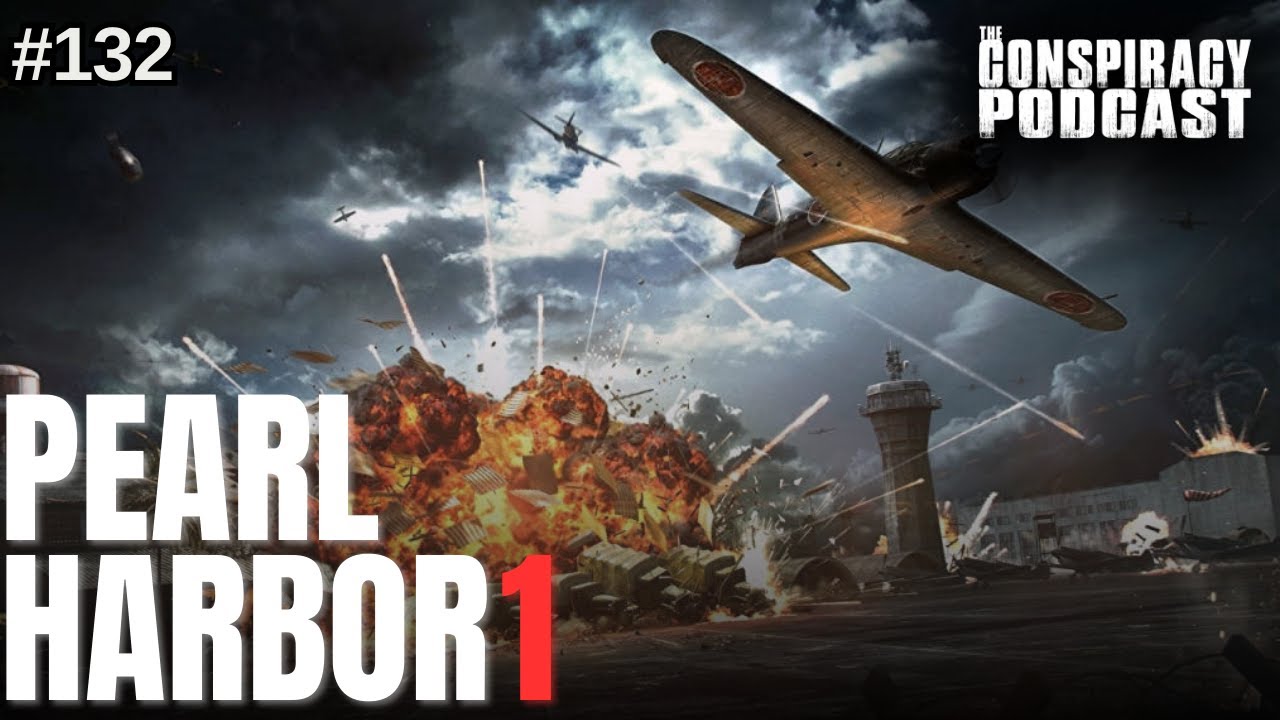
American flags fluttered lazily in the morning breeze and the aroma of breakfast drifted from the mess halls. No one imagined that in a matter of minutes the world would erupt into war. Yet just beyond the horizon to the north, a formidable enemy force was closing in. At approximately 6 a.m. on December 7th, Japan’s strike force had reached its launch position about 230 miles north of Oahu. From the decks of six aircraft carriers, they launched the first wave of attacks, 183 aircraft consisting of torpedo bombers, high-level bombers, dive bombers, and fighter escorts.
Veteran Japanese pilots had trained intensively for this moment, practicing in secret to hit moving ships and specific targets. They came in two waves that morning. What’s interesting about Pearl Harbor is that it was this massive harbor, but it was super shallow. So the torpedoes they were dropping would dive too deep. They put on these wooden propeller things and made it so they would hit the water and coast back up, so the propeller wouldn’t drive them straight into the ground. They very much planned this, and they had spies, actual spies, to know that. So they trained for all of this.
The first wave formed up in the pre-dawn dark and then swept southward toward Oahu. Shortly after 7 a.m. these planes approached land. There were a few scattered warning signs, but each failed to trigger action. On Oahu’s North Shore, an Army radar station detected a large blip at 7:02 a.m. Apparently they were novice operators, and they were astonished at the unusually big echo. They phoned in the report. Unfortunately, the junior officer on duty assumed it might be a flight of American B-17 bombers due in from the mainland. He told them not to worry about it.
So we’ve already had like six coincidences so far. We’re past the conspiracy level, it’s ultimate conspiracy. Apparently the new radar technology was not fully trusted, so they falsely assumed they shouldn’t raise the alarm because it could be anything. This new thing that actually detects stuff, don’t trust it. About 15 minutes earlier, the USS Ward, a destroyer on patrol at the mouth of Pearl Harbor, spotted and engaged an enemy mini-submarine trying to sneak into the harbor. So the Ward opened fire and sank that sub. And that was technically the first American shots in World War II.
They promptly sent a message up the chain of command about the incident, but by the time the warning was processed and relayed, dozens of minutes had gone by and the attack had already begun. You also have to know the tech. You send the message, then it goes to the switchboard operator and gets typed, then a runner goes looking for the commander. By the time it gets to them it’s 7:15, 15 minutes past. These missed signals, the submarine engagement and the radar sighting, were crucial tactical warnings that, had they been acted upon, would have at least given them 15 to 20 minutes of prep.
It almost seems like the Japanese were trying to get caught. Why send the sub in? What was that going to do? It almost seems like a recon sub, to go, okay, these are all the ships that are here. I’m assuming back in that time the spies probably had photos that were a couple days old, so you’re operating off older data, and you might go, okay, we need to know what ships are there. You have old photography, and how do you even get the photos there? They didn’t have drones back then. Carrier pigeon from Pearl Harbor to Tokyo. So Pearl Harbor remained blissfully unaware of the approaching danger until it was too late.
On the Japanese side, Commander Fuchida led the first-wave attack formation. As they reached Oahu, the Japanese pilots could see the island’s mountains and the harbor coming into view. It was shortly before 7:55 a.m. when Fuchida gave the final order to attack, sending the coded radio signal Tora, Tora, Tora. That means in Japanese tiger, tiger, tiger. That was the go sign. It was a pre-arranged phrase meaning that complete surprise had been achieved. How do they know that’s what it said? I think it’s from reports from the Japanese side. I’ve actually seen interviews with survivors from the Japanese side.
At that moment, the serene Hawaiian morning was shattered by aircraft engines and the whistle of falling bombs. The first targets were the airfields and the warships moored in Pearl Harbor. Dive bombers and fighters swooped low over the air bases at Hickam Field, Wheeler Field, and others, strafing and bombing rows of parked US planes. Huge eruptions of smoke and flame rose from hangars and flight lines as American planes lined up vulnerably wing to wing were destroyed on the ground. At Hickam Field, a mess hall took a direct hit, killing 35 men eating breakfast.
Aircraft were bursting into flames on the runways, and pilots racing to their planes were caught in machine gun fire from the Japanese Zeros sweeping overhead. Simultaneously, torpedo bombers skimmed just above the wave tops into Pearl Harbor itself. Torpedoes detached from their bellies and sped through the harbor water toward the battleships lined up along Ford Island.
I can see myself personally in a home defense situation not having any hesitation. But like chaos, I can’t imagine being in a plane thinking, I’m going to drop this bomb and tens of people are going to die. It could be hundreds. It’s got to be such a moral conundrum. You have to hype yourself up, because inherently I don’t think people want to kill other people. So you have to convince yourself that this is the only choice you have. But that’s a soldier, that’s your purpose. If you volunteered to be in the military, you already know the possibility. Especially at that time, there’s a world war going on. As for me, I’d be going into administration. I’m an administration kind of guy.
So at 7:55 a.m. the torpedoes and bombs found their marks. The quiet of Battleship Row was obliterated by the thunderous crash of metal, water, and fire. On the USS Oklahoma, sailors felt a massive jolt as multiple torpedoes slammed into her port side. Within minutes, the Oklahoma began listing dangerously. Listing is basically tipping over chaotically. Water poured in and she rolled over, capsizing in the harbor with over 400 of her crew trapped inside. Nearby, the USS West Virginia was hit by torpedoes as well, sinking into the shallow mud. What’s crazy about Pearl Harbor is that it’s so shallow that at some parts the boats tipped over and they’re still out of the water. And these ships are huge, it’s not a little schooner.
The USS California, at the southern end of the row, was also struck and started settling. Then came one of the most cataclysmic moments of the attack. A high-altitude bomber released a 1,700-pound armor-piercing bomb over the Arizona. The bomb penetrated the Arizona’s forward deck and plunged deep into her forward ammunition magazines. So what those bombs do, it’s almost like a bunker buster, where it doesn’t blow up on impact, it’s meant to penetrate and blow up inside. And it also hit the ammunition, which is the worst possible situation.
At about 8:10 a.m. the Arizona exploded into a gigantic fireball that ripped the ship apart. A colossal column of black smoke and flames shot into the sky as the battleship’s bow was utterly devastated. The explosion was so violent it lifted the 32,000-ton Arizona out of the water momentarily. More than a thousand men died instantly, including many who had been sleeping in their bunks and just weren’t even awake. It was instantaneous death. Witnesses across the harbor felt the heat and shock wave of the eruption. Burning fuel oil from the ruptured tanks turned the water around the ship into an inferno, almost like napalm, where the entire harbor is on fire. One stunned sailor watching the destruction remarked it looked like hell on earth.
All around Pearl Harbor, chaos and heroism unfolded side by side. Servicemen were jolted awake by explosions, hungover, and they had to snap into their job. They’re trained, so they scramble to their battle stations, but they were half-clothed and not even fully prepared. You go to the anti-aircraft gun and there’s no ammo, so you run to the ammo crates. Here are a couple really cool stories. It was a devastation and a disaster, but there are a couple heroism stories. Officers directed defenses from exposed decks. Sailors dove into oily burning water to rescue their friends, and even untrained personnel took up weapons to fight back.
A notable hero was Doris, or Dorie, Miller, and this was portrayed by Cuba Gooding Jr. in Pearl Harbor, the movie. He was a cook. This is actually a true story. He had no training at all, but in the heat of the battle he noticed a 50 caliber anti-aircraft gun was unmanned. He literally jumped on it, and despite the chaos and his ship already being heavily damaged, he took down some planes fighting back. And he was awarded the Navy Cross, the first African-American to ever receive it. What a legend.
The Japanese first-wave pilots, meanwhile, were executing their runs with precision, but not according to their plans. Everything goes out the window when all hell’s breaking loose. This was a cool part I found in this research: the timing of the assault was a mistake. They timed it at exactly sunrise. They were supposed to attack when you can’t see the planes coming in, but the Japanese didn’t anticipate which direction the fighter pilots would be facing. They were going toward the sun, so they were blind, and their hit rate was extremely low. Thank God. Remember how many planes they had. It was a major strategic mistake, attacking at sunrise and turning south, going toward the sun. We could have lost twice as many people. But who would have thought to take that into account.
There was one bomber, and this is part of the witness accounts, a Japanese dive bomber, his name was Zenji Abe. He had been briefed that his target would be the battleship Pennsylvania, which that morning was actually in dry dock on land. There was Battleship Row, and then over here was dry dock. It was moved the day before, and in dry dock they lift it out of the water so they can get under it, so it’s not touching water, that’s why it’s called dry dock. That was his target, but he said the glare made it hard to figure out which ship was his. In later recollections, some Japanese pilots admitted the sun was in their eyes during the approach. They drilled relentlessly, but the sun created such an inconvenience that they missed so much, and they were actually reprimanded when they got back for having such a low hit rate.
By 8 a.m. American defenders were finally starting to react, though in a disorganized fashion. Sailors ran to their stations and began firing the anti-aircraft guns wherever ammunition could be found. A handful of US fighter pilots finally were able to get airborne. Lieutenants George Welch and Kenneth Taylor, who had been at a nearby airfield, jumped into P-40 Warhawk fighters and took off under fire. This was also depicted in Pearl Harbor by Josh Hartnett, where they barely made it out and were being shot at. They engaged the enemy in furious dogfights, shooting down several Japanese planes, and they were the only air-to-air responses that could be mounted, just two dudes. That’s right, all the planes were tip to tip. And remember, they went and hit the airfields. The first thing you’re going to do is take out the response, which is going to be air-to-air.
Actually, believe it or not, the Japanese Zeros were superior. Our Navy fleet was more advanced, but their aircraft were better, more nimble and maneuverable. Now we’ve got those F-22 Raptors, baby. Now we’ve got that alien technology. When was Area 51 again? I think it was 1950-something. That’s when we got the new tech, after the war. That’s what they want you to think. Question everything, Eric.
Roughly 15 minutes after the first wave began, the second wave swept in. This second wave comprised another 167 aircraft, and they targeted what remained of the aerial and naval infrastructure. They bombed shipyards, any other planes on the ground, anti-aircraft batteries, and they sought out the remaining ships that were not burning. So their job was, you see a ship that’s not on fire, you’re cleaning it up.
The USS Nevada, the only battleship to get underway during the attack, attempted to steam out of the harbor, trying to make a run for open sea. She became an immediate target for the second wave. Dive bombers tried to sink her in the channel to block the exit. Under heavy attack and hit by bombs, the Nevada’s crew wisely beached the ship themselves, running it into the beach in an effort to avoid sinking and obstructing the harbor for other ships to leave. That’s a heads-up play right there. Other ships, like the cruiser Helena, the destroyer Shaw, and a repair vessel, were also struck. The repair vessel’s captain was famously blown off the ship by a bomb blast, landing in the water, and upon swimming back said, get back to work.
By 9:45 a.m. the air raid was finally over. The Japanese attackers, having inflicted as much damage as they could in two waves, withdrew to return to their carriers north of Hawaii. In the span of less than two hours, Pearl Harbor had been transformed from a peaceful harbor into a smoldering scene of devastation. The toll was catastrophic. The US Pacific Fleet was dealt a heavy blow. Eight battleships were damaged or destroyed, four of them sunk. Every battleship on Battleship Row, Arizona, Oklahoma, West Virginia, California, Nevada, Tennessee, Maryland, and Pennsylvania, had taken hits. Three cruisers and three destroyers were also badly damaged or sunk.
On the airfields, the toll was similar. The US Army Air Forces and Navy lost almost 200 aircraft, either destroyed outright or damaged beyond economical repair. The human cost was even more heart-wrenching. In the attack, a total of 2,403 Americans were killed and 1,178 were wounded. The Navy and Marine Corps bore the brunt of the fatalities, with the Arizona’s dead accounting for almost half of all people killed, just on that one ship, the one that got the armor-piercing bomb that went through and blew up the ammo. There was also a lot of people trapped underneath with little bubbles of air, like the Titanic. What’s really wild is the memorial for Pearl Harbor is in the water, built around the Arizona, and they left it there. They got all the bodies out.
Amid the horrific destruction of that morning, there were a few silver linings for the US Pacific Fleet. Notably, the Japanese had failed to destroy crucial targets. All three US Pacific Fleet aircraft carriers, Enterprise, Lexington, and Saratoga, were by chance not in Pearl Harbor that day. They were at sea. And those are the big boys, the main assets. At that time those carriers were the single most advanced piece of military technology we had, and none of them were there. They say information is what wins wars, and the speed of information back in the early forties was ancient. They’re operating off month-old intel, but that’s the best they had at the time.
Additionally, Pearl Harbor had vital infrastructure that the Japanese just missed. They had massive fuel storage tanks, the Navy Yard repair facilities, and a submarine base, all just untouched. The Japanese task force commander, Admiral Nagumo, famously elected to withdraw after the second wave rather than risk a third-wave attack against those facilities, worried about American counterattacks. This decision would come back to haunt Japan, because those untouched oil tank farms and repair yards meant that Pearl Harbor could repair everything. And they did. That’s a bad snap decision. Within months, several damaged battleships were raised, repaired, and sent out to sea for World War II.
For the Japanese strike force, losses on December 7th were comparatively light. Of the roughly 354 planes that took part in the attack, Japan only lost 29. That’s almost zero. About 130 Japanese airmen and sailors were killed, including the crew of the five mini-submarines. Many Japanese pilots returned to their carriers elated at what they thought was an apparent success. They had achieved complete surprise and thought they had dealt a heavy blow. As they celebrated on the flight decks, however, a few voices in Japan’s leadership wondered if they had truly knocked America out, or if they had awoken a foe.
Here is a famous quote, and it’s debated whether or not it’s true, but this is the quote from Admiral Yamamoto: I fear all we have done is to awaken a sleeping giant and fill him with a terrible resolve. I wish he would have said awoken a sleeping dragon, that would have been way cooler. But to be fair, it does sound like an American Hollywood script would write that. It makes us look awesome. That quote could be from the Pearl Harbor movie. Ben Affleck overheard that.
The attack on Pearl Harbor stunned the American people and had immediate, dramatic consequences. News of this sneak attack, a phrase that would quickly take hold, spread across radio bulletins. Many Americans initially could not believe it. One anecdote from a dinner party in New York described guests, upon hearing the news, thinking it was a hoax or some exaggeration, because they had been assured that Pearl Harbor was a fortress. Reality sank in, and shock turned into fury and resolve. Isolationism evaporated overnight. People were enlisting. It was the thing that made everybody who said we shouldn’t be part of this war get on board.
I don’t want to say it’s similar to 9/11, it’s very different, but it’s similar in the sense that, if you remember, right after 9/11 there was such a unification. Even myself. Every house had an American flag in the front, and everyone was like, let’s go after whoever did this. The very next day, December 8th, 1941, President Roosevelt addressed a joint session of Congress and said, December 7th, 1941, a date which will live in infamy. Usually Roosevelt is very calm and reserved, but this one was passionate. It goes down as a top-five speech in American history.
The normally calm FDR spoke with righteous anger. He described the devastation and the treachery of an unprovoked attack launched while Japan’s diplomats were still talking of peace. That’s the messed up part, they were still in negotiations. Congress swiftly and almost unanimously voted for a declaration of war against Japan, and the United States had entered World War II. The following day, Nazi Germany declared war on the United States. Why is that, though? They were allied with Japan. There’s a lot that goes into it, but essentially they wanted a reason. They wanted everything, they wanted to take it all, and they knew they would have to face America.
So in the next episode, we’re going to go over the aftermath of Pearl Harbor. We’re also going to go over certain reports that were given before Pearl Harbor: what the reports said, who they were sent to, and then establish whether or not, A, they knew about it, and B, did they knowingly not act. That’s the messed up part, the omission, when you see something bad happening and do nothing. There was a story that just recently came out, I think in Chicago, where a guy literally lit a woman on fire in a subway, poured gasoline on her and lit her on fire, and no one did anything. Eventually, after she was running out trying to get help, two people finally helped her put the fire out. How can you literally watch a human being on fire and do nothing?
Those are tough choices sometimes. I don’t mean the person on fire, I mean seeing something and then acting. Like the girl that got stabbed on the bus and everyone just watched it happen. If somebody is doing that on a bus, you’ve got to try to do something. If it’s a knife, I’m jumping in. If it’s a gun, I’m not, because he can just shoot me. With a knife, I would be more resolved to do that.
I do wonder, though, in this scenario, because there’s a lot of politics involved, you have to get everybody behind going to war. And the war is not on your continent. You also have legislation that is prohibitive of going to war. So the question becomes, the very thing you even made fun of earlier, us getting involved in foreign wars. Now we think of World War II as a heroic good against evil that we all had to stand up against, but at the time it was a foreign war. We were like, it’s not our problem.
So some conspiracy theorists believe that one of the reasons nobody acted was because this was the spark that would get us into the war. That’s honestly what I believe, which is similar to that whole thing with 9/11, knowing the pilots and the plan. You look at what happens afterward, that’s the big indicator. With 9/11 you look at the Patriot Act and the impingements on the freedoms of Americans. How could something like 9/11 then impinge the freedoms of Americans? This was supposedly a foreign attack against us, but now I’m getting watched more because of it. How do I lose in this? So you look at the repercussions down the line.
We’re also going to touch on, in the next episode, one of the biggest things, and I don’t know if you’ve ever researched this, but it’s one of the biggest things America has done wrong in my opinion, which is the treatment of Japanese Americans. After this happened, we were terrified that everybody was a spy, so we actually put Japanese Americans into internment camps inside the US. Remember we froze Japanese assets? Just imagine you’re a Japanese American and all of a sudden your bank account is frozen, and you have a legit business here, you’re American. After Pearl Harbor, we literally put people in camps. It’s one of the worst decisions we’ve made. And that doesn’t even get into actually dropping nukes on Japan.
So there’s a lot more to unpack on this whole thing in the next episode. It’s a horrible time. It’s so weird, because I haven’t lived through this sort of war scenario of going against an obvious bad guy. We had 9/11, but there’s a vagueness to the bad guys, it’s very nebulous. It was very easy with Nazi Germany, those guys, right there with the mustache, that’s the guy. We could be wrong and we could be naive on this, but that’s our take. That’s part one of Pearl Harbor. There’s a lot more we’re going to go over in part two. I think it’s going to be around a two-hour episode. We wanted to kick things off on this anniversary of Pearl Harbor. There aren’t very many veterans left, this was 80 years ago, so shout out to you guys for living through this and pushing through the war.