Did the US government know about 9/11 before it happened?
The record says the US government had warnings, not the plan. The 9/11 Commission Report documented alarming intelligence through the summer of 2001, including an August 6 presidential brief that bin Laden was determined to strike inside the United States, but found no intelligence naming the date, flights or targets, and blamed failures of imagination, policy, capabilities and management.
By the Conspiracy Podcast team | Last updated: October 2026
That is the gap the theories live in. The government knew enough to be worried and not enough to stop it, and people still argue over whether that was bad luck, bad bureaucracy or a choice. Here are the questions people actually search, answered with the official record first and the hosts’ verdicts after it.
What was happening before the 9/11 attack?
According to the 9/11 Commission Report, threat reporting in the summer of 2001 was so heavy that CIA director George Tenet later said the system was blinking red. The August 6 presidential brief was the 36th item that year on bin Laden or al-Qaeda. The Commission wrote that the attacks were a shock, but not a surprise.
Two of the warnings were about specific men. In January 2000 the CIA photographed Khalid al-Mihdhar and Nawaf al-Hazmi at an al-Qaeda meeting in Malaysia and learned that al-Mihdhar held a US visa. Within days they were in Los Angeles, then living in San Diego under their real names, renting a room from an FBI informant. The Commission found they were not watchlisted until late August 2001, weeks before they boarded the plane that hit the Pentagon.
Two more came from the field. In July 2001 the FBI’s Phoenix office warned headquarters that extremists might be training at American flight schools. On August 16, agents in Minnesota arrested Zacarias Moussaoui after a flight school reported him, then could not get a warrant for his laptop. Sean cannot get past this timeline: in his words, the warning signs were on the wall. He lays it out in the Final Summations episode.
Why didn’t the government prevent 9/11?
The 9/11 Commission’s answer was that the most important failure was one of imagination, alongside failures of policy, capabilities and management. It listed missed opportunities by the CIA and FBI, including the wall that kept them from sharing what they knew about al-Mihdhar and al-Hazmi, and it did not find that anyone chose to let the attack proceed.
The hosts accept the list of failures and split on what it means. Eric’s read is the closest to the Commission. He believes much of the leadership assumed that because nothing like this had ever happened, nothing like this could happen, so Phoenix and Minneapolis flagged real threats and the people above them did not move. He calls that arrogance, not a plot, and says he has seen no evidence of anyone wanting it to happen.
Sean’s verdict goes further, and he calls it his belief, not a finding. He thinks al-Qaeda planned the attack and a small handful of people at the top of the agencies allowed it, because a frightened country would hand over the powers they thought it needed. Jorge’s read rests on one theory, which he labels his own: the CIA kept al-Mihdhar and al-Hazmi in play because it was trying to recruit them, the play blew up, and the agency has been burying it since.
How did they know who the hijackers were?
By the FBI’s own account of its investigation, agents identified all 19 hijackers within days and published their names on September 14, 2001, working from flight manifests, rental car and flight school records, and luggage left behind. The 9/11 Commission named Khalid Sheikh Mohammed as the principal architect of the plot. He is charged before a military commission, not convicted.
One piece of that evidence is the one the hosts doubt. A passport belonging to a Flight 11 hijacker was reported recovered near the World Trade Center before the towers fell. Sean does not believe it, Jorge thinks it was fake, and Eric believes it was planted to boost a case that already looked airtight. All three say it changes nothing, because, as Jorge puts it, the passport only matters if you think the attack was staged.
None of them does. Jorge believes 19 hijackers flew the four planes, that a plane hit the Pentagon and that there were no bombs in the towers. Eric’s read is that bin Laden was a coward with money and hate rather than a mastermind, and that the planning belonged to Mohammed and the men on the ground. Sean rejects the theories that the passengers were fake or the families were actors.
How many bodies are still missing from 9/11?
According to the New York City Office of Chief Medical Examiner, about 1,100 of the 2,753 people killed at the World Trade Center, roughly 40 percent, still have no identified remains, and the office continues to test fragments and announce new identifications. At the Pentagon, 184 victims died, and 40 passengers and crew died on Flight 93 in Pennsylvania.
That toll is why the episode opens the way it does. Sean’s first words are that nearly 3,000 innocent people were murdered, that the passengers and crews were real people, and that the first responders ran toward danger. Eric calls the passengers of Flight 93, who learned what had happened to the other planes and decided together to fight, the clearest example of uncoordinated American courage that day.
The remains also settle one argument for Eric. He points to the forensic documentation of where each set of human remains was found inside the Pentagon as the reason he believes a plane hit the building and not a missile. Nobody builds that to sell a lie, in his words. Jorge agrees, citing the flight recorder and the DNA matches, and says the plane is not his mystery. The two men on it are.
| Theory | What the record shows |
|---|---|
| The government planned and carried out the attacks. The full inside job. | The 9/11 Commission attributed the attacks to al-Qaeda and 19 hijackers. None of the hosts believes it. |
| Officials knew and let it happen. Sean’s verdict, and close to Jorge’s read. | The Commission documented the warnings and missed chances but found no intelligence naming the date, flights or targets. Both call this their opinion. |
| The CIA was trying to recruit two hijackers. Jorge’s theory, which he labels his own. | A CIA inspector general review, released in part in 2007, found dozens of officers saw cables about al-Mihdhar’s visa without telling the FBI. No agency has confirmed any recruitment attempt. |
| Building 7 was brought down on purpose. Sean and Jorge do not buy the official explanation. | NIST concluded in 2008 that fire-induced failures caused a progressive collapse, with about 2.25 seconds of free-fall acceleration. Eric says strange does not equal evidence. |
| The military drills that morning were cover. Sean cannot get past the timing. | The Commission reported NORAD was running an exercise and found it did not slow the response. Eric calls it a coincidence. |
I don’t think that the US government orchestrated this terrorist attack. I think it got planned and it got allowed to happen.
the guys, on the record
How did 9/11 change the government?
Forty-five days after the attacks, on October 26, 2001, the USA Patriot Act became law, expanding surveillance powers, information sharing and access to business records. It passed the Senate 98 to 1 and the House 357 to 66. The invasion of Afghanistan began that October, the war in Iraq followed in 2003, and national security spending grew for years.
For the hosts, this is where motive lives, and it is the one place all three converge. Sean reads the Patriot Act as the greatest opening of latitude the government has ever been handed and believes it was the point of letting the attack happen. Jorge believes the White House did not plan the attack but cashed in on it, pointing to a 2000 policy paper that said the military changes its authors wanted would come slowly without a catalyzing event like a new Pearl Harbor. That is his read, not proof.
Eric, who rejects most of the other theories, still calls the Act a terrifying direction for the country. His verdict is that this was a real attack by people who hated the United States, which succeeded because the intelligence apparatus was too arrogant and too siloed to stop it. If anything was deliberate, the only version he finds believable is that somebody with intelligence in hand let the warnings play out, because a country that has just been hit hands over a bigger budget without questions.
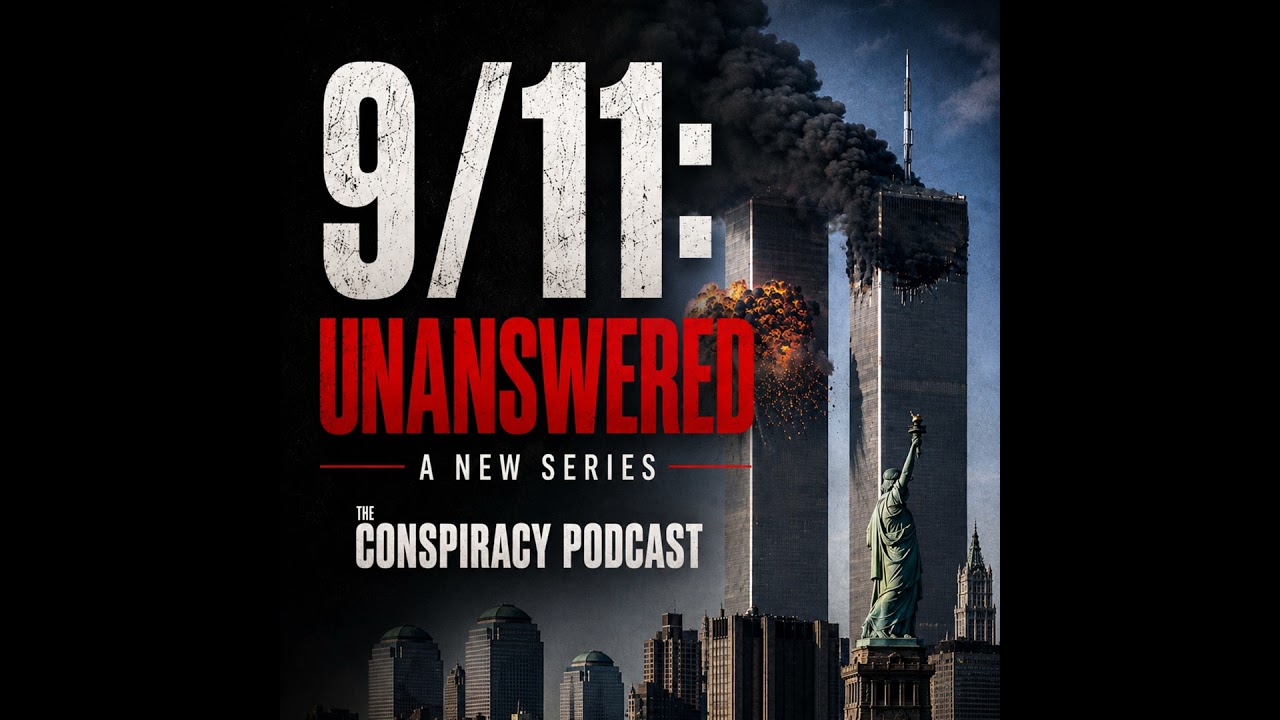
So what is still unanswered? Eric’s three questions for the Commission were who did this, who allowed it and why it was not stopped, and he believes it answered only the first cleanly. The FBI still refuses in writing to release what it holds on United Flight 23, and no host claims to know what happened there. Follow the series from the 9/11: Unanswered series hub, and hear all three verdicts in our breakdown of Part Eight, Final Summations, which closes with a listener poll.
For more cases where record and suspicion both have evidence behind them, see our roundup of famous conspiracy theories.