What Is Skinwalker Ranch?
What Is Skinwalker Ranch?
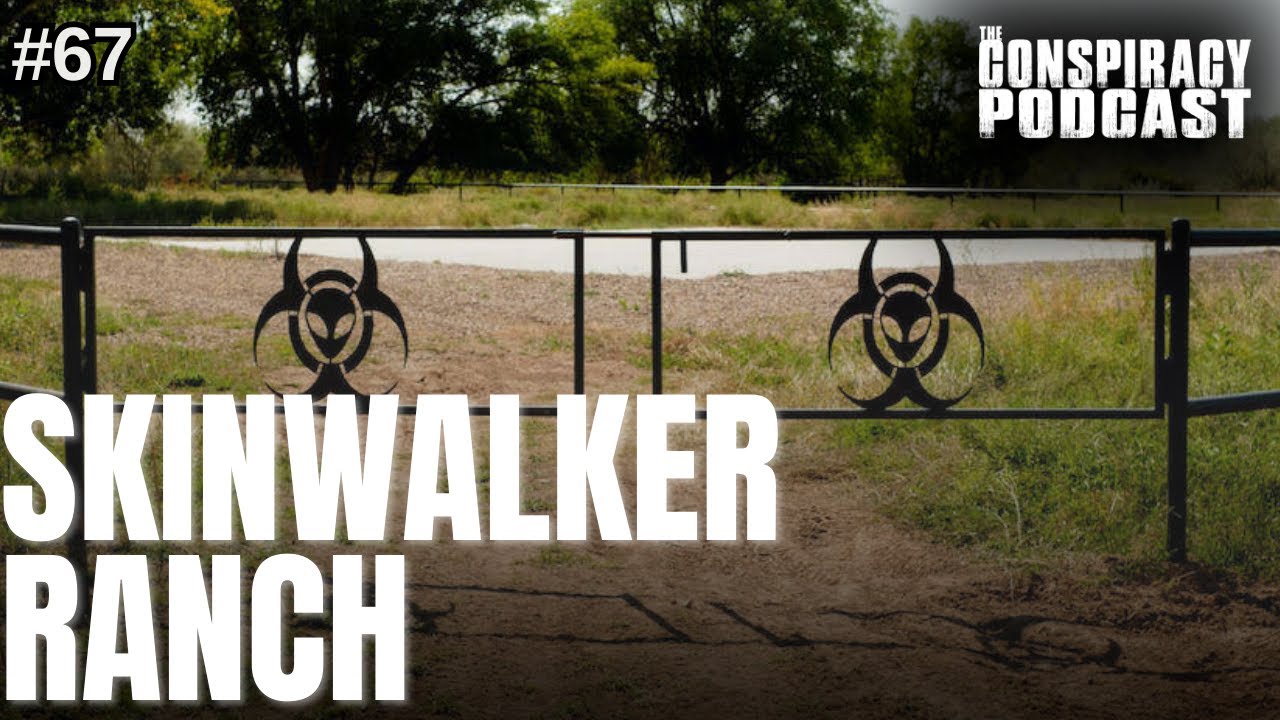
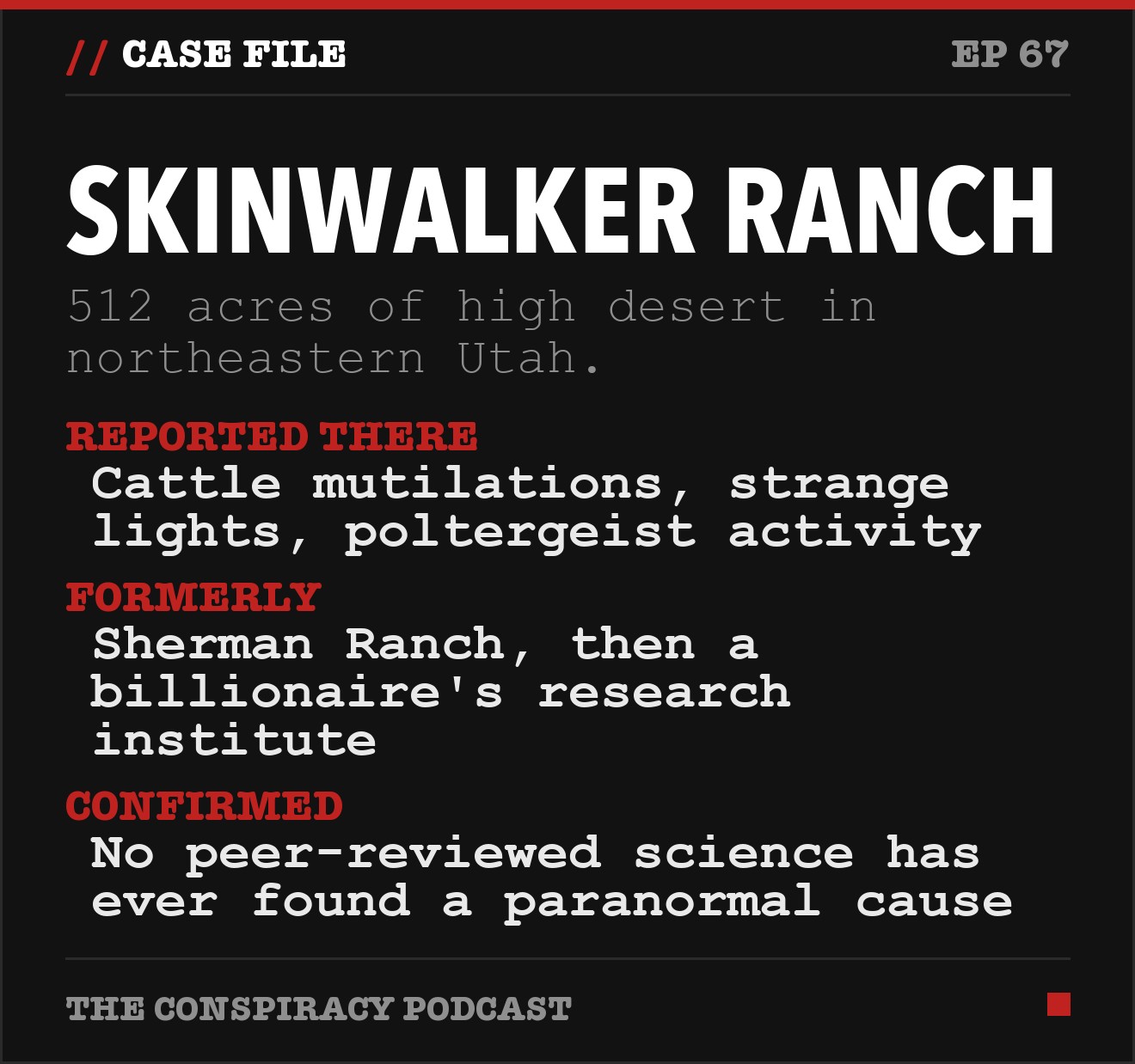
Skinwalker Ranch is a 512-acre stretch of high desert in northeastern Utah that became famous for reports of cattle mutilations, strange lights and poltergeist activity. Originally called Sherman Ranch, it passed from a billionaire’s private research institute to a real estate developer and a reality TV franchise. No peer-reviewed science has ever confirmed a paranormal cause.
By the Conspiracy Podcast team | Last updated: August 2026
The property has changed hands four times since the 1930s, and its paranormal reputation has grown with each new owner. A billionaire spent two decades quietly funding research there, and the current owner turned the name into a television franchise and a trademark.
What is Skinwalker Ranch?
Skinwalker Ranch is a 512-acre parcel of high desert in northeastern Utah, originally called Sherman Ranch. It became notorious in the 1990s for reports of cattle mutilations, strange lights and poltergeist activity, then passed through a billionaire-funded research institute, a Utah real estate developer, and a multi-season reality television series.
The ranch sits in a region of high desert with desolate plains, rocky brush-covered hills and very little vegetation, the kind of terrain where 512 acres can still feel empty. It was known as Sherman Ranch for most of its history, named for the family who owned it in the 1990s. The name Skinwalker Ranch only took hold after their reports made the property famous, and it stuck through every owner that followed. The property is marked with private property signage and has stayed closed to the public since. Much of its reputation still rests on secondhand stories, not anything a visitor could check directly.
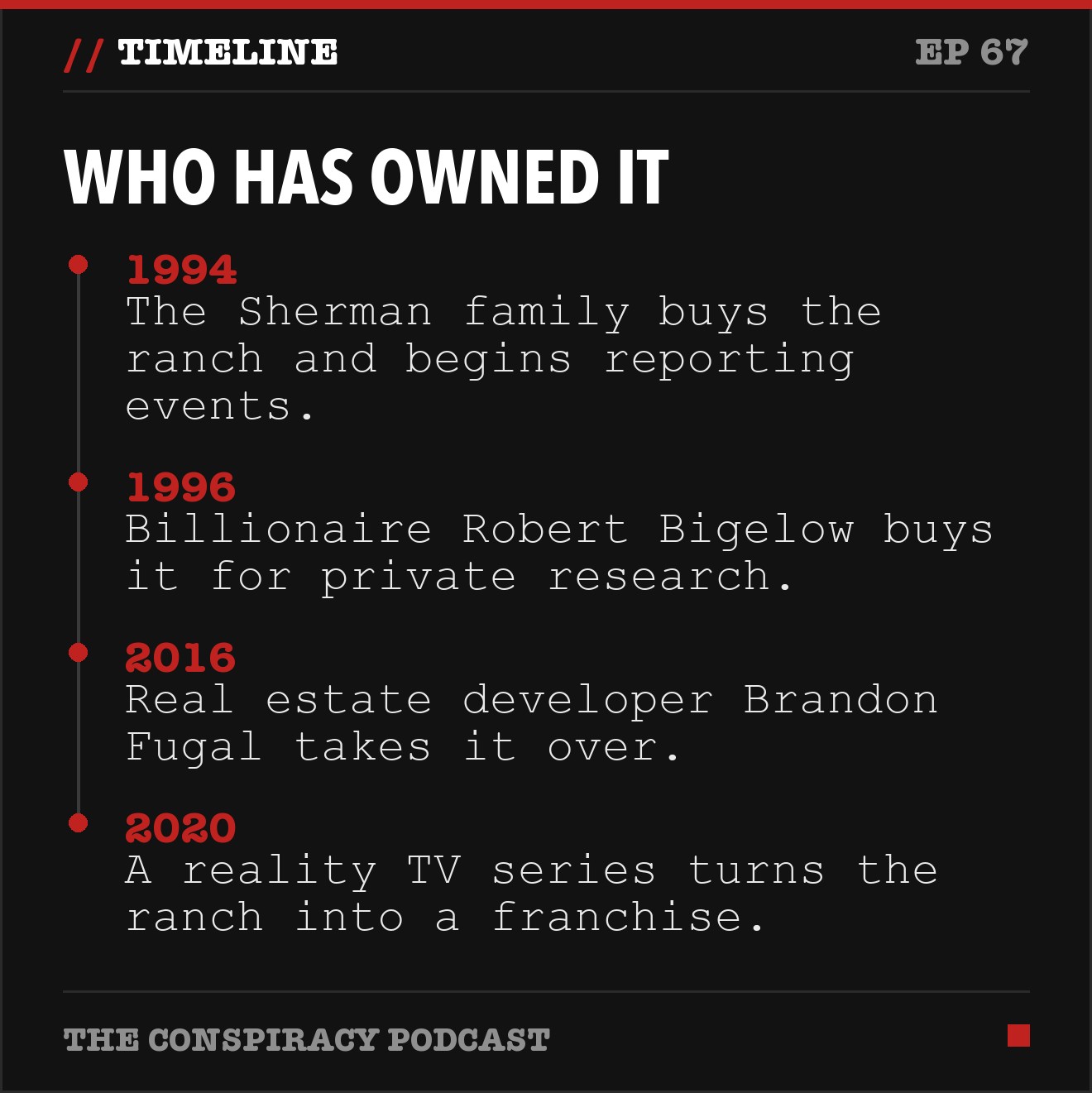
From 1934 to 1994 the land belonged to the Myers family, with no unusual reputation at all. The Shermans owned it next, for two years, then billionaire Robert Bigelow bought it in 1996 and ran it as a private research site until 2016. Bigelow then sold the ranch to Adamantium Real Estate, the holding company of Utah developer Brandon Fugal, who confirmed his ownership publicly in 2020. Four owners, four very different uses for the same 512 acres. The Skinwalker Ranch episode walks through that full ownership chain and explains why each new owner kept the name rather than starting fresh.
What actually happened to the Sherman family?
The Sherman family owned the property, then known as Sherman Ranch, from 1994 to 1996. They have publicly described strange lights in the sky, unexplained creatures near the property line, cattle mutilations, and what they called poltergeist-like activity inside their own home. They sold the ranch to Robert Bigelow in 1996.
What the family reported has stayed consistent across the accounts that have circulated since: lights that moved in ways they could not explain, livestock found dead under circumstances they did not attribute to predators, and disturbances inside the house itself that they described as poltergeist-like. These events first drew outside attention to the property, and are why it left agricultural use behind. The family sold after roughly two years, a short window for a story that has outlasted every owner since. Their accounts were later compiled in Hunt for the Skinwalker, the 2005 book by researchers Colm Kelleher and George Knapp.
None of what the family described was independently measured or recorded on any instrument at the time. That is not the same as saying the events did not happen, and it is not this guide’s place to call a private family’s account of their own experience false. It does mean the story exists as testimony rather than as hard data, a distinction the later research institute was set up to close and never fully did. The family’s ownership is also the only period with no research program running at the ranch, since Bigelow’s institute did not begin its work until after the 1996 sale.
Is Skinwalker Ranch connected to Navajo legend?
Only by name. The word skinwalker comes from Navajo (Dine) belief, where it describes a serious and feared figure that many Navajo people consider inappropriate to discuss openly, especially with outsiders. The ranch borrowed that name for its popular brand once its own paranormal reports spread. It is not a Navajo account of that specific land.
In Navajo tradition, a skinwalker is described as a malevolent figure capable of taking an animal’s form, tied to serious transgressions within Navajo belief rather than a simple monster story. Many Navajo people take the subject seriously and treat it with real caution, and the topic is commonly avoided in conversation, particularly with outsiders. That reticence is part of the tradition itself, not an absence of belief, worth stating plainly rather than as a plot detail. Outside retellings, including television and film, tend to flatten the belief into a generic shape-shifting monster, a different thing from what it represents within Navajo culture.
Skinwalker Ranch sits in the Utah high desert, and its paranormal reputation grew through the Sherman family’s accounts and the research that followed under Bigelow. The property picked up its current name as that reputation grew, and the name was later trademarked for tourism and merchandise use. That business use of the word is a modern, commercial choice made by the ranch’s owners, not a claim made by the Navajo Nation or any Navajo religious authority about that land. The ranch’s stories are ranch stories. The skinwalker belief is a separate, older and more serious matter that belongs to the Navajo people who hold it.
Who owns Skinwalker Ranch now?
Utah real estate investor Brandon Fugal owns Skinwalker Ranch today. His company, Adamantium Real Estate, bought the property from billionaire Robert Bigelow in 2016, and Fugal confirmed his ownership publicly in March 2020. He has since partnered with a Utah museum institute, and a multi-season History Channel series has been filmed on the property with his cooperation.
Adamantium Real Estate is based in Salt Lake City and registered the Skinwalker Ranch trademark in 2017, then expanded it in 2022 to cover branded merchandise such as cups, mugs, shirts and hats. Fugal stayed publicly quiet about owning the property for roughly four years before confirming it himself in March 2020. That same year he partnered with the Hutchings Museum Institute in Utah to study the ranch’s environmental and historical background, a more formal arrangement than under earlier owners. The History Channel series filmed at the ranch, with Fugal’s cooperation, has reached far more people than any scientific study ever has.
Ownership has mattered every time it has changed hands, because each new owner has reshaped how the public encounters the property: a working cattle ranch, then a closed research site, then a licensed media brand built around the same 512 acres. The ranch remains private property today, fenced, guarded and monitored, with security only tightened since Bigelow’s purchase in the 1990s. It is not open to visitors or to independent researchers who might test a claim for themselves. That restricted access is also why so much of what gets reported about the property is difficult to check against anything outside the current owner’s own account.
Has anything been scientifically proven at Skinwalker Ranch?
No. No peer-reviewed study has confirmed a paranormal explanation for anything reported at Skinwalker Ranch. A University of Colorado magnetometer study on the property came back inconclusive, and the ranch has been privately owned and access-restricted for decades, which limits independent, outside verification of any claim made about it.
The most concrete research effort on record is the University of Colorado study, which used magnetometers to look for magnetic anomalies on the property. The researchers found no confirmed anomaly and called for further study, a normal outcome, not evidence of a cover-up. Bigelow’s own research institute ran investigations for two decades and never published a confirmed paranormal finding either. Skeptic Robert Sheaffer has argued that the family’s original stories were embellished, then built up by later owners, to raise the property’s value. That is a theory too, not a proven fact, but it is backed by an ordinary, checkable motive.
Most of what gets reported as evidence, even by the hosts’ own account, amounts to a feeling: unease, dread, a sense of being watched, rather than anything measurable. That distinction matters, because a feeling is not reproducible, and reproducibility is the baseline the scientific method requires. Restricted access compounds the problem. The ranch is fenced and guarded, and outside researchers cannot simply visit and test a claim for themselves, which leaves the public with the owner’s own account of what happens there. For a closer look at how the hosts weigh each claim against that gap, see the full episode on the ranch.
| Theory | What the record shows |
|---|---|
| Interdimensional portal. A doorway between dimensions, with beings said to pass through. | No physical evidence exists. The claim rests on feelings, not data. |
| Secret government cover-up. Aircraft, unmarked vehicles and lights suggest classified weapons testing behind a paranormal cover story. | No agency has confirmed a program. The hosts call this the most plausible theory. |
| Ancient lost civilization. An advanced civilization is said to have left buried technology on the land. | No artifact tied to this claim has ever been recovered. |
| Fabricated for profit. Skeptic Robert Sheaffer says the stories were embellished by owner after owner to raise the land’s value. | The ranch is now a trademark with its own merchandise line, and the hosts agree. |
The pattern above shows up across paranormal cases generally: competing theories, one dull evidence-light explanation, a story that keeps earning attention either way. For more of the same pattern, our roundup of famous conspiracy theories covers a wide range of cases.
I couldn’t be more on the side of this is absolute fabricated stuff just for attention.
the guys, on the record