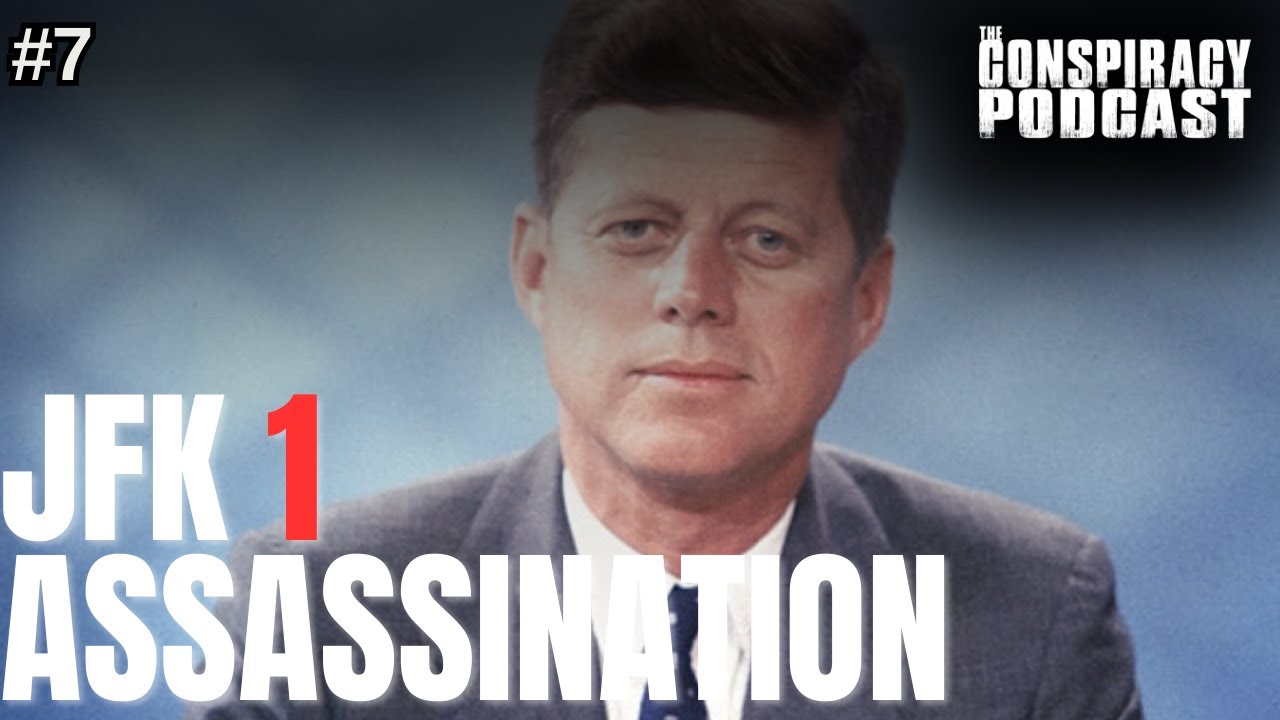
JFK Assassination: The Warren Commission Part 1 – Episode #7

JFK Assassination: The Warren Commission Part 1
The Conspiracy Podcast opens its Warren Commission series with the assassination that Eric, Sean and Jorge call maybe the most researched event in modern history, noting roughly 2,000 books have been written about Kennedy’s death alone. Before wading into the wilder theories that later episodes promise, the hosts commit to laying out the government’s own account first: the Warren Commission’s findings, delivered almost word for word from its 888 page report. Their stated goal is to read the sources, watch the documentaries, and reach their own conclusions by the end of the series, and they are candid that they do not all start from the same place. One host admits he had already leaned toward a conspiracy conclusion before the research even began.
The commission was formally the President’s Commission on the Assassination of President Kennedy, created by President Lyndon Johnson after he succeeded Kennedy in office. It convened for the first time on December 5, 1963, less than 30 days after the assassination, and finished its investigation in under a year, a pace the hosts contrast with far less prominent federal investigations that dragged on for a decade. Its seven members included Chief Justice Earl Warren, Senators Richard Russell and John Sherman Cooper, Representative Hale Boggs, future President Gerald Ford, former World Bank president John McCloy, and former CIA Director Allen Dulles. The hosts single out Dulles and let the irony sit for a moment: the agency he had once run was already a fixture of Cold War suspicion, and having its former director sit in judgment on a presidential murder investigation is a detail they say is worth remembering going forward.
From there the episode walks through November 22, 1963, almost scene by scene: the motorcade’s arrival at Love Field, the decision to route the trip through Dallas partly to shore up a city Kennedy had lost to Nixon in 1960, and the president’s choice to ride without the bulletproof bubble top so he could greet crowds directly. The hosts narrate the Warren Commission’s own description of the shooting, including the wound to Kennedy’s neck, the bullet that struck Governor John Connally through the back, chest, wrist and thigh, the trajectory later nicknamed the Magic Bullet, and the fatal head shot the report describes as moving Kennedy’s head back and to the left, a detail they promise to revisit once they get into competing trajectory theories in later episodes.
Inside the Texas School Book Depository, deputies found three spent cartridge cases and a boxed sniper’s perch at a sixth floor window, then a bolt action rifle stashed nearby, serial number C2766, marked 1940, made in Italy, and chambered in 6.5 millimeter. The hosts pause on a detail that does not immediately add up to them: three casings on the floor against what they count as two confirmed hits on Kennedy. When building superintendent Roy Truly noticed an employee unaccounted for during a headcount, that employee, Lee Harvey Oswald, turned out to already be sitting in a Dallas police interrogation room.
The hosts also trace Oswald’s movements after the shots: leaving the building, boarding a bus whose passengers happened to include one of his former landladies, switching to a taxi, and returning briefly to his rooming house before heading back out. About 45 minutes after Kennedy was shot, Dallas police officer J.D. Tippit was killed a mile from Oswald’s apartment after pulling alongside a man matching the broadcast description of the assassination suspect. Officers soon converged on the Texas Theater, where a man who had walked in without paying for a ticket, and who drew a gun during his arrest, was taken into custody. That man was Oswald.
Throughout, Eric, Sean and Jorge keep returning to how novelistic the official record reads, from a deer hunting detail that seems to vouch for a witness’s ear for gunfire to Oswald zipping up his jacket before leaving his apartment for the last time that day. They are careful to flag where the Warren Commission’s own language stays vague, particularly on exactly how many shots were fired, and to note the questions they plan to chase later rather than answer them here. Part one ends with Oswald in custody, and the interrogation that follows is set up as the subject of episode two.
- The Warren Commission, formally the President’s Commission on the Assassination of President Kennedy, was created by President Lyndon Johnson and first met on December 5, 1963, less than 30 days after Kennedy was killed on November 22, 1963.
- The commission’s seven members included Chief Justice Earl Warren, Senators Richard Russell and John Sherman Cooper, Representative Hale Boggs, future President Gerald Ford, former World Bank president John McCloy, and former CIA Director Allen Dulles.
- The commission delivered an 888 page report to President Johnson after less than a year of investigation.
- Eyewitness Howard Brennan told police he saw a slender man in his early 30s fire a rifle from a sixth floor window of the Texas School Book Depository.
- Police found a bolt action rifle, serial number C2766, marked 1940, made in Italy, and chambered in 6.5 millimeter, hidden between boxes near the sixth floor staircase.
- Dallas police officer J.D. Tippit was shot and killed near 10th Street and Patton Avenue about 45 minutes after Kennedy, and Lee Harvey Oswald was arrested soon after at the Texas Theater.
Read the full transcript
Hey everybody, this is Eric, Sean, Jorge. Yes, that’s us. What’s up guys? Welcome to the conspiracy podcast pcast! Get down. Yeah, you know it’s up. Uh, so this is the first of what will be probably four episodes, maybe three, we’ll see how how it goes. Uh, John F Kennedy, this a mey one. Oh, you know we got a lot of say, this is the worst one honestly. When I started, um, researching this I was terrified, honestly terrified, because it’s it’s a big one. It’s the most research conspiracy probably on and the history of mankind ever, right? So we want to make sure we get it right.
And so got a lot of details. Yeah, like 2,000, I looked it up, 2,000 books just on his death, not on his life, just on his on his death. There’s three books on his life, over a hundred movies were made about his death. 2,000 books, 100 movies, it’s Insanity. I, I, anyway, so I thought when I started doing this I was like, what’s the point? Like what do we have to add? Okay, you know what I mean, like you got you deep dive, you go, okay, you know what, but what do we have to add? I don’t know. You know, and I I kept thinking to myself, what’s the point, you know, whatever.
Uh, first of all, everybody’s going to be able to save watching a thousand movies. And I know, right, exactly, so that’s what we’re trying to, uh, hopefully that’s what we bring to the table here, is a new look. It’s now been 59 years since it happened. God, that’s crazy, 59 years. So, uh, now what’s interesting is growing up I was on the conspiracy bandwagon. Oh dude, for sure. I, JFK for sure conspiracy. I mean I was on the conspiracy b b, like just in general, like not even just JFK, just like everything, because I was, I, as a kid I was questioning just everything, like questioning my beliefs that I was given when I was a kid.
It’s kind of, it always kind of made sense, but this, when this, when I found out about this, I was like, oo, yeah, yeah, I know, might be on to something here. Yeah, so I, at the beginning of this, I have years of History Channel, you know, little thingy, thing things, Stone, creeped into my life. And, you know, and that was about, you know, that was about my he, for summary of it, but here’s what I did decide at the beginning of the research of this was, okay well, what if I actually jumped in, and what if I read the books, and what if I listen to the podcast, what if I watch the documentaries, which, what if I watch the movies, and then came to a conclusion by the end of it, what if.
So that is our goal, folks, that’s our goal, is by the end of it I’m going to say what I’ve concluded, and hopefully Jorge’s come to that, and might have different opinions. Yeah, yeah, yeah, hopefully Sean’s come to that, but he might have already made a decision right out the gate, like right when we started, he said JFK conspiracy. I mean, first of all, you guys know me a little too well, but I’m a, I’m a massive conclusion first, ask questions, ask questions later. So here we go guys, uh, Buckle in and, uh, get ready for a deep dive into JFK. Let’s do it, boys.
Y, and girls. So the assassination of John F Kennedy is, is one of those moments in American history, dude, it’s like, it’s like top tier Americana, but like the sh, on the on the shitty side, you know, it’s like we have like the good side, but then it is kind of like the black stain on like America as a whole. Yeah, and you go like, like for example, Our Generation, so you’re, how old are you? 41. 41, how old are you? 72. 33. 33. I’m 38. So our generation, our, our biggest, in my opinion, I could be totally wrong, but my opinion is our biggest, like, holy [bleep] moment, is 911.
Oh for sure, 100%. We were, Alla, 18, 16, remember, watching, turn the TVs on in class, and like I watched it happen, like, so you remember the, where you were? I remember the moment, it, soci studies class, I remember exactly. Yeah, so our generation knows exactly where they were, when, what they were doing, Etc. It was quential. Yeah, K was the same for the older generation. Oh for sure. Oh, I mean, that was like a, like def, like life defining moment. St, everything, like the class stopped or whatever, wherever you were, and everybody was hooked. And, um, so in my opinion it was a bit of a gut punch to the American way of life, you know, and the optimism of the 60s.
That was kind of like JFK’s Mo was the optimism of the democratic party and and that whole thing. So I’m not going to go into JFK, as like the presidency and like him growing up, and like that’s a whole other, yeah, we, you know, we don’t need to, I mean it, it’s a good exercise to know where he came from and his family and in the growth. But I, I thought the best place to start is the Warren Commission. Oh for sure, I mean that’s, I mean that just, yeah, I don’t talk, I want say anything right now, but just go into that. So the Warren Commission is the the government’s official response investigation of what happened to JFK.
Okay, so a majority of this episode is a, is pretty much, it’s actually almost word for word commiss, right? Because if we can start with what is the official version, then we can go from there. Branch off into the other information that has been provided. Exactly, exactly, but if we don’t know, conspiracy, it’s actually like there a eyewitness testimony that’s not detailed in the Warren Commission. I actually was talking to somebody the other day, and we were talking about the JFK’s conspiracy, and they didn’t even know anything about JD tippet. JD tippet, anyways, we’ll get into it later, but JD tippet is a major part of the story.
They didn’t even know. So the point of bringing, doing the Warren Commission is that going over all the data that they, they researched, they investigated, they, you know, they put down an 888 page report and gave to the president. And it was actually, this just as a, as as an aside, just so this out there, before we get into it, the warrant commission was pretty Swift, it happened, not, it, it didn’t take a very long time. Yeah, it was less than a year, or about a year. Yeah, you know, and for, for you, think to accumulate that much information, you know, you, there’s, I mean there’s there’s investigations that are far less high-profile that have gone on for 10 years.
How long did the 911 report take? Oh dud, it took [bleep], it took [bleep], 12, like, like five years bro, it would took forever, it took so [bleep] long. Okay, so how long did this one take? This one took exactly one year. Okay, now normal, normal podcasts in this, they do like an eerie, like, you know, he’s going down, you know, into de Plaza and he gets shot, but I, you know, I don’t really feel like we need to do that, because if you don’t know the basics, then you know, maybe, maybe why are you listening to us? Stop listening, tune back in, cuz we want to, we want you to hear us.
Yeah, we need you, please. So the the um the actual warrant commission was called the president’s Commission on the assassination of President Kennedy, uh, and it was established actually by President Lynden Johnson, who didn’t, he took over, he took over, and he’s the one who took over for JFK. Yeah, cuz he was JFK’s VP, right? That’s right. Yeah, uh, so they came out a year later with an 888 page report presented to President Johnson. Got it. It’s a big [bleep] report. I mean, that, that sounds like one of the bills that we’re going to the vote on. So this is basically, this is some of the excerpts, I guess you call it, read all inter Pages, no, but it’s actually really good.
So the Warren Commission met formally for the first time on December 5th, 1963, right. Uh, this was less than 30 days after Kennedy was killed. Okay, so Kennedy was killed November 22nd 63. Okay, they met for the first time December 5th. Okay, I see. Yeah, okay. Um, so a couple misconceptions about the waren commission, hearings were closed to the public unless the witness appearing before the commission requested an open hearing, no witness except one requested that. So second, the hearings, except one, were conducted in private, they were not secret. So they were held openly. Mhm, yeah, just to get that out of the way, right, just so, it was an open, but but it was an open Forum, it’s an open Forum, except for the ones that were held in private, which ex, one or two?
Yeah, no, I thought they were all held in private. No, only, only if they requested it to be held in private. So if you were, WT, I thought you were saying they were all, like, only one person requested it to be public? My bad. Yeah, it’s the opposite, so one person requested it to be private, for whatever reason. So they all happen. Well, but were the general public allowed there, like, like just open, every Tom, Dick and Harry, just like go? Yeah, but they, they, they individ, they, they interviewed hundreds of people. Yeah, oh No. So at a certain point you kind of go, this boring, this boring, running out a film, uh, to give you an idea, uh, this is who was in it, Earl Warren, okay, Warren, War commission, the guy is a Chief Justice of the United States, a guy named Richard, Richard Russell, he was a senator in Georgia, John Cooper, Kentucky Senator, hail bogs, Louisiana House Majority Whip, then there was also Gerald Ford, future President Gerald Ford, yeah, yeah, yeah, then there was a guy named John McLoy, and he was the former president of the World Bank.
Oh God. And then there was one other. Those are Rando dudes on this [bleep]. There’s one other, which is Alan Dulles, and he was the the director of the CIA. Did you catch that Sean? Oh, I’m, I’m just, Alan Dulles just hold, director of the CIA, just holding my breath here, I don’t want to, I don’t want to say too much. Okay, so here we go, you guys ready? Yeah, yeah, this is the [bleep], here we go. John F Kennedy, let’s do it. Okay, 11:40 a.m. on Friday, November 22nd, 1963, President JFK, Mrs Kennedy, and their party arrived at Lovefield, which is in Dallas. Behind them was the day, was the first day of a Texas trip that was planned five months earlier by the president, the VP, and John Connelly, who is the governor of Texas.
Okay, after leaving the White House on Thursday morning, they all arrived basically 11:40 amm on Friday, November 22nd. Mhm, so plan for later that day was motorcade through downtown Dallas, a lunch in speech at the Trade Mart, and a flight then to Austin, where the president would attend a reception and speak at a Democratic fundraiser. From Austin he would proceed to the Texas ranch of the VP. Okay, so these were his plans. Yeah, that’s like what he was going to do. SC, yeah, evident on this trip were the very roles which was an American president, uh, like a normal, I guess, motorcade, which is the head of state, chief executive, party leader, Governor, like that’s like a normal typical progression, right?
Okay, so the Dallas motorcade, it was hoped, would evoke a demonstration of the president’s personal popularity in a city which he lost in 1960. So in 1960, when he was running against Nixon, he lost Dallas. Okay, yeah, so he went then there to kind of pump it up. Yeah, I guess this is the word, right, back, Pump It Up. Yeah, so it was decided that it would be two days. Okay, and those responsible for planning were the governor, which is Connelly, right, and then Kenneth O’Donnell, which is a special assistant to the president. Okay, okay good. So the Secret Service was told on November 8th that 45 minutes had been allotted to a motorcade procession from Lovefield, which is the airp port, to the S of the luncheon.
So 45 minutes of driving. Yeah, slow, boring, super slow, right? Um, so after considering the facilities and security problems of the buildings, blah blah blah, a place called The trademart was chosen. Okay, trademart is like, that’s where he was going to speak. Yeah, that was at the lunch, the lunch in speech, that’s right, that’s where he was going to go to, like, that’s the end of his motorcade, right? Right, and it, and what a trademark is, is it’s basically like, they don’t have it anymore really, but it’s like a, just imagine a mall mixed with a conference center. Okay, where they have like booths, you ever go to a conference and then everybody’s got a booth?
Yeah, now throw in a mall. Why would there be, I, it’s called a trademark, I don’t know, like I thought that was just the name of the place. No, it is just the name of the place, but that’s what it means, that’s what it was. Yeah, yeah, then there was trade Mar, here you go, it’s so stupid, I know, I know, maybe that’s why it stopped being a thing. So the route was approved by a local host committee and the White House Representatives on November 18th, and publicized in the local paper starting on November 19th. So that means it was made publicly known November 19th.
Oh, like what he was going to do, like his his like agenda. Yeah, exactly, so that that’s important, so yeah, for sure, he was killed on November 22nd, so it was 3 days, 3 days earlier, in the newspapers it was announced JFK would be, blah, would be there, would be this, and would end up there. Yeah, I see, right, okay. This Advanced publicity made it clear that the motorcade would leave Main Street and pass the intersection of elm and Houston Street as it proceeded to the trademark by way of the stemens freeway. So by mid morning of November 22nd, the clearing skies in Dallas dispelled the threat of rain, and the president greeted the crowds from his open limousine without his bubble top on.
Top on it, like, like the bulletproof bubble top, must be so [bleep] AO. So apparently, apparently jeffk wanted it to to to not have a bubble top. Yeah, probably like wanted be like a real person. He’s like a [bleep] dude, he wanted to say hi to everybody, he wanted to shake their hands, and he wanted to be real. Exactly what you’re saying, right? So the, to the left, and who doesn’t love a drop top, come on, I know right, like want a wind in my, the 60s maybe, like, so to the left of the president in the rear seat was Mrs Kennedy. Mhm, okay, so president’s here.
Yep, to the left of the president in the rear seat is Jacqueline. Yeah, yeah, okay, in the jump seats were Governor Connelly, that’s in front? No, so the, yeah, the jump, the jump seat’s like a little side seat that like kind of, po, it’s almost, it’s like Hardy to explain, it’s like a little seat that pops down, it’s kind of, it’s on the side front, it’s in the front, two front seats, but they’re not really like, they’re not really seats, they’re like, they call them jump seats because they’re lower. Okay, right, they’re lower and they’re they’re actually back a little bit. Okay, right, and they’re not really normal seats, and that’s, you know, it’s like, yeah, I’m assuming they call it Jump Street or seats because you can jump the [bleep] out of them real quick.
I’m out, but you know, we’ll have to look that up. We should have put kened in the jump seat. I know, right, yeah seriously. Uh, okay, so Connelly was in front of the president. Okay, and and the wife was on the left. Yeah, okay, and agent William Greer in the Secret Service was driving. Okay, and agent Roy Colman was sitting to his right. Okay, tracking. Yeah, yeah, so what’s really important in this whole thing is that Connelly was lower than JFK. Yeah, okay, that’s right, really important to know that, it’s not like you’re just sitting in front of me, was lower in front of me.
Yeah, because just the way that the se, he ready to jump. Yeah, cu he’s ready to go, jump seat. So directly behind the presidential limousine was an open follow car that had eight Secret Service agents, two in the front, two in the rear, two on each running board. The ones that are standing, they’re stand, they’re actually outside the car. Yeah, right, these agents, in accordance with with normal Secret Service procedures, were instructed to scan the crowds, the rooftops, the windows of buildings, overpasses, cross, look for sketchy [bleep], exactly. Right behind the follow-up car was VP car, carrying the VP and Mrs Johnson and Senator Ralph yarboro, and next were’re a VP follow-up car, in several cars and buses behind that, they’re like the the the scrubs.
Yeah, they’re like, they’re still like on the VP VIP list, but they’re like, you know, scrubs, exactly. Okay, so now we know the lay of the land, right? So here we go, the motorcade left Love Field at 11:50 a.m., proceeded through residential neighborhoods, stopping twice because JFK requested to greet wellwishers by shaking their hands. Okay, love, sto twice, right, each time the president’s car halted, Secret Service agents from the follow-up car that we just learned move forward to assume protective stances near the president and jacn. As motor C reached Main Street, I, uh, things got out of control, like too many crowds, too many, eight dudes can’t do [bleep].
Yeah, the word that the Warren Commission used was tumultuous. Ooh, tumultuous, what a, what a saucy, what a tulous word. Yes, so as the president’s car approached the intersection of Houston and Elm, uh, they’re loomed directly, this is how they state it, they’re loomed directly ahead on the intersection, northwest corner, a sstory orange Brick Warehouse and office building, and that was called the Texas School Book Depository. You can tell this [bleep] was written in the 60s too, they’re lubed, I’m like, damn, it’s like a [bleep] like rapping in my chamber. So, as of note, as of note, riding in the vp’s car was an agent Rufus Young Blood of the Secret Service.
Rufus young blood, dude, I’m name my first, he’s on record as noticing that the clock at top the building indicated 12:30 p.m., scheduled arrival time at the trademark. So they were behind. Oh yeah, okay, okay, the president’s car, which had been going north, made a sharp turn toward the Southwest onto Elm Street at a speed of 11 miles hour, it started down the gradual descent toward a railroad overpass, under which the motor Cade would proceed before reaching the stem’s freeway. Okay, now I’ve been there, I went, I went there, has been on, I went to do this whole thing, I did the plaza, I did the The Book Depository, I did all of it, right, that’s the kind of research we’ bring you guys, we’re on site, literally, me and Jorge sent Eric there with our own credit cards.
M, that’s right, that’s right, we did not, there’s still an X in the middle of the street too, crazy, I spray painted it, it’s tape, it’s like white duct tape, that’s what I said, that’s my accent, that’s what I said. Uh, but it’s basically a sharp, so just imagine you’re going downtown Maine, like you’re going downtown, and then it’s a left, oh, you’re like, and then you go downhill, and then there’s an under, there’s an overpass, and you go SL, right before you got to the overpass, that’s when he get shot. So he was going 11 miles an hour. Okay, the front of the the Texas schoolbook depository was now on the president’s right.
So he’s going that way, so big buildings on the right, right hand side, right, and he waved the crowd assembled there as he passed the building. Del Plaza, which is an open landscaped area marking the Western end of downtown Dallas, stretched out to the president’s left, right? Okay, a secret service agent writing the motorcade radioed the Trademark that they would arrive in five minutes. So they’re five minutes out from the destination, or tus five, from from the N. Second, second, seconds later, shots popped in Rapid secession. Now, how many shots does the warning commission say? Doesn’t say, those [bleep] troll [bleep]. Well, we’ll see in the conclusion, it does talk about it, but it doesn’t really, like in the in the summary it doesn’t really talk about it that much.
Uh, they just talk about, of course, of course, he like, he’s dead, they talk about the effects of the bullets as opposed to the, here’s the effects of the bullet. Deathu, yeah, so death happened, that was the effects of the, but that’s a very key thing, right, as we’re going, as we’re going to see, as we get into this, like, I’m sorry, I’m jumping the gun here. Oh, what a double on there. So this is what they say, this is word for word, this is from the waren commission. Seconds later, shots resounded in Rapid secession, the president’s hands moved to his neck, he appeared to stiffen momentarily and Lurch slightly forward in his seat.
A bullet had entered the base of the back of his neck, slightly to the right of the spine, it traveled downward and exited from the front of the neck, causing a Nick in the left lower portion of the knot in the president’s neck tie. Holy [bleep]. So before the shooting started, governor, governor Connelly, had been facing toward the crowd on the right. So Connelly was like this, looking to the right, like the jump seat in the back. Yeah, this is the governor, and he’s waving like this in his jump seat, and he’s lower, and he’s waving like this. Yeah, so before the shooting started, Connelly had been facing toward the crowd on the right, he started to turn toward the left, and suddenly felt a blow on his back.
Yeah, say he got shot in the [bleep] back through a neck. The governor had been hit by a bullet which entered at the extreme right side of his back at a point below his right armpit. It’s right here. Oh [bleep], that a [bleep] place to get shot. Oh, that’s like, could have hit him. The, now this is important, this is the Magic Bullet of, this is the Magic Bullet of Oliver Stone. Shut up. So the Bullet Trav, Sean has his heart on the right, by the way, guys, go ahead, go ahead, go. The bullet traveled through his chest in a downward and forward Direction, exiting below his right nipple.
O, okay, save that nipple baby, right, nip, it passed through his right wrist, what, which had been on his lap. Okay, so it’s like a super down, it’s like a downward, downward angle, right, and then caused a wound in his left thigh. Jesus Christ, this [bleep] bullet just, like, they call the Magic Bullet, it hit, so going back a little bit, it hit Kennedy through the throat, then hit homie in the back, hit him right out through the back and a nipple, through his chest, nipple, hit his his wrist, through his leg, to his left thigh. Yeah, it’s like, is this a a 50 cal, this just is [bleep] going bro.
Yeah, but even then, okay, the force of the bullet’s impact appeared to spin the governor to his right, so then he went, and Mrs Connelly pulled him down into her lap. That was amazing. Then another bullet struck Kennedy in the rear portion of his head. Yeah, and that’s when his like [bleep], that’s when his like head, it, like, when the top of his head pops off. Yeah, that was back and to the left, back and to the left, because that’s that’s a key thing. The back and to the left, back to the left, because in terms of trajectory, well, we’ll get, we’ll get that later.
Yeah, sorry about that guys, it’s, sorry, I’m already getting, I’m, my heart’s already racing. Yeah, I know. So secret service agent Clinton Hill was riding on the left running board of the follow-up car. He heard a noise which sounded like a firecracker and saw the president suddenly Lean Forward into the left. Hill jumped off the car, raced down the president’s limousine. In the front seat of the PE car, inent Young Blood heard an explosion and noticed an unusual movement in crowds, he vaulted into the rear seat and sat on the VP in order to protect him. So he literally just smothered VP. Get the [bleep] out, shut the [bleep] up.
At the same time, agent Colman in the front seat of the president limousine turned to the to observe the president. Seeing that the president was struck, Colman instructed the driver, let’s get out of here, we are hit, he radioed ahead to the lead car, get us to the hospital, immed, immediately. Agent Greer immediately accelerated the presidential car. As it gained speed, Agent Hill managed to pull himself onto the back of the car where Mrs Kennedy had climbed. Hill pushed her back into the rear seat and shielded the stricken president and Mrs Kennedy as the president’s car proceeded at high speed to Parkland Hospital, which is four miles away.
So at the scene of the shooting there was an evident confusion at the outset concerning the point of origin of the shots. So it’s very confusing where they came from. Witnesses differed in their accounts of the direction from which the sound the shots came from, right? So within a few minutes, however, attention was then centered on a place called the Texas School Book Depository building. Multiple people basically converged on this building as, like, this is the spot. Yeah, okay, now this is a very important part of this whole story, ready? Extremely, let’s, let’s see if you can follow along. Okay, several eyewitnesses in front of the building reported that they saw a rifle being fired from the southeast corner window on the sixth floor of The Book Depository.
I’ve been there. Oh, it’s from The Book Depository. Oh, the depository of books, I thought it was, never mind, keep going. Okay, well it’s gna be, keep going, keep going. Yeah, so one eyewitness, Howard L Brenan, had been watching the parade from a point on Elm Street directly opposite and facing the building. Don’t trust, he promptly told a policeman that he had seen a Slender Man, slend, Slender, Slender, what is Slender, like a skinny? Yeah, am I slender? No, 100%, you’re slender is, no, we’ll get into that later. So he said he saw a slander man, 5′ 10, in his early 30s, take deliberate aim from the sixth floor.
How the fire a rifle in the direction of the president’s car. I’m sorry, how the [bleep] is he seeing his whole build, and he’s on the sixth floor, and he’s on the ground? True, he’s 5′ 10, how the [bleep] can you tell that from a a window? True, I’m going to give you that one, that’s six stories tall, doesn’t make sense. He was 510, he he was smiling, he told me to [bleep] off, he was drinking a butl light, had bright blue eyes, like really specific details, like, I can’t see, six high, is, how how high is that? Uh, a story is roughly 12 feet, so okay, so he’s 70 to 100 0t high, he’s like 510.
Yeah, okay, yeah, got it. Who’s wearing a flannel, definitely a flannel, hit a bulge on the left side, not the right? Is that a gay joke? No, of course not. Okay, so Brennan, which is the witness Brennan, thought he might be able to identify the man since he had noticed him in the window a few minutes before the motorcade made the turn, 880 ft above him. So at 12:34 p.m. the Dallas police radio mentioned the depository building as possible source of the shots. 12:45, the police radio broadcast a description of the suspected assassin based primarily on Brennan’s observations. Yeah, cuz this guy is like God, like what the [bleep].
So when the shots were fired, a Dallas patrolman, Marian Baker, so Maran was riding in the motorcade at app, Point several cars behind the president, he turned right from Main Street onto Houston Street and was about 200 ft south of Elm Street when he heard a shot. Baker, having recently returned from a week of deer hunting, now what the [bleep], hold on, that’s such a random, this, this is word for word the Warren Commission report, after a deer hunting event week before, they throw in the sentence of Baker having returned recently from a week of deer hunting to show he’s a credible witness to gunshots.
Yeah, it’s a gunshot sound, that’s what they’re doing, that’s what they’re doing. Okay, but they said recently, it was like 7even months ago, who knows. Yeah, he killed no deers, he fired no guns, he drunk. Yeah, it’s kind of like when you go golfing, you just [bleep], you just go out there, babe, I’m professional, tiger called me. Okay, so Baker, having recently returned from a week of deer hunting, was certain that the shot came from a high powerered rifle. Certain, certain, he looked up, he looked up and he saw pigeons scattering in the air from their perches on the Texas School Book Depository building. Dude, the Warren Commission [bleep] reads like a shitty book, it just reads like a terrible.
He raced his motorcycle to the building, dismounted, scanned the area to the west, and push his way through the spectators toward the entrance. Is this John Wick, like in the past there? He encountered Roy truy, and Roy truly is the building superintendent for the Texas book dep B depository. God damn, that name is horrible. I know, uh, so he offered Baker to help. Yeah, I’m a superintendent, so they enter, so, so here we are, the assassination has already occurred, you got homie on the Baker, on the on on the bike vigilante, he comes in, he’s a deer hunter from past from recently revus, and he comes in, he finds a superintendent standing outside of the building, he’s like, hey, help me out, let’s go inside.
Okay, so they go inside, and the fact that the guy’s like sure, they enter the building, they ran in, they ran toward the two elevators that are in the rear, finding that both elevators were on the Upper Floor, they dashed up the stairs, not more than 2 minutes had a last book, so 2 minutes had gone by since the shooting. So when they reached the second floor Landing on their way up to the top of the building, Baker thought he caught a glimpse of someone through the small glass window and the door separating the hall near the stairways from the small leading into the lunchroom.
Okay, so gun in hand, Baker, gun in hand, how does he have a, okay, so deer hunters just got a gun on him, he’s, he’s a policeman. Yeah, oh, Baker’s a policeman, myad, he’s a patrolman, he’s got a, B, I was like damn, I was like, if you’re a deer hunter, you just [bleep] have gut it is Tech, you know what makes sense, he’s got a gun on, I totally understand that. Lone Star, I know, he’s open carry [bleep]. So gun in hand, he rushed to the door and saw a man about 20 ft away walking toward the other end of the lunchroom, he was Slender, 510, the man, super on point there.
The man was empty-handed, at Baker’s command, the man turned and approached him. Baker’s command, truly started up the stairs to the third floor ahead of Baker, returned to see what had delayed the patrolman. So Baker asked truly whether he knew the man that he saw in the lunchroom. Do you know this man? Do you know this man? Yeah, who is this guy, right? Truly replied that the man worked in the building, whereupon, thank you [bleep], waren commission, whereupon Baker turned from the man and proceeded with truly up the stairs. So he saw guy in the lunchroom, said he [bleep], said hey, no, this guy works here, let’s go forward.
Oh, he was like, oh, you’re cool. Yeah, yeah, you’re cool, you couldn’t have killed the president, you’re good, you’re good, you’re good, let’s go up the stairs. So truly replied that the man worked in the building, then they went up the stairs. The man they encountered started working in the Texas School Book Depository in October, and his fellow, like a month before, yes, a month before, of which he was described by his co-workers as a loner, and his name, name was Lee Harvey Oswald. So within about one minute after his encounter with Baker and truly, Oswald was seen passing through the second floor offices. In his hand was a full [bleep] Coke bottle, which he had purchased from the vending machine in the lunchroom, right?
So at least he, you know, pays for his Cokes. Yeah, he was walking toward the front of the building where a passenger elevator and a short flight of stairs provided him access to the main entrance of the building on the first floor. Approximately 7 minutes later, at about 12:40 p.m., oswal boarded a bus at a point on Elm Street, 7 short blocks east of the depository building. So he walked out of the depository building, went to a bus stop, got on a [bleep] bus to where? Okay, here we go, got two tickets to paradise. The bus was traveling West toward the very building from which Oswald had come, its route lay through Oak Cliff section Southwest Dallas, where it would pass seven blocks east of where he was living, seven blocks from where he was living, at 10:26 North Beckley, a, on the bus was, this is a coincidence of all coincidences, on the bus is it, I know, or is it?
On the bus was Mrs Mary bledo, which was one of Oswald’s Old Land ladies. Okay, there’s this old land lady, like previous, does she recognize, oh hey, imagine seeing your old land lady ever, never, ever, ever, ever, The Coincidence is absolutely, I even recognize her, I just never happened. So she was on the bus and she ided him, you know what I mean? Mhm, yeah, a little, little too, little too. Oswald stayed on the bus for 3 to four minutes, on the bus, he stayed on the bus for 3 to four minutes, during which time it preceded only two blocks because of the traffic jam that was being caused from the death of a president.
Crazy, like out of control things. Oswell then left the bus, a few minutes later he entered a vacant taxi that was four blocks away, so he went four blocks out of the bus, drive sir, and got into a taxi, right, get out of here, just drive. So then he asked the driver to take him to North Buckley a, which is several blocks Beyond his where he was living, North Buckley, the trip was six minutes, cost him 12 cents. So at about 100 p.m. he then arrived at his apartment. But I thought he went to buckle. He did, confusing as [bleep], right, this is just the data that is there, w, war commission is really TP Notch.
So he took a cab four or five blocks away from his home and then walked back, got out of the cab, walked to his apartment. Maybe he was like trying to like erase a tail or something, I don’t know. So the housekeeper, Mrs Roberts, was surprised to see Oswald who come home midday because he had a job, and he remarked to him that he seemed in quite a hurry, he didn’t reply to her. A few minutes later, Oswald emerged from his room zipping his jacket, and he rushed out of the house. Okay, 14 minutes later, jacket zip, was, I know, I know, I don’t know why the war [bleep] zipper jacket, Lally H, like, he’s got a g there in there, he zipped up his jacket, hi [bleep] in the jacket.
You know what, you know, you made a good point, it actually reads like a novel where you’re doing foreshadowing. Dude, it is, it does, like everything about this, like, I, where you zip the jacket, oh why did he zip the jacket, he got something in the jacket, you know what’s going to happen in a minute, like there’s something in the jacket. I listen to a lot of audiobooks, this literally sounds like an Audi book, like it’s like it’s a [bleep], it’s a Noel. So approximately 14 minutes later, which is now, we’re now 45 minutes away from Kennedy dying, okay, or getting shot, shot, yeah. Another violent shooting then occurred in Dallas, and the victim was, uh, a police officer named JD tippet, and this is what I was telling you earlier, exctly, JD tippet, right, so he was a Dallas police officer, he had a great record, he was with them for 11 years, and, um, he was basically shot near 10th and Patton, and that was about a mile from oswal’s apartment.
Okay, at the time of the killing, tippet was alone in his Patrol car, he had been ordered by radio at 12:45 to go to that location as part of a patrol car activity to monitor the assassination and all the chaos that was going on. So at 12:54, tippet radioed that he had moved as directed and would be available for any emergency. By this time, the police radio had several broadcasts saying, there’s a suspect, 510, white male, slender, yeah, 30 years old, you know, that whole thing, 165, which is way less than I am, dude, I’m definitely not Slender, I mean, I I weigh 60 pounds, beef, beefed out enough about us, anyways.
So at approximately 1:15 p.m., tippet was driving slowly in a direction on East 10th Street, creeping, as we say, Tibet pulled up alongside a man walking in the same direction. So he’s going super slow, guy was, you know how cops do, and guy was Slender as [bleep], he’s super slender, 15, super slender, he pulls up a side, he pulls up a side next to him, the man met the general description of the suspect, hey slender, slender, hold, hold your hes, Slender Man. So he, the the man walked over to tip its car, he rested his arms on the door on the right hand side of the car, and apparently they talked, nobody knows what they said, they exchanged words, tipic got out of his car, he opened the door and he went around, you know, he’s like in the driver, went around, right, he went to the man, as he reached the front wheel on that side, the man on the sidewalk drew a revolver out of his zip jacket.
I love it, does it say out of his zip jacket? I added that in, oh my God, but it does say, do it says, tippet opened the door on the left side and started to walk around the front of his car, as he reached the front wheel on the driver’s side, the man on the sidewalk drew a revolver and fired several shots in Rapid secession, hitting tippet four times, killing him instantly. Oh wow, an automobile repairman, Domingo Ben aidas, can you help me out there? H, did I say that right, Dominguez, Domingo, Domingo benas, oh Benz, Ben heard the shots and he stopped his pickup truck on the opposite side of the street about 25 ft in front of the car, he observed the gunman start back towards Patton Avenue, removing the empty cartridges, you know the the you knows the shells, right, from the gun as he walked.
Ben aidz rushed to tippet side, the patrolman was already dead by the time benitz got him, he got hit four times, did benitz describe the guy he saw, [bleep], tippet was lying on his revolver, which was out of his holster, meaning tippet tried to pull, oh but he got [bleep], he got shot before he could do, yeah, done, done, done, done, yeah. Ben aidas promptly reported the shooting to the police over the radio in the car, the message was received at 16 p.m. So as the Gman left the scene, he walked herly back towards Patton Avenue, turned left, headed south, standing on the northwest corner of 10th Street in Patton Avenue was Helen Markham, who had been walking on that, and she, she saw both the Killer and tippet cross the section, she saw the whole interaction basically, she saw the man with the gun cut the, you know, cut through the corner, like the whole [bleep] thing, whole shebang.
Yeah, in the Corner House itself, there’s somebody named Mrs Barbara Davis and her sister-in-law heard the shots, rushed to the door, and saw the man walking across the lawn, you know, these are witnesses who saw it, shaking a revolver as if he was emptying it, you know, yeah Were like, you know, old scho. Later that day, each woman found cartridges in their front lawn. Did they save them? I don’t know the answer that, but this is in the the waren commission. So as the gunman turned the corner, he passed alongside a taxi cab which he parked on Patton Avenue. The driver, Scoggins, had seen the slang and was now crouched behind his cab on the street side.
The gunman cut through the Shrubbery on the lawn, Scot looked up and saw the man approximately 10 to 12 feet away, in his hand was a pistol, and he muttered the herds, which The Words, which sounded to Scoggin like poor dumb [bleep] cop, poor dumb [bleep], you stupid [bleep], stupid [bleep], well I mean his name was [Laughter] tippens D, he muttered the words on his Dusty breath, deepest bad of all bads that stupid, I literally turned the word cop and the [bleep], he just added two letters, really? Okay, damn it. So Scoggins looked up and saw the man approximately 10 to 12 feet away, say screwed him, saw the man, in his hand was a pistol, and he muttered The Words which sounded as scogin like poor dumb cop or poor damn cop.
Got it, stupid, so much St, it’s so stupid, it’s hilarious, God, we’re such children, bunch of kids. Okay, any, so at 1:29 p.m. the police radio had noted the similarity in descriptions of the suspects in the tippet shooting compared to the assassination. At 1:45 p.m., in response to a witness’s call, I have information a suspect just went into the Texas theater on West Jefferson, within minutes the theater was surrounded. So what happened is he went into a a a movie theater, or or theater, whatever you want to call it, Texas theater, motion picture house, and he didn’t buy a ticket, his walkon, honestly, I’m supposed to be here, I got a res, yeah, that’s literally what he did, he just walked in, and they’re like, hey, you have to pay, and he’s like, [bleep] off, and he just walked in.
I like it, I like, like he like, and he’s like, yeah, I’m doing it. So he went into that theater, and so anyways, uh, then somebody called saying, this is a weird guy, he fits a description, so then the house lights were turned up, the cops all showed up, and patrolman McDonald and several policemen approached the man who had been pointed out to them by the original witness. McDonald ordered the man to his feet and heard him say, well, it, it’s, It’s Over Now. The Man drew a gun from his waist with one hand and struck the officer with the other hand. McDonald struck out with his right hand, grabbed the gun with his left hand, and after a brief struggle, McDonald and several other police officers disarmed him, handcuffed him, and drove him to headquarters, arriving at about 2 p.m.
I feel like that seems like a little bit of an embellishment. Which part? There’s like, there’s like 25 cops, and like, he’s like, he pulled a gun on me, I subdued him quickly, quickly grabbed his arm with lightning cat May ref, maybe it was not as dramatic. I know, it seems like they made it super dramatic and like, what probably really happened, he’s like, hey man, I have a gun, don’t hit me, and they’re like, got him, get on the [bleep] ground, [bleep]. So following the assassination, police cars rushed to Texas schoolbook depository in response to all the radio messages. Okay, shortly after one o’clock, Captain Fritz, who is the, uh, Captain, I love that name, Fritz, he was a chief of homicide and robbery in Dallas, please, he arrived to take charge of the investigation of The Book Depository.
Deputy sheriff Luke money noticed a pile of cartons in the Southeast corner. Okay, cartons of sigs, or like just boxes? Oh okay, boxes, cartons of boxes, he squeez squeezed through the boxes and realized immediately that he had discovered the point from which the shots had been fired. Of course he did. On the floor were three empty cartridge cases, there’s the three, right, even though he was only shot twice. A carton had apparently been placed on the floor at the side of the window so that a person sitting on the carton could look down towards Elm Street and the overpass and scarcely be noticed from the outside.
Between this Carton and the half openen window were three additional cartons arranged at such an angle that a rifle resting on the top carton would be aimed directly at the motorcade as it moved away from the building. The high stack of boxes which first attracted Mooney’s attention effectly effectively screened a person at the window from the view of anyone else on the floor. So Mooney’s Discovery intensified the search for additional evidence, and at about 1:22 p.m., which is 10 minutes after the cartridges were found, the deputy sheriff Eugene Boon turned his flashlight in the direction of two rows of boxes in the northwest corner near the staircase, and stuff between the two roads was a bolt action rifle with a telescopic site.
The rifle was not touched until it could be photographed. So it says, when Lieutenant JC Dave of the police identification Cho decided that the wooden stock in the metal knob at the end of the bolt contain no, uh, fingerprints, he held the rifle by the stock while Captain Fritz ejected a live Shell by operating the bolt. Lieutenant day promptly noted that stamped on the rifle itself was a serial number c276 6, as well as the markings 1940, made Italy, and caliber 6.5, the rifle was about 40 in long, and when disassembled it could fit into a handmade paper sack, which after the assassination was found in the Southeast corner of the building, within a few feet of the cartridges.
Sounds super high powerered, like like the genius [bleep] Deer Hunter said, get the [bleep] out of here, this ridiculous, it was a high pil rifle, I’ve been around High pile rifles many times, dear hunting. Okay, so as Fritz and day were completing their examination of the rifle on the sixth floor, Roy truly, the building superintendent, who is like touring everybody, apparently approached with information which he felt should be brought to the police. Earlier, while the police requesting the employees, truly observed that Lee Harvey Oswald was missing. He’s on the bus, he’s like [bleep] dipping, yeah, I’m out. So there were 15 men that worked, uh, the book, book, as like warehouse workers or whatever, I don’t, I need to look up what that is, what the [bleep] is a Book Depository, that’s where you deposit books, [bleep] is it a book suppository, or book, last time you went down the street and you were like, oh I ain’t got to stop off at the old Book Depository.
I mean, this is this is like pre-internet, so that’s true, I know. And, uh, Oswald was missing, so after truly provided oswal’s name, address, description, Etc, he arrived at headquarters shortly after two, and asked detectives to pick up the employee who is missing, which is Lee RV Oswald. Standing nearby where the police officers who had just arrived with a man arrested in the Texas theater, when Fritz mentioned the name of the Mis employee, he learned that the man was already in the interrogation room. Nearby the missing school Book Depository employee and the suspect who had been apprehended was none other than Lee Harvey Oswalt. Y, so that’s what we’re goingon to do on episode one, uh, we’re going to do part two, where we are talking about the interrogation of Lee Harvey Oswald.
Oh yeah, and the what happen to him, you know, in the basement afterwards, oh we got a lot more ju more a lot more juice for you guys. Yeah, until then, we’ll see you guys later. Yeah, tune in next time, finish this [bleep] up.