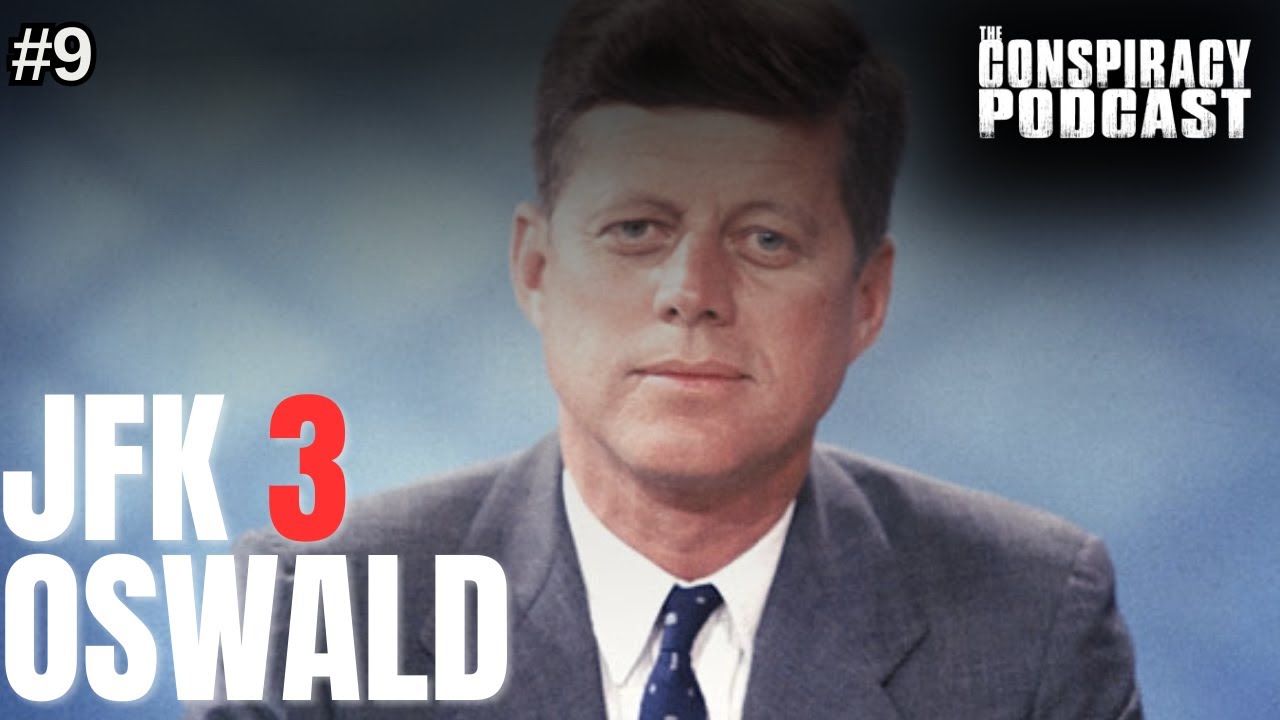
JFK Assassination: Lee Harvey Oswald Part 3 – Episode #9


JFK Assassination: Lee Harvey Oswald Part 3
This is part three of the guys’ five part series on the Kennedy assassination, and after two episodes spent inside the Warren Commission’s official account, Eric, Sean and Jorge shift to the man at the center of it: Lee Harvey Oswald. Oswald was born at the old French Hospital in New Orleans on October 18, 1939, two months after his father died of a heart attack, and the hosts trace a genuinely unstable childhood from there, 22 different homes and 12 different schools by age 15. He scored 103 on an IQ test in fourth grade, and at 12, during a stay in New York, he was sent for psychiatric evaluation at a juvenile reformatory after allegedly threatening his mother and his half brother’s wife with a pocketknife. The examining psychiatrist, Dr. Hartogs, described him as immersed in a vivid fantasy life built around power. By 15 Oswald was calling himself a socialist and writing to the Socialist Party of America, and the hosts read from his diary throughout the episode to track how his politics hardened over time.
Oswald quit high school after one month in tenth grade to enlist in the Marine Corps in October 1956, a week after turning 17. He trained as a radar operator, a role that required security clearance, and was stationed at Atsugi in Japan. He qualified as a sharpshooter in December 1956 with a score of 212, though by 1959 his score had dropped enough to be reclassified as a marksman. He was court martialed twice, once for accidentally shooting himself in the elbow with an unauthorized pistol, and again for fighting with the sergeant who punished him for it. He also taught himself Russian, testing at a poor proficiency level on a 1959 Marine exam, and received a hardship discharge that September by claiming his mother needed care.
Weeks later he defected to the Soviet Union. When Soviet officials refused his citizenship application in October 1959, Oswald cut his wrist in a Moscow hotel bathtub, an act his diary says was meant to shock. He was placed under psychiatric observation, then relocated to Minsk with a government subsidized apartment and factory work, a standard of living the hosts note was debated by conspiracy theorists as unusually generous. He met Marina in March 1961 and married her within six weeks, and by early 1962 his diary shows him souring on Soviet life, writing that he had had enough. The family, now including a newborn daughter, returned to the United States in June 1962 with a $435 repatriation loan from the US Embassy.
The episode’s biggest reveal is one the hosts say most people never hear about: an alleged assassination attempt on retired Army Major General Edwin Walker, a prominent anti-communist, six months before Kennedy was killed. On April 10, 1963, someone fired a single shot at Walker through a window from roughly 120 feet away using a mail order Mannlicher-Carcano rifle, the same model later tied to the Kennedy shooting, bought under the alias A. Hidell. The bullet was deflected by the window frame and Walker was only grazed by fragments. Dallas police found no suspects at the time, and Oswald only became a suspect after a note he had left for Marina turned up following the JFK assassination. The Warren Commission and the later House Select Committee on Assassinations both concluded Oswald was responsible, though he was never charged in the Walker case. The hosts spend real time debating the shot itself, disagreeing on how difficult it actually was and finding it more than a little convenient that the case against Oswald firmed up only after Kennedy was dead.
From there the timeline moves fast. In New Orleans that summer Oswald formed a one man chapter of the pro Castro Fair Play for Cuba Committee, printing membership cards for a group that never had more than himself, and was arrested in August 1963 after a street scuffle while handing out leaflets. In September he traveled to Mexico City seeking transit visas to Cuba and back to the Soviet Union, was turned away by both consulates, and the hosts flag that the House Select Committee later investigated whether someone impersonating Oswald had also shown up at those embassies. Back in Dallas, he was hired at the Texas School Book Depository in mid October 1963 for $1.25 an hour, commuting on weekends to see Marina and their daughters at Ruth Paine’s house in Irving. On the morning of November 22, he left Marina $170 and his wedding ring, and carried a large paper bag to work that he told a coworker held curtain rods, a bag the Warren Commission later concluded held the rifle. Multiple coworkers placed him on the first and sixth floors of the building in the roughly 35 minutes before the shooting. The hosts close by admitting they still cannot say what Oswald’s real motive was, only that his life reads like a pattern of a man chasing validation and grasping for a place in history, setting up the theories they promise to dig into next episode.
- Lee Harvey Oswald was born at the old French Hospital in New Orleans on October 18, 1939, two months after his father died of a heart attack.
- Oswald enlisted in the Marine Corps in October 1956, trained as a radar operator requiring security clearance, and was rated a sharpshooter in December 1956 before dropping to marksman by 1959.
- Oswald defected to the Soviet Union in October 1959, attempted to renounce his citizenship, and cut his wrist in a Moscow hotel bathtub after his citizenship application was refused.
- On April 10, 1963, someone fired a shot at retired Army Major General Edwin Walker’s home from about 120 feet using a Mannlicher-Carcano rifle purchased under the alias A. Hidell, the same rifle model later tied to the Kennedy assassination.
- Oswald formed a one man New Orleans chapter of the pro Fidel Castro Fair Play for Cuba Committee and was arrested in August 1963 after a street disturbance while distributing leaflets.
- Oswald was hired at the Texas School Book Depository in mid October 1963 for $1.25 an hour, and coworkers placed him on the building’s first and sixth floors in the roughly 35 minutes before the assassination.
Read the full transcript
All right, hey everybody, this is Eric, Sean, Jge, we’re back. This is all about Lee Harvey Oswald, the man, the myth, the [bleep]. Yeah. And so in our last, last episodes we were all talking about it was all the Warren Commission, uh, it was the entire report, everything they went, like the official story of the JFK situation. And now we pretty much establish as Lee Harvey Oswalt, according, according to the, yeah, according to the the government. So we, we can’t go, like we can’t go on without diving into Lee Harvey Oswal. He’s, well obviously he’s like the, like besides JFK he’s like, he’s the protagonist antagonist of this entire thing.
Like yeah, that’s right. So according to the government? Yeah, exactly, according to the government. Okay, so Lee Harvey Oswald, Lee Harvey Oswald was born at the old French Hospital in New Orleans, New Orleans, New Orleans, on October 18th, 1939. His father died of a heart attack 2 months before Lee was born. Is that why they call him Lee Harvey Oswal instead of just [bleep] Lee Oswald? Jesus, leave the middle name out. That’s true, I hate middle names, I hate my middle name. Actually, what’s your middle name? What is your middle name? Luis. Luis, Luis. Do you have two middle names or just one, Sean? What’s your, you got two middle names and you got two last names?
So what, give me your full, you have four names? No, no, no, no, I got two names. Yeah, first and middle, and then you get two last names. In, in Mexico you, you take the mom and the dad’s last name. Oh, how progressive. Wow. All right, I was named after a, uh, 80s comedy, uh, I was named after a Nolla guy. No, oh really. He, all right, all right. So his father died of a heart attack two months before he was born, so Lee Harvey never had a dad. Okay, s right, Lee’s older brother Robert Jr. was also a former Marine, in 1944. So that was 1939, that’s when he was born.
You said also, so his dad was a Marine? Or you’re talking about, no, also is Lee, was LE for Lee, Marine in 1944. Lee’s mother, Margarite, she moved the family from New Orleans to Dallas. Oswald entered the first grade in 1945, and over the next half dozen years attended several different schools in Dallas through the sixth grade. Oswell took an IQ test in the fourth grade and scored 103, in the fourth grade, fourth grade, but that’s pretty good, that’s not bad. I scored, I scored 167. I was in the [bleep] fourth grade. I know, it’s true. I was, me scored like 103, last I was meant toif 167 in the fourth.
Yeah, no, like offbeat [bleep]. Straight up, ask my mom, it’s her [bleep] claim to fame, she literally, this, she tells every [bleep] this [bleep], she, I think she’s got it saved cuz she was like, there’s no way he’s this smart, it’s believable smart. Once I’ve never scored at 167, even as an adult. No, same. Well trust me, the Michas have shaved that number way down. Did you just, did you just do the left side circles? I was like, I was like, ABC, ABC, ABC. Smart man, you deserve it, I hack the system. So as a child, Oswald was described as withdrawn and temperamental by several people who knew him.
When he was 12, in ’52, his mother took him to New York where they lived a short time with the half brother John. Oswald and his mother were later asked to leave after an argument in which Oswald allegedly struck his mother and threatened Jon’s wife, damn, with a pocketknife, and he was 12. That’s pretty savage, gangster. So then Oswal attended seventh grade in the Bronx, but perect, and this is, this is just part of this information, but was tardy, difficult, was submitted to a psychiatric assessment at juvenile Reformatory. The psy, PS, iatrist, which was Dr. Harthog, described Oswald as immersed in a vivid fantasy life, turning around the topics of power and you know, things like that, so through which Oswald tried to compensate for his present shortcommings and frustrations, and that’s from Dr.
Harthog. Yeah, cuz every psychiatrist is [bleep] German, super, like it doesn’t really tell us anything, like that statement by the psy. It seems like it was his own, like personal, like outside of professional opinion. He’s like, hate this [bleep], like he, like listen to the sentence, tries to compensate for his present shortcomings and frustrations. They, they drive like a big Dodge Ram or something, like I don’t know how that helps. Yeah, trck, I think we all try to compensate for our present shortcoming, dude. I do that all the time. How do you think I got through life so far? So when Lee returned to school in ’53, his disciplinary problems continued.
When Oswald failed to cooporate with school authorities, they sought a court order to remove him from his mom’s care so he could be placed in a home for boys that could complete his education. Damn, this is like almost like a, it’s almost like a weird offshoot of Good Fellas. Yeah, I’m not going to school. Uh, this was postponed partially because his behavior improved. So before New York family court system could address their case, the Oswalds left New York in ’54 and returned to Newor Orleans. So Oswell then completed e8th and nth grade in New Orleans. He entered the 10th grade in 1955, but quit after one month.
Damn. After leaving school, Oswald worked for several months as an office clerk and messenger in New Orleans. Oh, that’s before child labor laws exist, crazy. So he didn’t, he, he didn’t finish, he’s what, like 16? You’re right, okay, 16, that’s good point. Good, yeah, but he never finished high school, is the point. Yeah, not like us. But is, heyy, speak for yourself, check the credentials, the theed, the credits didn’t get transferred. [Laughter] Over. So in ’56, Oswald’s mom moved the family to Fort Worth. Oswald re-enrolled in 10th grade for September in Arlington Heights High School in Fort Worth. A few weeks later, in October, Oswald quit school at the age of 17 to join the Marines.
I mean, this guy, this is a lot of flippy floppy, Texas, New Orleans, Texas again, all over the place. So Lee Harvey never got a diploma, but he got a rifle, by this, by the Marines. Wait, do, do you need that to get into the military? Marines? No, oh [bleep], no, they don’t give a [bleep]. I thought you needed that, or G, or [bleep]. Hell no, you might need it to advance further, as like a career. True, you know, like you know, yeah. But like the whole, like to serve, they’re like [bleep] it, but just, I’ll take anybody. Well, come on, come on, but just to summarize, so Oswald resided at 22 different homes, that’s a lot, 22, and attended 12 different schools.
That was by the time he was 15. I see Eric is trying to set the table here. I’m just saying, like, like, like disturb, dist. So by the age of 15, he considered himself actually a socialist. So in his diary, and there is a, there is a diary, he’s, says, and I quote, I was looking for a key to my environment, and then I discovered socialist literature. I had to dig for my books in the back dusty shelves of libraries, book depositories. And, oh gosh, at 16 he wrote to the Socialist Party in America for information on their young people’s socialist league, saying he had been studying socialist principles for well over 15 months.
I love how, how the [bleep] was that the key, like that? Okay, continue please, I just, ridiculous. So Edward Vble, whom the Warren Commission had established was Oswald’s closest friend in his teenage years, reports that Oswald was already studying communism, was a lot of baloney. Fobel said that Oswald commonly read paperback trash, whatever that, like poros was, he like Playboy. So as a teenager, in ’55, Oswald became a cadet member of the civil, Civil Air Patrol in New Orleans, M, fellow cadets variously recalled him attending meetings three or four times. Oswald enlisted in the, in the Marine Corps on October 24th, ’56, just a week after his 17th birthday, because of his age his brother Robert Jr.
was required to sign as a legal guardian. Oswald also named his mom and his half brother John as beneficiaries. Beneficiaries to what? He’s 17 years old, he [bleep] owns nothing, no money. Yeah, Oswald idolized his brother, his older brother Robert Jr., and wore his Marine Corp ring, um, and his half brother testified to the Warring Commission that Oswald’s enlistment was motivated by wanting to get from out and under the yoke of oppression from my mother. So his brother testified to the Warring Commission saying that’s why he joined the Marines, to get out of the oppression from his mother. That’s right, she keeps shitty food, I got to get out of here, she won’t let me go to the movies, she’s my girlfriend, let me bring her home, mom.
So Oswal’s enlistment papers said that he was 5 fo8 and he weighed 135 lbs. So this guy’s like a [bleep], this a limp, limp wet rag. Uh, hazel eyes, brown hairs, blah, blah, blah. His primary training was in radar operation, sounds, sounds good for 5 830 lb. Now this is very important, so he, his primary training was in radar operation, and it required security clearance. What security clearance is the big question. That’s true, that’s classified. Yeah, only, only the Lord commission knows. Yeah, so, uh, in ’57 a document stated that he was granted final clearance to handle classified matter up to and including confidential, after careful check of local records had disclosed no derogatory data.
Yeah, cuz you probably, like you could probably know, know where like planes are, where bases are and [bleep]. At Kler base in Mississippi, Oswald finished seventh in his class of 30 in aircraft control and warning operation courses. Not bad. Okay, obviously we did not require any physical, or or high school diploma. I mean, he’s 135 lb, it’s like, son. Yeah, it’s my right arm, seriously. It included instruction in aircraft surveillance and the use of radar. He was given the military occupational specialty of aviations electronics operator. On July 9th, he reported to the Marine Corps at El Toro in California. Oswald departed Then for Japan the following month, where he was assigned to Marine Air Control Squadron 1 at Atsugi near Tokyo.
Cool, what a dope place, I would have Lov to go there. Oh yeah, so like all Marines, Oswald was trained and tested in shooting. Yeah, but not all Marines are good [bleep] shooters, bro. Not all snipers, they’re not all, they’re all Chris Kyle. American [bleep] Jesus, the guy was [bleep] 130 PB, I’m surprised he can even hold a rifle. So in December of ’56, he scored a 212, which means nothing to me, which was slightly above, no, this, I guess it’s a, it’s a shooting score. Yeah, it’s a shooting score, which was slightly above the requirements that were designated for you to be determined as a sharpshooter.
Seriously, this is in the 50s, bro, they don’t know [bleep]. Yeah, so Oswald was, per the Marines, a sharpo, sharp shoo. Okay, but that’s like saying, like I, I scored on my driving toest slightly above that to be a Formula 1 driver. I know, but if we were to look at it from this perspective, what would I score right now, a zero? Yes. What would you score right now, like a 15? A, yeah, what would you score right now, 100? Okay good. So Oswald was, Oswald scored a 212, and he’s now designated by the Marines as a sharpshooter. Mhm, shooting, shooting non-moving targets. So three years later, just as another thing, three years later, he scored a 191.
Mhm. Yep, so a 191, he was reduced from the certification of Sharpshooter to Marksman. Yeah, cuz like everybody gets lucky sometimes. I mean, that’s still pretty good. Yeah, pretty, pretty, considering, right? Yeah, pretty good. I would like to know what that techn, what that means in the Marine’s eyes, like what does that mean, you can do. True, like being a marksman and being a sharpshooter, what does that mean that you you’re capable of, in their eyes? What if, if you’re a sharpshooter, I mean, you at least got some very good aim, I mean maybe you’re not a sniper but like, you know, yeah, you’re above average, for sure, at least according to the Marines.
Like, okay, we got to take it, you know, take the truth from, well, because obviously in order to be a sniper, you’re actually doing like physics calculations, right? Like you’re [bleep] calculating like wind, air res, like all that [bleep], to the left, and like, we’re going to do a little pause here, we’re going to do a little pause here, because uh, Jorge went to Dallas, yeah, like, like a week ago, a week or two, two weeks ago, and he did go to the depository. Yes. Um, I had to find out what the [bleep] Book Depository is, he went, he went, he did the tour, there’s a picture of him on the X, he ran out into the street and took a little canned shot.
I went there, I still have not been there. So Sean’s the only one who has no real life experience here, so all my opinions, literally, my question is, my question here, here is, so you were standing there? Yeah, they have, you have the window, yeah, exactly, they have the window like, you know, blocked off, so can’t get, obviously right to the window, but you could definitely see it, maybe I don’t know, 10 ft away, something like that. Yeah, and they got, they still have the boxes like, uh, set up just how supposedly how it was, you know, back then. And did you go to the other floor where you were able to see the view of the shot?
Well, you could see it from that floor, it’s just that you’re like maybe two windows to the right of it, cuz he was, he was in the cor window, um, but so you can still see kind of like the view that he had, and I mean, looking down, that tree is still there, that one tree, the same, the oak or Elm or whatever. Yeah, and it’s definitely in the way, man, like really [bleep] right. Was it pruned, it was a bab expert treein, are you asking me, are you expecting me to be a landscaping, cuz I’m, you’re Mexican, so what would you say, was rude.
Here we go. No, but like, like do you think the shot was hard? It was definitely hard, really, definitely hard, especially, I had a different experience, had preconceived notions when you went, sh, one shot, I, I can see, um, and I didn’t have the exact view cuz like I said I was off to the right. Yeah, but multiple shots from there, and then, and then, like you know, we get into it of like under 6 seconds or whatever. Okay, so remove the tree, let’s say the tree was, the tree was not there, let’s say the truth was not there, was the distance and remove the time factor.
Yes. Perfect angle, distance was not far, not far, it’s not really, and especially you got that vantage point from, you know, the six, right? Yeah. Okay, so, okay, we’ll get into this later, I have a lot to say, I’m going hold my Tong, curi. They also have the rifle there, man. Yeah, the Caro, Caro, yeah, I forgot the name, but that one, and it’s definitely not like an easy, it’s a bolt action, like I, I think we went over this in the beginning, and it doesn’t look like something you can easily shoot multiple shots in 6 seconds like they said, especially while keeping like maintaining like hyper accuracy.
Yeah, exactly. Well, I mean, he is a marksman. Well yeah, a downed, shoo, uh, Sharpshooter, previous marks, a former Sharpshooter. All right, all right, good stuff, I was just trying to, I was trying to like, what you thought like when you were there in person, you know what I mean, was it easy? I don’t know, like cuz when I, before I went there, I was, oh, it was super far, only a sniper could do it, and then I got there and I was like, it, it’s not that far. Yeah, it’s not that far of a shot. Yeah, I just got to, like just for my personal opinion, because I’ve shot Mania rifles and I’ve shot good rifles, and I shot bad rifles.
Mh. There’s so much that goes into it. Yeah, like even to shooting at 50 yards, which is not terribly far, like if your sights are off, like you’re [bleep] way off, like your shit’s not dialed in. Well, it’s right in the crosshairs, but I’m hitting like the [bleep] sand. No, that’s true. So there’s a lot, and then you add the moving element to it. Yeah, the moving element, which is infinitely more hard. Jesus. Then you got the obstruction of the tree, so yeah, so just saying, but a lot of factors, to answer your question, like, does it look, it definitely looks like it doable, let’s say, not, not easy, not easy, but like doable, doable.
Yeah, it’s not like, you know, how we kind of thought where it was like super far away, thread the needle, you need one of those rifles in like Mark Wallberg Shooter movie, 50 cal, like [bleep] bullets are heated up and [bleep], right. Okay, well so after 1959, uh, this is a funny story is, Oswald was court marshal because he accidentally shot himself in the elbow with a 22, [bleep] Sharpshooter, literally. I don’t know how you accidentally shoot yourself with a 22. Dam, it, it reminds me of like, what’s that guy in the Eminem movie, like shoots himself in the in the thigh or whatever. Oh yeah, shoots himself in the, yeah, the, what movie it’s, in the8 Mile, he shoots, he’s like putting the gun and shoots himself in the leg.
So like, give, describe a 22, describe a 22, it’s a handgun. Well, it can be handgun or rifle, but the bullet’s very small, this is a handgun, so it’s a, yeah, it’s a 22, it’s very low recoil, and the thing is like, like a BB gun. Yeah, like a BB gun, that it’s the smallest kind, of the smallest caliber, no recoil, it’s just kind of, you train your kids to shoot with the [bleep] 22. I got it, okay, but my thing is why was he, he got court marshal for shooting himself on accent? Yeah, he, yeah, weird, yeah, actually, but there’s not a lot of information about that afterwards.
But then he was court marshaled again, how can you be court marshal twice? So yeah, he was court marshall again for fighting with a sergeant who he thought was responsible for the punishment of the shooting. So he got court marshaled for shooting himself in the elbow, and then the sergeant who punished him in the court marshal, he got into a fight with him. So then he got court marshaled again for the fight with the sergeant. So it’s like not only dishon, discharge, but like super dishonor. So he was then, he was demoted, he was demoted to, uh, from private first class to private, uh, and then he was imprisoned for a little bit, a tiny bit.
What’s under private, just like loser? Okay, so then, uh, he was punished for another incident, so he was on a night time duty in the Philippines and he little lady boys, all it says is he inexplicably fired his rifle into the jungle, so after like a few drinks, like honestly, that sounds exactly like, that sounds exactly right, 100%. He like [bleep], I can hit that tree over there, which one, you’ll find out, he had like six or seven Philippin, or hold my beer, like watch this. I’m, that sound racist. No, like he found, he had like six or seven like Filipino beers, and then just started firing, some like ting tows, and he was like, so there you go, uh, so this guy’s a [bleep], this guy’s [bleep] all sorts of things.
So he was nicknamed the Aussie rabbit, cuz he was super tiny and he looked like a cartoon character, and he loved Russia or Soviet, so he was also called Asovic, you know, that was another nickname. In ’58 he was transferred back to Altaro in California, but there, the, you know, an officer is on record saying that he was very competent and brighter than most, so he did better, he did better there. Sterling 103. Like yeah, so in ’59, when he Was in the Marines, he taught himself basic Russian, that’s, that’s hard to do, Russian’s difficult as [bleep]. Yeah, so in ’59, in February, he was invited to take a Marine proficiency exam in written and spoken Russian, his level at the time, after the test, was poor.
But poor is better than than zero, was like not efficient or like not able. Yeah, to some degree, uh, though he fared rather reasonably for a Marine private at the time, in the reading and the writing. So in September of ’59 he received a hardship discharge from active service claiming that his mother needed care, the mother that he hated, clearly they had to get away from. So at that point he was placed on the United States Marine Corps Reserve, so he was now in the reserves. Yeah, so in October of ’59 he traveled to the Soviet Union, here’s where things get sticky with his poor aptitude for Russian.
So Oswal traveled to the Soviet Union just before, before he turned 20, in the later part of of 1959. He saved 1,500 bucks from his salary in the Marine Corps, and he spent 2 days with his mom in Fort Worth, then they embarked by ship on September 20th from New Orleans to France on the Titanic. How long was that, probably a long time, like a month. Oh yeah, probably. And then he immediately traveled to the UK, and then he arrived in Southampton in October 9th. Do we know why he went? Does it say there why he went to the Soviet Union? Cuz he he Lov him, that nobody knows, that’s part of the problem, it’s like, like, mean, part of the conspiracy, part of, yeah, like we don’t like, why, yeah, you’re right, like why the [bleep] did he go there?
Like well, well, he was clearly, he clearly liked socialism, socialism, and you know what’s the world hub of that? Yeah, [bleep] USSR. But socialism is not communism, it’s extraordinarily similar, bro. It’s like, oh dude, are you kidding me, it’s, it’s very simar principles, you have, correct me if I’m wrong, democracy, you have socialism, and then you have communism, communis in the middle, communism is radical socialism, that’s really what it is, radical, it’s radical socialism, but the state owns everything. So instead of, instead of like in socialism, or communism, in communism, so communis, socialism is like, okay, everyone is is is equal and even, and everyone gets everything the same.
Yeah, so radical socialism, which is communism, is where the state owns everything and you are just a subset of the state, and the state will allocate everything to you, the same principle of like you’re all quote unquote equal, but the state’s like God, and so like, if you’re, if you run, if you’re in like, you really have rights too, oh dude, they [bleep] you, dis, disappear, look, look at China bro, exactly, China, China’s [bleep] classic example, the state will literally absorb your company, and they, oh, you got patents, sorry, it’s our company now. Cuba is another one, like what do you want to do, and if you, if you talk [bleep] like Jack Ma did, you [bleep] disappear here for a month, he’s like the, he’s like the one of the top 20 richest people in the world, he like vanished for a month and he came back like, I’m sorry, I didn’t mean to say anything.
Yeah, Jack Ma is the Alibaba, CEO of Alibaba, he worth like [bleep] $50 billion, probably more, dude, he’s worth so much money. Okay, so he arrived in Southampton October 9th, right, of ’59, and he told officials at that time that he had $700 and he planned to stay for one week, but before proceeding to a school that was in Switzerland, on that same day he flew to Helsinki, where he checked in at the Hotel Torney in room 309, we all know this, 309, comm, and then he moved to Hotel CL, C, and he was actually issued a Soviet visa on October 14th. All right, okay, so Oswald left Helsinki by train the next day, he crossed the border at a town that I can’t pronounce, Vincula, he he crossed the Soviet border of Vula, Vula, Vula, and arrived in Moscow on October 16th, his visa, valid only for a week, was due to expire on the 21st.
I just got to say something really quick, what a [bleep] piece of [bleep] that he gets discharged cuz his mother’s not doing well, he’ll s for two days, is like, all right, I’m going out of vac, I’m out of here. So almost immediately after arriving, Oswald informed his tourist guide, what, which quot, which is an interesting thing that I had to study on the side, which is, what is a tourist guide? I have no idea, like they don’t have that now. No, that’s what you’re, what your phone is for. What do you mean, like so back then they would have, you would hire somebody. Uncommon, really?
I have the [bleep] guide, like you could, everybody, like I don’t know, it just seems common to me, like you would hire somebody, show me all this, when, name one time you have had a tourist guy. Never, never. That’s common as [bleep], and you’re, you’re hella rich, especially, compar, H, right, but especially back then, you don’t have iPhone, you don’t have Google Maps, this is in the 50s. Yeah, you don’t even have maps, that’s, yeah, you don’t have Thomas Guide, that dates me, nice drop, nice, nice drop there. Yeah, this podcast sponsored by Thomas, dude, oh my God, we should bring back Thomas on the come up.
Yeah, to the corporate entities that own Thomas Guide, please contact us at infothe conspiracy podcast, we would love to sponsor the Thomas Guide, the Thomas Guide, we feel like it’s coming back, the digital version. Oswald informed his tourist guide of his desire to become a Soviet citizen, meanwhile he’s still in the reserves, [bleep] co. So when asked why, by Soviet officials he encountered, all of whom by Oswal’s account found his wish incomprehensible, he said that he was a communist and gave what he described in his diary as vague answers about this, the great Soviet Union. On October 21st, the day his visa was due to expire, he was told that his citizenship application had been refused.
He had to leave Soviet Union that evening, he was distraught, so Oswald inflicted a minor but bloody wound to his left wrist in his bathtub, and this was right before the, the in tourist guide was due to to escort him out of the country. I love, I’m sorry, I love how he lit, in his diary he’s like, I gave him fake answers, idiots, why would you, what, like what’s the point of writing that down. So basically he was refused citizenship, then be, the the day he was to be escorted out of the country he tried to slid his wrist with like a bck razor, it’s like a little cut.
He’s like [bleep], yeah, in a bathtub. H, uh, and he, in his diary he says he wished to kill himself in a way that would shock, okay, he shocked himself by how [bleep] how feeble he was trying to kill himself. So because he did that, because he did that, his departure was was delayed, and the Soviets then placed him under psychiatric observation until the 208th of October, so it’s another week. He’s like, yeah, you got to extend my passport now, [bleep] got him bag answers. According to Oswald, he met four Soviet officials in Minsk who asked if he wanted to return to the US. Oswal replied by insisting that he wanted to live in the Soviet Union as a Soviet national.
When press for ID papers, he provided his Marine Corps discharge papers. Interesting, I know, they’re like, okay, yeah, I know. So I told you we were going deep into like, this is the the play byplay of Oswalt and his like, you know, and also most people don’t know this [bleep]. Y, absolutely. So on, on Halloween night, October 31st, Oswald appeared at the US Embassy in Moscow and declared his desire to renounce US citizenship, and he was dressed as a Kalishnikov, he was dressed as AK-47. So he said, and I quote, he said, I have made up my mind, I’m through. He told the US interviewing officer that he had been a radar operator in the Marine Corps and that he had voluntarily stated to unnamed Soviet officials that as a Soviet citizen, which he never got, MH, he would make known to them such information concerning the Marine Corps and his specialties that he possessed.
And how do we know this, again, because of the diary, or this is, this is based on the, uh, oh, this from the embassy, the US, from the US Embassy, it’s on record, I think it’s a Richard Snider, US Embassy interviewing person. Yeah, and he said he had been a radar operator in the Marine Corps, and then he voluntarily stated to to Soviet officials that as a Soviet citizen, he would make known to them such information concerning the Marine Corps and his specialty that he possessed. Gotcha. He said he intimidated that he would, he might know something special of interest, like he kept saying, I’m, I know the [bleep], I know all the things this guy didn’t know [bleep], he was, was all using it, he was trying to get citizenship.
Yeah, of course, I got the juice, I got the juice, I got the tea. Yeah, I got the tea, I got the baby, te’s hot. So such statements led to OS was hardship and honorable military discharge from being changed to undesirable, like he was determined as undesirable. Well yeah, I mean obviously he’s now, he’s like a traitor. Well yeah, I’m surprised the guy at the embassy didn’t just like [bleep] shoot him in the head right there. Then Oswald received a government subsidized apartment, in a really nice apartment building, see it’s really easy when the state owns everything, right? No actually, like they L, like here, it’s ours now, here’s the argument, right, so some people, conspiracy theorists, say okay, so now he was given an apartment by the Russian government, and they don’t give the, they don’t [bleep] care about anybody.
Yes, so so they’re taking care of him. Yeah, so there’s the, that, there is that, like why was he, why was that happen, but at the same time I agree. Yeah, but at the same time, all it, all it is, is a government subsidized apartment for factory workers, and like, and like in hindsight, so did other factory workers get the same apartment? Correct. I say like, but maybe the apartment sucked a [bleep] apartment, like, exactly, it’s like [bleep] there, like, r, we don’t really know, also because if like we’re in a democratic system, so we don’t know, or at least I don’t know, like, like maybe they do that a lot, maybe they do, I, where they go, okay, this factory needs to be supported, we’re the government, and here or over there, what you talking, over there, like, like they do, because here’s the apartment building, factory A, it’s communism, right, so maybe they have to inject assistance into, well, in order to make you slaves, they need, going to keep you alive, look at a factory, you don’t make that much money, so then they’re like, okay, let’s keep them happy with an apartment, we’ll give you [bleep] one Rubble an hour, and we’ll give you an apartment though.
So this apartment was fully furnished, uh, in in in addition to that, they supplemented his factory pay, so at the time it was said that he had a comfortable standard of living in in Russia, which which is like, you’re [bleep] dead here though, they were under a lot of surveillance and like, like, oh, I bet you, know, you check in, clock in, clock out, like that whole thing. Yeah, yeah, okay, so from mid ’60 to ’61, Oswald was in a relationship with somebody named Ella, they ate together in the factory cafeteria every day, they dated a couple times a week, um, she later described Oswald as a pleasant looking guy with a good sense of humor, not as rough and rude as men here were back then, now she says she did not love him, but thought he was lonely and continued to date him out of pity.
Dude, savage, super savage, holy [bleep], she was like, I was bone on his supervisor, but I would feel bad for, I would hate that any of my past girlfriends dated me out of pity, I felt bad, he, sorry and pathetic. So uh, their relationship became more serious in Oswal’s eyes during the summer and fall of ’60, but it be began to deteriorate after she left, or, or she learned in October that Oswald was seeing other women, so he was on the sly side, okay, they was playing, he was using the pity card. Yeah, he he was on the s side, so on January 2nd, ’61, Oswald proposed to her, she declined.
Yeah, okay, so in January ’61, which is right after that, this woman declined his proposal, in his diary Oswald wrote, I am starting to reconsider my desire about staying, the work is drab, the money I get has nowhere to be spent, there’s no nightclubs, bowling alleys, no places of recreation except the trade union dances, I have had enough. There’s no strip clubs like in America. I’m going back, I’ve been looking for a titty for 2 years, can’t find one. So that’s word for word in his diary, right, he says he’s, he’s like, he’s like done with Russia and done with the propaganda, was so good, got me hooked, and then, then I get here, it’s trash.
So shortly afterwards, Oswald, who never, never formally renounced his US citizenship, wrote to the Embassy of the US and Moscow request the return of his American passport and proposing to return to the US if any charges would be dropped against him, and he’s like, hey, like, you know, take backs, I didn’t mean it. So now we’re going to little fast forward a little bit, so here we are in March of 1961, okay, Oswald meets a woman named Marina. Marina, are we back in the US? No, not yet, okay, so Marina is who he would end up marrying, Marina is right, the woman, the, the Oswal kids with too, right?
Yeah, that’s right. Yeah, so he met her in March of ’91, she was 19 years old, she was a pharmacology student, uh, they married within six weeks. Damn. Yeah, that’s fast. Y, the Oswal’s first child, June, was born on February 15th, so he met her of ’62, so he met her in March and then they had a, they were married within six weeks, they had a baby, uh, March the following year. So maybe she, she was knocked, knocked up. That’s what I was thinking, I was like, when did they have the baby, a year later, uh, February of, so February ’62. No that makes sense.
Yeah, 10 months. Yeah, oh there you go, boom, truth, [bleep] prago. On May 24th, 1962, Oswald the Marina applied at the US Embassy in Moscow for documents that enabled her to immigrate to the US. On June 1st, the US Embassy gave Oswald loan of sorts for $435. Dude, okay, this is crazy, this guy’s life is like, it’s like a Naked Gun movie, it just, he’s been like, that’s why we wanted to go into like all the the history, been court marshal twice, went to prison, like what the. Okay, so on June 1st the US Embassy gave Oswald a repatriation loan of $435, so a repatriation loan is to essentially get you back into the states, into the states, there you go.
So Oswald, Marina, and their infant daughter left for the United States, where they received less attention from the press than Oswald expected. So Oswald expected it to be like a coming home party, coming home, like a [bleep] parade, that’s right, what an idiot, and I got my full hundo. You knows, seems like a, it seems like a theme though, with Oswald right, like where he thinks, yeah, something should be like, he should be given more, he, he delusions of grandeur, like he thought the Soviet Union was going to be like this glorious [bleep] Mecca, and it’s like a [bleep] show. Yeah, right, so so the Oswald settled in Dallas Fort Worth, where Lee’s mother and brother lived, Lee began a manuscript on Soviet life, so he was starting to write about what it was like to live in the Soviet, this guy desperate for validation, of which he gave up on that project, so that never came to light.
I worked in a factory, and like you know, I had like a chick, she’s like pity boning me, the end, the end. Oswald found an unlikely friend in 51-year-old Russian George de Monas SC, uh, he’s a well educated petroleum geologist with like business connections internationally, he he was a native of Russia, he later told the Warren Commission that Oswald had a remarkable fluency in Russian. Oh, I thought it was poor. Which, yeah, but he was there, he was there for a couple years, so maybe it got better. Maybe it got better, but it does contradict everything. Yeah, that that we went over, it was remarkable.
Yeah, so in July of 1962, so this we’re in now ’62, right, July ’62, Oswald was hired by the Lesle Wielding Company in Dallas, but he quit within 3 months. This guy cannot complete thing, like my God, he went to school 78 times, [bleep] so many jobs that he quit or got fired, etc, you know, it’s just a never ending thing. So on October 12th, he started working for the graphic arts firm Jagar Chile Stoal as a photo print trainee, a fellow employee there testified that Oswald’s rudeness at his new job was such that fights threatened to break out, and and that he once saw Oswald reading a Russian language publication, he was fired in April of ‘ 63, so he was there for couple months, 10 months, October to April, yeah, so eight months, something like that.
So okay, good, so now we’re in April of 1963, this is the year that Kennedy was killed. Yes right. Okay, good, so now we come to the Edwin Walker assassination attempt. Oh my, yes, this is where not, not many people know this story, where that Oswal tried to assassinate somebody and failed months before. Yes, months before. So Oswal, in the in a newspaper, he bought a Carono rifle, he spent $19.95, so was like on the on the on the cheap for secondhand rifle, which is out of a newspaper, which is probably automatically just 10 times shittier than it would be standard. So in March of 1963, Oswald used the alias, remember the alias, a hell, oh that’s right man, right, and he made a mailorder purchase of a secondhand 6 and half MIM caliber Carono rifle for 1995, in addition to that, he purchased a 38 Smith and Wesson revolver, much more reliable than the Carana.
Yeah, and that’s the one that was used to kill Tippet. Yeah, kill the cop, that’s right. Okay, so he ordered those two items, so he ordered the um Carana rifle, and then he ordered the Smith and Wesson, from his [bleep] Macy’s Kettle 38. Yeah, basically, Jesus, all under the name a hell, yeah, cuz he was trying to be sneaky, he was trying to be, you sure that like the lady in Callum, like what’s the [bleep] a stand for, okay, sir, and then if you remember, that was also the name on his ID, right, when they found him in the, that’s right, but was it like Aell, was it like Albert or like, what the [bleep] did it say, I think it was Alex, oh okay, Alex, Idel, Alexander, I think, so I could be wrong on that one.
Um, but so for weeks Oswald carefully plotted out how he was going to kill Walker, Oswell staked out the narrow alleyway behind the Walker’s house and found a perfect vantage point behind a 5-foot picket fence, yeah, because he’s obviously short AF, yeah, they’ll never see me, 5 feet was his his maximum. He planned how, after the deed was done, he would ditch the rifle at some nearby railroad tracks, double back through a park and take the bus home. So on April 10th of 1963, which is April to November, so what, six months, yeah, six months before, uh, Kennedy was killed, Lee Harvey crouched behind a fence in the neighborhood, aimed his rifle at the window of a, uh, he’s an old, they call him an ultra conservative, named Edwin Walker, and he was a former US, um, Army general, now should we point out, and we’re Probably going to get into it later, but there was a picket fence about that height at the grassy null, at the grassy null.
Yeah, that’s true, nice, nice call, Jorge. I don’t know what that means, right, but but but confusing, I think it, you should know, I think it mean clones were involved. Hitler was there. Hitler killed you. Hitler was there, yeah for sure. So on April 10th, 1963, Lee Harvey crouched behind the fence in the neighborhood, aimed his rifle at the window, and around 9:00, Oswald was positioned behind the fence outside of Walker’s house. He was super excited because he couldn’t believe his good fortune. While Walker was seated as at his desk doing his taxes, he was literally doing his taxes, his head was perfectly framed by the upstairs window, just 120 ft from Oswal’s rifle, which is not a far shot.
It’s not a far shot, 120 ft, that’s 40 yards. It’s like easy peasy, I, this story, this story might actually be like against Oswal’s ability to shoot, that’s what, that’s what I’m saying, like at a stationary target, not [bleep], at night, he’s sitting there doing his taxes. I know, and then back then it was clickity clack, clack, CL, he’s got his green visor on, why do they have those visors by the way? No, I actually, I looked this up cuz I had the same question, it’s the somehow the green would would help to alleviate the eyes cat from looking, no, just from looking at the the the fine print for so long, nowaday we got the Blue Block.
Yeah, it would help somehow counteract that. Wow, yeah, cuz I was like, why, it makes no [bleep] sense. Was it, is it [bleep] like, I never tried, I I can only speculate, that’s interesting. I have turbo my tax, I do wonder, I I’m going to get one just for my eyes, guess like Goodwill, eBay, that [bleep]. A Walker was seated at his desk doing his income taxes, his head was perfectly framed by the upstairs, 120 ft from the rifle. Oswald pulled, pulled the trigger, and a sharp crack exploded behind Walker’s head, at first Walker thought somebody, some neighborhood rascal had thrown a firecracker, window, neighborhood rascal, that’s what it says, I love it, it’s a rascal, I like Dennis the Menace, but so keep in mind that Walker, he’s like a soldier, like he, he shouldn’t, he should know when there’s, I would [bleep] general, yeah, like if I heard a po pop pop I wouldn’t actually know it was gunfire, probably I’ be like, oh, it’s a fireworks down at the, I think it’s more common that Eric be like, those damn rascals.
Yeah, but he’s like a soldier, so so at a certain point he realized he’s like, okay, something’s happening, so he grabbed his pistol, was the window open, to the glass in break, or was the window open, no the glass broke, that’s what he heard, right? No, I think a crack, no it was behind his head, yeah, it was behind [bleep], hit the wall behind his head, okay, yeah, then he realized what was happening, he grabbed his pistol, he ran outside, and which point he noticed blood started pulling on his shirt sleeve from his glass, so he he got a bit of a ricochet, like like some like particles of the, yeah, there was shrapnel from the broken window, oh so the window did break, yeah, so it was shot through the window, oh, so maybe his, maybe oh okay, maybe his his head was, his face was turning the other way, and he heard the crack of the glass behind, behind him, so I think you were right, right, yeah cuz I was thinking he’s like looking out the window, and it’s just like his head’s there, like a [bleep] watermelon, to shoot.
So Oswald fired, but the bullet cared off the window sill, so carum is like a ricochet, so it’s, it’s off the window sill, missed Walker’s head by an inch. The Dallas Police Department investigation came up cold, and Oswald was already flagged by the FBI, evaded additional scrutiny, why was he flagged by the FBI, did it say, because he was a, uh, a re, he was a traitor coming back, the thing is I don’t understand is like, if they knew that he did that, he didn’t get arrested for attempt to murder, well, they didn’t have enough evidence to, but they, or they didn’t investigate it further, but how do we know that he was the one who like, you see what I’m saying, like, yeah, [bleep] sharpshooter my ass, [bleep], [bleep], but they did determine that the bullet that they did find ended up being from a Man Licker Kurana, okay, which no one would buy, it’s the shittiest, L world, it was determined later on that that was the same weapon.
Yeah, that’s the photo you took, right, of that weapon, is, wasn’t it, wasn’t it pretty common for like, uh, hunting, is that what we talked about at the beginning, H, ras, so I mean, it’s all debatable. Yeah, you know what I mean, I’m just saying like, this is a, this is a really big deal, because I’m telling you guys, I could have hit, I could have hit general [bleep], what’s his tits, with a [bleep] sling shot, what was it, 120t, that’s 40 yards, bro, yeah, like that’s, you could have missed, that’s not a difficult shot by an inch, by an inch, but in not a head, is it’s, I had a hit in, I mean granted if you’re a sharpshooter, you probably would not miss, dud, if you’re a sharp, smoke backtracking here, he’s a marksman, sure, not quite a sharpshooter, yeah, just below sharpshooter, uh, but in a couple, I think it was a podcast or an Audi book that I had listened to, they, they, they talked about the window, that it went through, [bleep] up the trajectory of the bullet, you know what I mean, like the shot, yeah, the shot, like he had a direct shot and then the window went, yeah, but and like off an in, but have a deviation of an inch from from a glass, you know how we don’t know how far away he was from the from the window too, no he was like, uh, what, Walker, yeah, Walker’s name, Walker.
No, but still, if he was 2 feet from the window, 10t from the window, so depending on if, if he was, say he was 30 feet after the window, that’s what I’m saying, the deviation of, I just don’t think that, I just don’t think, so what happened is he hit the window sill, so that means his shot, he hit the window, it literally says it, it crammed off the [bleep] window sill, we’re going to go back to listen, we’re going to go back to this, guess, just hold on, it did say that, you’re right, Hwal fired but the bullet Ked off the window sill, yeah, so ricochet missed Walker’s head by an inch, yeah, so it hit the [bleep] window sill, that’s, see a window sill could, so he was way off, so the sill is completely different than the window, cuz it’s, cuz it’s wood, like so wood can definitely deviate a bullet, glass, glass is going to give you maybe a millimet, it’s not, it’s not really hard, and the bullet’s going so fast, it’s like it doesn’t give a [bleep] about glass, that’s very true, would though, that’s 100%, yeah, that’s very true.
All right, well so the the Dallas Police investigated it, and they they categorized the shooting as an assassination attempt, but their investigation turned up no suspects at the time. I see. So Oswell then retrieved his rifle, and he was likely super upset because he missed a shot that was so easy to to do. Literally, I’m telling you like, I mean this is all speculation, but it’s all assumed that he was pissed off that he messed it up, I could have made that shot with iron sights with a [bleep] 9 mil pistol, like come on. So later on the Warren Commission, so later on, like after like a year and a half or whatever, later the Warren Commission concluded that Oswald was the one who attempted to kill US Major General Walker, super convenient.
Mhm, sorry, and that he fired the exact same rifle, the Carano, um, 100 feet away, or 120 ft away, as he sat on his desk, the, uh, this is from the warrant commission, the bullet struck the window frame, as we, there we go, and Walker’s only injuries were bullet fragments to his forearm. Oh, so the bullet actually disin, like it actually broke up when it hit the wood, just fing, and the United States House Select Committee on Assassination stated that the evidence strongly suggested that he, Oswal, carried it out, so he was never like charged, and he was never like, you know, whatever, and this is later on, after the fact.
Yeah, that’s why I’m saying like that guy, this guy tried to ass or killed the president, so let’s just, I’m saying it’s a little, it’s a little, no it’s saying it’s just a little convenient that now they’re like, well the evidence strong, this just, yeah, I just say it’s a little convenient, I’m not saying that he didn’t do it, like he, he could have very well done it, I’m just saying is very convenient that after the fact they’re like, oh, of course. I, well of course. Yeah, so just a couple other things that like support that he did do it, you know, just, did he write in his diary, no, so like Major General [bleep], like General Walker was outspoken about anti-communism, segregation, uh, you know, uh, you know, just like everyone else in America.
Yeah, sorry, yeah, he was temporarily held in mental institution on orders from Robert F. Kennedy, who who was, Walker, General Walker was actually, yeah, oh wow, so there was a lot of turmoil between the Kennedy association or Kennedy administration and General Walker, uh, but then why would Oswal want to kill him, because he was very anti-communist, and very, and and JFK wasn’t, no, but it was just, this is just what happened. Okay, I’m sorry, I’m sorry, I’m like [bleep] picking everything, my bad. Yeah, so Marina, the white, she testified that her husband told her that he traveled by bus to General Walker’s house and he shot at Walker with His rifle.
She said that OS, Oswald considered Walker to be the leader of a fascist organization. Oh, that’s, okay, that makes sense why You’ want to kill him then. Yeah, so a note was left by Oswald for Marina on the night of the attempt, telling her what to do if he did not return, and this note was found 10 days after the Kennedy is assassination, not the Walker assassination. I see. Track, and and how long was it be between the Walker and the Kennedy assassination, like what’s the time frame there? April to November. Okay, so so left her, like she found it months later, just conveniently, after says, I just checked my side table and was happen to be a not there, I’ll be right back, let me let me go take care of this, dude, right now I got to go get, I got to go work at the book depos.
That part is weird, it’s a little, a, I found it at 6 months later. Yeah, you found a note, she was like, I was, I was dusting off the plates, my the china, and I found. But so so what’s interesting, so let’s just imagine that we are, Kennedy has not been killed, okay, okay, so we’re now, we’re in, I don’t know, may, say may ’63, Kenny is still killing the game, yeah, is hitting slay, yeah, we choose not to go to the moon because it’s hard, exactly. Dallas please had no suspects, really, you’re saying in May, or what, in May, yeah, in like, in before Kennedy assassination, right, right, right.
The assassination occurred, and then Oswal became the suspect because because of the note, I’m just telling you the timeline, so in May there was no suspects. Yeah, he was just like, Walker was shot at, yeah, and he’s like, [bleep] bleeding, but then no idea, but then after Kennedy got shot, then they’re likew, then Oswald was a, that’s [bleep] sketchy as [bleep]. It’s weird, that’s a little, like a conspiracy to me. Really smells like one. So he was a suspect, but well, it’s weird because it does talk about like, they didn’t have any legitimate suspects, but he was, he was, he was a person of interest, that’s, that’s what they call it, person of interest, but the problem was that the bullet was too damaged to run ballistics, but then they ran ballistics, they’re like, it came from the Carana, this is [bleep] madness, how the [bleep] did they determine that after 10 months, or like now, months lat, in six months, our ballistics have have really advanced, crazy, is especially since the bullet, the bullet exploded, like it’s very confusing, super confusing.
Although it is 60 years ago, 70 years ago, yeah, but in in 6 months. Lally just, yeah, logically, you’re like, okay, 6 months ago I couldn’t determine it, and now they’re like, even though the same situation, we, it together, the switch of samples, switch samp, Swit, fo, me twice, the, yeah, so there was this guy named George Did Mlit, welcome to New Orleans baby, and he testified that he knew that Oswald actually disliked Walker in regards to this [bleep] schit, [bleep], [bleep], [bleep] schit, and his wife Jean recalled an incident that occurred the weekend following the Walker assassination attempt, they testified that on April 14th, just before Easter, they were visiting the Oswalds at their new apartment, and they brought a toy Easter bunny to the GI of the child.
As Oswal’s wife Marina was showing Jean around the apartment, they discovered Oswell ‘s rifle standing upright leaning against the wall inside a closet, Jean told George that Oswald had a rifle, and George joked to Oswald, were you the one who took a pot shot at General Walker? When asked about Oswald’s reaction to this question, George told the Warren Commission that Oswald smiled, and when Moren schit wife Jean asked about Oswal’s reaction, she said, I didn’t notice anything, we started laughing our heads off, big joke, big George’s joke. Okay, real quick, I’m s, testified that was the last time she ever saw or heard everything about this, insane, like they randomly found it in a closet.
[bleep] Why you snooping through my closet, first off, why are you in my closet? Like they’re in the bedroom closet, what do we have here, a rifle stand, was that you that shot, that shot? No, you shot that shot, like I always shoot my shot, big sh, you a shot, big shot, it, what the [bleep]. Okay, so in April, Oswald returned to New Orleans, Marina’s friend Ruth Payne drove her by car from Dallas to join Oswald in New Orleans the following month. On May 10th, Oswald was hired by the Riley Coffee Company as a machinery greaser, that’s a [bleep] job, but he was fired in July because his work was not satisfactory, and because he started loitering in the garage that was next door.
This guy, dud, guy can’t hold a job for life, this guy is like a, a professional grifter. Honestly, have we learned, we’re not, we still have a couple things more to go over, but have we learned that he’s just a [bleep] loser? Well, the thing, he’s, he’s a loser, he’s int at literally everything, yet he like, yet he’s literally one of the best snipers on the planet, like what the [bleep]. Okay, so on, in May 26, so now we’re getting closer to May 26, ’63, okay, right, yeah, we’re getting real close, we’re getting close. Oswald wrote to New York City headquarters of the pro Fidel Castro fair play for Cuba Committee, damn, that’s the longest name ever, what’s the acronym for that?
FPCC, it’s the thing. Yeah, the fact that you snap answer that was great. So he proposed, and he says, I quote, a small office at my own expense for the purpose of forming a FPCC branch here in New Orleans, three days later the FPCC responded to Oswald, stating, at least not at the very beginning, so Oswald replied saying, against your advice I have decided to take an office, from the very beginning, so he wrote to these, this committee on the anti-Castro, so much they want him to establish it, then get an office, but but he’s like, I’m get office offish it. Good, so at this point, this is where JFK the movie comes in.
Oh yeah, cuz remember, yeah, I remember, he had the office, yeah, he shared an office with an ex CIA person, yeah, you know what I mean, and they were like, they were cahoot, if you have not seen that movie, like it’s a good movie, you should definitely see, you should see it, pause this [bleep] right now and go watch it, yeah, actually fully listen to this, then you see it, y, and then subscri us, [bleep] Oliver Stone, pay us the money and I will dictate the movie to audiobook style, that’s, that’s, that was a really good movie, it was good movie, it was good, yeah, it was good, and it has every famous actor who’s ever lived in this, is in this movie.
So so okay, so now Oswald has written to this anti-Castro committee, and he says, I’m going to open my own off, no, so so what happened is, is is he went against their wishes, and he decided to open his own office, the pro Fidel Castro fair play for Cuba Committee, right, and so he opened his office on May 29th. Oswald ordered the following items from a local printer, and this is what’s the crazy part about this, is everybody knows like every movement of everything, so they literally know, from a local printer he went and ordered 500 application forms, 300 membership cards, because he was anticipating that he was going to sign up all these [bleep], he was going to just sign up a bunch of pro Fidel Castro people, right, and then he’s a thousand leaflets that he printed, the thing is, I can’t even find like the my like five guys purchase on my [bleep] credit card statement, I’m like, where is, I swear to God, but we know this, we know exactly this, the headline was hands off Cuba, that was the leaflet, hands off Cuba, strong, right, and then according to Marina, Lee told her to sign the name a hell on all the purchases.
So back that, yeah, nice. Okay, so on August 9th, now we’re in August of ’63, ’63, like before y, Oswal turned up in downtown New Orleans hinting out these leaflets, Oswal and two others were then arrested for disturbing the piece, because they got into a fight. Yes, yeah, prior to leaving the police station, Oswald requested to speak with an FBI agent, Oswal told the agent that he was a member of the New Orleans branch of the FPCC, which he claimed had 35 members, and the leader was a hell, but in real reality they had no members, had no members, and it was just him. So he was like, fake it till you make it.
Oh dude, this guy is the definition of fake it till you make it, he’s trying to fake every, that’s why he keeps getting [bleep] fired from every job he’s ever done, because he no idea what he’s doing. Okay good, so now Oswal stayed in New Orleans two more days or so, he was waiting for his unemployment checks, this guy is such a piece of [bleep]. D, oh my God, and it’s kind of unknown when he left, but around September, around September he left on a bus to go to Mexico. MH, so he arrived in Mexico City on September 27th, ’63, where he applied for a transit visa in Mexico City to go to the Cuban consulate, so you wanted to go from from New Orleans to Mexico City to then go to Cuba, yeah, right, which is Fidel, yeah, yeah, so he arrived in Mexico City, he applied, he claimed he wanted to visit Cuba on his way back to the Soviet Union, but see, this is why, this is where I’m getting confused, because he’s like, he tried to, he tries to write a memoir because he thinks [bleep] Soviet Union, Russia sucks so bad, and now he’s trying to go to Cuba, thinking it’s going to be better.
I know. Oh, he did finish it, so maybe he chang, he’s like, look, they got mojitos, is going to be way better than, exactly. So he claimed he wanted to visit Cu on his way Back to the Soviet Union, the Cuban Consular officials insisted Oswald would need Soviet approval before, you would get that, but CIA documents note that Oswal spoke like horrible Russian, so like he was bad, so he’s got his homie, like, so it’s like he’s poor, then his homie is like, it’s spectacular, and then now they’re like, he literally knows no words in Russ. And so after about 5 days of shuttling between consulates, and including a heated argument with an official at the Cuban consulate, he pleaded to the KGB agents, and at least some CIA scrutiny.
Oswal was told by a Cuban Consular that he was disinclined to approve his visa, saying, a person like Oswald, in place of aiding the Cuban Revolution, was doing it harm. So later, on October 18th, 1963, the Cuban Embassy approved the visa, but by this time Oswell was back in the US and given up his plans on visiting Cuba and the Soviet Union. So 11 days before the assassination of Kennedy, Oswald wrote to the Soviet Embassy in DC saying, had I been able to reach the Soviet Embassy in Havana as planned, the embassy there would have had time to complete our business. So while the Warren Commission concluded that Oswal had visited Mexico City and and the Cuban and Soviet consulates, questions regarding whether someone posing as Oswald had appeared at the embassies were serious enough to be investigated by the House Select Committee on Assassinations.
So basically it said there was some evidence that showed that some person who claimed to be Oswald, who was not Oswald, okay, was in Mexico City claiming to be him. It was it was the real Aidel, yeah, and this is that, this is that story that you were talking about, which is the duplicative, the dou, the the the yeah, the Oswal doubled, yeah, saying that, yeah, I’m here to like, you know, defect, get into that in the next episode. Yeah, casting call, all 5 835 lb males please, so, but according to a CAA document that was released in 2017, wow, 7il years, it is, it said it is possible Oswald was trying to get the necessary documents from the embassies in Mexico to make a quick escape to the Soviet Union after the assassination.
Yeah, so he was kind of like, like they say that he was trying to plan to depart, get the [bleep] out of there. Yeah, he’s like, I’m going to need the $400 loan again, yeah, 423, I’m need the four, like I’m going to need that for the bus and then the ship that’s, that’s going to take me back. So on October 20, or, I’m sorry, on October 2nd, 1963, Oswald left Mexico City via bus, he arrived in Dallas. Ruth Payne said that her neighbor told her on October 14th about a job that was opening at a place called the Texas School Book Depository. So is this like sheer, like [bleep] dumb luck that he gets this job?
Well, so Payne’s neighbor’s brother, oh my God, Wesley worked at the depository, Payne’s neighbors brother’s cousin sister’s husband. So Mrs. Payne informed Oswald, who was interviewed at the depository and was hired there on October 16th, my birthday by the way, Mrs. Payne informed Oswald who was interviewed there, and he was hired on October 16th for a125 an hour, what the [bleep], I, this is a long time ago, it makes sense, but like, what I just want to say, what do they do when they look at his resume, like, you, You’ had quite a few jobs, sir, you’ve had 17 jobs, and you’ve only, you don’t need a resume for a book deposit, I mean the maximum length, 25, yeah, for do25, how qualified are you, can you breathe, like, okay good, that’s still cheap, like that’s, it’s minimum wage at that time, it was minimum wage.
So Oswal’s supervisor was Roy Truy, now if you remember from the episode a couple episodes ago, Truie was the guy running around going, I know that guy, he’s not here, you where, yes, exactly, he said that Oswell did a good day’s work, the first day at the book depos was a good, and so far he was an above average employee, during the week Oswell stayed in Dallas in a rooming house under the name Oh Lee, this guy with his [bleep] aliases, this, he’s like God, but he spent his weekends with Marina at the Pain home, who got him the job, in Irving, Texas. Okay, okay, so he would go to work at the depository during the week, he would go home in Irving with Marina, that’s like 40 minutes away, okay?
Is it, yeah, oh good knowledge, yeah, Cowboys fan, I’ve been, I’ve been all around there, Arlington, and he’s been to Cowboys games too, unfortun, go, go boys, they suck, anyways continue. So Oswell did not drive a car, he commuted two from Dallas on Mondays and Fridays with his cooworker Wesley, oh he stayed there, so he stayed during the week, and then he stayed, you know, he stayed at a rooming house under the name O Chile, yeah, that’s like a really rough sketch for minimum wage, Jesus Christ. So on October 20th he had another kid, [bleep] four days after he got hired, and this job, 20th is 30 days before the assassination, yeah, Jesus.
Okay, good, so the Dallas branch of the FBI then became interested in Oswald after its agent learned that the CIA had determined that Oswald been in contact with the Soviet Embassy in Mexico, making Oswald a possible espionage case, because he had defected, he had gone, he had gone back, he had gone this, he had gone that, etc, yeah, this guy’s like triple, this like it’s like not like7, he’s like triple zero, like he’s the worst possible agent imaginable. Ual FBI agents twice visited the Pain home, which is the Pain home is the person, the friends, the friends of, they got him the job, right, and they visited in early November, Oswald was not there, but they spoke to Mrs.
Payne. Oswald visited the Dallas FBI office about two to three weeks before the assassination, asking to speak to an agent, when he was told that the agent was unavailable, Oswald left a note, according to the receptionist it said, quote, let this be a warning, I will blow up the FBI and Dallas Police Department if you don’t stop bothering my wife. Oh my God, Lee Harvey, and he signed it Lee Harvey Oswalt, this guy is so [bleep] out of control. The note allegedly contained a threat, but accounts vary to whether Oswald threatened to blow up the FBI or merely report this to a higher authority, so that that information is like disputed, like whether or not he said, I’m going to blow up the FBI, let me speak to your supervisor, that basically means I’m going blow you, he was going full Caren, and they’re like, oh [bleep], it’s a threat, that’s right.
So according to the agent, the note said, if you have anything you want to learn about me, come talk to me directly, if you don’t cease bothering my wife, I will take the appropriate action and report this to the proper authorities. So the agent said that, okay, so that’s probably what it said, so it might not have been a bomb threat, it was probably just like a threat, like a stern house, yeah, leave us alone, yeah, that’s right. So the agent destroyed the notes, why, on orders from his superior, which was, his name was Gordon, after Oswald was named the suspect in the Kennedy assassination, but then why would they, after been ordered to destroy the, no now, hear me out, hear me out, now regardless of whether or not Oswald killed Kennedy, it’s a little sketch that they had him destroy the, wouldn’t you, wouldn’t you maybe go, hey, you know the guy who killed Kennedy was here like a week ago, didn’t do anything, well see, they didn’t want to get, they didn’t want to, there you go, he was [bleep] never here, bro, that’s right, so destroy all this [bleep], super sketch, right, so destroy it because, yeah, they’ll be, guess I don’t want to be implicated in, when the Warren Commission’s like, so, um, we were checking the records here, and, uh, so you didn’t respond, he asked us, see supervisor, exactly right, and they were scrutinized, and they were, they were really like, you know, because the main suspect for the assassination of Kennedy was at their office two weeks earlier, that’s, that’s not a good look, it’s not a good look, yeah, right.
Okay, good, so now here we are, Thursday, November 21st, 196 3, this is the day before, mhm, Oswald asked Frasier, which is his boss, for an unusual midweek lift or drive to Irving, right, so he said, hey, can you, can you drive me there, cuz I don’t have a car, I can’t drive to get the strap, get the [bleep], so he said he had to pick up curtain rods, oh cuz curtain rods are long, just like a rifle. So the next morning, which is the day of the assassination, he returned to Dallas with Frasier, he left $170 and a wedding ring, and his wedding ring, $17, it’s like three months pay, what the [bleep], so he left it with Marina, here’s the cash baby, take my, and he’s, and he left his wedding ring, yeah, right, he was, he was going to, he was going to, he was going to the titty, he’s like, babe, they can’t, they can’t know, so he left, I got, got the curtain rods, I got the curtain rods, I’m, you know what I’m saying, so he left $170 in his wedding ring, but he took a large paper bag with him, Fraser reported that Oswald told him the bag contained curtain rods, took this huge bag, I was like, I was thinking of like a lunch bag, I was like, what the [bleep], he took to, so to work, he took this huge bag, and he said, and it was covered in paper, oh yeah, and he said, Fraser, hey, don’t worry, it is C that we picked up yesterday, remember the curtain rods over there, let’s go back, why is it, why is it shaped like a gun, cuz a C rod, and as of note, it is as of note, the Warrant Commission concludes that the package of curtain rods was the rifle, sure, yeah, because why Would you take curtain rods to work like, obviously you’re taking curtain rods away from your house to to the book depositor.
The lights is [bleep] me up, I got can deal the. Okay good, so now we’re here, now we’re at the point of the Texas Schoolbook Depository, the day of, reation okay, so one of Oswal’s co-workers Charles Given, he testified to the commission he saw Oswal on the sixth floor of the Texas School Book Depository at 11:55 a.m., and what time was the shooting? 35 minutes later. Okay, so there’s a witness, 35 minutes before, mhm, sure, and that’s Charles Given, in an FBI report taken the day of the assassination, Given said that the encounter took place at 11:30 a.m., and that he saw Oswald reading a newspaper in the first floor room at 11:50 a.m.
William Shelly, which is a Forman at the depository, testified that he saw Oswal near the telephone on the first floor between 11:45 and 1150 a.m. Okay, so he was up reading it, he was upstairs, then he was downstairs, and then he goes back upstairs like six minutes later. So then the janitor Eddie Piper, dope name, dope name, dope name, Eddie Piper, also testified he spoke to Oswald in the first floor at noon. So when the shooting happened, like 12:05, 1220, oh okay, okay, how you doing, well, you having a good day? He’s like this, look at these, I just, just clean the [bleep] out, it’s all yours brother.
So so another coworker Bonnie Ray Williams was eating lunch on the sixth floor of the depository and was there until at least 12:10 p.m., he said that during that time he didn’t see Oswald or anyone else on the sixth floor, and he thought that he was the only person up there on the sixth floor. He also said that some boxes in the southeast corner may have prevented him from seeing deep into the snipers nest. Caroline Arnold, the secretary to the VP of the Texas School Book Depository, informed the FBI that as she left the building to watch the motorcade, she caught a glimpse of a man whom she believed to be Oswald standing in the first floor hallway of the building just prior to the assassination.
So he was in the first floor hallway before going up six flights of stairs, so these are all, this is all the info of the witnesses that were there at the Texas, so pretty much sevenes before, so like seven people saw on the first floor, and then like one dude was like, he was on the sixth floor, right, 35 minutes PR, so there we go, that’s, that’s the information leading up of Oswald leading up to the shots. Yes, right, and here we are, and now we know a synapsis, we know a synapsis of Lee Harvey Oswald, his life, the man, the myth, the [bleep] loser.
God, this guy was the, this a [bleep] bag. So there’s so many things, and um, I hope it gave an explanation a little bit of Oswald, and like, what, I don’t want to say his motives, because we still don’t know his motives, and we still don’t know necessarily what he was trying to do, or, but it seems like he was grasping onto trying to make a change and trying to make a name for himself. Yeah, and try to force himself into history I guess, and I think it’s good, order to make a, in order to come to your own conclusion, you, you think you need all the variables that you can have, and like knowing the backstory of this guy, and makes it, gives you a better picture of maybe like the mindset, like, but all a, I’m, yeah, because it’s like what you’re saying, a lot of people don’t even know a bunch of the incidents that we went over, like the prior assassination attempt that link to him, we all, we all agreed, or even like the the whole russan thing, like and how he was, um, what’s it called, like, like he left, defector, yeah, and then they like let him back in, and give him like money to come back in, like what the [bleep], get the [bleep] out of town.
So obviously, you know, in in the upcoming episode this will be the right, where we kind of get into all the nitty grady, and and obviously we’ll voice more opinions, but definitely we want to, we want to get you guys feedback, we’d love to hear what you guys think, what your questions are, if we can provide any more insight, or or just our views, and or we want to know what you think, maybe we, we’ll maybe give a little plug on the on on the next episode, like let us know, yeah absolutely. So next episode we are going to go over every theory, uh, that exists, now that we know the entire backstory, we have a full grasp, or at least I would say a partial grasp of Oswald and of the story of JFK assassination etc, we can now go into the conspiracy theories and kind of take a look at all the the weird ones, the good ones, and come to a conclusion, I do have a conclusion for you guys, that is mine, uh, and I might have a different one, so I guarantee I have a different one, absolutely, but uh, anyways, that’s what we got for you guys tonight, uh, thanks a bunch.
Yeah, catch you next time, make sure to follow us on social media, we’re on Tik Tok, Instagram, Twitter, leave a riew for Christ’s sake, leave a review, review, review, even if you hate us, leave a review, I don’t care, I just want you to just want you to give us your feedback. Damn it, our best suggestion is to leave a review that’s five star, even if you hate us, so if you just just do five stars, but then hate us in the review