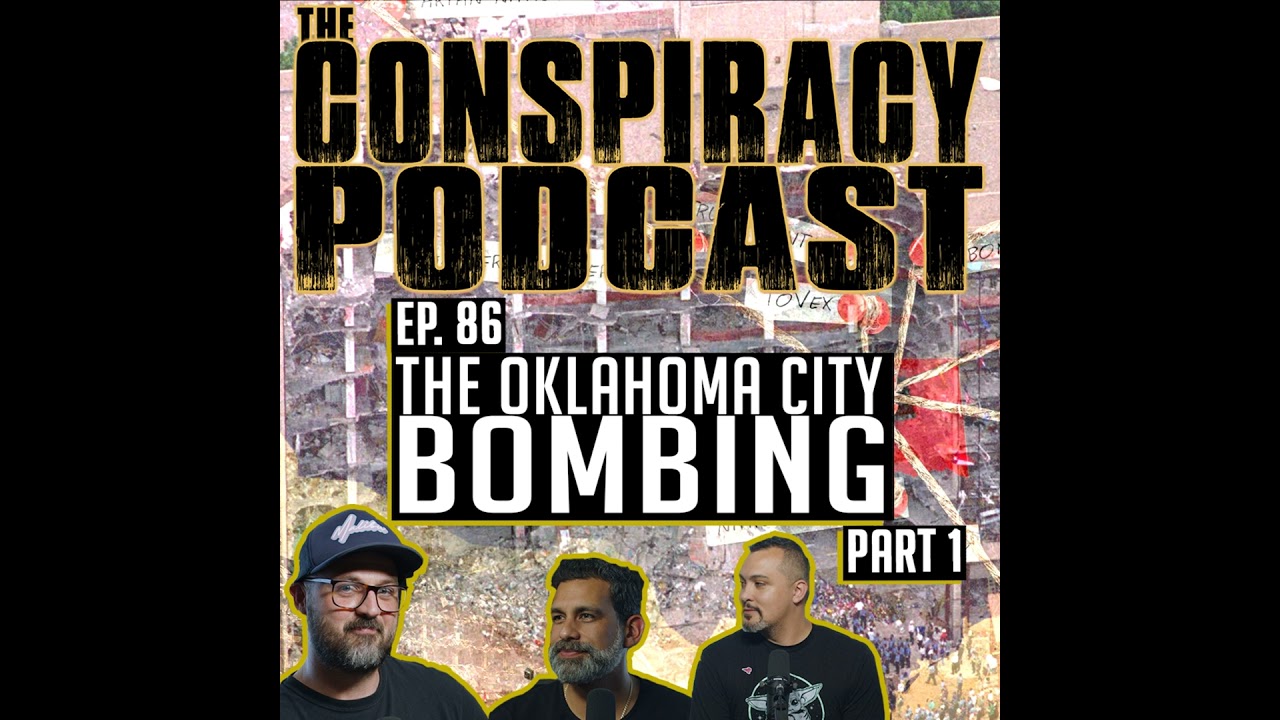
The Oklahoma City Bombing Part One – EP 86

The Oklahoma City Bombing: Part One
On the morning of April 19, 1995, a truck bomb detonated outside the Alfred P. Murrah Federal Building in downtown Oklahoma City. The 9:02 a.m. explosion tore through the nine-story building, collapsing much of its front facade and causing the floors to pancake on top of each other. The blast was felt and heard for miles, and nearly 600 people were inside the building at the time.
The bombing killed 168 people, including 19 children in the building’s daycare center, and injured more than 600 others. It remained the deadliest act of domestic terrorism on American soil until the September 11 attacks six years later. First responders, including firefighters, police officers, and volunteers, arrived within minutes and worked around the clock through the dangerous work of searching the wreckage for survivors.
In the hours after the bombing, investigators recovered a truck axle from the debris that helped point them toward the vehicle used in the attack, and Timothy McVeigh was taken into custody that same day during an unrelated traffic stop. The full account of how the case against McVeigh came together is covered in part two.
- At 9:02 a.m. on April 19, 1995, a truck bomb exploded outside the Alfred P. Murrah Federal Building in Oklahoma City, a blast felt and heard for miles
- The explosion tore through the nine-story building, collapsing the front facade and causing the floors to pancake on top of one another; nearly 600 people were inside at the time
- 168 people were killed, including 19 children in the building’s daycare center, and more than 600 others were injured, making it the deadliest terrorist attack on American soil up to that point
- Firefighters, police officers, and volunteers rushed to the scene within minutes and worked around the clock, often risking their own lives, to search the rubble for survivors
- Investigators recovered a rear axle from a rented Ryder truck in the wreckage, which became the first major piece of evidence in identifying the bomb vehicle
- Timothy McVeigh was arrested about 90 minutes after the explosion during a traffic stop for driving without a license plate, before investigators had publicly connected him to the bombing
Read the full transcript
Hey guys, welcome back to the Conspiracy Podcast. Yo, yo, what’s up everybody? Got a good one for you today, we, other boys, if we don’t know who are, yeah, if we don’t know who you are, I’m Eric, I’m Sean. What’s up? They know, going, they know by now, they know, watching, who are, who is. Uh, we got a cool episode tonight, and it’s brought to you, know, true, who’s it brought to us by, it’s brought to us by our, one of our rich person Patreons, our VIPs. And yeah, if you don’t know what that is, Patreon is a platform that allows us, allows you guys as listeners, to, to support us.
Yes. To provide, how do you say it, money. Yeah, like it’s like Monet, monetary money, monetary support. You do get benny’s uh within that. I want also people to know too, like most of the communication happens on our Discord, it doesn’t really happen through the Patreon app itself. Yeah, so if you are a Patreon subscriber, make sure you are in the Discord, because that’s when you’re communicating directly with us. Uh, if you are at this level, uh, this, you know, this, this, what we call the rich person level, you get to a select your own episode. You also get crazy access on the Discord, like all these different channels that no one else has access to, and you get big discounts on merch, which are coming next month.
That’s right. Let’s, literally, we just ordered a whole, a shipment of hats that are coming in next, next two weeks. So you’re almost going to get them at cost. I mean, pretty close. Yeah. So, um, so we appreciate you guys, and this is brought to you by Big Worm. Worm, um, he’s been a supporter. I mean, he, we’re going to go with a he. Oh, it’s a dude. It’s, he’s 100%. Yeah, 100%, he is a dude. Yeah, I know Big Worm’s, I know a dude for a fact, you know. And he’s a dude, I know, but I mean the word worm, no, I mean the word Big Worm.
Oh, okay, sound a chick. I know, but we’ve never established if he’s a woman. A dude for sure. I’ve talked to that, bro, he’s, he’s a dude, he’s a dude. Yeah, my dog, [bleep], my dog. Yeah, cheers to you. Anyways, uh, so, uh, he requested, he requested this episode, which is the Oklahoma City bombing. Yeah. And I was actually surprised it wasn’t on our list. I know, right? Yeah, original, original list, and it was kind of excited to, to go through this one. There’s a, so there’s a lot of history, or, or, or there’s a lot of story behind this. There’s a lot of story behind this.
And so, so bear with us as we learn this story, because, um, I didn’t actually know a lot about this. I don’t know much. Yeah, okay, I just know some. Yeah, it’s also what we do. Yeah, like our format is this, yeah, you get the backstory and then we like beat the [bleep] out of it. Yeah, exactly. So, um, if you, everybody’s probably heard of the Oklah, Oklahoma City bombing, um, even the city itself is now known as this experience, because, you know what I mean, you kind of tie in Oklahoma City with maybe a certain, a few things, the Thunder, and then like a few things, and then this.
So, so uh anyway, so if you haven’t uh heard of this, then then buckle in, and and we’re going to go over the story. Um, I would say a lot more, like if you’re our age you know about it, but like if you’re a little, you know, a little younger, young blood. Wait, wait, our age or no? R, yeah, R. Sean never heard about this? Oh yeah, you got, you got a different generation, six years old, 7 years older than me. Sean just, Sean just reached the level where he can rent a car, so he’s, I’m 35, what are you talking about, I could rent a car 10 years ago, like what are you talking about, can’t get a hotel by, raed than you.
I literally went to Walmart and I bought these [bleep] white cloths and the guy’s like, I’m like, oh I got my ID, he’s like, I don’t need it, like cool. And I was like, what, and he’s like, the grays, I was like, damn it, [bleep] got me. Okay, the Oklahoma City bombing. Uh, so the morning of April 19th, 1995, it began like any other in Oklahoma City. The sun was shining, people were going about their daily routines, and the Alfred Murray Federal Building, a concrete structure housing various government agencies, was bustling with activity. I love, little did anyone know that that, that ordinary day was about to be shattered by an event so devastating that it would be forever etched an American lore, the nation’s collective memory, and the city name itself would be tied to this moment forever.
At 9:02 a.m. the calm was violently interrupted by a massive explosion. The blast was so powerful it could be heard and felt over four miles away. Holy [bleep], look like a [bleep] nuclear b. Windows shattered, cars were blown off the road, and the Murray building itself was partially reduced to rubble. So almost like the half the building like vaporized. [bleep] dunzo, nuked. I mean, not nuked, but yeah. Yeah, essentially. Yeah, yeah, uh, the explosion tore through the ninstory building, leaving a gaping hole in the facad. The destruction was horrifying, and the floors pancaked on top of one another, trapping, trapping many of the nearly 600 people that were inside the building at the time.
Oh [bleep]. First responders on the scene within minutes, but the scale of devastation was overwhelming. As they dug through the debris, a grim picture emerged in the, the initial report, which was 168 people, including 19 children in the daycare center that was in the building, lost their lives. Damn, dude, that’s [bleep]. So over 600 people were injured, that were not of the 168 people that died. Okay, it was the deadliest terrorist attack on American soil up to that point. Yeah, yeah, right, because this is, this is in, yeah, this is, yeah, well 911 was 2001. Yeah, exactly, this is in the 95. Yeah, so uh, I remember seeing this in in the news, like I could still see the picture of the building, was happening.
Yeah, yeah, that’s, that’s like basically the only thing I remember, like that, that image, it’s like burned. So at this time I was, I was, I was eight years old, and since I was so young. [bleep] you weren’t even born. I was born in ’89, bro. Okay, you were sixish, fiveish. You’re fiveish, okay. But you were, you were 10, was 26, I was, uh, is Texas, working at the mill. I, I was born 81. Yeah, so you’re 14. Yeah, they 14. Yeah, damn. Yeah, damn, damn, it’s like that one. Uh, have you seen that? No, that, that Kevin Hart one where, um, forgot that guy’s name, but he’s uh, he, he goes, he’s like, he’s 57, he’s like, damn, like, you haven’t seen that?
Oh man, sounded just like, was itzel? No, it was not den cell. I mean, I’m so bad with names, but anyways, it was on the show Heart to Heart. Yeah, it’s on his podcast. Yeah, and he was, he was talking to somebody, I forget who it was to, I personally am to this, she, she love that, one, you down for day drinking. So in the immediate aftermath, the people of Oklahoma City exhibited um incredible resilience in the ordinary citizens became heroes. So it’s kind of like you almost look at like 9 911 vibes, like the whole, the whole country was like amica, and then now it’s like everyone’s like.
So basically, so this happens at 9:00 in the morning, and then you have firefighters, police officers, and volunteers who rush to the situation. Oh, totally, and these are the, these are the the frankly, the heroes of the situation, because then they go, [bleep] it, I’m going to put myself at harm’s way, oh, to save these people and jump in an exploding ninstory building and try to, people shit’s still falling down, like it’s burning, you know, bl, la, la. So uh, they, they worked around the clock, often risking their own lives to pull survivors from wreckage. Now, if anybody has been part of, I haven’t, I have not, thank God, but if you’ve been part of trying to, um, what’s the word, like excavate people from rubble, mhm, it’s dangerous.
Oh, for sure. You know what I mean, like one of my, one of my buddies is, uh, he does like volunteer work, and he his guy’s named like the topos, and they go, like whenever there’s like big, yeah, like whenever there’s like earthquakes and [bleep] like buildings fall down, like do they go in there, Mexican right, yeah, my homie is not Mexican, but he’s part of them, the part of the group, and they go and they execute, true, there’s like one uh Greeno with them, right, yeah, that’s him. And so he’s, cuz he’s like a trained nurse, and and so they, they, they excavate people from like bu that have collapsed from, from, from uh earthquakes, and it’s super dangerous, it’s super dangerous.
So obviously, um, it’s a tragedy, and um, you know what’s interesting about tragedies is it also brings out the best in people. Yeah, pretty much, and and kind of unites people in a way, you know, people are put in a position of of horrible situations, and then they, some people rise to the occas. And it’s also, people like start to, like it’s becomes more humanity and not just individualism, like everyone, like everyone becomes a group, everything goes out the, like gender goes out the window, race goes out the window, politics goes out the window, and it’s like man, kind, yeah, it’s humans. Exactly, we’re like dude, we’re all on this together, brother, let’s [bleep] survive, which is amazing, which is like the be the best part of humanity.
So that what that’s what happened at Oklahoma City, which, which is that, you know, when this happened, every every body rushed who were in any sort of specialty anywhere, even if they were a medic, firefighter, police officer, etc., they rushed to kind of go, okay, [bleep], there’s a Child care there, dude, that’s crazy. Uh, there’s people just working there, you know what I mean, like it’s a dark, it’s the, that’s like the most, it’s [bleep] up, that’s the most [bleep] up part. I know, the 19, fued, yeah, like once you have a kid, it’s like the kid, oh my God. And so you know what’s interesting is, is we’ll go into like some of, you know, the suspects and the people who, who did this, but but the point that Sean makes is, is the most important point, which is, you know, regardless of what we think about this next person, which is Timothy McVey, right, children were killed.
Oh yeah. So as far as how much you can believe in something, you still ch, killed children. Yeah, I don’t care, like whatever you say, I don’t give a [bleep], even, even if there was no children, like I mean there’s nothing, nothing to justify that, irredeemable, like there’s nothing you can say, make me, make you cool in my ass, you’re [bleep] toast. So, but uh, but you know, like I said, in these weird circumstances where there’s a tragedy, there’s, there are people who, who rise up to the occasion, and they become heroes, or however, I don’t know what word you use her, heroes without capes kind of thing, you know, that, that sort of thing.
So, but then the question then became, after the salvaging and the rescuing, etc., is who could have done this and why. Yeah, like what the [bleep], who could have done it and why. And in the immediate aftermath, speculation ran wild. Some thought it was the work of international terrorism. Um, now granted this is 95, so it was a little different. Yeah, it wasn’t 200 one. No, this is before, like, yeah, ex, it’s also like, in, and this is not like [bleep] on Oklahoma City, but it’s not like Oklahoma City doesn’t really hold any sort of like specific, yeah, relevance to like, true, you internally, like, yeah, like New York is known, in, it’s like it is just what it is, you know, just like DC is, it’s what, capitalist, so it’s not like, yeah, I’m not like [bleep] on, city is great.
Some thought that it was connected to, so I don’t know if you know this, but in two years earlier the World Trade Center was bombed. Oh yeah, in 93, and it was a smaller bomb that obviously didn’t take the towers down, but it was a bomb, essentially in the lobby, it was a terrorist attack in the lobby. Oh [bleep], yeah, so some thought it was connected to that. Um, but as investigators sifted through the rubble, they found a crucial piece of evidence, which was a real rear axle from a Rider truck. Now, if you know Ryer, Ryer is like a rental, Mh. Oh, what’s a [bleep] thing, it’s like Enterprise, but for trucks.
Yeah, for sure. Yeah, yeah, uh, and they found a rear axle for a Rider truck which had been used to carry the bomb. Okay, so that was the first piece of evidence. Okay, okay, they, they build those axles are [bleep] built for to. So the investigation quickly led to a man named Timothy McVey, and if you’ve heard this, you heard Timothy McVey. Yeah, McVey, a former Army soldier, was a, with, had a deep-seated hatred for the federal government, the US government. He had rented the Rider truck used in the bombing, along with an accomplice named Terry Nichols. McVey had packed the truck with a deadly mixture of ammonium nitrate fertilizer and a fuel oil, creating a bomb powerful enough to bring down essentially half of the building.
On the morning of the attack, McVey parked the truck outside of the Murray building, lit the fuse, walked away. Like, why would, I guess maybe you think, like with bombb that big, they’re like, they’re never going to know it’s like the truck you rented, like what about Ryder, like the guys that Ryder, like, but where, where’s the truck, bro, like we need the truck back. Yeah, like it’s gone, you know, like it probably didn’t think that, like, are you like think, not thinking that far ahead? I don’t know. So this is the FBI’s official report, and this is what they say. They say the identification of a twisted rear axle from the truck led directly to a local rental agency.
How the [bleep] they identify that axle, like, o, this is a, which in turn led investigators to McVey, who rented the vehicle. That, a little interesting though, like, how the [bleep] did they know it was that, from that Rider? How do, how they know it’s a rider truck? How do you from an axle, does it, I mean I could understand a rider truck, but how do you signify it, it’s from that? I know, I’m saying, like, how do they know it, from, from that rental? Yeah, I mean, unless there was like Rider on his side, know it’s like it’s like maybe like a number, I don’t know.
No, but it’s an axle, it’s an axle, there’s no number. Shut up. Now, just [bleep] live. Now this is one of the biggest parts of the case, is the axle led to McVey. It’s a little starting off a little, like, it allowed law enforcement to narrow their suspect down to McVey, and the report continued, saying that a massive effort was launched to find McVey, who had been arrested 90 minutes after the explosion. What the [bleep], by a state trooper, for driving without a license plate, sketch. So, by luck or by karma or by the acts of God, I don’t know, he was pulled over by a state trooper because he had no license plate.
What an idot. I mean, you’re just asking for it. What an idiot, like at least steal a plate and put that plate on there. I know, do anything, like what the [bleep], I mean, you just bombed a building, yeah, like you think, I have a license plate? I had, take a bus, just get the [bleep] out, like what are you, do it. Does, you know what’s crazy is we’ve done a lot of these episodes now, and we’ve got like MLK, got RFK, got JFK, they’re all, but they’re all so like ridiculous. It’s like MLK is like, he left the gun on the floor, no right there, it’s almost like a similar thread of like the, the, the stupid dude doesn’t think it through with all these details, he doesn’t do, he like he just is like piecing out, driving around, the writer thing was his receipt, remember Lee Harvey, he like walked to a movie theater, shot a cop, and shot the cop, [bleep] jerked off in a theater, and then, you know what I mean, like it’s just like it’s ins, what’s the word, aloof?
Oh yeah, yeah, aloof, just kind of, yeah, I think that’s like, you know, there’s, there is a concept of, you know, you do bad things, and like you inherently, you inherently just don’t, you want, you’re, you’re going to criminal wants, I mean that’s also like bad, it’s bad, but it’s also stupid, how do you drive around without a, a plate, you know, you’re going to, anybody’s going to get pulled over. Soe, you’re trying not to get pulled over? Yes, correct. Wasn’t even speeding, this, no lives, like what the [bleep]. So I wanted to spend a moment and talk about Timothy McVey, um, and so we’ll go through this real quick.
And so Timothy James McVey was born April 23rd, 1968, in uh Lockport, New York, a small town near Buffalo. He grew up in a workingclass family, the only son of three children. His parents, William McVey and Mildred Noren, divorced when Timothy was a teenager, uh, a period during which he began to exhibit signs of emotional turmoil, per the psychiatrist. Uh, he was known to be shy and reserved, often retreating into a world of fantasy where he imagined himself as a hero against oppression. I mean, have a, we all, I mean legit corre, like just explain my childhood. MC, McVey’s early life was marked by an obsession with firearms in the military.
I did not have that. Okay, I mean I didn’t. As a teenager he became an avid reader of survivalist literature and developed a deep mistrust of the government. After sure, after, after graduating from high school in ’86, McVey briefly attended Briant and Stratton College before dropping out in 88. Seeking direction, and influenced by his interest in military, he enlisted in the United States Army. Mh, yeah, during his time in the Army, McVey excelled as a soldier, earning several commendations, becoming in a decorated sharpshooter, unlike [bleep] Lee Harvey, the opp, actual decoration. It was in the Army that he forged a close friendship with Terry Nicholls, and Terry Nichols was the accomplice, that the, the judge or whatever said that he was the accomplice in it.
They can, I was going to show it, but they canot see. So he became a decorated sharpshooter, and we’re going to put those, we’re going to put those, put, put, I mean the, the building’s like half gone. Oh, for sure. You know what I mean, like look at the cars like outside, they’re [bleep] toast. McVey military service included a tour in the Gulf War, where he served as a gunner on a Bradley Fighting Vehicle. The war further shaped his world view, intensifying his anti-government sediments. Like [bleep], like this war was ridiculous. Exactly, so that was the concept, he was in, he was, he was in the Gulf War, and it was like, why are we doing this, this is so pointless.
And there’s some interviews that you can go on YouTube and you can see, and he was like why, he’s like, I killed people, like via a sharpshooter, and he’s like, they’re just normal people, why did I kill them, because a military industrial complex, baby. So the difference I did notice, yeah, the difference I did notice between like say, say Lee Harvey and him, was he wasn’t stupid. No, Lee Harvey was, uh, I mean McVey was not stupid, Lee Harvey was completely useless, like he was the most useless human. Le Harvey was unintelligent. Timothy, Timothy was just crazy. Yeah, yes, you know, smart, cra, a lot, some, sometimes crazy and smart, yeah, exactly.
But McVey’s military career, however, did not progress as he had hoped. After failing, so basically he Went into the Ranger program, mm, didn’t make it, and he washed out. Yeah. Yep, happens. Yeah, happens a lot. You go to Rangers or SE, basically hardest [bleep] to, to a hard. Well, the Rangers and seals are the two, like that’s like the elites. Yeah, so he wash out physically, like he couldn’t physically get through the program, and I, there’s a reason why it’s hard. Y, I mean I would do, okay. This episode is brought to you by Shopify. Whether you’re selling a little or a lot, Shopify helps you do your thing, however you ch ching, from the launch your online shop stage, all the way to the we just hit a million orders stage.
No matter what stage you’re in, Shopify is there to help you grow. Sign up for a $1 per month trial period at shopify.com specialoffer, all lowercase, that’s shopify.com /s special offer. I’m Michael CH, and I’m Colin Joose, and we’ve got a little secret, actually it’s a pretty big secret. Well, now you got to give the people something. No, I’m not saying a word. Oh, then people won’t know to tune in. Come on, tell them a little bit, like how we’re hosting a live comedy event streaming only on Peacock, September 12th. Exactly, or how it’s called New York After Dark, and it’s a comedy show that only features drop in comics.
Boom, you nailing, Michael Chase, phone numberb. Whoa, whoa, whoa, hey, hey, hey. New York After Dark, some kind of live comedy thing, September 12th, only on Peacock, you love it. Yeah, right, they be like, Eric, Eric, you’re waterprof, your arm, your arm, here is, is impressive, that’s impressive to Eric. And I get to 10,000 steps a day, and it’s like my knees hurt, knees, I to text somebody, sweetheart, pick me up, I’m at 10,000, broken, pick me up, pick me up, you drove there, pick me up. So again, as he became disillusioned with the government, government, saying like it wasn’t his fault that he washed out.
Oh, okay. So now, and it was a government kind, this is when the crazy starts, yeah. Oh, they didn’t want me to be a, they could not, like, this is, this is when the crazy starts, yeah, this when the crazy started. Well, see, look, I understand like not believing in the government, but like it’s not like, oh, I like [bleep] up a job interview, I’m like the goddamn government, again, they, he don’t miss govern, don’t miss. So keep in mind, he’s like in his mid-30s, and like that was his entire life, was military, he wanted to be the hero, he wanted to whatever, and he washed out of Ranger school.
So now what are you doing, and now you’re just like, all your anger is like, yeah, and so you kind of make a target, or you, you find a target, and, and the target, I mean you find the bad guy, so you going be the hero now. Now, to be honest, I’m not, he’s not, I don’t think he was necessarily wrong about the Gulf War being wrong. No, for sure, I agree with that, like it doesn’t mean that you got it, almost seemed like he was, it was a logical path of, I, I shouldn’t be the, I shouldn’t be in the military because I don’t agree with what my management or the government is telling me to do, which is kill Iraqis.
Well, this is, see, this is like, this is like the funny, like I don’t know how, like how, how did you like arrive at this situation, it’s like government’s making me kill people who are just like living their life, so oil or whatever, to get back at them, I’m going to kill people who are just living their life, how you like arrive at that conclusion, like you’re doing the exact thing that you were pissed that you were, what the [bleep], I don’t understand. So he drifted through various jobs after he was offloaded from the Rangers, yeah, and um, he began to immerse himself in anti-government militia movements.
Oh God, and that was gaining momentum in the early ’90s. Uh, he, he was particularly influenced by something that happened, and I don’t know if you know about it, which is the, the story of Ruby Ridge and Wakeo. Oh, you ever heard of the Waco standoff? Yes. So the Waco standoff was in ’93, it was called the Waco Siege, and um, it was, damn, that far, I didn’t know it was that long ago. Yeah, and they call it like a, like a cult of like a 100 people, dude. I do remember this. Yeah, yeah, and the ATF, uh, essentially raided them. Yeah, there’s a, there was like a Netflix, yeah, and they raided them, and um, they [bleep] killed all of them, right, didn’t they?
And essentially what happened is they raided them for 40 days, and they played like music trying to get them out, etc., and then they tried to put in, uh, tear gas, and, and class, and then it, they accidentally burnt them, they burnt them, they killed all of them. Yeah, and they killed them. Okay, I didn’t know, I don’t remember that part. It was [bleep] horrible, it, it was absolutely disaster, horrible, yeah. And uh, I don’t even know if it, I don’t think it warrant an episode, because we know, we know exactly what happened, the ATF did it. Yeah, the ATF was like [bleep], and they accidentally put like gasoline into the building, and then it on fire, we accidentally, it’s on video, it’s accident, yeah, it’s on video, and they just lit it on, and like 70 people died.
How do you accidentally, I’m not meaning to do this, I know, [bleep] ridiculous, but what’s interesting about this part of the story is that Timothy McVey was watching, like, live in the parking lot. No, they filmed him, he was in W. Yes. Why was he, he was selling bumper stickers, anti government bumper stickers, man. How did you get in the parking lot of the Waco Siege? Could you imagine having like that vocation? Like yes, what do you do, what, up stickers. So if you wanted to go deeper into it, you could go on YouTube, and there’s an interview of one of the uh news reporters interviewing a guy selling bumper stickers out of his car at the we, and it’s Timothy M.
No, oh [bleep], [bleep], and it’s two years prior to Wild. I, it shows like, uh, like the, like the, yeah, it’s just more like further, like, yeah, you know, look at him, he’s going on the, it was, it was the extreme right, it was, yeah, you know, uh, the bumper scker that had a Nazi symbol that said, you know, like, uh, if they want to take my gun then, you know, why would have locked and loaded, why would I have a Nazi? Oh yeah, no, like tyranny, like against opposing tyranny. I was like, what? No, no, not that he believes in naism, but he’s saying like, yeah, like, but but like, yeah, they’re saying unlimited freedom, they’re saying that, that the Bush Administration, uh, which was at the time Bush was president, yeah, that it was a tyranny against weapons, the father, or the father.
Yes, not, not, not my homie. Well, GDB was very soon afterwards. Yeah, g, that was during 911. Yeah, but it’s the extreme. Now, you got to, you got to take in mind that was, um, 35 years ago, yeah, and so it was a little different than the Republican Party now. It was very, uh, it was a very extreme right of the NRA, but it wasn’t even like really the Republican Party then. Yeah, I mean it was, I mean the Republican, I don’t think the Republican Party was ever really like, maybe like, no, in like 1776, but you see how, like the Republican, or the parties change over of Dem, I mean, like man, they used to be like JFK and like the [bleep], those guys were the [bleep], like hell yeah, they were the best.
Anyways, so it’s just an interesting anecdote to the story, which is that he is in the video, that’s wild, of the wo siege that happened right before it. Yeah, so these events radicalized McVey, because what happened then, after he wased it happen, he watched the ATF kill those 70 people. So he’s like, the government fuel, I was right, of course it’s going to fuel. And so he started to believe that it was his duty to fight back against what was perceived as a corrupt and oppressive, hero vibe again, like I am the hero of my own story, and this, this incident supposedly, now you guys decide in your own minds, is one, this incident led to him going, I need to take action.
I can see that happening, like you, you were, you’re selling sckers, they [bleep] murder all these people, and he’s like, yep, everything I thought is true. Also, he, he already had that, that, that whole sentiment about, you know, the government, and then this just kind of confirms it, like he was looking for like a reason, the, the c back, like this is it, yeah, exactly, he’s like, give me a reason, [bleep], just give me a reason. So, but like that could have been like the thing that he was looking for, you know, that confir, or whatever, cuz he had his whole experience through the military, but then he gets back home, and, and like he sees the government do, you know, do this, so maybe like he was like, maybe it’s just me, you know, maybe it’s just me, see, he like, it’s them, it’s my time to fing act.
So, uh, he was arrested, um, Timothy McVey was arrested for the Oklah, we’re like fast forwarding now, right, like not for selling bumper stickers. No, no. So yeah, so he was arrested, uh, for the bombing, because of the axle that had connected. Still don’t quite understand how they did that, it’s a little sketchy. You know, you know, it’s beyond my capacity of knowledge. That’s fine. So the trial of Timothy McVey was one of the most high-profile in American history. The evidence against him was overwhelming, like Johnny Depp, Amber Herd. Yeah, in 97, so it took four years. Damn, no, it took two years, sorry, two years, took two years, and in 97 he was found guilty in all counts.
Okay, yeah, I wonder what, what other evidence they have. They said it was overwhelming, like they, like [bleep], just said he was there, he was scoping it out, he was, he left the scene, the people saw him leave the scene, the axle was to the car that he rented. Okay, um, you know, he was an anti-government, I didn’t know if they had, like, you know, they have video, w, they go to his house and there’s like [bleep], like bomb material, the fertilizer, whatever else. When he was arrested, he was pulled over for driving without a license, remember that, no, without, without a license plate in his possession.
He had anti-government literature. I didn’t know if, like, yeah, like if there was actual like bom material, like, I, I want, I don’t know if we have that, but like, yeah, they said it’s overwhelming. To me that’s overwhelming evidence, like yeah, we found the [bleep]. Wonder if they had like cameras or something back then, that, that they had him on camera in the truck. Okay, that would be overwheling. It was later revealed that McVey had originally planned to carry out the attack on April 1994, which is exactly one year after the Waco incident. Oh, okay. Then, but it, there were delays in acquiring the materials and finalizing the plan, so the choice of April 19th was not a coincidence, it was the 2-year anniversary of Wakeo.
Oh, okay, so that’s, they kind of adding to the f. So he’s on video at the Waco incident selling bumper stickers, you know what I mean. And I mean, obviously there’s a lot of circumstantial, for sure, lot of it, correct, whole fuckingcum. That’s what I’m saying, like, but like, where’s the, yeah, like sure, if I was there, and then you’d be like, uh, I’d still be like, like what have I toi, I’m wearing a shirt that [bleep] the tree of libery, like, okay, so what, like where’s, I know, like where’s the [bleep] t-shirt, should not convict you, has no bearing on, like, I know, they’re like, but that t-shirt though, guilty, all, all in favor say.
Or, he’s like, he’s like, in Oklahoma without a license plate, I mean like 80%, 80% of people are driving in Oklahoma without a license plate, I mean it’d be, it’d be impossible to find jurors that were not, um, what’s the word, like when you’re, um, bias. Yeah, exactly, I know, they’re like, know, but yeah, so like day one, they’re all like, this motherfucker’s guilty, like [bleep], sketch, [bleep]. But you know what, I don’t know, and maybe we’ll, we’ll go to, uh, don’t we have a, don’t we have a forensic, uh, Patreon Jenny, uh, isn’t it Jenny, Jenny, maybe can help us out with, she would be our forensic expert.
Yeah, so maybe she can look into, uh, how much forensics are involved in an axhole being recovered from a rental vehicle, and could you trace that. I’m going, I’m going to hit Jenny up on disc, you know what I mean. I don’t know the answer to that, really don’t know at all. It seems farfetched. It does. Only, there’s how many rental places, there going to be, there got to be a [bleep]. If your, if your, uh, Tundra was in an accident, and all I had was your, your axle, they’ be like, we don’t know who the [bleep] this is. Would I, would I know it was you?
Would would would would we know it was him? I mean, I’m telling you, unless it has like some VIN number, but other than that, how the [bleep], this is, okay, there’s no way, there’s no way. Yeah, all right. That’s why I think that, like, to me, that’s the only like sus thing, and the fact that they were like, this overwhelming evidence, he was pulled over with an anti-government shirt on. Yeah, this [bleep]. Okay, so the trial, so the trial of Timothy McVey was, was one of the most high-profile at the time, right, in, in 96, 97, and, and like we had said, it was overwhelming.
In the trial it seemed like it was overwhelming, um, now we’ll go over it later, but there is the concept of trial by media. Well yeah, I mean, what I’m saying, like how, how possible is it that these jurors would not, biased, exactly, it’s impossible. Yeah, during the trial, McVey showed little remorse for his actions. He claimed that he was acting in defense of the freedom of America. Oh, so he pretty much admitted it? Yeah, that, nobody didn’t admit it, but he said, how was he acting in the defense by not bombing him, in the defense of America, I did not bomb. So he was found guilty.
Yeah, he was sentence to death. Oh, really? Yeah. When did that happen? In June, June of 2001, he was executed. Oh wow. In, in Indiana? For what, like, was it like Indiana injection? Oh, okay. Indiana, Indiana, Indiana, why Indiana? That’s where the trial was. Maybe like a state that they tri was, maybe they, they did a trial there so that they can get jury to make it like more, yeah, little more, uh, strangely it was exactly 90 days before 911 that he was executed. Wow, I mean, I don’t know why that’s strange. I mean, I mean, it’s not, it’s not like related, but yeah, I mean it’s a building, but I mean, you know, anyways.
So, and then, uh, Terry Nicholls, who is aom as a, was the homie, yeah, uh, he had helped McVey build the bomb, but he did not, uh, participate in the attack, so he just helped him build it in the house. It’s still illegal though, right? Sure. Yeah, he was also tried separately, and he was convicted. Oh, oh, of what? Oh, like second, accessory. The FBI’s report emphasized his role, stating, Nichol ter, like [bleep] everything, Nicholls provided critical assistance in the procurement of materials in the construction of the bomb, although he was not present, isn’t, at the bombing itself. Just as, Nichols received a life sentence without the possibility of parole.
It’s almost wor, but not the death penalty, not, not prer, the death. I know, there was one other man, his name is Michael Fortier, who knew about the bombing in advance but he didn’t report it. Is that il? So he didn’t, yes, so he didn’t participate but he knew about it and he didn’t, they were friends or something, or yeah, okay. Though that’s, I know that’s like a weird, like kind of grayer, like I know something bad’s going to happen but I don’t say anything about it, you’re like prison. He, he was put on trial himself, he was convicted, 12 years in prison. Really? Wow, just for knowing?
Just for knowing, I mean, it’s, he did testify against McVey, and he got his sentence reduced because he testified against that. I’m not saying that, like, he is, like, in his, in the right for not saying something, but like, also isn’t a little, like, I don’t know, it’s just, it just seems like the law is a little weird sometimes, how, like how har it is, no how it, no how it applies to like the regular folk, but it doesn’t apply to like, oh yeah, everyone else. Yeah, the elites. Oh, the deep state. I mean, no, no, like they’re saying like the rich, or are you talking about black, white?
No, no, like you, no deep state. Oh, see, no, for example, it’s like, okay, so it’s like, you know, the, the federal government’s like, oh sweet, we want to go to Kuwait to get oil, yeah, and like we’re going to make up some [bleep], yeah, and like cause death in mayhem, destruction, like [bleep], all them knew about it. Yeah, and they’re like, what’s the problem. Well, and, and so I’m saying, like, it, it’s like rules for thee, not for me. Yeah, yeah, like all these things, it’s like, oh well, you know, if you get convicted of insider trading, you’re like all this blah, blah, blah, blah, meanwhile, like [bleep] Nancy P is like the best trader, best trad in history, the greatest trader in the history, or even like not even her, like all these politicians that are like trading an energy securities, and they’re like over, like they’re over the, the energies commission, and, but somehow that’s like totally cool.
But if, like, you know, if I don’t, if I don’t pay taxes on like my [bleep] cash app money, I’m like, I’m like, I’m getting [bleep] nuked. But but in relation to this case, do you think that, I’m just saying, because he was like a low, low breed. No, the word, I’m just saying that the, the concept of, like, you know, something bad’s going to happen, you’ll say, I’m not saying he’s in the right, like, no, [bleep] this guy, this guy, [bleep] this guy, this piece of [bleep], he had something to do with, no, this guy’s piece of [bleep], he knew this was going to happen, people died.
I don’t think he had to do with it, he just had the responsibility, that some, he knew something bad was going to happen, he should have reported it. I agree. So he, there definitely should be some punishment for him, but I wouldn’t say, like, he’s part of, I wouldn’t say he’s on the same level as, just cuz they’re like, oh man. Wear me out. So, hear me out, hear me out. We go to a bar, us three. Yeah, let through at a bar, [bleep], shipwrecked, [bleep], pbrs and margaritas, deep, pbrs and margaritas, double fing. Yeah, uh, I get into a fight with a dude, yeah, yeah, I stab him in the neck with a [bleep] pool stick, because I’m, I’m ripped like that, through the pool stick.
No, hear me out, theory. Yeah, okay, I [bleep], I [bleep], and I kill the [bleep] out of him, because you ri his throat out. St, what’s that guy’s name in Casino, when he gets the pen, and he’s like, my [bleep]. Yeah, Joe. Yeah, anyway, so obviously I do that, yeah, 100%, yeah, obviously, Tuesday, and then I leave. Okay, so what, what’s the, what, what do you guys do, Andor? If you don’t, are you saying, are we going to snitch on you? Yeah, and if you don’t snitch, what’s your penalty? No. Okay, this is a little bit different, this is a little bit different, I know, this is premeditated.
If, if he killed 100 people, but it’ be different if you’re like, Eric’s like, y boys, I’m about to go [bleep] kill this [bleep], I’m about to shank this [bleep]. I’d be like, okay, wait, s down, let me go to a different bar, get the [bleep] out. No, but in concept, no, I know, but let’s just say it’s a passion thing. Okay, if it’s a passion thing, I wasn’t at the bar, so you would not report. I wasn’t at the bar. You weren’t? Eric, who, I was like, what, I’ll be like, all right, I do love the, I do love the support, I do love the support.
I was next to my wife the entire time. I was shot, and I don’t know, happen, now, now. Okay, good, so you guys [bleep] got my back, I love it, I love it, yeah, I love it. No, no, fantastic, yeah, you’re not dead to me. No, but now I get arrested, and I get charged with murder, and I get, and I then get ConEd, you call us out. No, and then I get, no, no, he’s like, oh, I was with Sean, I was with, and then we get dragged in. Not necessarily me andard, like we were not there, we at the zoo, like I got, I got pictures.
No, no, cuz Timothy McVey did not say that. Yeah, he didn’t, he didn’t rat out the other, they did. Yeah, so it would be essentially, I get arrested, okay, and then witnesses at the bar say, hor was there, Sean was there, like there’s a lot of Mexican and brown people in there, so then I get convicted, these aren’t even tattoos, these are, these are spray on, I get convicted, and I get sentenced to life. Yeah, for killing somebody, makes sense. Yeah, facts. Okay, what is your punishment, dude, I was, what is the right thing for your punishment. No, no punishment, he got 12 years. No, no, Eric, that was pre, that was premeditated.
No, he just knew about it. No, he knew that they were going to bomb a building, it’s different than like a crime of passion, you’re like, dude, dude spits in your face and you shank him, and we’re bar, when you [bleep] drinking. Okay, so if you say that, like in that situation, like the bartender gets, like, goes to prison cuz he was there, then everybody, everyone, everyone’s in prison. Okay, all right, the whole city’s in prison, I guess, we’re getting to. Do you think that 12 years was right? No, the fact that he knew, knew, it seems like he knew that they were going to bomb and kill all these people.
Okay, so I guess the, the better analogy would be if I was going to bomb some [bleep], yeah. No, no, if you were like, hey, I’m going to kill you, knew about it. No, no, many people. Okay, I’m gon to kill everybody, I’m going to bomb shipwrecked, I’m going to bomb, instantly, fight you, I’m going to bomb the entire bar, and then, you know, yeah, then that’s the point. Is, do you think it was, 12 years was, was, no, appr, too much or enough? I don’t know, I think, I mean, I think, I think it’s deserve, man, in this case, just because of the gravity of what happened, 160 people, 19 kids, like let’s say he would have bombed and one person would have died, I don’t think that he would have gotten 12 years, but because of the way, you know, it worked out, yeah, there’s way too many lies.
Okay, and the fact that he knew about it, yeah, dog, I’m sorry, if you were like, yo, I’m going to bomb this building, I’d be like, yeah, I love you, but like, sorry, I got to tell somebody. And I know, again, again, again, as we do, we, we’re joking, but no dude, it’s, me, horrible people, di, that’s why I think it’s valid, he should have, my whole point in saying that was, that not that he is like in the right, yeah, it’s just, if you look at, like, if you flip the coin, to like how many things that, like the knowing, the knowing, you know, obviously knowing about it, could have, doing something, yeah.
Oh God, dude, yeah, I, I think there was a lot of people that knew about that and nothing happened. Yeah, so that’s what I’m saying, [bleep] this guy, this guy’s a piece of [bleep], yeah, he should have got, go to jail, he deserves to go to jail, like he’s a piece of [bleep], okay, yeah, all right. Well, here’s what we’re going to do, because, um, piece of [bleep]. So there, there’s, there ‘s a lot more to go over, and so we’re going to do an episode two, we’re going to do a part two, yeah, we got to dive a little deeper into this. So we have, we have a couple things, I’m going to give you a little teasers about part two, which is that, um, there was another person, scene, another one at the scene, okay.
Yeah, and so we don’t know who it is. Numerous, yeah, numerous, I, witnesses described a second suspect, but they con, the FBI concluded that McVey acted alone. Hm, h, acted alone, but like two of the [bleep] went, again, with the FBI, acted alone. Well, the bestar FBI never made a mistake, they, they’ve always been above board, like them and the CIA. Um, there’s, uh, there’s a couple theories about how the government knew it was going to happen, and they let it happen, we got to get into that. Y, well, see, that’s the thing, I also think, I feel like in these situations, like I feel like the government always wants a real quick, like decisive, it’s done, yeah, we handled it, like rebuild, like they really want it, they don’t want it to be like, who the [bleep] did this, [bleep], because people get worried, and they’re like, they, then they lose faith in the system, yeah, they can’t have that.
There’s a couple about false flags, have you ever heard of the false flag movement, or not movement, but like false flags of, yeah, the concept of it, where you’re trying to essentially divert American attention by some major event, and you know this just happened to be during the Gulf War, yeah, 9, yeah, exactly. And so there’s a lot of, you know, also, also, he got the death penalty, and it moved very fast, for, in relation to a death penalty, typically it takes like 10 years before you’re, and it happened, it happened in about four. Oh wow, so was a fairly, get him out fairly fast.
Yes, it was a fairly fast thing. So anyway, so we’re going to go over more, and this, the next episode will be all about the conspiracies that are related to Oklahoma City bombing. Um, and again, I just want to say, um, it’s 168 people, p, pass away, like disclaim, every, every disclaimer, we’re not laughing at the situation, and if anything, what we’re trying to do is we’re trying to analyze this situation, and go, okay, this is a part of history that happened, that maybe not everybody knows the details about, that history, and then go over it, and then go, what really [bleep] happened. D, and also, it’s like, the thing is, like, look, if people can’t, you, you have to be able to confront history, because if you, if you, if you’re not willing to confront what has happen, yeah, you’ll, you’ll never be able, you miss out, like what, what could happen right in front of you right now, exactly, and you’ll never be able to, like it, like to grow and advance from it, because if we just like completely neglect what has happened in the past, the, the past will repeat itself, as was saying, it’ll justen, again and again and again and again, because you’re not, you know, hey, it’s like if I touch, if I touch a hot stove, [bleep], that burn, but you should learn, yeah, like I’m like, I’m not going to touch that hot stove again, but obviously, if you, if you forget about it, you might touch it again, yeah, simp, very simple analogy, but that’s right.
So, uh, next time we will do part two, and we’ll catch you guys next Tuesday. Huh, peace out, see you next Tuesday, 9, night.