Dracula: Man or Myth – EP 128


Dracula: Man or Myth
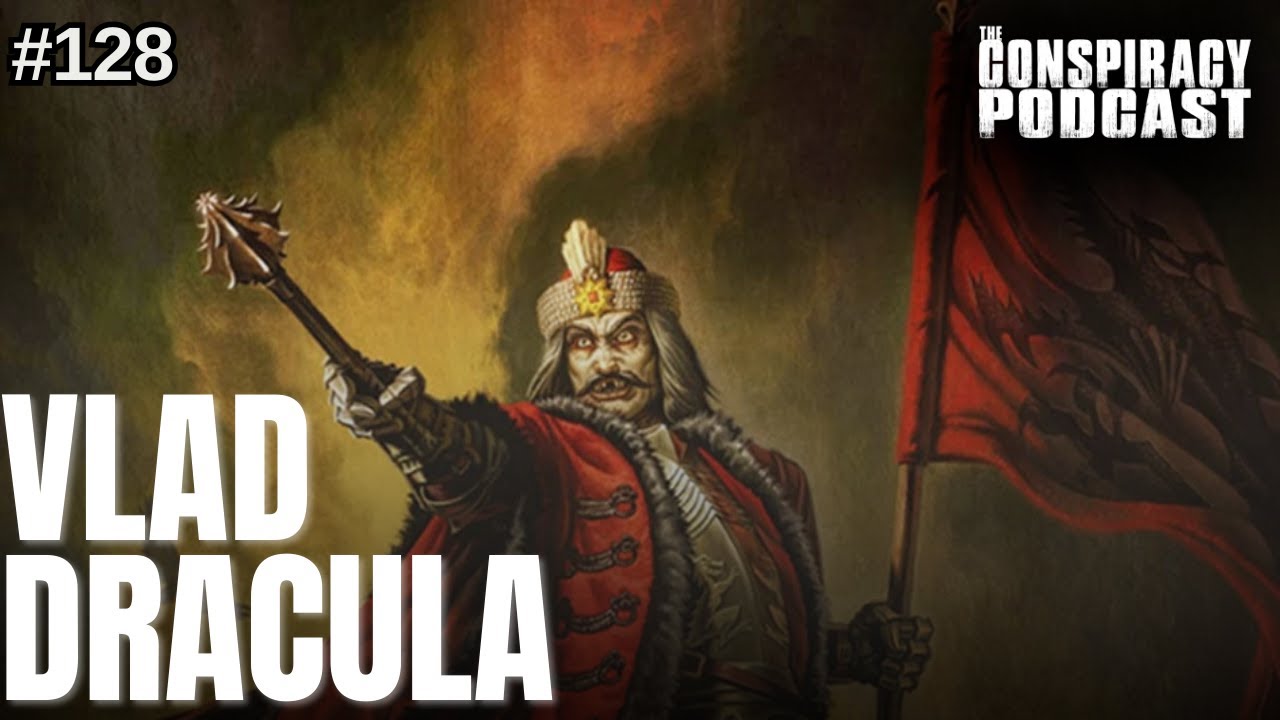
For this Halloween episode the guys dig into the real history behind Dracula, starting with Vlad III, born in 1431 in Wallachia to a nobleman named Dracul (dragon), making young Vlad “Draculea,” son of the dragon. Sent to the Ottoman court as a child hostage, Vlad watched his father get overthrown and killed and his older brother tortured and buried alive, a betrayal that shaped him into the ruler later known as the Impaler for his signature punishment of enemies.
The episode walks through Vlad’s brutal reign: the purge of disloyal nobles at a staged feast, mass impalements of Saxon villages and merchants in Transylvania, nailing the turbans of Ottoman envoys to their skulls, and the so-called forest of the impaled that reportedly made Sultan Mehmed II retreat rather than face him. After his death, cheaply printed pamphlets, some of the first bestsellers in Europe thanks to the new printing press, spread lurid and possibly exaggerated tales of his cruelty across the continent.
The second half traces how Irish writer Bram Stoker stumbled on Vlad’s name and reputation while researching in a Whitby library in 1890, borrowed the name Dracula for his 1897 novel, and fused it with a wholly invented vampire count. The guys track the character’s screen history from Nosferatu through Christopher Lee, Gary Oldman, and beyond, then debate how much of the historical Vlad’s brutality is fact versus centuries of campfire exaggeration.
The episode closes with a broader debate on monsters, vampires, and the undead, including theories about genetic mutations, leftover ancient creatures like dragons, and why humans seem hardwired to fear the unknown.
- Vlad III was born in 1431 in Wallachia, the son of Prince Vlad II Dracul, whose name means dragon, making Vlad’s nickname Draculea translate to son of the dragon
- At around age eleven, Vlad and his brother Radu were sent to the Ottoman court as hostages to guarantee Wallachia’s loyalty to Sultan Murad II
- After his father was overthrown and killed in 1447, Vlad’s older brother was tortured, blinded, and buried alive by disloyal nobles
- Vlad earned the name the Impaler after purging Wallachian nobles at a staged feast and carrying out mass impalements, including a reported forest of impaled corpses that made Sultan Mehmed II retreat in 1462
- Irish writer Bram Stoker found a historical account of Prince Dracula, whose name was noted to mean devil, in a Whitby library in 1890 and used it for his vampire villain
- Stoker’s novel Dracula was published in 1897, and while it references Dracula’s noble ancestry and wars against the Turks, the vampire count himself is entirely fictional
Read the full transcript
We just finished the Salem Witch Trials, and we found a way to squeeze in another one. We don’t usually do the whole monster, witch, Halloween stuff. This is like our year three and we have only done it a little. We’ve never actually done Bigfoot, which is weird, probably because none of us know how to make an hour and a half of content on it. It’s just five minute stories, like a million of them.
Bigfoot is like the icon. Or the Yeti. But a Yeti is literally just like Bigfoot, only not in the forest, so that should all be blended into one. But what we did figure out, what we thought was interesting, was: was Dracula real? Was it a story that was passed down through time that just kind of got morphed and expanded upon and dramatized, kind of like Salem? I feel like almost all stories are based somewhat in truth. There’s an experience, and whether or not it’s fully true or embellished to make it more dramatic, there had to be a story. Something went down.
To be honest, personally this is my favorite one of the monsters. Dracula is my thing. I watch all the movies about Dracula, the Bram Stoker stuff. My favorite is kind of the original one with Keanu, but it’s not the actual original. It’s not Nosferatu, which we’ll get into. Did you see the new Nosferatu? I wasn’t a big fan. I did see the boat one, the story of Dracula coming over from Transylvania on the boat. It’s a good rendition, but it’s just one chapter of the original novel. I recently watched The Last Voyage of the Demeter. Demeter was the Greek goddess of agriculture, I learned.
What we’re going to do is go over the story of who we believe it was based on, then the story of Dracula, and then ask: is this real? It’s a dark story. In the winter of 1431, in a place called Transylvania, a boy was born who would one day carve his name into history with blood. His name was Vlad. Super disclaimer: I will mispronounce so much in this episode. This will be the highest number of mispronunciations. Bear with me. We agreed to let it ride and not edit it out.
Vlad was the son of a Wallachian nobleman named Dracul, and that name means dragon. Some variants are also devil. Young Vlad was known as Draculea, literally the son of the dragon. That’s tight, the son of the dragon. Wallachia lay at the crossroads of empires, between the Ottoman Empire to the south and the Kingdom of Hungary to the north. Its princes walked a dangerous tightrope of shifting alliances in order to survive.
Vlad’s father, Prince Vlad II Dracul, ruled Wallachia but was forced to balance loyalties between the Hungarian crown and the Ottoman Sultan. In 1442, when Vlad was still a child, his father was compelled to send him and his younger brother Radu into Ottoman custody as hostages in order to guarantee Wallachia’s obedience. This is that time period where bending the knee is not good enough. They need collateral that you’re not going to betray them.
At around eleven years old, Vlad Draculea was taken from his homeland and delivered into the court of Sultan Murad II. He was taught statecraft and warfare at the Sultan’s court, but Vlad never ceased resenting his captors. In this story his younger brother adapted well to the Ottomans, yet Vlad’s own heart only hardened with hatred, because he knew he was a captive. His little brother probably thought it was kind of dope.
In 1447, his father was overthrown and killed by disloyal nobles. Vlad’s elder brother was tortured, blinded with hot irons, and buried alive. They did the craziest things back in the day. This betrayal and murder of basically his entire family forged within Vlad an unyielding desire for vengeance. They need to make a Vlad movie. They did make one, Dracula Untold, but it wasn’t the straight history version some of us wanted.
Not long after, Vlad was freed from Ottoman custody under uncertain circumstances. The deaths in his family left a power vacuum in Wallachia, and the Ottomans saw an opportunity to install Vlad, still in his teens, on his father’s throne as their puppet. Backed by the Ottomans, Vlad briefly seized the Wallachian principality in 1448. His first taste of rule lasted only a few weeks before a rival prince drove him out and he was forced into exile.
The young Dracula wandered among the courts of Eastern Europe. For a time he took refuge in Moldavia with relatives, and later in Transylvania under the protection of his former enemies. During these years of uncertainty, Vlad bided his time like a predator in the shadows, honing his cunning and waiting for the moment to strike back and reclaim his birthright. It’s a sick screenplay. We should write this and start a GoFundMe for the production cost.
By 1456, fortune’s wheel turned decisively in his favor. The Hungarian warlord John Hunyadi, who had been responsible for the death of his father, died that year, which weakened Hungary’s grip on Wallachia. Sensing his chance, Vlad secured support from Hungarian factions and mustered an army to invade his homeland. At age 25, Vlad Draculea seized Wallachia once more, and this time for a longer reign. The young prince with a bloody past was now in command, and he soon earned the name the Impaler.
Determined to consolidate power and avenge past betrayals, Vlad launched a brutal purge of the people who wronged him, the highborn nobility who had conspired against his family. According to legend, he invited hundreds of these people and their families to a big feast at his palace. As the nobles sat feasting in his great hall, Vlad abruptly turned on them. His soldiers stormed in and seized the stunned guests, and on his orders they and their wives were led outside and put to death by impalement on the spot. It’s like the Red Wedding.
Just so we’re all clear, impale means to pierce or stab something with a sharp object. At this time it could be a wooden stake, a spear, or a sword. The younger, sturdier nobles and their families were marched off to the mountains and forced into hard labor, basically enslaved like internment camps, and few survived the entire ordeal. Through this ruthless stroke, Vlad eradicated much of the older noble class that had betrayed him and his family.
With Wallachia’s internal enemies subdued through fear, Vlad next turned his attention to external threats in Transylvania to the north. The German-speaking Saxon merchants of Brasov and other towns had given refuge to Vlad’s rivals. Enraged by their meddling, Vlad struck back with a campaign of shockingly violent raids in 1459. He attacked Transylvanian villages and trade centers, accusing them of disloyalty. One Saxon chronicle claims Vlad once carried off an entire village and impaled every man, woman, and child in a single day.
In the same month, at the city of Brasov, he reportedly ordered dozens of merchants impaled on a hill outside the walls. An infamous woodcut from later years depicts Dracula calmly taking a meal amid a forest of impaled bodies. Imagine Vlad eating some rice and chicken while dozens of bodies are impaled on spikes in the background. He was numb. He thrived on it. Now again, we don’t know how accurate any of this is, the same way we just went over the propaganda. How much of this is legend, campfire stories, screenplays of the 1400s? Exaggerated or not, such stories spread the message that Wallachia’s prince Vlad would show no mercy.
Having secured his realm, Vlad III Dracula refused to remain at the beck and call of the Ottoman Empire. For years, Wallachia had paid tribute to the Sultan in exchange for peace, but now Vlad was defiant. He halted payments and peace offerings. When Ottoman envoys arrived at his court to demand submission and payment, Vlad responded with cruelty. The story goes that the envoys refused to remove their turbans in his presence, so Vlad had the turbans nailed to their skulls.
Outraged, Sultan Mehmed II, the conqueror of Constantinople, raised a great army to march on Wallachia in 1462. Vlad was outnumbered and outmatched in open battle, so he resorted to scorched earth tactics. He poisoned the wells, burned the villages, and harassed the invaders with night raids over and over. At one point, Vlad himself led a desperate nighttime attack on the Ottoman camp, hoping to assassinate Mehmed. He wreaked havoc in the darkness and slew many sleeping soldiers, but the Sultan survived. You can see the story formulating, Vlad coming in the night like the boogeyman.
Mehmed pressed onward toward Wallachia’s capital, but as the Ottomans neared another town, they found the road lined with thousands of impaled corpses. There’s nothing to kill the morale other than seeing hundreds of impaled bodies, almost like what the cartels do, hanging people from everywhere. This became known as the forest of the impaled, and it supposedly stretched for miles. The site was so dreadful to the Sultan that he retreated, unwilling to engage a foe who would participate in such horrors.
His victory, however, was short-lived. The Ottoman army had retreated, but Vlad’s own support was crumbling. Many of the Wallachian nobles were weary of the tyranny and scared of Ottoman reprisal. They welcomed Vlad’s younger brother Radu, whom Mehmed had groomed as a more obedient replacement. Abandoned by his nobles and facing certain defeat, Vlad fled to Transylvania. The Hungarian king had Vlad arrested and imprisoned, finding it politically convenient to remove the prince from the scene. Vlad was transported to Hungary and held prisoner for ten years.
In 1475, shifting alliances prompted his release. The tides of war again turned against the Ottomans, and suddenly the Impaler was useful to Hungary again. Vlad Dracula, now in his forties, rode into battle once more against the Turks and proved he had lost none of his ferocity. They just unleashed this guy, took him out of the cage and pointed him in a direction. By the autumn of 1476, he reclaimed the Wallachian throne with Hungarian support. How do you rule and lose and rule again so many times?
Again, though, within weeks of restoration, his enemies closed in and he was cornered. Accounts differ. Some say he fell in heroic combat, others whispered that he was betrayed and murdered. His severed head was supposedly sent to the Sultan as proof that he was gone. The rest of Vlad’s body was interred in a monastery tomb, and Vlad Dracula had been vanquished, so it would seem. This is the beginning of the legend.
The death of Vlad the Impaler did not silence the tale of his deeds. If anything, it marked the birth of a dark legend that would spread far beyond the borders of Wallachia. News of Vlad’s ghastly exploits traveled across Europe, shocking and fascinating those who heard it, taking advantage of the recent invention of the printing press. So they started to publish stories, the beginning of propaganda. By the late 15th century, these gruesome booklets were among the first bestsellers in Europe.
In cities like Nuremberg in Germany and Austria, readers flipped through cheaply printed pages filled with lurid accounts of Dracula’s antics. Woodcut illustrations showed the Impaler at his grisly work: armies of skewered victims on stakes, disloyal nobles dangling from spikes, and Dracula feasting among the bodies. To a Western European audience that knew little of Wallachia, Vlad Dracula was portrayed as less than human, a demonic tyrant who delighted in cruelty and feasting upon bodies. You can see how they got to the lore, the Nosferatu image.
Closer to Vlad’s homeland, however, the stories grew more complex. Throughout the Balkans and in Vlad’s native Romania, folk tales and oral traditions remembered him in a different light. Some tales spoke of Vlad as a stern but just ruler who defended his land and brought order through fear. It was said that under his rule a golden cup could be left unguarded by a public fountain and no thief would dare steal it, because they were terrified of him. I would be terrified too.
For generations after his death, Vlad Dracula’s name lived on in ballads, broadsheets, and campfire stories. Mothers in Transylvania would frighten naughty children into obedience by whispering that Dracula was nearby, and if they did not go to bed they would be impaled. It’s the boogeyman. Vlad’s going to come impale you if you don’t eat your vegetables. I might use Vlad as my little bedtime story: you’re going to sleep, sweetheart, or Vlad’s coming.
Over time, the real prince Vlad Dracula faded into obscurity and was almost half forgotten, preserved mainly in scholarly works and historical context. But the legend became more about Dracula, and it became huge when somebody named Bram Stoker found Dracula. Late in the 19th century, the dragon would rise again, this time not on a battlefield in Wallachia but in the pages of a novel. In 1890, an Irish writer named Bram Stoker visited the seaside town of Whitby in England, looking for inspiration for a new Gothic tale.
Stoker had been toying with an idea about a vampire aristocrat haunting some distant corner of Europe. He imagined an undead count lurking in a crumbling castle, a story he tentatively called The Undead, but he had yet to find the perfect hook to give his villain unique depth. When they say aristocrat, gothic, or vampire, it’s a finely dressed individual with manners who would then suck your blood. He’s elite, but he’s also hungry.
In Whitby’s quaint public library, amid old books and dusty manuscripts, Stoker stumbled upon a bit of history that would spark his imagination. He came across a brief account of a Prince Dracula who had fought the Turks and was infamous for being cruel. The text noted that Dracula in the Wallachian language meant devil. Stoker was electrified. Here was a real name dripping with sinister allure and meaning, and he knew at once that he had found the name for his vampire antagonist: Dracula. The history pretty much made the story for him.
Armed with this fragment of historical inspiration, Bram Stoker went to work weaving his horror tale. He shifted the story’s locale to the eerie Carpathian mountains of Transylvania and rechristened his fictional count with the ominous name Dracula. Bits of Vlad’s legacy filtered into the novel’s conception. The count boasts of his noble ancestry and war against the Turks, and it even hints that he was more than 400 years old. Stoker did not write a historical novel, but the shadow of Vlad the Impaler lent his book an extra layer of mystique.
After several years of writing and research, Stoker’s novel Dracula was published in 1897, introducing the world to a new kind of monster and forever binding the name Dracula to the lore of the undead. The concept of vampires has been around for a long, long time. I think it comes from cannibalism, from eating humans, but there’s a lot of lore going back. In the novel, Count Dracula is introduced as a mysterious Transylvanian nobleman living in a crumbling castle in the Carpathian Mountains. An English visitor to his castle, Jonathan Harker, gradually realizes his host is not a mortal man at all but an undead vampire who survives on human blood.
Why did they make this beast courteous and well-mannered? I think it’s a dichotomy between an animal and high society. How can someone be very prim and proper but then be savage? That’s why it’s so captivating. One analogy is Mario Puzo’s The Godfather, because before The Godfather came out nobody thought mob people were classy. There’s a code, an honor, and you can’t violate it, but you’re also murdering people.
The writer creates the character, and that kind of changes what we think of the historical figure. I think that’s exactly what happened here. Good and bad is a gray area. In every war, every side thinks the other side is the bad guy. Even criminals think they’re the good guys. In the military you’re notoriously obedient to the chain of command, much like in the mafia. The boss tells you to do something and you do it. The overall point is that the writer creates the character, and that shifts how we see the real history.
Stoker’s novel was not an immediate blockbuster, but it gradually gained fame for its chilling atmosphere and unforgettable antagonist. It firmly established the link between Dracula, vampires, and Transylvania. Readers closed the book convinced that Dracula was another word for an undead fiend who drinks the blood of the living. At the time it came out, it wasn’t necessarily Vlad the Impaler, but bringing the history together with the fiction is really where it came from.
In the decades after Count Dracula first crept onto the page, he was on stage and in all sorts of things. In 1922, a German silent film came out called Nosferatu. An interesting thing about Nosferatu is that it was Dracula’s tale, but they couldn’t get the rights to the novel, so all the names are changed. The easiest comparison is X-Men. X-Men was tied up with another studio, so even though X-Men is part of the Marvel universe, Marvel didn’t have the rights. That’s why they changed adamantium to vibranium and then had to stick with vibranium because they already changed it.
As decades passed, new interpretations of Dracula continued to enthrall audiences. In 1958, there was a film called Horror of Dracula starring Christopher Lee. Christopher Lee was Count Dooku, the Sith Lord in Attack of the Clones, and he was also the evil wizard in Lord of the Rings. In 1992, Francis Ford Coppola came out with Bram Stoker’s Dracula, with Keanu Reeves and Winona Ryder, and Gary Oldman as Dracula. It’s funny that the same director did The Godfather, since we were just talking about that. Some people say it’s the worst British accent ever done by an actor, but I think the movie is fantastic. Gary Oldman is a fantastic rendering of Dracula, creepy and pasty.
By the 21st century, Dracula has been featured in hundreds of films, making him one of the most portrayed characters in the history of storytelling. New books, television series, and video games all continue to reinvent him. He’s the king of vampires in the dark, the progenitor, the original vampire who then creates other vampires. There are a lot of cool stories if you want to dive into the actual history of Vlad the Impaler, his raids and the bodies in the field. I’m super interested in a historical film, and at the very tail end he gets a weird scab spreading along his veins and the mic drops. We should actually make this with AI. It would cost us six hundred dollars.
So the question becomes, was Dracula a real person or a fictional monster? In the end, he is both. His identity is split between history and legend. Vlad III Dracula was very real, a 15th century prince whose brutality secured his place in the chronicles of medieval Europe. He walked the earth as a man, spilling blood and terrorizing his foes, earning the moniker the Impaler. But the Dracula most of the world knows today, the vampire count in the castle with the immortal thirst for blood, was born from Bram Stoker’s imagination, a variant of Vlad the Impaler. That Dracula never truly lived except in the pages of a novel and on film reels.
Another good vampire movie is Interview with a Vampire. I watched it a couple months ago and it was actually really good, with a super young Kirsten Dunst, a little moody. Brad Pitt’s character is moody and depressed the whole three hours. I thought you were going to say Twilight. I super enjoy watching Twilight, it’s a full-scale comedy. I follow a guy who recreates scenes from Twilight with a wig, and it’s hilarious because it makes you see how terrible those movies are. The books may have been good, but they messed those movies up, and somehow they were still blockbusters.
Over time, the two figures have become entwined. The fictional count took on the dreadful aura of the real prince, and the true history of Vlad became blurred by the supernatural legend of Stoker’s creation. Ask anyone about Dracula and they might describe a stake through a vampire’s heart as quickly as they would the impaled victims of the Wallachian warlord. The myth has consumed the fact, but it also preserved it. Bram Stoker’s tale ensured Vlad the Impaler’s name did not vanish; instead it gained a new life.
So was Dracula real or imaginary? The blood-soaked prince was real, and the undead count was fiction, though in the public imagination they are one and the same. Dracula exists in the murky realm between fact and fantasy, and as long as vampire tales are told and history remembers cruel princes, the legend of Dracula will endure. Sometimes the truth can be as frightening as fiction, and a good story can itself confer a form of immortality. The truth was scary, almost scarier than the fiction.
And so it’s Halloween, and I’m going to ask about the monsters involved. Do you believe in vampires? Let’s take it further: do you believe in monsters? This is our final Halloween episode for 2025. We’ve got vampires and monsters, and as far as conspiracies go, this one is really more legend than fact. How much of it is fact? Even Vlad the Impaler’s story, of him storming in the night and putting hundreds of people on stakes, seems a little far-fetched. He’s eating eggs Benedict surrounded by impaled children, saying yes, this meal. At some point the military is going to say we’re not doing this anymore, Vlad, we’re not getting paid enough for this.
There are rules of war, but there’s also the Art of War. I saw a funny post about Sun Tzu, the military genius, but when you actually read the Art of War, his axioms are basically don’t lose the battle, if you win you don’t lose. Thanks for the insight. Still, Sun Tzu was a tactical genius, and that was way before this, ancient China, maybe four hundred or a thousand years earlier.
So back to the first question: was Vlad the Impaler as ruthless as the stories tell? This is campfire stories passed down 700 years. There was a key point about the creation of the printing press, and I think he was running a big propaganda campaign, pumping it out. I think he probably did impale some people, but I don’t think he was impaling everybody. Nobody’s that crazy. I’m on the other side. I like the story. I want to believe he was that ruthless. So we agree the forest of impaled bodies and eating his eggs Benedict surrounded by corpses seems like legend.
The next question is vampires, monsters, the undead. Can that happen? No, definitely not zombies, unless you count that guy in Miami on bath salts who was eating people, but that’s different. There are stories of people who are legally called dead and then come back to life, but that’s just a brief moment. The concept of the undead is an actual animated corpse, where the body is dead but the corpse is alive. I don’t think that’s a real thing. All zombie movies are complete nonsense. Why do they need brains? It’s such an arbitrary thing.
Why are we so fascinated with this stuff? Because they make money off of it, but also we’re fascinated with living forever. That’s why people are so fascinated with vampires, the immortality concept. But isn’t it funny that the only way you live forever is if you’re dead? My best guess is that a long time ago somebody had to eat somebody else in order to live, cannibalism, and that became the story that vampires need to eat in order to survive. It’s more about their blood, but that’s how it gets skewed. My only problem with the vampire narrative is that they’re actually dead.
Is it possible there’s some weird genetic mutation where someone is really strong or looks weird, and people call them a beast or creature? When I think of monsters and mutation, I actually think the monsters we believe exist are just aliens, leftovers that got left off the boat and couldn’t get back through the Stargate. They’re superhuman beings that just got left over, they live longer than normal, and they don’t age. They got left behind, like lizard people.
Here’s a question. It’s the middle of the night, everybody’s asleep in your home, and you go outside. Have you ever approached something and automatically thought it’s a monster, not a real person? It’s weird, I automatically think it’s some monster or ghost, not an actual person. I think it’s that same fear from when you were a kid that still sticks with you. Or what if it’s an alien?
There’s a kind of genetic thing that goes down where you’re inherently afraid of certain things. If you see a lion, even a child knows this thing is going to kill me, because throughout the line those have been predators. It’s a built-in defense. I believe many, many moons ago there were creatures that existed. For example, dragons. I think dragons might have been a real thing, because every major civilization has talked about dragons, completely independently of each other. But I don’t think they exist now. I think they got all killed off, and I think we’re still inherently terrified of them.
I just don’t think they’re around now. I think we killed them, and we’re still afraid. Inherently in your body there’s a fear of this thing, you don’t know what it is but you’re afraid. My wife says she heard something and tells me to go check it out, and it turns out it’s just a little roach, which is literally worse than a dragon. My wife would rather have a vampire in her house than a cockroach.
The last part is that, depending on what each of you believe about having a spirit, if you believe you are a spirit and not just your body, then that lends to the idea that there are others. Most major religions believe in the spirit concept. This goes more into the ghost thing, things we can’t necessarily visually see but the fear you can feel. There are different degrees of this ghost thing. Sometimes it shows up way more solid and real, and sometimes it’s just a transparent thing. You ever get that weird vibe? It’s like a scale.
There was one time I was literally going around my house with my gun, clearing it, because it felt sketchy. Usually I don’t care, I walk around my house in pitch black. My daughter doesn’t help, because she’ll say there’s someone in here. She always talks about this girl Nina who tells her to do things, sometimes good but mostly bad. So I’m clearing the house like three times a week. My point is the fear is there, and subconsciously we do believe there’s something else, in order to be afraid of it.
There’s also the fear of the unknown, an unknown quantity, because how do you handle something you can’t compute? It’s terrifying, like space, where infinite things could go wrong, a pebble could hit the ship and you’re dead. And to that point, I believe I’m a spirit, I don’t believe I’m just a body. That opens the door to other things, because I can’t visually see or quantify myself as a spirit, so there’s a door open in my mind for other entities. We’re a tiny, infinitesimal microcosm of everything that exists. There are millions of galaxies, each with trillions of stars, and we’re all orbiting around a black hole that might eventually absorb us a trillion years down the line.
So we determined that Dracula is real. Is that what just happened? Sean is clearing his house with a gun because Dracula is going to be there eventually. What we actually established is that the Dracula story itself is fake, created in fiction land, but the door is open because there are things that are unexplained. I’m pretty sure it’s mostly aliens, a strong inclination that it’s likely aliens, though I’m in a major Halloween bias right now. But what about human dudes who are just killers? We could be afraid of that too, that what goes bump in the night is just a human trying to kill us.
Last question. Do you think there’s a vampire out there? It’s too specific. They need to suck your blood, but what happens to the blood when they suck it up? Where does the excess blood go? They’re still in humanoid form, so are they pissing it out, like when you take too much creatine? Although I believe there are people who think they’re vampires, people who get fangs put in. It’s crazy. People wear grills too, and I don’t get that either. A lot of NFL players still do it. If I were that rich, I’d literally look like a bum, wearing a tank top and swim trunks everywhere. Adam Sandler is what I strive to be, maybe mixed with a little Jack Black.
That’s our Halloween segment. Dracula is real. I’m sure the Halloween aficionados will hit us with all the lore. I would be interested in exploring the good side of witchcraft, we didn’t touch on it enough in the Salem episode, even voodoo, good juju on a good vibe. We also need more episode ideas. If you’re a Patreon at rich-guy status, twenty-five bucks a month, you get your own episode. Beyond that, we want some foreign conspiracies. Ten percent of our listeners are in the UK, four percent in Australia. We’d love to know the number one conspiracy in Australia, Scotland, Sweden, Cyprus, a worldwide tour.
We’ve got a cool lineup coming for the remainder of 2025. We’re doing the Federal Reserve first in November, which will lead into the anniversary of Pearl Harbor on December 7th, a date that will live in infamy. So keep listening every Tuesday, leave us reviews, likes, shares, and follows, and tell your friends. We want to see your Halloween costumes, so send us an Instagram DM and we’ll make a post about it. Best costume gets a signed Conspiracy Podcast item. Somebody sent in an idea to get a phone number where people can leave messages, like Theo Von does. We need your help to get on his level. Happy Halloween, everybody. Be safe out there, and we’ll catch you next time on the Conspiracy Podcast.