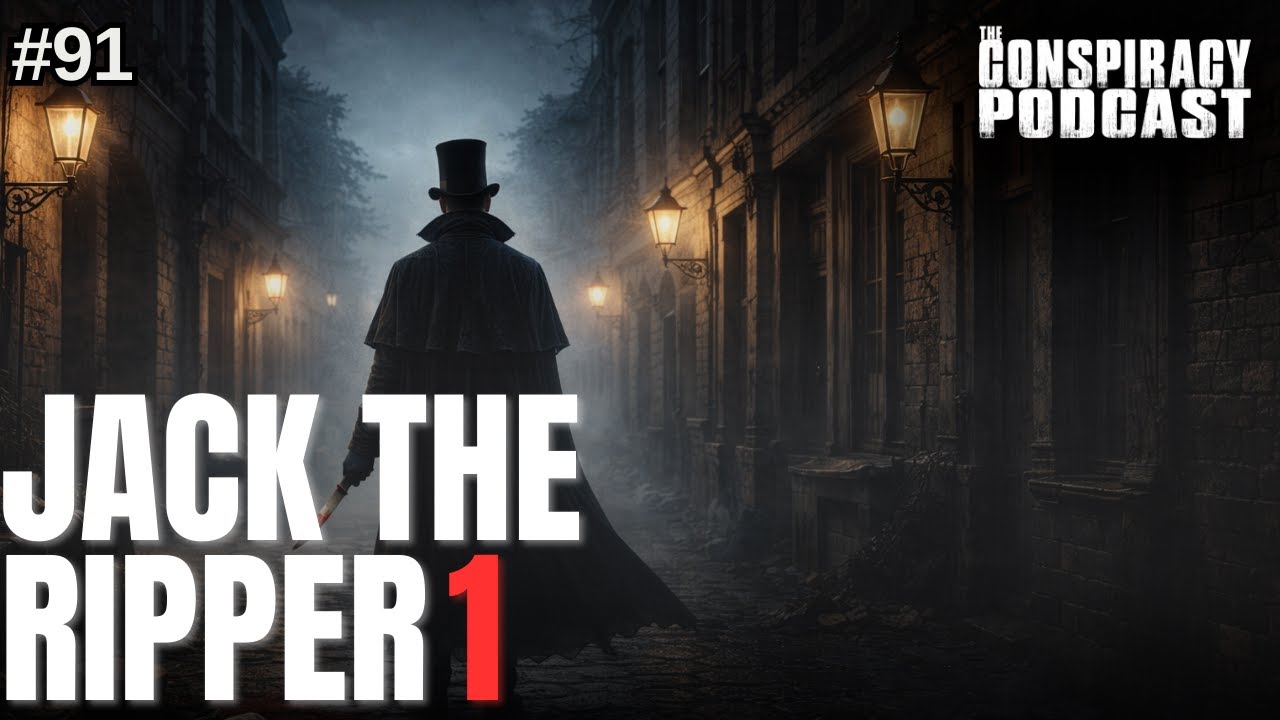
Jack the Ripper Part One – EP 91


Jack the Ripper: Part One
In this two-part series opener, the hosts dig into the 1888 Whitechapel murders, the case that produced history’s most famous unidentified serial killer. They set the scene in London’s East End, a densely overcrowded district of only 1.3 square miles that was home to roughly 80,000 people, dozens of brothels, and widespread poverty, alcoholism, and homelessness.
The episode walks through the lives and deaths of the five victims historians agree were killed by the same person, known as the canonical five: Mary Ann Nichols, Annie Chapman, Elizabeth Stride, Catherine Eddowes, and Mary Jane Kelly. It also covers the Dear Boss letter, the note sent to a London news agency that gave the killer his infamous name.
Part two of the series will pick up with the suspects and theories behind who Jack the Ripper really was.
- The murders took place in the Whitechapel district of London’s East End starting in 1888.
- Whitechapel covered only 1.3 square miles but had a population of around 80,000 people at the time.
- In October 1888, London’s Metropolitan Police estimated there were 62 brothels and 1,200 prostitutes working in Whitechapel.
- The five victims historians agree were killed by the same person are known as the canonical five: Mary Ann Nichols, Annie Chapman, Elizabeth Stride, Catherine Eddowes, and Mary Jane Kelly.
- The killer’s name came from the Dear Boss letter, sent to the Central News Agency of London on September 27, 1888, and forwarded to Scotland Yard.
- Elizabeth Stride and Catherine Eddowes were both killed on the night of September 30, 1888, an episode referred to as the double event.
Read the full transcript
Hey guys, welcome back to the conspiracy podcast. Oh, the Hiatus is over, boys. Oh, we’re back. [bleep] We’re, we’re, oh, we’re back, we’re so back. Uh, hope everybody’s doing good. Yeah, a lot has happened. Did you guys miss us? Yeah, I mean, probably. Like, God damn it, they’re going to get a Tuesday notification like, [bleep] we, we got some cute messages. We got a lot of cute messages, I think we, yeah, I think we, like, we have good fans. Yeah, yeah, we have great, we actually, we have great fans, great fans and patreons, the patreons. Oh yeah, stuck it through. Oh my God, like, you guys.
Strangely, a lot has happened since we left, dude. So much. God, we could do, like, hurricanes, multiple hurricanes, flooding, elections. I mean, just, I don’t even know what to say. Bitcoin, serly, Bitcoin spiking as soon as the election’s done. It’s like, I know, man, it’s been going crazy. But we hope you guys are doing good, we miss you, and, uh, you know, we got a cool episode. We’re doing a little bit different because we’re in between Studios. We are actually doing, uh, this is an outside episode, this, we’re on site here at the, at the, the backyard patio. Of, that’s right. So all of the equipment is out side right now.
Yeah, it’s on a table. You guys hear some, like, sirens go by, or some, like, random [bleep], now you know. Yeah, it sounds a little echoey, but that’s just, that’s just, that’s his life right now, like we’re living it. But it’ll be fun, and we’ve, we got an episode, we got two-parter actually, and, uh, I’ve been wanting to do this a very long time. I’ve watched and listened to almost everything I could get my hands on in order to do this. A lot of people go, oh, how is this a conspiracy? And I will tell you to shut up, it’s our podcast, we do what we want, this is our show.
Deal. [bleep] Welcome to the podcast, it’s not a conspiracy, but it’s just the podcast. Now the, uh, these episodes is Jack the Ripper. And, good one, Jack B nimble, Jack bewig, Jack the r. Do you guys know a lot about this dude? I know, like, a little bit, I actually don’t. You know, you know this, this is a white person me and, are like, what? Yeah, like, who he play for? That’s pretty funny. Uh, well, if you don’t know who Jack the Ripper is, he’s basically the first famous serial killer. Yes. It was like England, like old England, like they’re [bleep] wearing like three piece suits.
Oh yeah, we’re going to go around, so this happened in 1888. Old school. Okay, yeah, no forensics. Oh yeah. So just to give you guys an idea of what was going on in 1888, the United States, it was an election year, kind of like it is now. Um, the president was Grover Cleveland, and he was running for reelection, he lost to Benjamin Harrison. Uh, I don’t even know who that is. Yeah, don’t know. Both of them, didn’t even know that he was a president. Uh, in France, the Eiffel Tower was under construction. Yeah, we, we, okay. Uh, the British Empire was at its peak, this was like peak, they were the superpower of Earth.
After they lost, after they lost to us. Uh, then Nikolai Tesla and Thomas Edison were engaged in the war of currents, so this is the, you know, DC, alternating. Yeah, yeah, exactly. Um, Arthur Conan Doyle published the first reference to Sherlock Holmes. Leg. Um, Vincent Van go painted Star KN. Uh, just to give you guys an idea, yeah, this, yeah, this is like, this, like, height of of humanity right now. Golden Era, exactly. Um, too bad this guy’s out there nuking people the streets. Although, unfortunately, medicine was not that advanced at this moment. I know, the average lifespan was like 38, germ theory was not accepted yet.
So there were no, I think they were still doing blood lighting at this, at this point in time. I’m, I’m going to bleed, I’m going to bleed the disease out of your body. Uh, life expectancy was really low because there was a major separation between rich and lower class, and, like, they, they didn’t have, like, the hygiene level was like. That’s right, and they didn’t believe germs. Yeah, they’re like, oh, ass to mouth, no big deal. Yeah, they’re like, oh, and they were like taking shits in the street and stuff. 100%. It’s like, la, like downtown San, foran. Yeah, well, I mean, you know, less beautiful, but same amount of [bleep].
Yeah. So overall, 1888 was a time of significant social change, political tension, and advancement in, you know, art and technology. Um, but it was the era that laid the groundwork to this story. Okay. Yeah, in the last part of the 1800s, England experienced an influx of Irish immigrants who swelled the population of major cities, including what was called the East End in London. From 1882, Jewish refugees fleeing the Russian Empire and other areas of Eastern Europe also immigrated to the area. Yeah, immigration problem. So, where, so where this takes place is called the Parish of White Chapel. Oh wow. And the parish, essentially, we still use that term in Louisiana, like there’s parishes.
Yeah, there’s parishes. Yeah, but they’re essentially smaller than towns, they’re like little sections, little townships, like counties. And the actual definition is religious, because it’s your parish, it’s like your group. But it’s, it’s also a name for a small, small little section of a town. Yeah, it’s, it’s almost like a, like like a neighborhood. Yeah, like that, almost like that, like, you know, your subdivision. Like, I thought it was bigger than town but smaller than a county, or maybe it’s smaller than town. I think it’s smaller than a town. Yeah, that’s right, it’s a section of a town. Okay, that’s my, that’s my understanding of it.
So White Chapel, which is in, called the East End, right, they have a population of 880,000 in 1888. Okay, maybe it’s bigger than a town, cuz that’s, 80, 80,000 back then, it’s [bleep] section of a town. But this is London, right? Oh, England’s like this. B, and, and remember, the British Empire was the height, like this is the height, this is the biggest town, or the biggest city on Earth essentially. Close. Yeah, probably. Yeah. Okay, so, um, work and housing conditions worsened, and a significant economic underclass developed. 55% of children born in the East End died before they were five. Oh my God. Jesus. Yeah, probably because, like, you know, they weren’t getting baths every night like our kids.
So there’s robbery, violence, and alcohol dependency were commonplace, and the endemic poverty drove many women to prostitution to survive on a daily basis. Oh yeah, you see those in the movies, and they’re like, they make them look all hot, but, you know, they were like, yeah, they were not, they were. And it’s not, it’s not, like, it’s not like their fault. It’s just, like, you know. Yeah, like, no sh, no shower, I mean, sorry, it sucks. And, like, where a coret, then [bleep] sweat to death. Well, this dude’s [bleep] you down. [bleep] gross, bar. So the area of White Chapel was extremely overcrowded, many of the residents lived in poor and unsanitary conditions.
This dense population, combined with poverty and inadequate housing, contributed to its reputation as a district that was plagued by crime and social unrest. So White Chapel, in the late 19th century, covered an area of only 1.3 square miles. Oh my God. 880,000 people that time, that’s 1.3 square miles, that’s tiny. That’s hard to believe. What the [bleep]. It was densely populated District characterized by narrow streets, overcrowded housing, and this weird network of alleyways in courtyards. And so it was this weird, it’s where you get scared, and you’re like, that’s the [bleep] alley, that’s, from here to the entrance of this neighborhood. R, it’s literally right, imagine your neighborhood had 80,000 people in it.
But there’s about, there’s about 500 people here. If, yeah, gu, so multiply, so 80,000, multiply by, yeah, by 400. 400 times more people. So in October 1888, London’s Metro Police Service estimated there were 62 brothel, 1,200 prostitutes walking the streets in White Chapel. Damn. Wow. This walson. So put that into perspective, 1,200 prostitutes in a 1.3 mile, that’s like a prostitute every, every house, every house got a like three or four. There’s, there were approximately 8,500 people residing in what was called lodging houses, where it was like this big room where you have CS. Oh, so it’s, so it’s like a storm shelter where you go, they, they line the CS up, and very condensed living.
It’s horrible. Actually horrible, horrible, horrible. Um, the nightly price for something called a coffin bed was 4 p. And a coffin bed. Cofin. A coffin bed sounds comfy. It’s exactly what you were just saying, which is like, it’s almost like a shelter where you just have beds lined up. So it’s like a c, yeah. But even though it wasn’t a comfy cut, it was like a piece of cardboard. So, those, that cost 4 p a night to stay there, which is equivalent to about2 EUR today. So it’s cheap. Super cheap. Cheap, really cheap. Yeah, but everyone was like dirt. Four, like Motel One, not Motel, they like charge by the hour.
So they also had something called The Hangover Rope. This is [bleep] insanity, okay. They would string a rope in these rooms, or in these big hallways, and you would be a drunk, you would pay your two pence, and you would lean over the rope, fall asleep. No way. This is a true thing. You’re so drunk, this is a [bleep] true thing, it’s called The Hangover Rope. Oh, but it’s like only two p, not four, so like 50% off if you’re so drunk. Stand up, it’s two p. So, and it’s like a little, you know, play on words, cuz it’s hang over, and you’re drunk, but you’re also hanging over the rope.
Wow, it’s insane. Yeah, so there you go, give you an idea of what’s going on there. I mean, these slum lords were maximizing profits, for real. The large number of attacks against women in the East End during this time adds uncertainty to how many victims really were attributed to Jack, specif, Jack the Ripper, right. So 11 separate murders happened from 1888 to 1891, one, uh, and they were called The White Chapel murders. Now, we’re not going to go over those murders, because we’re only going over the Ripper confirmed murders. Okay, so, so he could have been, he could have been wild, like even more wild, was like his origin story, wer, but they weren’t necessarily like part of confirmed, as, his meaning.
But, but when you say confirmed, like, I mean, it’s pretty, I’m g, go through it, I’m going to go through it, and you’re going to be like, okay yeah, he does this thing. Yeah, yeah, exactly. Okay, so there’s, there’s, uh, and this sounds like a super [bleep] hero comic book, but it’s horrible, but it’s called the canonical 5. Oh my, damn, that might, that’d be a dope ass, like, rap name, like you know, wuang, the canonical five. These are the five that all historians say we’re Jack the Ripper. Okay, oh, they, one of these five, they’re in, they’re, they’re like, you know, the term canon, like, so it’s, how do you explain it, like, they’re the only ones that are legitimately Ripper victims.
But how do they know? Oh, because, again, here we go. Yeah, canle. Yeah. Okay, so Maryanne Nichols, known in life as Paully, was born Maryann Walker in 1845, off Fleet Street. Described as small in stater, standing 52, delicate, high cheekbone face framed by brown hair started to turn gray. She had a youthful appearance despite the roughness of her years. She was missing several front teeth, she had a small scar from childhood. Yet she was remembered as a woman who tried to keep herself clean and presentable, despite being an alcoholic, despite being a raging al. Whereas the man who were raging alcoholics stopped giving a [bleep] years ago.
So at age 22, Paulie married, uh, somebody named William Nichols. They had five children, but after years of domestic discord, they separated, she was abused, Paulie left William for good. Um, the split sent her further into alcoholism. But, man, like you, she was, five kids, like, I know, how? I can’t, I just can’t imagine being that dirt, porn, being like, let’s have another kid, baby. Well, that’s how they end. So essentially, she was in a family, she was in a marriage, she had a home, and then that ended, ended, ended, and then she became homeless, and then she turned a prostitution. Yeah, I mean, yeah, you got to do something to, yeah, feed five kids.
[bleep] Feed her alcoholism, yeah, that too. So, so she started living in what’s called, uh, work houses, which is kind of like government. No, it’s not, it’s not a hor house, it’s like a government, yeah, even, even lower, section8. Yeah, where, where the government would provide shelters for x amount of time. Ess, like, you can, you can sleep here, [bleep] out. Yeah, you got four days. Yeah, then they’re like, and then next month they come back for the four days, you know what I mean. Otherwise, they’re start, they’re going start asking for pants. Yeah, kind, there’s a rope over there. I know, press the hor.
R. So, by the, by the end of August 1888, Paully was lodging in various rundown, uh, houses in White Chapel, the heart of London’s East End, extreme poverty, etc. August 30th was no different than her normal living in squalor kind of thing, which was heavy rains washed over the city. Paully was seen wandering White Chapel Road, possibly seeking customers to earn her money to stay in the house. Yeah, yeah. And I do want to take a moment here, and I do want to say, this is some of the worst description stories that we’ve told in this podcast. Oh, this is terrible, this is actually terrible.
So I’m going to describe some of what happened to these people. Oh, you’re talking about, now I thought what you were talking about, up to now I’m like, this is [bleep] terrible. Just wait, tillo, I can’t imagine my mom, like, I’m just telling you, if you do have kids listening, this is, now the, the point of, you turn, you probably should turn it off. Yeah, it’s going to, it’s going to get a little, although we should have already warned, we should have warned you at the beginning. I’m like, yeah, okay. So she’s, she was seen wandering White Chapel Road, she was possibly seeking customers to earn her money for staying at the place.
In her inebriated state, she told a friend she already had the money three times that day, but she spent it all on booze. Her optimism never wavered, though, as she boasted about, she had a new bonnet, and she was confident that she was going to earn her way out because of this new bonnet. Got that new bonnet, boys, going to be a wild. Yeah, that new B, see, the boys, like, keep in mind, ied, [bleep] bonnet. I tried to explain, I tried to explain, like, how she looked. And, like, it sucks, because we think of, I don’t know, you know, she had like no teeth, she had, missing half her teeth were missing.
But you got to think, like, most of the people, most of the people, it was probably like the way she looked was probably like the same, you know, if you’re looking for head, that’s the one you go after. Oh my gosh, she’s got a little bit too many teeth for me. Hey, bonnet girl, come here. So in the early hours of August 31st, Paulie’s body was discovered in Bucks Row by a car man named Charles Cross and another man named Robert Paul. They were on their way to work, they stumbled upon her lifeless form. Her hands cold, but her limbs were still warm, and that indicated to them that she was killed moments earlier.
Oh, wow, wow. The police were quickly summoned, and Dr. Ree Luan pronounced her dead at 4:00 a.m. The brutality of her murder shocked even those officers. Her throat had been slashed deeply, her abdomen bore horrific mutilations, inflected with violent precision. Later on, the inquest into her death revealed these details, a long bladed knife had been used with considerable force, severing arteries and causing severe abdominal injuries. The doctor suggested that the killer might have been left-handed, adding to the mounting theory surrounding Jack the Ripper. And, and if he was, is left-handed, her throat, well, you can kind of, the angle, the angle, yeah. Her throat was severed by two deep cuts, one of which completely severed all the tissue, all the way back to her vertebrae.
Holy [bleep], damn, man, that takes a lot of effort. Her, her vagina was stabbed twice. Oh my god, really. The lower part of her abdomen was partially ripped out, with an open deep jagged wound causing her bowels to be on the outside. Oh my God. Several other incisions inflicted to both sides of her abdomen, had also caused by the same knife, each of these wounds had been inflicted in a downward thrusting manner. But why, why stab her in the vagina? That’s so unnecessary. A [bleep] psycho. You’re, you’re going to see, in these, in these, these murders, I mean, in, in part one we’re going to go over the murders, and then in part two is, is all the theories and all the conspiracies, right, right.
But you’ll see, in this, there’s, and a point of note, there’s no evidence of any sexual activity. He was just, he was a straight, straight ready to kill people. Call him a sexual deviant because of the vagina stabbing, maybe, like, more like, he gets some sort of like weird, like, pleasure. Yeah, [bleep] weird, God. I, so in her possession was a comb, a white pocket handkerchief, and a broken piece of mirror, which apparently was a prize possession in a lodging house, because there were no mirrors. Oh yeah, so you couldn’t see how you looked, there was no bathrooms and stuff like that, so you would, that, and as a working girl, probably like a, a thing, a hot commodity.
Yeah, h, there you go, that’s, that’s victim one. [bleep] Yeah, it just keeps going. By the way, that was the most of the mers also, like back then, it’s like, you know, like nowadays we have some, some psycho [bleep], and you also kind of been desensitized probably, you know, withing video games for files. Yeah, for f, yeah, Grand Theft Auto. CSI Sean, you know, he’s a CSI expert now. I am, I know, certified. True. Anyway, I’m just saying, back then, that like the shock that they, they must have had, you know. Oh, it’s got to be [bleep], running up on this. Also, all within, within like a mile and a half, mile and a half.
Well, I mean, it’s squared, so it’s a little bit bigger than a mile and a half straight, you know what I mean, it’s like four essentially. No, four in a square. Yeah. Cube, cube, doing my ass. Now, all right, that was, that was, uh, victim number one of the confirmed. Yeah, the, what, of the, the five, the canal five. Five, I mean, might, get that as, might trademark that. Yeah, okay, Annie Chapman, known as dark Annie, was born Annie Eliza Smith in 1841, to a soldier in the second battalion of lifeguards. Annie was petite, standing 5et tall, with a pale complexion, blue eyes, dark brown wavy hair.
Despite being under nourse and suffering from chronic lung disease and possible brain damage, Jesus, she had remarkably good teeth, though she struggled with alcohol, which is seems to be a theme. Yeah, I’m pretty sure it’s, that’s a, that’s a going concern. I mean, me too, I know, you, you living with 80,000 people. Eric has remarkably good teeth. I, I’m with you, Annie, with you, possible image struggle is real. That, not possible, that’s confirm. Those who knew her, like her friend Amelia, describe her as generally a steady woman, uh, in, kind of like reliable, despite she had a very, very strong taste for rum, that’s what she said, very, very strong.
Yeah, Annie married John Chapman, a coachman, on May 1st, 1869. They had three children, Emily was one of their children who died of menitis at 12. Annie, um, I’m sorry, Joh Alfred, who was disabled, was eventually put in a home. Um, like you have to thing, this is so hard to, no, but I, I, what I think, like, it’s got to. Be the, there’s a high percentile chance that there, she was on the rum while she was pregnant. I mean, I granted, I think there is, the hygiene is a huge part, but based on the amount of alcohol that everyone’s consuming at all times, I’m, I guarante, that has a factor.
And it’s not like beer, no, it’s not, there is no like straight up hard liquor for [bleep]. Yeah, they need like liquor. Yeah, so they separated in 1885, the husband continued to send support to her in payments, but he died the next year. So essentially, by 1886, she’s on the street, she, her daughter died, her husband died, her son’s dis, her son’s disabled, and she’s, di, going deeper into, that’s saying, she’s got to hit the street. Yes, that’s right, it’s like, you, I got to get the rum payments. That’s right. So like the previous victim, she started living in the lodging houses. Where are the kids, why are the [bleep] kids at?
I know, are they in the lodging? Probably just running the streets. In the [bleep], well, clearly, well, her son’s not run in the streets. So she tried everything that she could, uh, she started doing crochet work, she started selling flowers. Oh, okay, uh, she, at least she’s not like, only the, at least she’s doing, after, after a couple years, she just wasn’t cutting it, she turned to prostitution. Oh, [bleep], yeah, um, I hate you. There were reports, I was like, she’s trying, she’s trying to make a better life, like, damn it. There were reports that the night of, uh, her death, because she’s the second victim, that she got into a fight with another prostitute about some sort of romance with a John triangle.
Yeah, so just as a note, right, on the evening of September 7th, Annie was seen by Amelia, who noted that Annie appeared unwell and dejected. Despite her ill health, Annie was determined to make the money for her lodging tonight. That night, now, it’s crazy that each victim had to make it every night, like they have to make your rent every night. Yeah, that’s like, you, there’s like, every, every day is a struggle to survive. It’s not like, oh, I got to get it by the 15th, it’s, yeah, by like 700 p.m., yeah, yeah, or like 1:00 a.m., so I can go sleep. Oh my God, you know what I mean, it’s just crazy.
Can you imagine doing that, dude? I, how did, like, you don’t have rent tonight, needed four pens too. Like, I, but how did 880,000 people survive like this? What the [bleep]? So, around 130, England’s at the height of its power, like, [bleep] [bleep] hole. Around 1:30 a.m. on September 8th, she left, and she told the night watchman she would soon return with her bed money, so she can come back. Yeah, at 5:30 a.m., Elizabeth Long witnessed Annie speaking with a man outside of Handberry Street, in the company of a dark-haired man wearing a brown deer stalker hat. What is that? It’s like almost like a Sherlock Holmes kind of hat, like where it’s a little bit like down.
Got curve. Yeah, exact. Yeah, oh, okay, yeah, and it’s usually not plaid, but like, yeah, I don’t even know the color of it. Brown. It’s almost like a top hat kind of, but it’s not like, more like, yeah, it’s not like a the ears a little bit more. Yeah, it’s not like a, oh, like in a tuxedo, top hat, but it’s like more of a, yeah, look at, like, look at old timey English photos, and you, you’ll see it. Okay, okay, all right, anyways, just wondering. Yeah, yeah, yeah, oh, this one, I, I was way off, it’s definitely not a top hat, it’s a Sur Lo Hom hat.
Oh, you can do, get the flaps, and you put the flaps down, okay, got it. Uh, so he was wearing the deer soccer hat and a dark overcoat, and, uh, somebody described him as being shabby gentile. Now, shabby gentile is somebody who like it would be like, I wore a suit, but you’re poor, but I’ve been wearing it for like 5 days, does that make sense, like, it’s like a nice suit, but it’s like it needs to be pressed. Yes, it’s, it’s worn in, so to speak. Yeah, um, according to the eyewitness, the man asked Chapman, will you, to which Chapman replied, yes. Shortly thereafter, Albert Kadosh, who lived next door, heard voices in a thud against the fence.
The body of Annie Chapman was discovered approximately 6:00 a.m., near the steps of the doorway of the backyard. As in the case, of, the throat was severed by two deep cuts, her abdomen had been cut entirely open, with a section of the flesh from her stomach being placed upon her left shoulder. [bleep] Another section of skin, of flesh, plus her small intestines were removed and put on her right shoulder. It’s like weird symbolism, like. Chapman’s autopsy also revealed that her uterus was removed. Oh my God. Sections of her bladder were removed, and her vagina was removed, and, then they weren’t at the scene, they, taken?
Yes, okay, this guy’s, this guy’s on some other. Dr. George Phillips suggested that the murder had anatomical knowledge. Yeah, almost like a surgeon. See, like, this guy’s like doing some weird experiments, like he, [bleep], he’s like, o, take, or he knows where things are, exactly where to cut. Like, I don’t mean to be grotesque, but if, if Jorge and I cut Sean opener right now, I, I would bet money that you canot find, no, I would, I, is this, I don’t know, you know what I mean, like, you wouldn’t, I wouldn’t really know, where’s his uterus, where’s, I can’t find it, you would just like remove my penis, you’re like, I know where that is.
Yeah, exa, like, [bleep], we, we got that one off the lid. Check, which one, intin, so that’s what, you know, that’s, where’s this uterus, I can’t find it, what does it look like? No, so Annie was buried September 14th, in a quiet, early morning funeral, uh, her relatives paid for the service, kept it private, uh, her grave has since been buried over. Damn, that’s so dicky, you can’t even find her grave. God, that’s so [bleep]. They buried over, they put another body on top. I know, horrible [bleep], England, man, Jesus. Okay, so right around this time, in between victim 2 and 34, yeah, yeah, something came out which was called the Dear Boss letter.
Okay, and this was supposedly written by Jack the Ripper, and it was, was received by the Central News Agency of London on September 27th, and was forwarded to Scotland Yard. Here’s what the letter said, dear boss, I keep on hearing the police have caught me, but they won’t fix me just yet. I have laughed when they look so clever and talk about being on the right track. That joke about leather apron gave me real fits. Now, leather apron, they found a leather apron at the scene of one of the crimes, so he’s like, didn’t we get bl in a suit, and so they, they were like, oh, it’s a butcher.
Oh, and then they started calling it, because this is the first time, there was no Jack the Ripper at the time, so they called it leather apron, like that was the name of the, the killer, the leather apron killer. Yeah, exactly. Yeah, so, the leather apron gave me real fits. I am down on [bleep], and I shant quit ripping them till I do get buckled. Grand work, the last job was, I gave the lady no time to squeal. How can they catch me now? I love my work, and I want to start again. You will soon hear of meat with my funny little games. I saved some of the proper red stuff in a ginger beer bottle over the last job to write with, but it went thick like glue, and I can’t use it, red ink is fit enough, I hope, hahaa.
The next job I do, I shall clip the lady’s ears off and send to the police just for jolly. Wouldn’t you keep this letter back till I do a bit more work, then give it out straight. My knife so nice and sharp, I want to get to work right away if I get a chance. Good luck. Yours truly, Jack the Ripper, don’t mind me giving the trade name. And that was the first time, that was the first time ever, the term Jack the Ripper, because he, like, g, coined it himself, that’s right. So initially it was considered a hoax. Yeah, I mean, obviously they’re like, [bleep] this.
But the next victim, they cut, cut, cut, the [bleep] ears off, cut the [bleep] ear off, oh my God. And no one knew about, like, it sound like this was broadcast. So there’s no Twitter back then. Yeah, no, like, I know, right, like, [bleep] community notes, this guy’s full of [bleep]. Now, of course, like, people who are skeptic of it say, oh, well, the ear was nicked, it wasn’t quite cut off, of the next victim. Okay, so debatable, some people say the letter is a hoax, and it was a newspaper kind of thing trying to boost ratings. Trying to boost ratings, and that sort of thing.
So, but it essentially was the first time, the fake news, we need, we need to sell some more papers. But, and then the news frenzy started. Oh, for sure. Yeah, Jack the Ripper, the Rippers here, you know, like, uh, everybody started getting scared, essentially. So, yeah, I mean, no [bleep], I’m scared, fu, this happened like over 100 years ago. On the night of September 30th, which was just a couple weeks later, or a few days actually, Elizabeth Stride, which was known as Long Liz, met her brutal end. I, I’m sorry, I love how, that everyone is known by like, the first chick was like, it was like blah, blah, blah, name, p, and then, there, a long, and then the other one was, was dark Annie, and then now it’s, now it’s Long Liz.
Long Liz, who’s making up these [bleep] names, like, okay, she met her brutal end in a dark yard in White Chapel, but the difference this time was she was the first of what was called the double event, this was murders in the same night. Oh jeez, he’s getting. Like hella braz. Earlier that evening, Elizabeth, a 44 year-old, or 45-year-old woman of Swedish descent, was seen with, in high spirits. She had earned some money cleaning rooms, used part of it to drink with friends at the Queen’s Head, drinking, used all of it to get shitfaced. Around seven, she left her lodging house in Flower and Dean, cheerfully showing off six pence she had earned, determined to make her way through the rainy night.
Uh, I mean, I guess six pence is what, baller, two nights, it’s night, night and a half, two nights. If you want the rope, I’m good, I’m good till Saturday, it’s like a night in a rope, baby, I’m good to go, night in a rope. As the other, as the hours pass, witnesses plac Lizabeth with various men. By 11, two laborers saw her near the Brick Layer’s Arms, which is a rad name for a bar, it’s a super rad name for a bar, where she was embracing a man, the pair seemed intimate, yet the man made light of the situation, teasing them. 45 minutes later, William Marshall noticed her on Burner Street talking to another man in a sailor’s hat, whispering and laughing, they were close.
Elizabeth seemed fine and just doing her job, like doing her, doing her duty. Shortly after midnight, more sightings occurred, even a police constable saw her with another man described as carrying a mysterious package. 12:45 a.m., a witness named Israel watched from across the street as a man appeared to aost Elizabeth, violently pulling her to the ground near the entrance to Dut Field’s Yard. She screamed three times, not very loudly, but she screamed nonetheless. Schwarz, unnerved, noticed another man standing nearby who began to follow him, who caused him to flee. 15 minutes later, at approximately 1: a.m., Lewis Deut Dutz, a jeweler salesman, entered Dut Field’s Yard, guiding his pony, the pony sudden, the pony suddenly went, whatever, yeah, whatever, fing, and he, that’s when he discovered Elizabeth’s body laying in the pitch darkness.
Believing at first she was drunk, he soon realized the horror, her throat had been slit, still bleeding, her body was still warm. He quickly raised the alarm at the International Workings Men’s Educational Club, which was next door, and then it became a scene of flurry and panic. Dr. Frederick Blackwell was called to the site, pronouncing Elizabeth dead at 1:16 a.m. It seemed that the killer was interrupted and killed her. Oh, really. And fled. Oh, so he didn’t have time to like do like his weird [bleep]. That’s right. So how did he kill her? Cut her throat, okay. That’s it, was it the two cut, was it the two cut, like d double cut?
Cut. Okay, double cut, the [bleep] double cut. Yeah, I don’t understand, so, like, to ensure it get done, is it like, like the top and the bottom, or, yeah, maybe it’s like one. I’ve never done it before, so I don’t, I don’t really, I’ve never done it, really well versed in like the art of slashing throats. But, so, Elizabeth was still clutching, like, a small little, uh, bag or whatever, and so it’s assumed that she, it was just killed, and nothing else happened. Okay, does that makes sense, the other ones are, yeah, he’s like, yeah, cutting and placing body parts. So that was the beginning, is she number four?
She’s number three. She’s number three. But that was the beginning of the double event, the double up, okay. Right, right, yeah, so minutes later, a short distance away, about a two blocks, mh, Ripper strikes again, claiming Katherine Edos, and plunging White Chapel into a deeper terror of fear. And just [bleep] everything’s chaos here. In White Chapel, yeah, one of the Griz grizzli events in the history of White Chapel murder, and that was Katherine Edos, a 46-year-old woman with auburn hair, hazel eyes, uh, she was well known in White Chapel, she lived hard life, marked by struggles and separations. Yeah, walk to White Chapel, baby, yeah, it’s like, f, ain’t nobody living a good life there.
She spent the night, the night before, in Bishop Gate police station, because she was arrested at 8 for public drunkenness. Okay, you can, you get arrest for public drunkenness, but, like, hook’s like totally legit, yeah, it’s like no problem. Like, do you think the logs show that she put her first name as nothing, like her name is nothing? Yeah, written word nothing. The ledger is nothing. Okay, classic, she, she’s got a great sense of humor, love her already. So by 1:00 a.m., she was deemed sober enough to leave the station, and she was reported as laughing and bidding the officers farewell, and she said, I shall get a damn fine hiding when I get home.
Wait, didn’t that seem like she found like the hack, like staying in the police station is free? I know, o, I’d save four pence on this [bleep], and I could use it for boo. Released at 1:00 a.m., Catherine turned left, walking away from the direction which would have taken her back to her lodging, so she was going the other way. Instead, she headed toward Algate High Street, where she gotten drunk earlier that night, going back for seconds. After they sobered up, I mean, that’s literally what she was doing, she’s like, [bleep] it, I’m going back, yeah, I’m like, I’m going to go back to, I get drunk enough, enough to get back to the police station.
Somewhere along the way, she would have passed Duke Streak, leading directly to Church Passage, and it was a route shrouded in darkness, and in an alley with a half hour gap unaccounted for, that was the last time she was seen alive. At 135, three men exited the Imperial Club on Duke Street, they spotted Catherine standing at the entrance to church passage, speaking intimately to a man, with her hand rested on his chest. One of the witnesses noticed the man’s appearance, roughly around 30 years old, fair complexion, mustached, okay, medium build, wearing a loose jacket and a gray cap. Okay, they walked on, unaware that the w, they were the witnesses of the last moments of Katherine Eto’s life.
Yeah, I mean, you’re leaving the club, you’re like, whatever, that’s a hor, you know, making liv, you’re like, [bleep] it, like, what was it, 1,600 prostitutes in a one m radi. Yeah, 10 minutes later, at 1:45, a police officer Edward Watkins entered the square on his regular beat. He found Catherine lay on her back, her throat savagely cut, and her body was horrifically mutilated. Her intestines were pulled out, arranged over her shoulder, with parts, parts of her detached and positioned behind her, or next to her. The killer then carved her face, creating grotesque flaps of skin, and rem, and pulling the skin over her face.
Oh my God. He removed her kidney, and he removed her womb, with precision, that again the doctor said denoted anatomical, anatomical knowledge. That doctor arrived at 2 am, later detailed the brutal injuries, the sheer speed and efficiency of the mutilations implied that the killer worked with extreme expertise, inflicting the wounds that would taken a skilled surgeon like dozens of minutes, but he did it in several minutes, on the fly, after just murder a person, like, blood pulled around Catherine, but that little would have splattered. The murderer, who likely left the scene in a composed state, the wh didn’t end in the square. Later that morning, a piece of her apron, which was covered in blood, was discovered in a different street, smeared with what seemed to be feal matter.
Nearby, on a wall, was scrawled in chalk, that read, the Jews are the men that will not be blamed for nothing. Wait, the Jews, he misspelled it, how do he spell it, j u wes. Maybe that’s on purpose, or, like, okay, or maybe he was training to be a surgeon, but they found out he’s [bleep]. So, so, like, they’re like, no, bro, it’s not going to work out, the Jew is Jewish. So the message appeared to imply that Jews in general were responsible for these murders. But it’s unclear whether that graffiti was written by the murderer, just by, like, randa, or he dropped the apron next to, next to the graffiti, the graffiti.
The police commissioner, Sir Charles Warren, feared that the graffiti would spark a riot, and, like, a, a, anti-semitic. Yeah, you had mentioned that a bunch of the Jews had fled the Russian country, so there’s probably like that little community there. So, before dawn, he washed it away, tampering with evidence. Yeah, he did log it in the report, but he also, and he was honest, he said, I wash it away before dawn happened. Yeah, I mean, yeah, we don’t want to ride on our hands, boys, yeah, and that’s the double, that’s the the two night, the double night, like the, you know what I mean, whatever, the double event, the double event.
All right, so then the victim four, Mary Jane Kelly, also known as Marie Janette Kelly, Fair Emma, or Ginger, isn’t this five victim five, cuz they already did the double up. Oh, yeah, it is five, you’re right, yeah, 100%, this is the final victim. [bleep] Uh, she was known as, she was known as Farah Emma, or Ginger again, she has, course, I think this is like, this is like the horror, like naming convention. Yeah, like they got to know. Yeah, but, uh, so the description of her is, a young woman, striking beauty, blond hair, blue eyes, fair complexion. Why they call her Ginger, though, I thought I assumed she had a red hair.
Good question, that’s me, that’s on. I don’t know, good question. Yeah, she’s blonde, so, I, I don’t know, I guess, technically, like the ginger, the root itself is, if you like shave it off, it’s like kind of like blonde color, so makes sense. So, though attractive and lively, though attractive and lively, she endured a turbulent life, uh, marred by misfortune and hardship. There’s not a lot of information about Kelly’s early years, much of which we know, she was married, she was from Limmerick, Ireland, and she moved to Ma, Wales, as a child with her family. She was kind of well off, but details about her background are uncertain.
So we don’t really know how she ended up in White Chapel. I want to take a wild stab and say that somehow booze is involved. Yeah, no, absolutely. 100%. She, um, and what’s her booze of choice, and, well, I know, question, each of them have a different, I know, oh wow. Um, but we do know that she was married at 16, and then her husband died in a mining accident. Oh, [bleep], so I’m assuming that’s when it turned, and she didn’t have anybody to support her, andor she was crushed by the fact that the loss of her husband. Uh, in 1884, she arrived in London, she started working in a high class brothel, and that was where you would go to the gentleman, as opposed to the gentleman coming to you.
Oh, like an escort. Yeah, oh, you, you’ have to like, like, send for the carriage, and you bring, bring me the ginger. Yes, and then she would go in the carriage to the estate. So it’s like this is like the apple, in the high end, you striking beauty, like. Yeah, like she good, they probably wash him up, eventually, eventually. That, you know, you, you turn, you know I mean, once you go down the dark spiral. Oh, for sure, drinking and prostitution, and then you kind of go down that. I mean, anyone, like, yeah, and I mean, obviously, that’s, that’s not like a fun life, that’s not like she did this by choice, like, because she liked it.
Also, the environment, the environment was so set up to, to go slower into squalor. I mean, I wouldn’t even equate it to a highend escort today. Yeah, you know what I mean, they, they end up in this [bleep] White Chapel where you’re sleeping, The Hangover Rope, like white Chapel’s like hell, I know. And of course, I would want to drink, like the ghettos of the ghetto, if I lived in my Chapel, I would, I would want to drink all the time, I would be literally raging. A, exactly. So eventually, she met Joseph Barnett, um, and they began living together in 1887, they struggled through with rent, etc.
Eventually, Kelly started inviting other prostitutes into their place to live, until he just finally was like, no more, and they got into an argument, etc., and then, so she was out on her own. K, her out, like, damn, I mean, you know, it seemed like she was kind of a cool person, because she trying to, yeah, exactly, and, like, you know, she had probably a bigger room, or a bigger space, and that sort of thing. Unfortunately, this is the, the, the worst of the murders. What, worst, the, this is the worst. Get, I know, now I was talking to Shan off air, and if you were so inclined, they had about one photo per crime scene, so if you were inclined, you could go see exactly what happened in a black and white photo.
No, I did not, we talked about, we talked about it, yeah, I have not seen them. The photo of this is nothing I’ve ever seen, it’s [bleep] gnarly. So you have seen it. I have seen it, I did see it, saw all five, I saw all five. Yeah, yeah, okay, so, so what happened, so, okay, here we go. So the night before her murder, on November 8th, Kelly was reportedly in high spirits, friends later remembered her as warm-hearted, who tried to help others despite her own poverty. She spent the evening drinking in local clubs or pubs, and at 11:45, a neighbor named Maryan Cox saw her return to Miller’s Court with a stout man carrying a pale of beer.
So they do drink beer, probably, maybe it’s cheaper than the, but it’s a pale. I don’t know how big a pale is, it’s like gallon o beer. I think of, I think of a pale, like, where it’s like hanging on a water, the garden with, I mean, I’ve never had that much, like, hey buddy, I brought a pil tonight, two pales for my, my cadr over here, hey, hy, bring over some beer, brings a a barrel. Yeah, so she was with this guy, a quote unquote stout man, she was wrapped in a red shaw, and she greeted Cox, who heard her singing a violet from mother’s grave into the early hours of the morning.
So basically, the point is that she was in a good, good mood, and I just want to say this, interject, she was buzzing. No, there’s like surprisingly good information, like that they got from all these drunkards, you imagine interviewing these people, like, just tell me what happened. Yeah, well, like, my lips will be unsealed for a glass of rum, like, you like, [bleep], oh man. Around 2 a.m., another resident, George Hutchinson, saw Kelly on Commercial Street with a well-dressed man. He described the man as Jewish appearance, whatever that means. What the [bleep] does that mean, what does Jewish appearance mean? Well, he was like well-dressed, like Jewish appearance.
Yeah, I don’t, I actually don’t know, I really have no idea what that means, appear means. Yeah, um, you, you, you, you kind of have that appearance. I mean, maybe because the beard, but he could not be hidic, because he doesn’t have the hair for it, and I don’t have the nose, I don’t have the nose. No, but I think, I think maybe, just kidd, I think maybe it’s like, maybe they were probably distinct look, distinctly different from, like, the English Anglo Saxon people that were there, especially at the time. So maybe that’s why, it’s like, oh, Jewish par, I, this looks completely different than, yeah, I feel like, then everything was separated, like, oh for sure, you were like, if you were Irish, you were like a little cap, you know, Irish, different, Irish.
Yeah, yeah, okay, all right, we figured it out. Sal, yeah, uh, so, so they entered and they linered around 3:00 a.m., nothing seemed to miss. At 4:00 a.m., there were cries of, some of this statement, which was, oh, murder, and that was heard, but in White Chapel, apparently, that was common, and it didn’t draw much attention. They’re like, which is super, I don’t really like this part of the information, because everybody was freaking out, out about all the murders. I know, yeah, so it doesn’t really make sense, it doesn’t really add up, I feel like it’s a bad witness, you know, too drunk. Yeah, the room fell silent, and the flickering candl light went out.
The next morning, 10:45 a.m., John McCarthy, Kelly’s landlord, sent Thomas to collect her rent, because it was overdue. Remember, it’s every morning, it’s like, yeah, it’s just like, on the rents due when. Bower, uh, received no response, he peered through the broken window, and saw a horrifying sight, Mary Jane Kelly’s mutilated remains lay on the blood soaked bed. Oh, was like in her house, it was in a room, it was in like one, like, apartment room, essentially, that she was renting. Okay, yeah, the police forced open the door and discovered the gruesome scene. Her face had been an, quote, hacked beyond all recognition, her throat severed down to her spine, the abdomen emptied all of its organs.
Her uterus, kidneys, and one of her breasts were placed beneath her head as a pillow. What the [bleep]. Dam, other internal organs from her body placed besides her feet, about the bed, and sections of her abdomen and her thighs were put on the bedside table. What, dude, this guy’s just a [bleep] psycho. The heart was completely missing from the crime scene. He took the heart, he took the heart, how do you [bleep] cut up a whole, and then you like, how are you not covering blood? Maybe that’s why he cuts the neck first, right, gets most, yeah, bleed out, and then, I don’t know, I don’t actually want to know.
So multiple ashes were found in the fireplace, suggesting that Kelly’s murder had burned several combustible items to illuminate that single room while he mutilated her. So the difference being that the other murders, it was on the street, yeah, this one, it was like, or in a backyard, it was like in the, in an apartment, so he had tons of time. Oh yeah, he had all the time, no one’s going to walk up on, yeah, no, yeah, exactly. So, uh, they established that a recent fire had been severe enough to melt the, uh, the part between the kettle and it spout, which had fallen into the fireplace, so that means it was, the fire was big enough and long enough to have melted things.
So it wasn’t just like a little like he, like, lit a newspaper, and it, like, burned out. That’s right. This would be widely considered the last Jack the Ripper murder, uh, of which he was never caught, never identified, never even acknowledged by the police as to who they believe was responsible. That’s insane, and, those that’s the canon canonical five and Jack the Ripper. I, this guy was like a real piece of [bleep], that’s like, like, didn’t the deepest darkest piece of [bleep] that’s ever, like, 100%. I mean, not like killing, and, and it’s like just killing her is [bleep] really shitty, but got to cut our [bleep], th piece of her thigh, like, put on the table.
And that’s why they say, and it’s so weird that he takes like some of the organs with him. Oh yeah, like the heart’s gone. Yeah, took the heart. Leaves, where the [bleep] does he take it? I know, what do you do with it, what, cannibalistic, may, made some weird rit, [bleep], I don’t know. It seemed like a couple of the victims had removed parts. Yeah, well, there was uterus, uh, the womb, vagina, vagina, the heart, he took, he took like a, he took a kidney from one of the chicks. Yeah, yeah, he’s, it seems like he’s some weird like Frankenstein experiment [bleep] like thing, that’s what I feel like he’s doing.
So all in this time, like, people are freaking out, there’s the letter, um, and then there’s all these fake postcards and letters that come out. Oh, it’s just like the Zodiac, it’s like every, like, dude, it’s just, no, and that’s a great point, which is that it, it very much is Zodiac Vibe. Yeah, right, with the letter, and then people like, I want to try to recreate it. Yes, yes, exactly, I want to be famous, everyone like this weird obsession with being famous and being like validated, even if it’s for shitty stuff, it’s like, ah, so. Weird. So there you go, that’s part one of Jack the Ripper.
We are going to go into all the suspects and the conspiracies, there’s some [bleep] wild ones, and they’re pretty interesting to consider, is, yeah, things like that. So I don’t know if you guys have any thoughts right now, um, you know what I mean, about, I mean, kind of hard to hope you have a great day, like set you up for success, like Jesus, ch. I mean, we, we do, I mean, there’s obviously a pattern. Oh, there’s, there’s clear pattern, yeah, he’s got something against people are down in their luck, White Chapel is this [bleep] environment of a despair, everybody’s just selling their body and drinking, and drunk.
Yeah, and just like, there’s no well-to-do people, everyone’s, likeing this [bleep]. But what I always found weird is that people call him a sexual deviant, and, like, some sort of like sexually depraved person, but none of them were raped, or none of them were, but all these were like prostitutes. Maybe that’s why, but it’s also, it’s like, if you’re, if, if you, if you take someone’s vagina, I mean, I think they’re going to automatically classify, is sexual. Yeah, I get it, just saying it’s a sexual part. Yeah, I, I, yeah, yeah, I get it. Have no other reason to understand why I said they were prostitutes, so, like, you can just assume that, oh yeah, okay, he’s killing prostitutes, he wanted to, like, I don’t, I don’t know, yeah, I get it, Jesus.
Well, I’m sad, defin definitely crazy, I’m ready for, ready for number two. Yeah, please, I’m ready to solve this tonight. Yeah, absolutely, well, like I said, it hasn’t been solved, and it, it, yes, and maybe tonight, you know, there you go, next week for you guys, I know that’s right. All right, we’ll catch you guys next time, I hope you tune in to part two of Jack the Ripper, uh, again, sorry, sorry, it’s such a dark, really story, but, you know, at the same time, it’s, he’s one of the most famous, I mean, I think our lady listeners will probably like it, because, no, the ladies are always like, just like my wife, they’re all into like [bleep] crime, crime, true crime, dude, they, I don’t know why girls are so into that [bleep], like, and don’t act like you aren, cuz you [bleep], you know it, 100, we all have wives, we know that they’re into that [bleep], true, anyways, it’s cuz, cuz girls are like the ultimate like, uh, investigators, [bleep], like, is that what it is, maybe it is, get to the bottom of this [bleep].
100%, you think that’s why, I think that’s why, like, their, their FBI [bleep] turns on, and they’re like, I’m gna find out, like, day, you know what I don’t understand is that why are all serial killers white men? That’s true, it, it’s not all now, I know, cra, which one’s, which one’s not, there’s like, like one in Atlanta, in Atlanta there was, a there was a child murderer, it was a horrible, he was the worst, like, but he was a black guy, you know what I mean, makes sense, no Mexicans, I’m happy about that, that we know of. What you talking about, the night, the night Strangler was Mexican, night Strangler, I don’t know, I mean, do the cartels count as serial killers?
Yeah, like [bleep] do the craziest [bleep], I think he was called the nightstalker, and he was, he, that was in LA, yeah, he was in LA, and he raped like a hundred people, yeah, it was crazy, and he would crawl through their windows and rape them, and sometimes kill them, okay, and he was Mexican, but I was just wondering, I, anyways, we, you know, we could talk about it later, but I don’t understand white men. Yeah, I don’t understand it, really is that way. Yeah, yeah, all right, well, we’ll figure that out next time, catch you next Tuesday, guys, and if you’re a white male, good luck to you.
Yeah, we’re, we’re watching you. All right, we’ll catch you guys next time, night night. Hey guys, are you obsessed with us? I am, can you just not get enough? That’s all right, we don’t blame you, we just launched a Patreon, Patreon and Spotify exclusive content. There are two ways you can sign up for exclusive content, the first is through Spotify, there’s a link in our profile description that links you to the Spotify Premium page, and that’s only $22.99 a month, and it gets you an adree experience, and it gets you extra episodes that come out every month. The other way is through our Patreon, all you got to do is go to Patreon, search The Conspiracy Podcast, and you’ll find us, there are many different levels there, all giving different amounts of content, and you get a lot of bennies with this, like maximum bennies.
No, no ads, you get some exclusive discounts on our merch, oh yeah, you get access to our, we got, we got a Discord, you want to like talk to us in real time, do you want to yell at us constantly, live, yeah, do you want to have free access to cuss us out without any repercussions whatsoever, or just simply suggest a new episode that we got to do, there you go. And, and on top of it, you get five free mini episodes right out the gate, and then one a month from then on. What is a mini episode, real quick, a mini episode is basically a conspiracy or a mystery where it just doesn’t warrant a full hourlong episode.
So go to conspiracy podcast.com, patreon.