American Myths Part One: Revere, Betsy Ross, Washington & Franklin – EP 158


American Myths Part One: Revere, Betsy Ross, Washington & Franklin
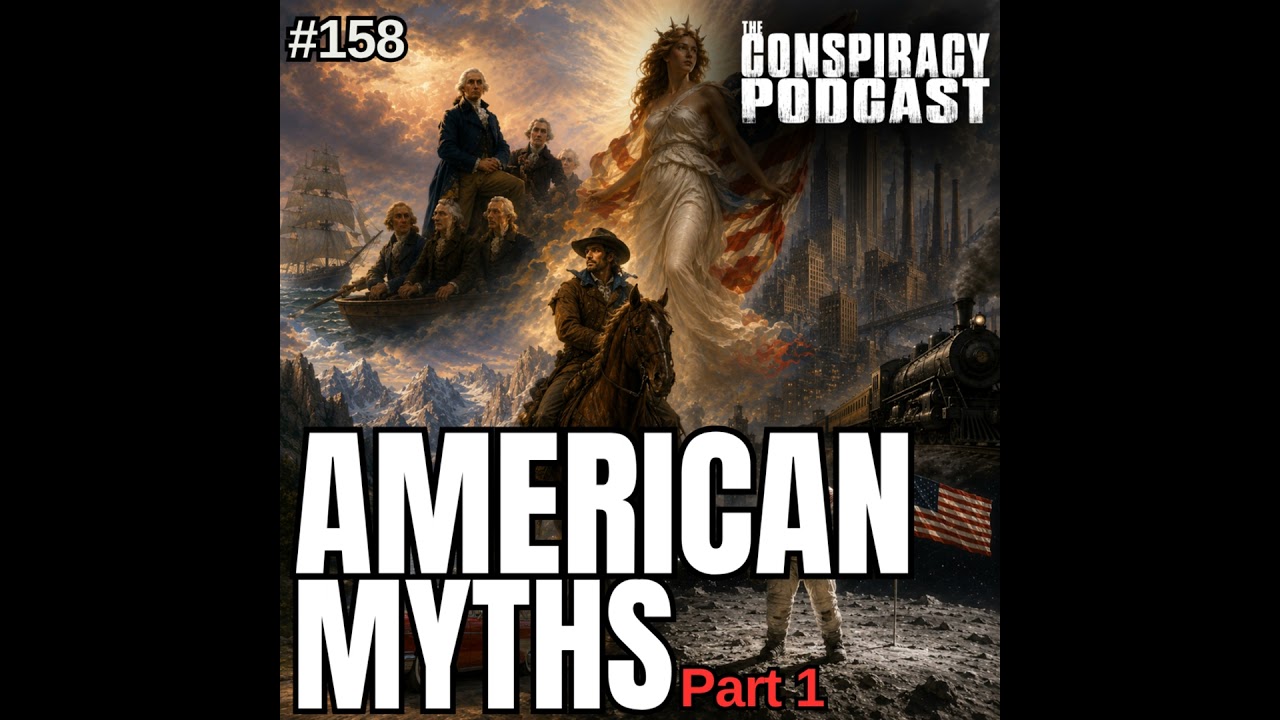
This episode opens a two-part series the hosts built around the 250th anniversary of the United States. Instead of revisiting the Declaration of Independence or the war itself, the hosts test the origin stories that get attached to the people involved, the ones on elementary school murals, on pocket change, and in every Fourth of July retelling. Part one covers four of the most famous: Paul Revere’s midnight ride, the Betsy Ross flag, George Washington and the cherry tree, and Benjamin Franklin’s kite experiment. The goal, as the hosts frame it, is not to tear down the founding generation but to separate the documented record from the stories that got built up around it decades and sometimes centuries later.
The most famous version of Revere’s ride, a lone rider galloping through the night shouting that the British were coming, does not hold up. For one, he would not have shouted that specific line: colonists at the time still considered themselves British subjects, and the ride was meant to be a quiet warning to militia leaders, not a public alarm. Revere was also only one of three riders sent out on the night of April 18, 1775 to warn that British regulars were marching from Boston, alongside William Dawes, a tanner who took a separate route by land, and Samuel Prescott, a doctor who joined partway through the trip. Revere reached Lexington and warned Samuel Adams and John Hancock, but a British patrol captured him before he reached Concord and took his horse. Dawes was thrown from his horse and turned back. Prescott was the only rider of the three who actually finished the route into Concord. The lone-hero version comes from Henry Wadsworth Longfellow’s poem Paul Revere’s Ride, written around 1860 and published the following year, which leaves Dawes out entirely, gives Prescott a half-line mention, and never says that Revere was captured or that he failed to finish the ride himself.
The Betsy Ross flag story rests on a single source: her grandson. Ross was a real Philadelphia upholsterer, recently widowed at the time the story is set, and government payment records do show she was later paid for making flags. But not a single document from 1776 mentions Ross or a flag-design meeting: no letter, diary entry, payment record, or congressional note names her as the maker of the first flag or credits her with suggesting five-pointed stars over six-pointed ones. The Continental Congress’s flag resolution, passed in June 1777, established the design but named no one as its designer. The story did not surface until 1870, nearly a century later, when Ross’s grandson William Canby told the Historical Society of Pennsylvania that he had heard it directly from his grandmother. The hosts point out the timing: 1870 fell in the middle of Reconstruction, when the country was looking for unifying patriotic stories, which is around when the Ross legend took hold on its way into schoolbooks.
The cherry tree story is not an embellishment of something real. It is a full invention, and historians know who invented it, and when. Mason Locke Weems, a bookseller and former minister known as Parson Weems, rushed a biography of George Washington to market within a year of Washington’s death in December 1799. The cherry tree anecdote, in which a six-year-old George damages his father’s tree with a hatchet and confesses rather than lie about it, did not appear until the fifth edition of that biography in 1806. Weems claimed he heard the story from an elderly family friend, but no such source has ever been identified, and no supporting documentation has ever surfaced. It was, however, a useful story: Washington had just died, the country wanted to mythologize him, and a tale about supernatural childhood honesty served that purpose well enough to end up as standard moral instruction in American schoolbooks.
Franklin’s kite experiment happened, but not quite the way it is usually told. In June 1752, Franklin flew a kite with a metal key attached during a Philadelphia thunderstorm to test whether lightning was electrical in nature. The popular version has him gripping the string as lightning strikes the kite directly, a moment that almost certainly did not happen and would likely have killed him. Some historians argue that what Franklin actually observed was closer to a static charge building on the damp string, similar to St. Elmo’s fire, which made the key spark faintly when he brought his knuckle near it rather than delivering a direct hit. That the danger was real is not in question: in 1753, the scientist Georg Wilhelm Richmann was killed while attempting a related lightning experiment, becoming the first person known to have died testing electricity. Franklin also was not working alone. Scientists in France were running related experiments around the same time that helped confirm the same theory, and the lightning rod Franklin developed from this research went on to save lives well beyond his own name.
The hosts close by weighing why any of this matters if the myths are inspiring. Their answer is that knowing the documented history does not have to diminish the founders, and in Washington’s case it can add to the story: they point out that he was reportedly asked to take power as king and later to serve beyond two terms, and turned both down, which they agree is one piece of the Washington legend that actually holds up. Their larger point is that the real founding generation was made up of complicated, flawed, real people, and the parts of the story that got invented later, the lone rider, the patriotic seamstress, the honest little boy, the solitary genius in a storm, were built to make heroes simpler than the truth actually was.
- Paul Revere was one of three riders sent out on the night of April 18, 1775 to warn colonial militia, alongside William Dawes and Samuel Prescott, and Revere was captured by a British patrol before reaching Concord while Prescott was the only one of the three who actually completed the ride
- Henry Wadsworth Longfellow’s poem Paul Revere’s Ride, written around 1860 and published the following year, is the source of the lone-hero version, and it leaves William Dawes out entirely while never mentioning that Revere was captured
- No document from 1776, including letters, diaries, payment records, or congressional notes, mentions Betsy Ross or a flag-design meeting with George Washington, and the story did not surface until 1870 when her grandson William Canby told it to the Historical Society of Pennsylvania
- The Continental Congress’s flag resolution, passed in June 1777, established the 13 stars and stripes design but named no designer
- The cherry tree story first appeared in the fifth edition of Mason Locke Weems’s biography of George Washington in 1806, seven years after Washington’s death, and no source for the story has ever been identified
- Benjamin Franklin’s June 1752 kite experiment did not involve a direct lightning strike, which would likely have killed him, and the scientist Georg Wilhelm Richmann was killed in 1753 attempting a related electrical experiment
Read the full transcript
Hey guys, welcome back to the Conspiracy Podcast. What’s popping? What up people? I’m Eric Jorge and Sean. Hope you guys are well. Welcome to uh July. Yeah. No. Yeah. July. Welcome to July. Yeah. And it’s it’s hot. I’m My feet are wet. Like [laughter] that’s how hot it is. So, as we do, let’s get some [bleep] [bleep] out shout outs. We got Becky from Canada with a yearly membership to the founding crew. Thank you so much, Becky. And I thank you for putting from Canada so it’s not just your first name. So you know it’s you like for a fact. All your homies are going to know it’s you.
Then we got KSN. Welcome with a with a founding crew member. Another Euro. He’s uh looks like it’s from England from KSN cuz it’s a pound. We are international folks. Say Mr. Worldwide. Then we got Jackie Midnight. She is in there and she got a a twoagger in the Wordle on her first day in Wle. So jealous. I’m ridiculous. So jealous. I’ve never gotten a twoagger. I got so close. I was one letter away from a twoagger. I was pissed. It’s like the unicorn. I just can’t get it. Then we got Bendler with another founding crew membership. And then we’ve got Lachlan with a conspirators membership.
And I believe Lachlan is from Australia. And I think you just joined. And I think I said what’s up to you at 1:30 a.m. That’s [laughter] dedication. I did see that like godamn. I was like in bed. kind of like, “All right, what’s up, brother?” So, thank you, uh, as always. Um, we love you Patreons. Um, you’re really the the the cornerstone of this organization and, um, we look forward to many more fun convos in the Discord. Absolutely. I love I love the international, too, because Yeah. You know, it’s really expanding, honestly. Uh, Europe is now 10% of our listener listenership. Oh, man. Yeah. Wow.
Killing the game, man. There you go. So, if you want to support the show, go to patreon.com/theconspiracy podcast. Uh, and and it helps the show keeps going and, you know, makes us do things that we couldn’t normally do like more equipment, better sound, uh, more episodes, more minis, etc. And also for upcoming, just so you know, there are some minis coming out all about America. America, uh, and it’s for Patreons only. So, uh, we’ll let you guys know on that. But otherwise, what do we got today? Okay, so we’re now in July, and I don’t know if you know this, but [laughter] yeah, you do.
Uh, it is the 250th anniversary of America. 250 years of excellence and embezzlement. [laughter] So, we thought it would be cool to do some of the more famous American [snorts and clears throat] stories and the myth or the myths behind them and see. Yeah. see if they hold water. Like see if uh see if the stories are true or if they’re a little makebelieve. Let’s get into it. Yeah, I’m excited. So, every country has a founding story, a clean, heroic, inevitable narrative about how the nation came to be and how the larger than-l life figures who made it happen. The wise general sitting at top the white horse, [bleep] yeah.
The patriotic seamstress stitching a flag by candlelight. The young boy who could not tell a lie and the brilliant inventor flying a kite in a thunderstorm. [snorts] These are stories that you learned as a child or at least for Americans. Yeah, that’s I learned this as a child. Uh they’re on the murals in elementary schools. They’re on the coins that are in our pockets. They show up every Fourth of July, year after year, wrapped in red, white, and blue. And this year, 2026, the United States turns 250 years old. Okay. You know, I I feel like we should do like the intro and it’s like the Ron Burgundy where he’s like sick of telling you what’s what’s wrong with America.
How about what’s right with America? [laughter] Like we kick butt Russian butt. We should do that. So, we’re at a quarter millennium, 250 years since men signed a document in a sweltering hot Philadelphia room. Yeah. wearing wool coats. Kind of like us right now. Yes. And told the most powerful empire in the world to go to hell. Suck it. Yeah. Yeah. So, we figured this was a perfect moment to do something we’ve been wanting to do for a while, which is go over the myths. Not the country, not the ideals, not the people who actually bled and suffered and sacrificed to make this place exist.
We’re talking about the stories, the legends, the invented details, the carefully crafted narratives that were built up decades and sometimes centuries after the fact. Oh, hell yeah. Of course, by biographers and poets and politicians who needed heroes and they didn’t mind inventing the heroes. I mean, history is written by the victors, you know, just saying. So, let’s start with the most famous midnight ride in American history. Paul Rivere. THE BRITISH ARE COMING. THE BRITISH. We And we went to the We went to the Paul River house in Boston. Yeah. So, uh, Sean and I went to Sorry. I know. God damn it. Cory was busy.
Yeah. I’m sorry. More like you left me out. [laughter] I still We didn’t We We forgot you existed. I didn’t get an invitation. I mean, what do you call that? Your wife went [laughter] What does that tell you? Oh my god. What does that tell you? It was for my wife’s birthday, let’s be fair. Yeah. So, uh, we’re not even kidding. Last year, we went to Boston. Uh, we toured Paul River’s home. I regret not going. I wish I wish cool. It was a lot of fun. Uh, we also walked the Freedom Trail. The Freedom Trail. Yeah. Yeah. And that was pretty cool. It was pretty cool.
Yeah. Yeah. April 18th, 1775. The British are coming. Except they weren’t called that at the time. And he didn’t do it alone. and he never actually finished the ride. He [laughter] just like stop, took a break. Here’s what actually happened on the night that became the most romanticized moment in the American Revolution. And here is how one poem written 85 years later turned a messy, collaborative, incomplete mission into a myth about a single hero and his horse. So the setup is real. The British Army or more precisely the regulars the professional troops of the crown. They were preparing to march from Boston to conquer. Their mission seized a cache of colonial weapons stored there.
American patriots got wind of the plan. Someone needed to ride out and warn the militia. Three men were sent. Paul Rivere. He was a silver smith. He was a known Son of Liberty, which is kind of like a rebel group that was created, and a veteran of previous intelligence missions. He set out from Charleston at around 11 p.m. He rode to Lexington first, where he warned Samuel Adams and John Hancock that the British were coming for them personally. Then there was a man by the name of William Daw. He set out at nearly the same time, but a different route. He was a tanner, not a silver smith.
He covered the same ground, delivered the same warnings, and by every historical account did exactly what Paul River did. Yeah. Exactly. No credit. Yeah. Forgotten. The crazy part, honestly, if you put him neck and neck, it could have been a poem about William Daws. I may maybe it’s like less sexy to have like a tanner than like a silver smith. Oo. Yeah. But if you surveyed, I don’t know, children of America or even adults, they would be Paul River. I think remember we saw like in the thing too like Paul Rivere like his family, they were making ship for like ships and stuff. They were like they were pretty integral in the war effort and like commerce and everything.
So the two men met in Lexington and decided to continue on to conquer. Along the way, they were joined by a third writer named Samuel Prescott. He was a local doctor who happened to be out late visiting his fiance. He [snorts] knew the roads, so he joined the mission. A British patrol stopped them. River was captured. He was held at gunpoint, questioned, and eventually released without his horse. He then had to walk back to Lexington on foot. [bleep] that. [laughter] And helped move some of Hancock’s papers before the fighting started. He never actually reached Conquer. Daw escaped the patrol, but was thrown from his horse during the chase and had to turn back because he was injured.
Prescott jumped his horse over a stone wall and disappeared into the woods. I mean, this sounds like the story like that that sounds like the way more like [bleep] I know. He was the only one who actually made it all the way to conquered. He was the one who completed the ride. So, Samuel Prescott, the one who finished, the man whose name you almost certainly did not know in school. But how did Paul Riverv become the legend? One word was a poet named Longfellow. Henry Wodssworth Wodsworth Longfellow was one of the most famous poets in America in 1860. So 1860 compared to you know the late 1700s.
So it was 80 85 years after the ride. He sat down and he wrote a poem and he called it Paul River’s ride. And it opens with one of the most famous lines in American poetry. And it goes, “Listen, my children, and you shall hear of the midnight ride of Paul Rivere.” Just a good romantic side. It’s a good rhyme, too. Yeah. You can’t like the the midnight ride of dogs. [bleep] doesn’t [bleep] doesn’t vibe. It doesn’t flow off the tongue. [laughter] I know, right? It’s not bars, right? I know. Seriously, got them [bleep] [laughter] ancient American bars, brother. I mean, truth be told, it’s a beautiful poem.
It’s dramatic. It builds tension properly. It turned Paul Rivere into a lone hero thundering through the night, carrying the fate of America on his horse, but it’s mainly made up. I mean, yeah, two degrees like captured, released. I mean, the overall theme [laughter] of fail leave that out. The theme of it is right, you know, like Yeah. the sentiment for sure, but like you know our guy little doctor on like a midnight rendevous with his little honeyone jumping walls make it the conquered in Long Fellow’s version Paul River is alone. He finishes the ride and he warns every village and farm and he signal lanterns in the church tower.
One if by land, two if by sea are part of the plan. He’s a hero by himself, decisive, and there’s even like great images of him riding through the town. And there’s one, you know, one one if by land, two if by sea kind of thing, you know. It’s also from like a logistic standpoint like it’s it would be pretty dumb to send one dude. Yeah. Like just from like a redundancy like Yeah. Like he could get thrown from his horse. Like Yeah. There’s not And you’re traveling at night. You’re going to be exhausted. Like you could get stopped by patrol. I mean there you would it would be stupid to send one person.
So uh Daw does not appear in the poem at all. Prescott does get a halfline mention. [laughter] A half line. Yeah. Uh it never mentions how Paul Rivere was captured. Of course not. You got it doesn’t even say that it probably doesn’t say. It said he finished the ride that he never got captured. Yes. And it never mentioned that he never actually made it to conquer. Cool. So the question then was like, well, maybe he just didn’t know the history and he wrote a poem and all. He was he was [bleep] commissioned by the family, wasn’t he? Exactly. He actually had Paul River’s own account, which in his own account says there were three people.
What a [bleep] [bleep] Oh, I I crushed it. You understand? I made it. [laughter] I made it the whole way, baby. So, we shouldn’t blame Paul River. Oh. Oh, it’s Oh, Paul River said that there was three people. Yes. I thought I thought Paul River was like hyping himself up. I’m the only one. Yes. No. So, just imagine it’s us three and we do the ride and then later in my memoir I’m like I was by myself. [laughter] My My friends abandoned me. They were too afraid to go on the journey. No, but in reality, he told the his the true story. Oh, okay. Yeah.
And then the just the guy who wrote the poem decided to It just sounds better like the lone hero. Like it is it’s it is more like it’s more fantastic. Yeah. Yeah. And imagine trying to describe three individuals in a poem. Yeah. No, it doesn’t. You know, you got a lot of line space. Too much to rhyme. Yeah. Apparently, he had his reasons. It was It was 1860. The country was tearing itself apart over slavery. The Civil War was one year later. Longfellow was writing about unity, about the courage of ordinary Americans standing up to tyranny. Okay. About the founding spirit of the nation. I mean, it would be like nice to I mean more it’d be more unified if there was multiple people standing up.
I know, right? [laughter] No, only one. But also like true. Yeah, it is true. But like it sounds better like one guy fighting one, you know, one guy making it like I don’t know, like inspirational, I guess. Yeah. When the one white knight like slays a dragon, it’s way doper than like the army just [bleep] [laughter] nuke that [bleep] It almost sounds like he wanted people to stand up, right? Yeah. If one person can make a state, you can make a state. Not really unity cuz unity would be like everyone. us three homies got together and we call it peace. Maybe. Maybe it’s like Yeah.
It’s like if one person is willing to do it, like why aren’t you willing to stand up for your country? Just a a silver smith. A lowly a lowly silver. So the poem was published. It spread and it was memorized by generations of school children. And Paul Rivere became the midnight writer. William Daw was essentially forgotten for over a century. [laughter] In 1896, nearly 120 years after the ride, a woman named Helen Moore wrote a satirical poem pointing out exactly how absurd it is. She called it the midnight ride of William Doss. It was Its first line was, “I am a wandering bitter shade. Never of me was a hero made.” Oo, damn.
She got some skills. Yeah, she’s I like her vibe a lot more. But as you know, it did not become a classic poem. [laughter] Well, it’s because probably it’s the original. It’s already there. It’s the original diss track. Yeah, it’s [laughter] like the original diss track. Anyways, and that’s that’s the uh the you know, there’s there’s actually more to the story of there. There were more writers. They just didn’t do the whole the whole route. You know what I mean? Yeah. So, but that’s you still see this like even today like if if if a story takes off like that’s just the one that it becomes the truth.
Yeah. Yeah. Okay. Okay, so the next one. Well, actually, hold on before we jump into the next one. Mhm. I mean, you get why it happened, but does that it’s [bleep] Do you think it was detrimental to anything or I guess it’s just more the two guys got the short end of the stick? They got the short end of the stick for sure. Yeah. But otherwise, what they did was still communicated, right? Well, it it was, but like nobody really knows. Like even I didn’t really even know that at all. Yeah, I thought it was just River like running it. I didn’t read when we tooured the house.
I I wasn’t I was just looking. I [clears throat] wasn’t actually like reading the the cliff notes. I was just like, “Ooh, look at this stuff.” Did you talk about that in the house when you guys were over there? Uh in not in the house because in the house was all about his It’s all about him. It’s This was the fireplace that he you know, whatever. And it was like his family and like what they did like artifacts and [bleep] Yeah. They did mention it on the trail, but you would have to stop and read the sign. There’s a lot of signs. Yeah, there’s a lot of signs.
We also saw like Cuz a lot was happening in that town. We also saw like Ben Franklin’s like grandparents grave. Mhm. It was like random. I was like, “Oh, okay. Cool. I guess like I don’t know why that’s impressive.” [clears throat] Okay. The next one, and it’s the story of Betsy Ross. Ah, okay. Okay. Betsy Ross is one of the most beloved characters or people. I don’t want to say characters in American history. A young Philadelphia seamstress. She was recently widowed. Called to a meeting with George Washington himself. Dude, [bleep] Gdub. Like original gangster. He shows her a sketch of a flag and it had 13 stars, 13 stripes.
And she suggests one small change. Cut the stars with five points instead of six. It’ll be easier. Washington agrees. So then she sews the first American flag. Wait, they had six pointed stars. I know. I was trying to like what does it what does it even look like? What the [bleep] It looks like an asterisk. Yeah, basically almost like it is a perfect story. It’s a patriotic woman, a a a widow, a humble contribution, and then a founding father and then a gesture of a small change that turned it into the American flag today. Pretty much story we all know. But there is no contemporary evidence of any of it actually [laughter] happening.
Oh my god. Crazy. They were just like, “We need a feel-good story for the people.” Not a single document from 1776, not a letter, not a diary entry, not a payment record, not a congressional note, mentions Betsy Ross or her flag. The Continental Congress passed a flag resolution in June 1777 establishing that design as the official design. Okay. The resolution though names no one. No one in the founding era seems to have thought about who made the flag first or cared or even wrote it down. To kids, summer isn’t just time off. It’s time spent building confidence and curiosity. But when school meals pause, millions of kids lose access to the food they count on during the school year.
As a neighbor-led network, Feeding America is deeply rooted in every community, ensuring summer meals continue nourishing growth and potential. Your support puts healthy food within reach, fueling the future for kids and their families. Give now at feeding america.org/summer hunger. Christian David Beckham dreamt hungry soning Alonso Davis meal I mean it’s like it’s like the Nike symbol. You know that girl that did the Nike? She don’t get any credit until uh Bill Knight. Yeah. Then he, you know, gave gave her credit. But I think it’s like at that time, the only thing I can think of that would make sense is unfortunately at that time women, you know, they were kind of like That’s true.
They were important, but they they didn’t get any recognition really for anything. It was only like men who like [bleep] Yeah. ran [bleep] So maybe that’s why like it got like brushed under the rug because they’re like, “Eh, what?” Yeah. We did this [bleep] We’re the founding fathers. We’re [laughter] the founding mothers here, boys. So similar. Uh nobody heard of Betsy Ross until 1870. So 100 years. Years. Yeah. Yeah. That year, a man named William Kanby stood up before the Historical Society of Pennsylvania and told the story. He said that he heard it directly from his grandmother. His grandmother was Betsy Ross. Oh. Cani was a loyal grandson doing something very human.
He wanted his grandmother to be remembered. He collected affidavit from relatives. He wrote the story up. It spread. And by the time anyone thought to question it seriously, it was in the text. It was fact. [laughter] That’s right. But some historians have been skeptical for a long time. Betsy Ross did exist. She was a real Philadelphia upholsterer. She did make flags and we have payment records of her doing other flags. Okay, there you go. So that I mean it’s like if you’re building a case I mean there’s there’s proof that she’s made flags before. Mhm. Also there is evidence that she knew Washington through their shared church.
Okay. Sure. Yeah. You know, meaning there was like a connection of like, “Hey, Betsy.” Well, it’s also like I’m kind of working on a thing. Well, it could also be like [laughter] I can also see the other side of it, too. It’s like, yeah. Oh, like I went I I saw I saw [bleep] 50 Cent at the Houston airport. So, there’s a shared connection of us using the same transit [laughter] post. Well, no, it would be more like like some somewhere you go every month. Yeah. I mean, obviously I’m I’m playing devil’s advocate here. Like why does everybody take a hundred years to tell the story?
I know, right? That that’s a [bleep] great That’s a great There was no social media. Yeah. So you couldn’t just like rip a post out about it. [laughter] So the specific story that can be told, the meeting, the design suggestion, etc. And even the first flag, no one has ever found a single piece of evidence to support it. What makes it even more interesting is why this story took hold when it did. 1870 was right after the Civil War. America was in the middle of what’s called the reconstruction phase, trying to put itself back together, trying to reconnect with its founding ideals. Well, see, then it’s like when the propaganda machine gets in play, like we need we need a unifying event.
Yeah. I mean, kind of similar to the It is. I’m very similar. Yeah. Um, and it was a story about an ordinary patriotic woman contributing to the birth of the nation and you know might have been exactly what the kind of the kind of myth that the country needed at that time. Yeah. Yeah. It got written into history and Betsy Ross, a real woman who may or may not have made the first flag, became an American icon based entirely on the story told by the grandson. You know, I I feel like she probably did make the flag, but I think they might have I think I think they might have added in her like suggestion.
What do you mean? Like her suggesting that it be a fivepoint star instead of a six point star. Yeah. I think they just [clears throat] gave her a little like they fluffed it up a bit. Like she probably did make it just to make it more real. Yeah. But like I can’t imagine like her even being like, “Uh, Mr. Washington, sir, who’s like like literally like he’s like 6’3. Very imposing man.” Yeah. Very imposing. He’s young, strapping dude. just like literally just crush the the strongest entity on earth and you’re like uh it should be five points like [laughter] sir no I think she was like hell yeah I’ll make it whatever you guys need I won’t charge you because this that’s why I don’t think there’s like a I’ll do it for free it’s like for the nation record yeah but I I think they probably added in that she like gave a little little insight yeah okay no I I I like this one I believe I think it’s just the records are gone.
Yeah. Similar to the first one, it just like kind of got lost in whatever every day dayto day and then y I like it. Okay. But with the first one, we know what happened. Yeah. Like it just they just changed it. This one we don’t know what happened. Yeah. So that’s why it’s a little different cuz it’s like Yeah. But it’s believable. Like it’s totally believable. If you’re going to the same church week after week like And that’s what you do. You built you’ve already made some other flags like Yeah. Who else would you go? George probably George was like anybody know a flag maker [laughter] for sure.
He was like my name’s Betsy. He’s like perfect Betsy. Make it. Yeah. For free. My name’s Jeff. [laughter] So speaking of George Washington. Yeah. There’s another story and it’s the story of the cherry tree with George Washington. I don’t know if you’ve heard this before. Uh, George Washington, a small boy, a hatchet, a cherry tree, and a I cannot tell a lie. Oh, yeah. So, you’ve heard this about Washington. He like that’s like his myth, like his tagline. Yeah. Is commander, you know, general, president of the, you know, the first president of the, you know, blah blah blah. And, you know, he could not tell a lie.
Yeah. I thought that was honest. Abe. No, but he also had No, [laughter] he stole it. Sounds pretty good. I’m going to go with this one. Uh, but what most people don’t know is it is made up. He’s told hella lies. Yeah, it’s not. [bleep] lying all [laughter] the time. It’s not embellished. It’s not exaggerated. It’s fully invented. And we know exactly who invented it and why and when. His name was Mason Lock Williams. He went by Parson Williams. The why. Big alteration. Yeah. The what [laughter] the [bleep] He was a book seller and a former minister who had a gift for storytelling and a very practical interest in selling books.
After Washington died in December of 1799, Williams recognized an opportunity. Here comes the playbook. He wrote a biography on Washington and it was a short one, a readable one, and it was designed for mass production and mass sale. And he rushed it to market less than a year after Washington died. He saw a cash cash grab. Yeah. Yeah. The early editions were fairly straightforward. Then Williams had a better idea to change it in the fifth edition of the biography. [laughter] Not the fourth. How about hear me out here. What if he was a [bleep] saint? [laughter] Not even kidding. So in 1806 when the new edition was being printed, he added a chapter and it was called the story of the cherry tree.
In it, a six-year-old George Washington receives a hatchet as a gift and promptly uses it to damage his father’s favorite tree. [snorts] [bleep] you, Dad. When his [laughter] when his father asks who did it, young George says, and this is the famous line, I can’t tell a lie, P. You know, I can’t tell a lie. I did cut it with my hatchet. It’s so funny. He’s like, why are there chips in your brand new hatchet I just bought you, Georgie? [laughter] Okay, you caught me. I can’t tell why. You know what, father? I cannot tell him. [laughter] His father was so moved by the honesty that he embraces him and tells him he’d rather have George be truthful than own a thousand cherry trees.
It’s cute. It’s super cute. It’s cute. It’s not believable. He would have happily had a [bleep] thousand cherry. Give me a switch. [laughter] I know, right? I was like, now I’m going to beat your ass. I love how these like back then you don’t have to verify anything. Just [laughter] write [bleep] Just write [bleep] So crazy. Sean was a giant man. [laughter] And you just call it biography. Yeah. That’s no new edition. New edition. Yeah. Eric had the locks [laughter] of a Swedish god. And they based the movie Thor upon [laughter] Eric standing at a reasonable 6 feet, [laughter] 285 lbs of pure muscle. Williams later claimed the story came from an old woman who had known the Washington family personally, but no such woman has ever been identified.
Historians have found zero supporting documentation. And everybody kind of agrees the story almost certainly came from Williams himself, a man who understood that a good story sold books. I mean, can you imagine like being like a sleazy salesman in the like the 1700s? Oh, bro, can make a killing. Trust me on this one. This is patent pending. What [laughter] do you do? What do you do? You go door to door? Oh, for sure. You’re like And you just look for like what’s wrong with them? You’re like, I have a great like this magic wart cream. And he’s just like right in a little like he’s got a little rolodex wart [laughter] family.
Exactly. Like like the woman with the weird toes. Got it. But again, the cherry tree story spread because it was useful. Washington had just died. The country needed to grieve him properly and to mythologize him to turn him from a flawed human being into something permanent and monumental. A story about his fundamental almost supernatural honesty at such a young age served the need perfectly. By the time anyone pushed back on it or historians decided to look into the credibility of it, it was in every school book in America. Children were learning it as a fact story. It was cited as moral instruction to the children.
And today it’s one of the more foundational stories of American childhood, which is George Washington could not tell a lie. And that’s why [clears throat] he was the greatest. You know, I’m pretty sure they even put him as the number one president. Oh, for sure. Greatest. Yeah. I mean, at least in the top, probably the only president like and especially like him like him him even denying like serving additional terms cuz he was like no like [bleep] he he literally if he wanted to he could have been the king of [bleep] America easily and they would have been like [bleep] yeah 100%. And that’s a good that’s a really good story and uh I don’t think there’s a myth there.
I think it’s a true story. They they literally were like, “Please serve again.” And he’s everything and he’s like he’s like, “No, I won’t do it.” And for people who don’t know that story, [clears throat] especially like maybe our people overseas or who don’t know, didn’t grow up with American history, um George Washington was the first US president. And uh in America, we have two term limits. And he was asked to actually become king of America. And he said no and refused. And then he was asked to do multiple terms beyond it was like and was like no that’s that’s defeats the point of why did we even do this why did I [bleep] fight this [bleep] but I think like those type like that I’m like okay even if it’s not true like I understand you would think there would also be records of that I just think of of them going we put into motion Washington’s extended term you know oh I yes I was talking about like the story of him being on it like you know not telling a lie I’m like, look, I get it.
Even if it’s not true, like I get the sentiment, but I personally think it it actually holds more weight when someone is flawed and they still achieve like this this level of responsibility and like devotion to like the cause. Like that’s to me that’s more valuable because they’re like, “Oh, I can do it.” Like I can I can Yeah, you’re human. It’s like achievable. I can achieve this level of like greatness. I don’t have to be some like [bleep] demigod to like do this thing. So, the last one’s a little different because this one is the story of Benjamin Franklin flying a kite in a lightning storm.
Oh, yeah. With a key attached to it and [bleep] I wonder what’s going to happen. [laughter] It’s not entirely invented. The experiment that he had was real. Franklin actually did it. He was legitimately one of the most important scientific minds of his era. and his work on electricity was genuinely groundbreaking. Uh, and I was actually fortunate. I took my kids to Ben Franklin’s house in Philadelphia. It’s really cool. Yeah, we did not do that when we went to Philly. No. Twice. Should have. But the story, you know, the one with the key on the We went to Rocky. [laughter] Yeah. [bleep] Yeah. We with his tiny little feet.
Yeah. [laughter] God, his feet are of a child. It’s hilarious. But the story, you know, the one with the key on the string, in the lightning bolt, in the heroic moment of discovery, is a lot messier and stranger and more dangerous than the legend suggests. And the heroic lone genius version of it erases and something more important about how science actually works and is created. So, here’s what we know for certain. In June 1752, Franklin conducted an experiment in Philadelphia to test his theory that lightning was electrical in nature. He flew a kite in a thunderstorm with a metal key attached to the string. Okay, so far so good.
So far so good. Line it up. The goal was to see if electricity from the storm clouds could be drawn to the string to the key. And if it could, that would prove that lightning was electrical. It worked kind of. Here’s the detail that almost never makes it into popular version. Franklin didn’t stand in the field holding the string while lightning struck the kite. He had one of his servants do. [laughter] What he observed was not a lightning strike at all. It was St. Elmo’s fire, a static electrical discharge caused by the charge atmosphere during the storm. The key tingled and it sparked a little bit when he brought his knuckle near it.
Oh, so it’s the static electricity. Yeah. Okay. So, technically it wasn’t lightning. Yeah. Right. This is why the scientific method exists. So, it’s like Yeah. Like something’s got to be provable and like and repeatable. Mhm. But I mean it technically it’s still on the same vein is because that’s all lightning really is is a collection of like the the the stray ions and like the atmosphere like combining into directed electrical force. I mean, that’s just really what it is. Yeah. Nice. Yeah. [clears throat] I mean, here’s the here’s the consensus is that if lightning actually struck the kite, it would it would have killed them.
Oh, four. Well, [laughter] actually, no. Not necessarily because it’s like a it’s like the string itself isn’t like a isn’t a great conductor. Unless the string if the string was made of metal, he’s [bleep] cooked. Like he’s his his brain explodes. Yeah. And he’s totally dead. So later, two men in Europe tried to replicate the experiment after Franklin told him or after he published his account. They used metal rods this time. Oh. Oh, those guys were [bleep] dead. Both were electrocuted. Both were [laughter] both literally dead. Big surprise. Yeah. This episode is brought to you by Perfect Beastro cat food. Hey guys, today I’m interviewing my cat about his perfect beastro food.
Percy, you seem to be a big Perfect Beastro fan. Care to comment? Totally. What do you like about it? You love the high quality ingredients and the delicious flavors, of course. Yeah, that makes a ton of sense. Listen to Percy, guys. Visit perfectbeastro.com to try it for your cat. This episode is brought to you by San Pelgro Chow, a gift from Italy to your home. San Pelgro Chow is a flavored sparkling water made with real fruit juice, finished with a pinch of Sicilian salt for a perfectly balanced taste. So, which flavor will you choose? Peach, lime, blood, orange, cherry, or maybe the allnew lemon cello.
Crafted in Italy with 0 g of added sugar. San Pelgro Chow. Buy it now. Uh, in 1753, George Wilham Reichman, a Russian scientist, was killed by a ball of lightning in his lab and he became the first recorded person in history to die from an electrical experiment. He’s like, “Trust me, boys. This is going to be Oh, the other the other two guys didn’t die, huh? Yeah. What’s really wild about the George Wilham incident is that there was an artist present. Imagine [laughter] like the [bleep] You imagine like he looks like that. That’s where they That’s where they took the um the Home Alone like scenes from.
They’re like this is what it looked like. What’s really wild is he drew a picture of it when it happened. But what’s weird is like just imagine he’s going really fast. Oh my god. And is on the floor like not doing anything. [laughter] Oh, I got to draw this. I need to draw this side. Yeah, like the like the uh the court guys that are like destroying this really fast. [laughter] Yeah. There’s also a second thing the legend erases. Franklin’s kite experiment proves something. Yes. But he wasn’t working alone and he wasn’t working in a vacuum. A European scientists particularly in France were simultaneously conducting experiments that confirmed his theories more often in controlled settings.
the lightning rod, which Franklin actually invented himself and which generally saved lives and was based on a full collaborative body of knowledge that was not just in America but in Europe as well. I mean, so it wasn’t a a singular on his own. Yeah. Well, you see that happen a lot where it’s like, yes, you’re the one who had the original idea, but like he didn’t do it alone, but only you get the cred. Yeah. Yeah. It happens all the time. Yeah. Exactly. Yeah. just like, “Oh, look at like all of Elon Musk’s companies, but like only he’s getting credit, but he’s like tens of thousands of employees that are like literally make this [bleep] go.” Yeah.
Uh Benjamin Franklin though, there’s no way around it. He was brilliant and his scientific contributions were real, but the version of the story where one pluckucky colonial genius figured out electricity by himself is not totally 100% 100%. Yeah. Yeah. No, not even close. [sighs] So, here’s the question. Why does it matter if the myths are inspiring? If the cherry tree story teaches kids to be honest, if Paul River’s ride makes people feel connected to the founding of America, and if Betsy Ross represents ordinary Americans contributing to something larger to themsel, why spend time like why are we doing this episode to like tear it down almost?
Like, I I didn’t want it to be where we’re just [bleep] on every story that we have of America. We’re not. We’re just trying to know the truth. That’s that’s the thing. It’s and it’s it’s it’s a slippery slope because I mean you can even see that nowadays, you know, you on the scale of importance, you’re like, “Okay, well, isn’t it better if we in essence lie to make something seem better or to prove a point or anything? But at what point does that stop?” Yeah. I mean, like, look at Nazi Germany. It’s like at what point is like Gobles like I’ll [bleep] say whatever the [bleep] I want and like do whatever the See, so it’s like a slippery slope.
You you can have it or not have it. It’s the same concept with the you know the argument on free speech is like you either have 100% free speech or you have or you don’t. Yeah. Because it’s like oh well you can’t say this because it’s bad and people don’t like it. And like that’s fine and I understand there’s things that I don’t like, but do I have like the I feel like people should be allowed to say whatever they want regardless of whether it hurts our feelings. Yeah. Because the the moment you start making that distinction, you start whittling away at it and eventually it’s only like partially free speech and [laughter] then it’s like very controlled free speech and then there’s no there’s no such thing as free speech.
You can only say what we [bleep] say you can say because the people have decided that it’s bad to say certain words. So the same thing if you lie about it, you end up like Jack Maul. Yeah. Exactly. Exactly. You end up like Jack Maul, one of the richest men on the [bleep] planet getting ghosted. So it’s like at what point are you like, “Okay, yes, I I agree that those stories like are mostly putting out good messages.” Yeah. But at what But it’s You set a precedent. You set a precedent that it’s okay to lie about stuff and then like And then you have the US government now.
It’s like, well, yeah. Everything kind of Well, it’s it’s for your own good. We’re doing this for your own good because we know better than you. Especially when you live in the time of it. Oh, for sure. Right. [clears throat] For sure. Like the other point is, you know, would you, for example, Washington and Jefferson own slaves. Mhm. Right. And I know, you know, uh, and that’s a full-scale topic that maybe we should even do an episode on. Sure. That will probably be a longer conversation. Yeah. But would you rather not know the truth? I’d 100% rather know the truth. There you go. That was that was where I’m getting is like, would you rather know the truth?
Even if they were great, incredible individuals, would you rather it only be the myth or know the whole truth about them and go, “Okay, no, the whole the whole truth.” You got to see the thing is like look like at the time like it’s you can’t what we love to do, we love to like put everything into the context of right now. Yeah. You can’t you can’t do that like you can’t put everything in context right now like choices it was like you’re like a product of your environment like people like the whole concept of like nature versus nurture I mean I think that obviously nurture is a fundamental part if not to me more I think everyone’s fun I think everyone’s fundamentally good at heart but if you’re bred to think that this is the way that this is how things are this is the way and it’s okay and it’s this is not actually bad how would you know Yeah.
Like if you were brought up, let’s say you lived in the 1500s and you were brought up that like slave like everyone owns slaves. Like what’s the problem? Like we do this. This is how we survive and this is this is the right thing to do. How are you to know any better as a child? You’re a [bleep] ch you’re completely molded by the adults around you telling you what to do. Now you’re still like Yeah. children are are are molded to I mold my [bleep] kid every day. You [laughter] mold them too. I’m like hardcore. I’m like this is like don’t be a dick like be cool like [bleep] listen to me like so that’s what I’m saying.
Can you really fault can you really fault them for something that they were born into? Yeah. It’s not like he decided one day he’s like you know what [bleep] those guys let’s make them slaves. That’s a different story then [bleep] you. Right. Also [clears throat] all these stories end up being written by somebody else. Oh 100%. Yeah. Yeah. So it’s not that like they’re claiming Yeah. They’re writing their own. Even in the first one, Paul River actually told the whole story [laughter] didn’t even get out that way. Yeah. So, it’s we can’t blame Paul River. I know. For writing the truth, for writing that story 100 somebody Wads, whatever.
Longfellow. Long fellow 100 years later. Wodssworth. Wadssworth, whatever the [laughter] [bleep] his name is. Yeah, exactly. Uh, so the founders were real people, complicated, contradictory, sometimes brilliant, and sometimes extremely wrong. The nation they created was a real place, messy and contested from the very beginning, built by people whose names we mostly don’t know, shaped by forces no single hero controlled. But I do I do think that at this moment in the 250th anniversary, I would say go learn about your country’s history. Go learn about America. Learn about these heroes that we didn’t know about. There’s some amazing stories and even in the wars and all that sort of thing, some amazing people who built what we have today, which is America.
Uh so, happy birthday to America. Happy birthday, America. Like now, right now, I’m seeing a lot of foreigners that are coming for the World Cup and they’re making a bunch of videos of like, they’re like, “Oh my god, America rules.” Dude, the Japanese guys are my favorite. I love those guys. But you know what? On the other side of it, I go over to Europe. There’s some things I [bleep] love. It’s amazing. It’s beautiful. I love it. Ireland, Scotland, all these places. Canada. I literally tell them all the time. I love Canada so much. It’s so incredible. Anyways, so happy birthday to America. Um, we’re going to celebrate with you over the next month.
We got a series. We actually have a part two of this. We’re going to talk about more of the national American myths. One of which is Columbus. [laughter] Ever heard of him? stuff. Even though he was Italian, I don’t. Uh, we’re going to go over the Liberty Bell. We’re going to go over Pocahontas. The Liberty Bell, which we did see. Yes, we went to the Liberty Bell as well. Uh, we’re also going to over the Alamo. If you’ve ever heard the story of the Alamo. So, my neck of the woods. Say Eagle Eagle Pass. Yeah. And then for the minis, we have uh there’s a a conspiracy about well, not a conspiracy, more of a myth about who really was the first president.
M uh because there are some paperwork that shows that technically speaking there was another president. Okay. Uh we’re also going to go over the myths of the Wild Wild West. Love it. Mhm. Uh these are minis. These are minis for patreons only. Yeah. Sorry. We’ll go over those. Normies. You can’t. Also, we’re going to do an episode on the dollar bill. Okay. What the [bleep] is that eye doing over the pyramid? And then if you fold it a certain way, you see the 911 tower. And there’s a dude in the bush. Like [laughter] there’s a little dude in the bush going. Anyways. Yeah, there you go.
All right. Well, there you go. We’ll catch you next time on the Conspiracy Podcast. Night night. What’s up, guys? I hope you enjoyed this episode. I want to invite you to join us for our Patreon. So, what that is is an exclusive membership. We’re going to be able to get exclusive discounts like 15% off on all our merch and you won’t have to listen to these ads ever again. Ads ever again. Plus, you’re going to be able to access our minis episodes. So, that’s something that nobody else is going to get access to. They’re just short podcast episodes where about 15 minutes long or so.
So, cool, you know, extra content that you’re going to get access to. I know. And all those other suckers are waiting for next Tuesday that you’re going to hit some minis up, you know, fill the void. That’s right. instead of, you know, having to wait the rest of the peasants for for the next episode. [laughter] All you got to do is go to patreon.com/theconspiracy podcast and you’ll find us. There are many different levels there, all giving different amounts of content. That’s right. All right, ladies and gentlemen. Night and night.