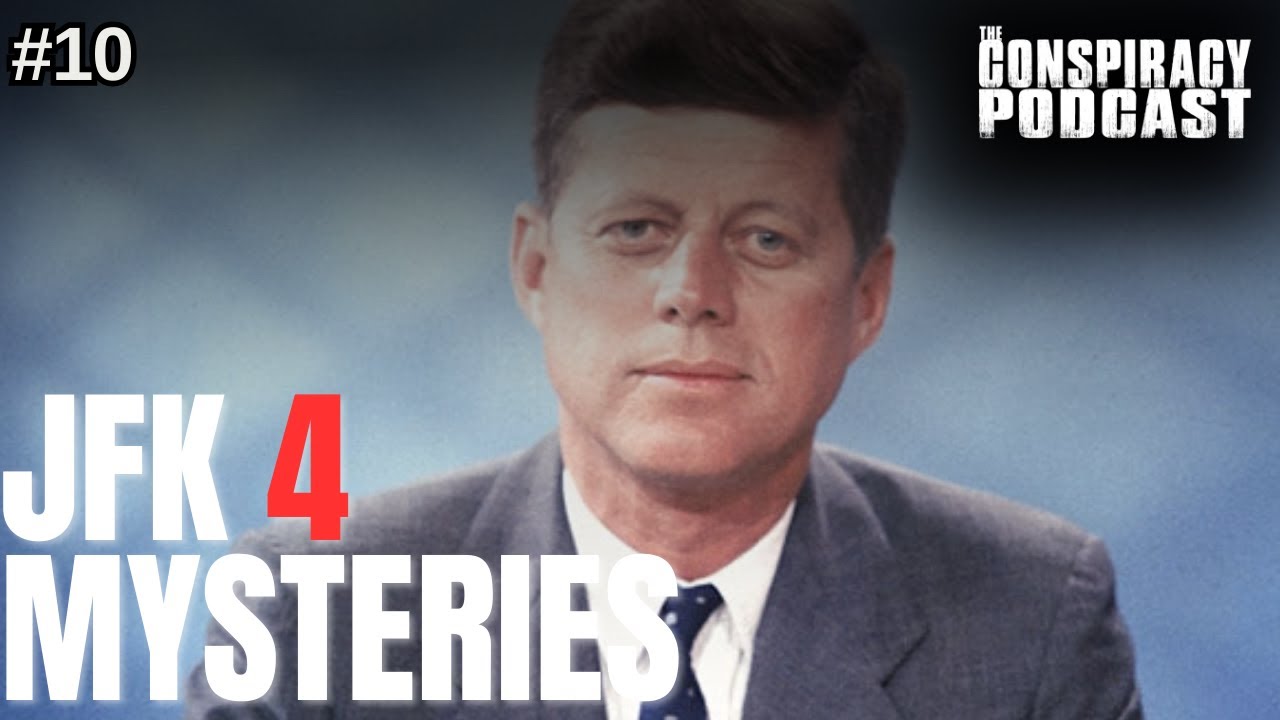
JFK Assassination: Unsolved Mysteries Part 4 – Episode #10

JFK Assassination: Unsolved Mysteries Part 4
Part four of the guys’ five part JFK series is a deliberate change of pace. After two episodes on the Warren Commission and a full episode tracing Lee Harvey Oswald’s biography, Eric, Sean and Jorge say this one is a catalogue of loose ends, the details that never got a clean explanation no matter which side of the case you land on. They are explicit that this is not the finale, the theories and their own verdicts are being saved for part five, so what follows is presented as open questions rather than conclusions.
The episode opens at the grassy knoll with Lee Bowers, a railroad switchman whose tower gave him a clear view of Dealey Plaza. In his Warren Commission testimony, Bowers said he heard at least three shots and described a reverberation that made it impossible for him to say whether the sound came from the depository or from the mouth of the triple underpass. The hosts flag that Bowers also described a crowd of onlookers converging near his tower afterward and mentioned people being arrested nearby, a detail they say never surfaces in the Warren Commission’s public conclusions even though Bowers was interviewed about it. Photos later emerged of three men detained by Dallas police near the depository and described in reports as transients, and the hosts spend real time on how well groomed the men looked in the photos, arguing that does not match the description, though they stop short of saying who the men actually were.
From there the episode turns to Julia Ann Mercer, whose story the hosts single out as the strangest one they cover. In a notarized statement given to police the day of the assassination, Mercer described a parked truck near the overpass, a man she said removed what looked like a gun case from the truck bed, and watched him walk up the grassy knoll. In later interviews she was shown photos of Oswald and Jack Ruby. She said Oswald’s photo did not match the man carrying the case, but that Ruby’s photo showed a similar round face to the man who stayed in the truck. Two decades later, in a 1983 interview with author Henry Hurt, Mercer reportedly said she had identified the two men as Ruby and Oswald after watching Ruby shoot Oswald live on television, and that she later accused the FBI and the sheriff’s department of falsifying her official statement. The hosts do not resolve the obvious timeline problem, that this would place Oswald at the knoll around the same window he was reportedly still inside the depository, and they treat the account as genuinely unsettling rather than fully credible.
A cluster of physical evidence questions follows. The Mannlicher-Carcano rifle’s scope was reportedly so misaligned when the FBI examined it that it could not be sighted through at all, no ammunition clip was ever recovered, and the FBI reported finding no identifiable Oswald fingerprints on the weapon, only partial prints. Gunshot residue testing reportedly showed traces on Oswald’s hands but not on his face, which the hosts find hard to square with firing a rifle at close range, and they debate without settling whether that residue could instead trace to the separate shooting of Dallas police officer J.D. Tippit. On the Tippit case itself, they note Jim Garrison’s claim that the bullets recovered from Tippit’s body could not be ballistically confirmed as having come from Oswald’s revolver, and that three witnesses who reported seeing a second man near Tippit’s squad car were never called before the Warren Commission.
The hosts then walk through Garrison’s impersonation theory, built on a handful of odd details: a Riley Coffee Company resume that listed Oswald’s height as 5’9 when the hosts insist he was 5’8, a CIA surveillance photo from Oswald’s Mexico City trip that reportedly showed a different man entirely, and a Dallas parking lot job applicant who allegedly asked about the view from a downtown building and signed the name Lee Harvey Oswald weeks before the assassination. The hosts push back on their own summary here, pointing out that Oswald got his Book Depository job through a friend’s brother months before the motorcade route was even released, which they say reads more like happenstance than an elaborately staged frame job.
The episode closes on two threads the hosts treat as the most damning. First, the FBI reportedly received a telex five days before the assassination warning of a threat and never acted on it, and separately, agent James Hosty testified that he destroyed a note Oswald had personally delivered to the Dallas FBI office weeks earlier, on the order of his supervisor Gordon Shanklin, only after Oswald was already dead. Second, at Parkland Hospital a nearly whole bullet was found loose on a stretcher with no documented chain of custody, and later that night at Bethesda Naval Hospital, an autopsy team with little to no gunshot autopsy experience reportedly did not initially recognize a wound in JFK’s throat, mistaking it for a tracheotomy incision, while an unnamed general in the room allegedly ordered them not to dissect the back wound. JFK’s preserved brain was requested from the National Archives in 1966 and was reported missing a few years later. The hosts openly disagree about how to read all of it, one suggesting sloppy, panicked bureaucracy is the more likely explanation, the other insisting the stakes were too high for that much incompetence to be an accident, and they leave that argument unresolved heading into the finale.
- Lee Bowers, a railroad switchman with a clear view of Dealey Plaza, testified to the Warren Commission that he heard at least three shots and could not determine whether they came from the depository or the triple underpass.
- Photos surfaced of three men detained by Dallas police near the Texas School Book Depository shortly after the assassination and described in reports as transients.
- Julia Ann Mercer gave a notarized statement to Dallas police the day of the assassination describing a man removing what looked like a gun case from a truck and walking up the grassy knoll before the shooting.
- The Mannlicher-Carcano rifle’s scope was reportedly so misaligned it could not be sighted through, no ammunition clip was ever recovered, and no identifiable Oswald fingerprints were found on the weapon.
- FBI agent James Hosty testified he destroyed a note Oswald had delivered to the Dallas FBI office weeks before the assassination, on the order of his supervisor Gordon Shanklin, only after Oswald had already been killed.
- A nearly whole bullet was found loose on a hospital stretcher at Parkland Hospital with no documented chain of custody, and JFK’s preserved brain was requested from the National Archives in 1966 and later reported missing.
Read the full transcript
Hey guys, welcome back to the conspiracy podcast. This is Eric, Sean, T, I know. For is gonna go first. What’s up guys, we are back. This is JFK conspiracy, JFK assassination I think. What is this episode, this be, this would be four episode, episod. So the last episode we went in in depth on Lee Harvey Oswald. But he, here’s the thing, go back and listen to that. If you have not listened to episodes one, two, and three, then just don’t even do this episode, do yourself a favor. It’s not going to make sense, you’re having no idea what’s happening, and it’s actually a lot of good information to set you up, yeah, for right now.
And so this episode is going to be essentially a majority of the first three episodes were basically like leaned, I guess you would say, towards Lee Harvey did it. It was the Warren Commission, speak for yourself, you know. But like, so this, these are the holes, these are what I consider the holes of the investigation, right. And and and in the final one, the next episode, will it’ll be all about the conspiracy theories that exist over JFK. But these are just basic small excerpts about each hole that exists, and why, you know, the mystery. And I’m [bleep] rambling, [bleep] [bleep], so stupid. It’s good, it’s a monologue, sometimes monologues are good.
But I do want to say one more time, please listen to the entire thing before you start yelling at me and emailing me hate, hate emails, and horrible comments on social media. Just listen to everything, yeah. And if after you listen to it and you hate us, that’s fine, totally, yeah, we’ll take it. But you can’t watch like 10 minutes of the movie and then be like, you know, I hated the ending. Exactly, yeah, okay, I heard somebody talk about it. Yeah, yeah, yeah, all right, let’s go. All right, so let’s go, we’re going to Del Plaza, right? November 22nd, 1963, JFK, you know, etc.
Okay. Yes, so there is something called the grassy null. Yes, you guys have heard about the grassy null. You better heard about it, is the joke of all times. Yeah, there was another gunman on the grassy null, everybody knows. I, there’s a joke, but, well, no I know, but more like aiz something here. Well, in like pop culture, it’s like everywhere, like I was the second sho her on the grassy null. I think Jim Carrey did some whole thing on it. Yeah, but there was a man named Lee Bowers, and Lee Bowers was a switchman at a railroad yard that was right basically next to the grassy null.
He, and his name is Lee, hold that for later, part of the conspiracy. Uh, so what he said, so he had a, a an amazing view of everything, basically the murder, the grassy null, of, of where it was, where JFK was shot, you know, he had a good view. And he was just sitting there, and he just sat there for like 12 years, he was on his like 8year break. Yeah, so he said that many people came around his tower afterwards, and some people were even arrested around him. For what exactly? I know, that’s so, like people that were in the crowd kind of like ran over there and were arrested, and that there were people arrested by Dallas Police, H, which is confusing, yeah, because, extremely, in in the Warren Commission that we did in episode one and two, do you guys remember anything about people being arrested?
There was [bleep] no information about that at all, yeah, nothing. And that was supposed to be like the government’s, like, oh, we’re doing the right thing, the detail report. Yeah, yeah. So photos were like emerged, basically, of three individuals that were arrested. Now I’m going to show you this photo, and we’re going to, we’re going to, uh, we’re going to actually put this on our website eventually, yeah. But see, this, check our Tik Tok stuff, we’ll put this up there. Three guys were arrested, uh, by Dallas police, and they were said to be transients. Oh, it’s like grifters, hos, Drifters, bums. Yeah, okay good. Uh, they were arrested right next to the Texas Book Depository, right after the assassination, just are looking sketchy.
Now I want to show you these photos, and you tell me if they are bums. Those guys look like [bleep] GQ models. Yeah, yeah, definitely not. B, dude, the guy in the front, the in the front, looks like, look, look, looks like he’s got it going on, like he drives a Corvette, right, yeah. Now this is the 60s too, right, so if you were a hobo, would you have a clean cut hair? No. If you were a hobo, would you have a nice, like you, a bler, would you have pop collars with a tweet jacket? Got the collar pop. Okay, so, uh, the guy went to Cornell.
Now you said they were arrested by the railroad, by the Dallas police, but it was right next to where Lee Bowers was. Okay, right, interesting, strange, very strange, very strange. Um, you know, some reports were that they were just hobos. Those [bleep] are nothing to do with anything. Hell no, those are not. But they don’t, that was, that’s the argument, is they do not look like hobos, cuz man, if those are the hobos that are around here, they could, I don’t, I’ll give him cash, I actually might pay. Super respectable, one of these guys is a, yeah, pop collar, he looks like Jude LW. I know, the pop, got the sharp, sharp jawline.
Exactly. So that’s a strange thing. So then Lee Bowers, he was interviewed the day of November 22nd, and this is what he said, and I quote, I heard at least three shots very close together. Just after the shots, the area became crowded with people coming from Elm Street and the slope just north of elm, it’s also, which is the grassy n, or no, yeah, the slope, yeah. It’s also interesting, he says at least three, so he’s for sure of three, like a small little crowd kind of came over, but he heard three shots at a minimum. He says at least, at least, he says at least.
Y, okay good. During the Warren Commission, right, which is the next year, yeah, this is the interview with Bowers. There’s a Mr Ball, and he says, did you hear anything? Bow says, I heard three shots, one, then two very close together, also reverberation from the shots. Mr Ball, and were you able to form an opinion as to the source of the sound, or what direction it came from? Bowers, the sounds came either from up against the depository building or near the mouth of the triple underpass. And that’s where the grass is, yeah, like the mouth would be where you, they exit, but the, is right, right to the right of it, it’s like right next to it.
Correct, that’s right, yeah. But it’s not like, I mean it, it’s still a little bit ways, like, like what would you say, maybe it’s the shot, 40 yards, 30 yards? I don’t, we just posted this on Instagram, he did just post that, yeah. So you see, you see the underpass, uh, and the, the mouth that he’s talking about. Okay, grassy m is on the right, you can’t see it, so he’s saying it’s from that direction, yeah, like from, well, he’s saying it’s either the depository, right up against the depository building, or the mouth of the underpass. Well, that makes sense, I mean he’s saying like, okay, the three shots, so like one and then two from the other side, okay, that make, see, okay.
Mr Ball says, were you able to tell which? Says, bow says, no, I could not, cuz it’s both. Mon [bleep] ball. Well, now, had you had any experience before being in the tower as to sounds coming from those various places? Poers, yes, I had worked the same tower for some 10 or 12 years, damn. And was there during the time they were renovating the depository building, and had noticed at that time the similarity of sounds occurring in either of those two locations. Damn, this dude’s like [bleep] on point, holy [bleep]. Mr Ball, can you tell me now whether or not it came, the sounds you heard, the three shots, came from the direction of the depository building or the triple underpass?
Mr Bowers, I could not see. These with this, this [bleep], like weird line of questioning, cuz they’re like, they’re trying to, it seems like they’re actually trying to put doubt into it. It’s almost like they set him up to say no, like I can’t, because, so you can’t say where it came from. Yeah, you can’t say it came from here, you can’t say it came from there. No, I can’t, cuz it didn’t sound that clear. Well, you know, a lot of the people who hate the Warren Commission, or I don’t want to say hate, but like they dislike it, whatever, strongly, yeah. They, the one of the biggest arguments is that the Warren Commission decided it was Lee before they did the commission.
Oh yeah, that makes everything, everything’s leaned towards it, everything’s like, it’s almost like, you know, when like you have like a murder trial or something, and there’s all the media about it, and then the jury ends up making the decision before the trial even happens, just because all the coverage. Yes, that’s kind of like what it is. Exactly, right, okay. So Bowers says there is a similarity of sound because there is a reverberation which takes place from either location. So then ball says afterwards, did a good many people come up there on this High Ground at the tower? Barer says, a large number of people came, More Than One Direction, one group converged from the corner of Elm in Houston and came down the extension of elm and came into the high ground, and another line, another large group went across the Triangular area between Houston and Elm, and then across Elm, and then up the incline.
Some of them all the way up, many of them did, as well, of course, between 50 in 100 policemen within a maximum of 5 minutes. [bleep], I mean this guy’s recall on this stuff is amazing, like I’ to be like, I don’t know, [bleep] year. I mean this is The next year, so it’s not like that, but I’m saying he’s like super crisp with this freaking, you know, things ever happen, and the guy’s been there for 10, 12 years. So it’s like, you know, he’s just watching, he’s just watching hobos and transients. My wife, my wife asked me if I switched the laundry over. I was like, I don’t [bleep] know, I can’t remember, I have no clue, I’m dead serious.
So Mr ball, he says, in this area around your Tower? And bow says, that’s right, sealed off the area, and I held off the trains, and they, until they could be examined. And so that was the, the testimony of, of Mr Bowers, Lee Bowers. So what, he kind of helped, like citizens arrest these guys, is that what he’s saying there? No, he’s just saying like he just shut down the trains, and he, I don’t know what sealed off the area means, from a, for from a citizen. ESP, he’s in a, he’s in a tower, he’s like, don’t go over there. I think, seal off, I don’t think I would seal off any area.
Hey, over there, it’s sealed off, what is he sealing it off with? Like, there’s like, can you imagine something bad happens at 7-Eleven, and then the cops come, and you’re like, I sealed the area off, I sto the trains, it’s all good, yeah. Anyways, that’s, that’s the story of Lee Bowers, you know, and he’s a switchman on the railroad yard. I mean that’s actually really, I think that’s kind of important, like, yeah, why left out of the warning commission, that’s the question. H, you know, that is the question, it’s very good question. I mean, they did interview him, and that’s what, that, that interview is, but they didn’t de, it wasn’t important enough, they decided it wasn’t relevant, yeah, they decided it wasn’t relevant to deciding what happened, I guess.
Yeah, so idiots. Um, so now this one is, is, I’m so sorry to cut you off there, but I can’t remember, because, I know we, on the Warren Commission episode, did they, what was their verdict in terms of how many shots were fired? I can’t remember that off the top of my head. Three? Oh, so they did say three, okay. I wanted, I just wanted to say three to four, because they did that whole acoustic, uh, I wanted to see if that matched to what he said, at least. Yeah, I think it, I think it was three, and two hit them. Okay, I just wanted to make sure that they, that sounds right, one missed and they couldn’t find the bullet.
And cuz if there were like one, and this guy’s like, yo, it was three, I’d be like, oo, yep. So there, there’s another story, and this is a, this is a story that’s strange, and we had to include it. And I don’t, you know, from coming, like my opinion of this whole thing, is this part is a very strange part. Sometimes the strange ones are like the best conspiracy, actually, you’re like, I believe this one. This is, there’s a woman, and her name is Julia an Mercer, and I’m going to read her statement that she gave to Dallas Police, Dallas Sheriff Department, right, she gave this statement on November 22nd, 1963.
Okay, okay, so the day of JFK, uh, it was notorized, there was a notary there, there, just in the, in the [bleep] police station, that’s how [bleep] legit this is. I, this is like [bleep] Sign, Sealed, deliver, exactly. So she said, on November 22nd, 63, I was driving a rented white Valiant automobile West on Elm Street, so specific, and I was proceeding to the overpass in a Westerly Direction, and at a point about 45 or 50 ft east of the overhead signs of the right Entrance Road to the overpass, there was a truck that was parked on the right hand side. The truck looked like it had one or two wheels up on the curb, the hood of the truck was open like it was broken down or something.
Right on the driver’s side of the truck there were printed Leever letters in black, and oval shape, which said, said, air conditioning. This was a pickup truck, and along the back side of the truck were what appeared to be tool boxes. The truck was a green Ford with a Texas license, I remember seeing the word Ford on the back of the truck. This man, maybe, maybe people just [bleep] remember chid better back, this is the most specific, this is the day of it, right? Yeah, it’s the day of it. I cannot do this, I’m a smart dude, and I’m like, what, I’m like, it was a vehicle, some of some sort, I saw some green [bleep] on the, I don’t know if the car was, close your eyes, what, what color pants is H wearing right now?
Pants, no idea. The answer is pants, no. Okay, so a man was sitting at the wheel of the car and slouched over the wheel, this man had on a green jacket, he was a white male and about his 40s, and was heavy set, I did not see him too clearly, right? Remember that, I did not see him too clearly, yeah. Another man was at the back of the truck and reached over the tailgate and took out from the truck what appeared to be a gun case, h, or, or in Lee Harvey’s, you know, circumstance, it was this big paper bag. This case was about 8 in wide and at its widest spot and tapered down to a width of about four or 5 in, it was brown in color, it had a handle, and was about 3 and 1/2 to 4 ft long.
The man who took this out of the truck then proceed to walk away from the truck, and he reached down to free it, he then proceeded to walk across the grass and up the grassy Hill which forms part of the overpass. This is the last I saw of this man, I had been delayed because the truck, which I just described, was blocking my passage, and I had to wait until the lane to my left cleared so I could go by the truck. Holy [bleep], so she’s just sitting behind it watching this whole thing unfold. During that time I was at this point and observed the above incident, there were three policemen standing talking near a motorcycle on the bridge just west of me, then, they didn’t see this.
The man who took what appeared to be the gun case out of the truck was a white male who appeared to be in his late 20s or early 30s, and he was wearing a gray jacket, brown pants, and a plaid shirt, as best as I can remember. I remember he had on some kind of hat that looked like a wool stocking hat with a tassel in the middle of it, whatever that means. I believe that, I believe that I could identify this man if I see him again. The man who remained in the truck had light brown hair, and I believe I could identify him also if I were to see him again.
And that’s the statement of julieanne Mercer, and they were like, n, no more questions. So this is before, this is before the assassination, she’s saying that she sees a pickup truck pretend, or like on the side with the broken down, street, the grass, and he walks grass, grassy, with a rifle. With a rifle, what else could it be? I mean [bleep] des, and unless she’s got like a [bleep] saxophone in there, like there is no other shape that could be that. Like, okay, now this is where it gets weird, it’s going to get really weird here, now she get [bleep] nicked. So on November 25th she was then interviewed Again by the FBI, or not again, but she was interviewed by the FBI.
Oh, because before it was with the police department. Police, yeah, she was shown a group of photographs including Lee Oswald. MH, she said the photo of Oswell did not look like the person who had taken the rifle from the truck. This was noted in the Warren Commission, yeah, very small note, yeah. It’s like it, it’s like it’s, it’s actually in white, it’s in white font, can’t see it. Okay, it’s good. So then three days later, November 28th, she was interviewed again, and she was shown a set of photos including Jack Ruby. Now remember the description above, one guy was in his early 20s, I mean late, late 20s or early 30s, the other guy heavy set, yeah, right, okay.
On, on November 28th she was interviewed again and shown a set of photos including Ruby. When specifically shown the photo of Ruby, she said the man in the truck had a round face similar to Ruby’s, but she couldn’t identify him as the person, that was noted in the warrant commission. H, okay. Now she was then again shown a photo of oswal, she said he had the same build, size, and age, but couldn’t identify by him as the man, okay. And like interviewed again, they showed him seven pictures of, so now it’s one of these guys, seven out of eight. So now, fast forward 20 years, 20 years forward, 1983, she’s interviewed by a author named Henry Hurt.
Now Henry Hurt is a conspiracy theorist. I kind of gay, okay, we got, I know right, take that with, right, 1983, she’s, she’s interviewed again, and he wrote in his book Reasonable Doubt. And she said, in the interview she said, at 4:00 in the morning the following day, men came to her apartment, 4:00 a.m., and they showed her FBI identification. She went with them to, to the Sheriff’s Office. Why at [bleep] 4:00 a.m., go the get her in the morning, why is it going to be at 4:00 a.m.? That’s so ridiculous. Well, the president just got shot, I mean, that’s right, you know, heighten. So she’s in ‘ 83, she’s now telling this story the next day.
Okay, I thought this was in ‘ 83. I was like, why the [bleep] would they do that, 20 years, L, next day, yeah. So she accompanied them back to the Sheriff’s Office where they showed her a dozen or so photos, asking her to pick out any she thought might be the men she saw Friday morning, she Selected two pictures. Mercer had no idea who these men were, because at that time there was no suspects, at the time, there’s not really anything going on, right. On Sunday morning, the day after Miss Mercer made the identification, she was watching the assassination coverage on TV with friends, and she saw Ruby shoot Oswald live on TV.
Instantly she shouted out to her friends that those were the two men she saw on Friday, and she told the FBI that, what, that Ruby and, Ruby and oswal, Ruby and Oswald, in the truck. But how, the wa, okay, so osal is supposed to be in the book depos party, but he’s also on the grassy no, so does he have like a twin, is he clone, like what the [bleep], Oswald is actually magician. So she said Ruby was the driver, and oswal was, oswal was the guy who took the rifle and walked up the null, or the grassy area. Did, wait, did it say what time, at what time she saw them?
Cuz that would be an interesting note, this is like right before, this is like 30, 40 minutes before the assassination. Okay, so this, um, that’s what I’m saying, like, maybe, I don’t know, I don’t, that check out with the, with the other offal statement that was notorized, the supervisor inside the Book Depository, cuz he saw, he saw there that’s 30 minutes or something. Like, confused, the coke, that’s confused as [bleep], I know right, this whole thing’s confusing, that’s the problem, how was he in two places at one time? So HT, who’s the, the guy, the conspiracy author who interviewed her, he said some years later, when Miss Mercer saw the official reports, that the notorized statement, she was a ghast.
Miss Mercer adamant denounces the reports as corruption and Fabrication by the FBI and the sheriff department of what actually happened. Wow. Oh wow, that would be super easy for them to do it, be like not. And Oliver Stone put, there’s one part in JFK, there’s a woman who, she’s is in the movie, and she’s saying I didn’t say that. Oh, I remember that, I remember that, I didn’t say that at all, I, I saw this guy in a truck, and like, they were like down. So that’s a very weird story, that’s Julia and Merer, super weird, you know, God, that’s, that’s so bizarre. Isn’t that strange?
I thought that was, I thought that was, there’s anything to that? I mean, it definitely was, I, I don’t think it was Oswald, and I think it was possibly our second shooter, that goes with a conspiracy, there was a second shooter. Maybe we should look into, maybe we should look into Jack Ruby’s, uh, military record, maybe he was a sharp shooter. All right, so there’s a, there’s, there’s, uh, here’s a few other things that are like I consider holes, holes in the investigation. There were several witnesses who claimed to see two men in the depository top floor looking out the window at the time of the shooting, before, right before it, oh, right before, right before it.
Of which, and, and when I say several, several, like three people, people are claiming that they saw a man and another man that were, and they described them as Mexican and black, h, of course, so it’s me and Jorge. Does it say if it’s on the same sixth floor? Yeah, sixth floor, six Flor window, six floor, same window, the same window. I mean, how, so may, so maybe Oswald was on the n, ran back to the depository, it’s, I mean, how do you, how do you, how do you get a black person mixed up with a white person though? You don’t, it’s impossible, that’s one thing that’s never happened.
May, Mexican though? No, you be, well, it is Texas, everyone’s kind of tan, everyone’s kind of tan. I don’t know how it was back then, but like I was there a little bit ago like we said, and you, you can’t get a clear picture from the, I know, from that, that far away, you’re like, it’s a dude, but if it’s a black dude you’re like, that’s a black dude, come on, let’s be honest. If e Salas and like the 64, you’re like, hey, you know, you know, I know, it’s very strange, I don’t know, but these, these Witnesses, uh, you know. See the thing about that is like I understand, like if people are looking out the window for sure, it’s like the president’s coming, like you want to see, like I’d want to see, like hey let’s take a look.
But the fact that it’s also from the sixth floor is super sketchy, right, yeah, right. In addition, so the man liquer Caro was said to be the murder weapon, right? Yes, that’s the BT action, shitty bolt action rifle, that sucks. Okay, so when it was picked up, I guess, and when it was inspected by the FBI, uh, the initial reports were that the site was so misaligned, that’s, remember, I, I told you about that, I told you if that shit’s not dialed in. So it was so misaligned that you couldn’t see out of it, it was that bad, it was that bad, so it was like, like it’s just so wrong, so warped, yeah, that you couldn’t see out of it at all.
So wow, so allegedly this Sharpshooter, yeah, now, didn’t even use a scope. Now, no, no, no, now there’s a possibility, though, okay, so there’s a possibility, though, now hear me out, that he got lucky. No, like, so, okay, you take a shot, you have a shot with the man liquer, you, bolt action, three shots, whatever, Seven, 8 seconds, whatever it is, six, and then you throw it, or you put it somewhere, mhm, and then pick it back up, no, and it hits, it hits the scope. Oh, I see, I see, if youed out discarded it. Sure, I mean, I gu, I guess that’s a possibility, but it doesn’t seem likely.
So a couple other things on the, the, well, first of all, if you remember, like, they didn’t find it just kind of thrown on the floor, it was like placed, was hidden in the corner behind a box, yeah, so he threw it into the perfect hiding after it ricocheted off the ground and landed perfectly Into The Hiding Place. One other thing, um, so they did find the shells, or they found shells, uh, they never found the clip. You mean the magazine? Yeah, so they never found that, so he took the [bleep] magazine out, makes no sense. That’s just the most random things, know, I’m just saying, they never had it, they never found, I’ll leave the gun.
Does it say how many, keep the magazine, does it say how many shells they found? Three, h, all in the same place, yeah. Well, first of all, I’m, I’m sorry, like I’m not trying to be like Mr, like anti everything you say, it’s just, it’s super simple to get cartri, like this, like empty cartridges, cartridges, and be like, oh here, they’re here, yeah, yeah, you know. So, uh, then the FBI took the man liquor, they, the worst name, man liquor, FBI, they took the man liquor. I mean, I guess it just doesn’t translate well. No, it’s an Italian, right, I wonder what that means in Italian, it probably means like war god.
So the, the FBO, the FBI, they ran fingerprints, and they found no Prince or even partial Prince of osw Wells. That’s weird. Mhm, cuz you think like, you’re in, if let’s say he, let’s say he does, he shoots the president, yeah, it’s not like this guy who has had 7,000 jobs in four years, totally, and it’s like, totally true, you know, like he’s not going to have the wherewithal to be like, Oh, I’m going to wipe down all the prints, cuz there’s going to be prints, there be prints on the, on the, on the top, like where the barrel is, where he’s holding, the prints on the, on the handle, where he’s hold, he’s going to wipe it all down, prints on the cartridges.
But let me ask you a question, exactly, let me ask you a question, so, cuz I’m not like a gun officient, AO, right, so if, if you had prints on something, say I had a prints on this can, mhh, if I just get a like a duster and I just go, are they gone? No, no, what, what does it take to remove, really, to wipe it, like, like wipe, wipe, no, because look, okay, so the, the, yeah, pretty much, here’s what oily, here’s what leaves a, yeah, there’s actually oil on your, your skin produces oil to, to keep your skin from like turning into dust, yeah, so that’s the oil, is what leaves the print.
So you have to actually wipe the oil off, usually you have to use some sort of solvent. I mean, I’m sure you could just use a dry rag couple times, and it would, it would make it so even if it was, the oil was still there, they’re not going to be clear print. Okay, so partial, yeah, it’s not that difficult to do, okay, just wipe it off. But like, but still, I don’t think he’d have the, he’d probably be like, oh my God, I did it, yeah, hide the rifle, throw it, yeah. Well, a lot of people, by the way, on, on our social media, they posted about how, uh, you know, there’s a test that you can do to see if a firearm was discharged, correct?
Right, very true, very true, I forget what it’s called, but it’s, it’s where, it’s probably, you mean like a test on, on the person, or on the GSR, the Gunshot residue. So when you fire, when you fire a firearm, it, there’s obviously a chemical reaction between the gunpowder and it, it lights on fire, and that. So when, when the Gunshot is shot, that smoke and powder goes out, and it’ll be actually on your hands, so they can test your hands for gunshot residue, yeah, which is what’s left behind after that. And I just bring that up, they did, they have that, you know, so they did test Oswald, okay, right, and what was the test, and it was on his hands, but it was not on his face.
So meaning, what was on his hands, the argument was That the argument was, though, that, that it wasn’t on his face. So like you’re on a rifle and it’s going to be on your face. Oh, 100%. So I, I just wanted to bring that up, because a lot of people were posting about that, and they were like saying, hey, he didn’t have it on his cheek, that’s ex, Strang, because you literally, when you, when you site in your hand, like your hand is, is within 2 in of your face, so that is weird. Why would be on his F? I know, that’s [bleep] bizarre, that part was weird.
Maybe he got a facial afterwards, or, I mean, the only thing that, that gives, I guess, Credence to, is that maybe he just shot tippet. Yeah, I’m saying maybe it’s just from the tippet shot, does that make sense? He killed, he killed tippet like couple hours afterwards, right? Yeah, no, 45 minutes, no, Tipp was killed 45 minutes later. Oh, that’s right, right, sorry, Dallas, sorry, my bad, anyway. So that, anyways, that’s actually a good point, that’s actually a really good point. But can you just wipe your face off? I mean, no, no, the thing about, could, the thing about GSR is like you’d have to actually use soap.
What’s GSR, gunshot residue? Oh, there it is, you have to, you have to use soap to get GSR off. Oh really? Yeah, so unless he washed his face with soap, or with a Coke. Oh, he was not that [bleep] smart. [bleep], he really was, coke bottle down the cafeteria, if I’m not mistaken it was 103 IQ. Yes, like that’s not a 103 IQ, play grade, fourth grade. Well bro, look at how many jobs he had, how can you get fired for the jobs, that this man, his head. No, the thing that makes the most sense is, okay, if it was on his hands but not his cheek, definitely makes sense that he is just true, yeah.
But like, granted, if he did wash his face with soap that would explain it, but if he washed his face with soap he would have washed his [bleep] hands, exactly, true. You need to put soap on your hands to put soap on your face, that’s true, that’s true, that’s true. All right, well, speaking of tippet, speaking of tippet, uh, so Jim Garrison, who’s the, uh, attorney, district attorney for New Orleans, he was, uh, who Kevin cner played in Oliver Stones JFK, uh, he claimed, and this is a big thing about his aspect of the tippet murder, is that, uh, that the bullets that were pulled from tippit’s body were not from Oswald’s revolver.
What the [bleep], were they a different caliber, or, the problem is, is that they ballistically were not confirmed to be a revolver. Oh, but in the, in the report that was, that I read it, it doesn’t mean it wasn’t them, but they couldn’t confirm that it was, maybe they, the bullets were too [bleep] up to like decide. Yeah, so that’s another part, that’s, that’s Garrison’s, you know, like, oh, if he didn’t kill tippet, then, then he’s just a guy, like he didn’t, he’s not a m, he didn’t do anything, you know, blah, mean the thing about that, how many times, there was Witnesses. Well, I mean, there was like, yeah, there was hund [bleep] million Witnesses.
Yeah, but the thing about that is I do believe he killed tippet, I 100% believe that, yeah, but that’s what I’m talking about, Witnesses, when he killed tippet, and then he ran into, um, the [bleep] movie, right? But, but what, like how many times did he shoot tippet? Four, and they couldn’t confirm any of the bullets. See, not that, see, if it was one time and they couldn’t confirm the one bullet, understood, but like four times, yeah, yeah. So, in addition to that, on this is on the tippet, is that there were three witnesses that the Warren Commission never called, and these three Witnesses say that there were two people that were standing near the police car.
Oh [bleep], and, and there were two people, so they were saying, oh yeah, there was a guy who fled, Oswald, and he had the zipper jacket, he had the revolver, he went to the theat, stood there, blah blah blah. But those Witnesses also said that there was another person standing at tipp’s car. That’s interesting too, the fact that it was three Witnesses, not just one, like whenever it’s more than one I’m like, okay, yeah. But they’re not saying that it wasn’t him. Absolutely, they’re saying somebody with him. They did find the revolver on him, right, when they found him in the in the theater, it was on him.
That’s right, yeah. Interesting side note, if you go to our, our Instagram or Tik Tok, there’s a video that we posted of the interview with Oswald, yeah, he had, like the reporters kept saying, how did you get that cut over your eye? You notice that? I know, I did see that. So that is, one of the policemen hit him in the theater, pistol them in the theat, remember, remember the part where he gets picked up in the theater, yeah, somebody hit him over, like over the eye. I know, CU, you see clearly, yeah, he’s got a big old. And I just going to say, the casting they did in JFK with, with who played, no, who played Oswald, it was, it Gary Oldman?
No, it wasn’t Gary Oldman, was it? It might have been. So anyways, yes, you’re right, it was Gary Oldman, he looks [bleep] just like, bro. Like, if you look, like when, when we first, when we first posted that, that video on, on Tik Tok and Instagram, I was like, this is, I actually was a little pissed at Eric, I was about to text him like, you [bleep] idiot, like why posted youting, you’re posting the movie, and I was like, oh [bleep], that’s actually the r i, like looks just [bleep] like. So a couple other things that, uh, just stood out as big holes. So we’re, we’re going to get into a little bit of oswalt’s what he did that year, I know, the last episode we went over Oswalt and his whole, you know, life leading up to, yeah, yeah.
So when Oswald returned to the US from the Soviet Union, he started working at, a, it’s called the Riley Coffee Company, researchers found his resume that when he submitted work there, I would love to see this, yeah. And here’s the strange part, he listed his height as 5’9, he was 5’8 though. What, I thought he was 5’8, 135. Oh no, no, no, no, and that’s the strange part, and, and this is confusing, and this all, I’m telling you, we, we the [bleep], all, I swear to God he was 5’8. It’s super confusing because this is, Jim Garrison, he spends three chapters on how he’s 5’11, but then if you watch the video on our Tik Tok or on our Instagram, he shored compared to everybody.
Dude, I swear to God, I’m going to go back and listen to footage, like I’m pretty sure he was 5’8. So maybe, maybe Garrison’s just wrong on this. I think Garrison is wrong, because I, I’m telling you, I just relistened to it, yeah, I just, I just listen. Yes, I, yes, I listen to us, sorry, I listen to our own, our own podcast, yes, cuz I find it entertaining. I swear to God it was 58135, cuz I remember, we were like, we made like 17 jokes about. I mean, so, so Garrison goes into this whole thing for like two or three chapters, and he’s like, why would he lie about his height, yeah, on his own resumes he would lie about his height.
So Li, well, here, here’s where Garrison’s getting at, that Garrison is trying to prove that he was being impersonated. Oh, that there was, there was someone who, so there’s someone else, so they had to put the right height, because they were going to physically be there, I see, and they going to be their exact, they put their height, I see, that’s right, that’s right, cuz. And then I go into the next one right here, which is, so the CIA claimed that Oswald went to Mexico City, and when he went to Mexico City he was going to contact the Soviet and Cuban embassies. Yeah, I remember, I remember that, yeah, right, remember that.
So it was claimed that Oswald went into the embassies, and the CIA was watching those embassies and it took a photo. Mhm, the photo though was of a completely different person. Oh, so there, there was like an Oswald body devil. That’s right, that’s right, and so Garrison believed that Oswald was being impersonated in Mexico, with the whole purpose of, of creating this, creating, like, yeah, like, like, where you go, like, like, like, just imagine I’m framing Jorge, framing Jorge, for the murder of my dog. MH, and then, you know, I go, okay good, so I’m going to go pretend to be Jorge, he’s going to go to the vet, yeah, and I’m G buy poison, and I’m gonna be like, hi, my name’s Jorge, I’m buying poison, yeah, my name is a Rodriguez, yes, and I’m signing Jorge Rodriguez, buying poison, you know what I mean.
And that’s, now there’s this like documentation back story, right. It is, now that you mentioned that, it is kind of interesting, because remember, I remember specifically that, so he went, and he was trying to get, um, he was trying to get a visa to go to Cuba when he went to Mexico City, and then he ended up, he got the Visa, but then he left and went back to the US, yeah, that’s right. So after he literally got the Visa approved, he went to the US, which is weird, like you went there to get the visa, you get the visa, but then you come back to the states, right?
That is, I thought that, I always thought that was a little odd, straight, and CH. There’s another story, in September of 63, a man, a young man, applied for a job at a parking lot in Dallas, and he asked the manager, Albert Bogard, he said, hey, is there a good view of downtown Dallas from this building? Like, why you’re working, so then the manager, like, did the interview, and then he wrote his Name on the back of a business card, and the name was Lee Harvey Oswell. What, weird. Oh, so he’s like, he’s like, so this is, this is what Garrison is saying, is that there was a built backstory, like, like people were going around going, hey, do you think you could kill somebody from this window?
I don’t know, by way, here’s my ID, yeah, here’s my ID, just in case. See, one of the things I always thought was weird too, is, and sorry, just to kind of digress, like, I know, so remember when L, Le Harvey went to Dallas, and he was staying with their friends, and it was the friends, it was the wife, her brother who worked at The Book Depository told him about that job. Yeah, so it’s like, how would he have known that getting this job from his friend’s brother at The Book Depository would, would give him the vantage point to shoot the president, at, cuz that was months before, right?
It was like, it was like two months before, two, three months. And, and but I wonder if the route already had been EST, we talked about this, we talked, like the route wasn’t released till like, I think it was like 2 or 3 weeks prior. So he was already working there, so I’m like, how could he have planned this out, like this guy’s not like, it seems more happen stance. No, it’s just like lucky, and I was like, oh [bleep], yeah, yeah, you know. But, best vantage, no, but, but is he, is he like checking, like, the [bleep], waiting, like when am they going to release the route, like is he check, hope this is the right job?
Know, I hope this is the right job. Well, remember he also said he, he had a good day’s work, and he’s probably like, I’m going to quit this [bleep], I should have stated the Riley’s Cofe company, [bleep] free down the street, hope I get that garage job. All right, here’s another part of this whole investigation that, that is absolutely insane, holes, yeah. So, uh, 5 days prior to the assassination there was a telix that was sent to the FBI warning them of an impending assassination. Holy [bleep], yeah. The FBI, on the president, or just in general, on the president? Okay, because they knew that he was coming, and it was like, Hey, Alert Dallas office, and they, like, they like swep, swept it on the rug.
Sh, the FBI received a specific warning about the assassination 5 days prior, however, none of the agents followed up or even gave the slightest hint to any agency, or even the warrant commission, that they received the telic. Wow, it’s just like the, remember the agents when, uh, yeah, when, uh, what’s his face, Lee hary, went into the office and was like, yeah, and they were like, he, it was never here. Yes, yeah, no, dude, and I, there’s more. That’s exactly, we’re going to, we’re going to touch on that. Yeah, yeah, yeah, perfect. So they just ignored it, they just ignored it, nobody will kill J, okay, or I don’t want to say ignore, but like they didn’t, they didn’t give the priority.
May, yeah, maybe somebody got it and then they were like, this is, we get these all the time, just brush it aside. CU, I am sure that they get a lot of like [bleep], yeah, all the time, just constant [bleep], they’re like, I can’t follow up on every lead. But that’s a pretty big, it’s a pretty big statement, that’s pretty big, yeah, yeah. And also the FBI and the Secret Service are fairly new, this is not, that’s true, like they’re fairly new organizations, 60 years, 70 years. So there is, there, there’s another story, it’s a, I guess, a two-parter. So it was revealed after the Warren Commission, so this is not, so this is like a, this is after, because the war commission was the year after, and then, right, so this is after, and it was revealed that Oswald sent a telegram to DC FBI and DC Western Union, yeah, probably basically, and he threatened to blow up the Dallas office, what, if they didn’t stop questioning his wife.
Okay, this is what we, this what I was talking about, okay, yeah. So, so he sent the telegram to them saying, hey, stop questioning my wife. But wasn’t, didn’t we, didn’t we establish that he didn’t actually threaten to blow it up? I don’t know, maybe, or I thought it was that he was like, he was just pissed that they were like talking to his wife, and he was like, if you want to talk, talk to me. Yeah, yeah, we, we touched on it a little bit, but that’s all we said. Yeah, yeah, no, no, you’re right, you’re right, you’re right. So I don’t know what, I don’t know what actually happened.
Well, here’s the full, um, here’s the full story of it, right? So some time between November 4th and November 8th in 1963, which is 3 weeks before the assassination, Lee Harvey Oswell came to the FBI office in Dallas, he delivered a note to the receptionist, and it was supposed to be to one of the FBI agents, right, and this is, uh, from a New York Times article that was written in December 12th, 1975. Okay, so it’s, it’s way, 12 years Afters, yeah. So it says, an agent who investigated the assassination of Kennedy, uh, testified today, oh wow, that he flushed down the drain a note that Lee Harvey oswal delivered to the Dallas office of the FBI.
Damn, he even said he flushed it down the, he didn’t even throw in the trash, he flushed it. So James hoyy Jr, James hoyy, solid [bleep], especially as a junior too, there’s another James hoist who existed. So he testified, and he was still in the FBI, it wasn’t like he was disaffected FBI agent, he was still in the FBI, you’re still an active duty, he wasn’t fired for being a, exactly, he was in the Kansas City FBI office, uh, said he had been ordered to destroy the Oswald note by Gordon Shanklin, who was at the time the chief of FBI operations in Dallas. Wow, really, wow, it’s why did it come from so high up, yeah, so ho, the chief of operations.
So Hoy testified before the house judiciary subcommitte that is looking into the charges that the FBI withheld evidence from the warrn commission. How much would to bet they were never charged? I bet you good money, I bet you good money, nothing ever happen. So in the testimony, Mr Shanklin, who was now retired when he did the testimony, denied ever knowing about a note, and said he never ordered anybody to destroy anything, and he just didn’t even know about it. How, how much would to bet, Mr Shanklin has a [bleep] house on Nantucket. So Shanklin said, now this is the conflicting part, Shanklin said he was out to lunch when said note was supposedly delivered to the receptionist.
Al, between November 4th and November 8th, he said the note, two paragraphs on bond paper, said, if I did not stop talking to his wife he would take action against the FBI. That’s what it was, okay, take action, like he blow it up, right, kill us all. So m, Mr hoyy said, now this is the conflicting part, because above he said when it happened that he didn’t know about a note, and then later he said, oh, well, that, that a stupid note, I was out to lunch. I was to lunch, sir, the note was dropped 700 p.m., I was at lunch. Conflicting, conflicting info, right?
Yeah, yeah. So Mr Hoy said that he had previously gone to the home of Ruth Payne on November 1st, and Ruth Payne is the friend that they were staying with, that’s right, okay, Dall. And he was trying to find Oswald because he was looking into his contacts with the Communist Party. He said Mrs oswal came out of an adjoining room, and he interviewed her with Mrs Payne acting as an interpreter, because his wife was Russian. Russian, she didn’t speak English, that, that CR, wait, Payne spoke Russian? Yeah, apparently. All right, probably better than [bleep] Oswell. So on the day of the Kennedy assassination, Hoy said he was dispatched to Dallas Police Station to assist in interviewing oswal.
So oswal said to hoyy, he said, you’re the one who’s been interviewing my wife, he’s pissed, he’s like a territorial. At a strapping 135 lbs, you TR, talking about, wife, 58 to 5’11. I know, 5’8 to 5’11, who knows, is his bones are very, very frail, yeah. So Mr Hoy related and said it took some time to quiet oswal down, cuz he was all rled, I’m a SHP shooter. So later, later he said chenlin called him into his office at FBI headquarters and was quite agitated and upset about the note. Mr Hoy said that Shanklin ordered him to write a memorandum detailing receipt of the note, its contents, and the interviews with, with Payne and Oswald.
Hy said he dictated a memo to a stenographer and delivered it to his boss the same day, but on November 24th, which is 2 days after the assassination, and also a couple hours after oswal died. Oh [bleep], right, he said he, he was again called into shanklin’s office. So two hours, two to three hours after Oswald was shot by Ruby, he was called into shanklin’s office again, right, there was no note. Shanklin reached down into the lower rightand drawer of his desk and took out the memorandum and note in question, and said, Oswald is now dead, they can be no trial, flush it, on the toilet.
So host, hosty testified that, that’s what he said happened. Okay, so several days after the Kennedy assassination, hosi said Mr Shanklin ordered him to destroy another oswal DACA. Jesus Christ, this is way too, how many [bleep] documents. The document was a rough draft letter that Oswald wrote to Soviet Embassy in Mexico City, and he said that Mrs Payne gave, gave it to him. Hosy said he had gone to shanklin’s office to inquire how he should put the document into the file, but Shanklin became angry and told him, I thought I told you to get rid of it. See, this is why, like why, Hy said it was clear to him that Shanklin had confused the FBI, the Oswald note with the Soviet Embassy letter.
So basically there’s a, a letter that he wrote to the Soviet Embassy, and so he thought that his boss was saying destroy the note, oh, to the Soviet Embassy, but not, not the note that he dropped off saying stop talking to my wife. Yeah, yeah, so they got confused basically. But why would you destroy any of them? It did somewhat necessary, it’s like, yeah, people only destroy [bleep] that incriminates. Yeah, people, you don’t want to be incriminated. So he said he did not destroy it, but put it into the Oswald file that went to DC. He said the document was highly pertinent and confirmed Oswald’s contact with the Soviet Embassy, so he did not destroy it, even though he was ordered to do so.
He was asked if he told the warrant commission of, about the FBI Oswald note, and Hasty replied, no, I wasn’t asked. These [bleep], oh my god, well, they didn’t ask me about, why would I say anything, I only answer questions I’m asked. So he said he was instructed by the, by both, by commission and FBI Personnel, to answer questions put to him but not to volunteer information. I [bleep], this is so, that makes sense, this is, only answer questions you’re asked. But it’s like almost you do an interview, but it’s like, if they, if they give you the interview questions, you don’t have to answer any bad questions.
I only answer the interview, they ask me the interview question. What, want to do, another agent that was there, Kenneth, how he confirmed that the testimony existed and it’s correct. But see, nothing [bleep] happened, like homie still retired, full pension, like living the dream. No, see, like, this is, this was, so this is why I don’t [bleep] trust the government, bro. Yeah, this is why I’m always on the side of the conspiracies, because like they just get off, it’s so corrup, you know, you know. I hate to be the guy, but we need you as the guy, but it’s possible that they were just covering up their laziness in the investigation, but that, that still doesn’t mean that it’s not a problem.
I know, and I hate to use J over and over as, as the bad guy, robbing 7el, but let’s say, let’s say, no, no, let’s say you and I are cops, you, Shawn, yeah, okay, good, okay. Jorge and I are cops, right, beat cops, yeah, and Sean commits some atrocious acts, he’s a serial killer, he, you know, whatever, like he’s black, you just go after. Yeah, there are no, there are no black serial killers, that’s actually true, they’re all white, they’re all white, every serial killer is [bleep] white, insane. Actually, I was talking the other day and I was like, what’s the deal with no black serial killers?
No, because the is like, cuz black people just kill you cuz like you pissed them off, like seral killers are like, oh, it’s like a weird fetish, like, oh yeah, all right, go. So, okay, so, so Jorge and I are cops, got it, Sean ends up being a serial killer. So, okay, so Sean sea became a, a serial killer, but six months ago Shawn came to us and said, hey, I’m having bad thoughts about killing people. And then we were like, well, just go deal with it. No, here’s the thing, I wrote, I wrote, I wrote you a note. Yes, there’s all these red, everybody has thoughts, everybody writes notes.
And then, and then, and then two days after’s like, Eric, destroy the, no, no, no, no, no, no, and here’s what happens, right, here’s what happens. And then Jorge and I are like, dude, we got to go to Applebee’s, bro, like let’s go get like two for ones, right, and we’re at Applebee’s getting wings and two for ones, and it comes out that he’s the serial killer. But he came to us, and we were busy at Applebee’s, and we’re like, [bleep], no one can know, no one, no one can know he came. Yeah, no, we could have stopped him, like we could have done something, we didn’t do our job.
Okay, so then we’re like, [bleep] it, let’s, let’s, let’s delete his emails, yeah, let’s delete his, uh, like that he came and saw the receptionist, he was never on the podcast, he was never here, we don’t know. And then we’re not liable for anything, yeah, we’re not going to get fired. I can understand that, like trying to cover, trying to cover up negligence for sure, yeah, I totally. But the fact is, like he had him, this, he told him to destroy [bleep] before, like, mm, when, when, when was the first? It’s 2 days later, it’s when, it’s when Oswald was killed, that was the first time he said destroy the [bleep], yeah, [bleep].
All right, it’s possible as negligence, yeah, but like, anyways, but it’s weird, it’s still weird, it’s, it’s where a lot of people like, like go, hey, the FBI [bleep] this up, and they [bleep] it up hard, you know, like they, they could have done, look at all the [bleep], that’s like, you’ve got homies, the warning, like hey, someone’s going to kill the president, they’re like, whatever, it’s not going to happen, but. And what you said earlier is right, what if you had 10,000 notes about killing, let’s say you were the Secret Service for Trump. Oh my God, it’s like 10,000, let’s say Trump got killed, I’m not saying Trump’s going to get killed, and I’m not, whatever, but I’m just saying, we don’t condone this, but, but just imagine you’re the secret service agent who got 10,000, and you didn’t do about the one, like one lead that you maybe didn’t follow up on, you didn’t really look into.
There you go, yeah, yeah. Anyways, I mean, maybe, maybe they would have been like, maybe he shouldn’t be in a convertible, yeah, maybe that would have been like a good play, like sorry sir, conver out. Okay, so now we’re going to move on to Parkland Hospital. Oh yeah, Parkland Hospital is where JFK went, you know, immediately too, and he, you know, was bleeding and he died. Yes, unfortunately, this is the thing that makes me go, it’s all [bleep], you know, whenever grinds my gears, yeah, so this is the one thing that I go, [bleep], that’s so wrong and it doesn’t make sense at all. I know, you’re, I know you’re going with this, and this is, that a whole bullet was found on Governor col stretcher at Parkland Hospital after the assassination, an entire bullet, and this is, and this is the bullet that literally went through JFK’s body, like, and they hit like six different places, and then magically, yeah, it’s on the [bleep] stretcher, that’s right.
So yet they couldn’t Identify the four bullets that were shot, were shot at, at [bleep], at tippet, and I find this to be the biggest hole, because there’s no, there’s no chain of custody, like forensic, nope, it’s just there, just literally sitting there, anybody could have, anyone could have dropped a [bleep] bullet there. So basically, a nearly whole bullet was found on Governor Connelly’s stretcher at Parkland Hospital after the assassination. After his arrival at the hospital, the governor was brought into trauma Room 2 on a stretcher, removed from the room on that stretcher a short time later, and taken on an elevator to the second floor operating room.
On the second floor he was transferred from the stretcher to an operating table, which was then moved into the operating room, and a hospital attendant wield the empty stretcher into the elevator. Shortly after, a guy named Tomlinson, the hospital’s engineer, removed the stretcher from the elevator and plac it in the corridor on the ground floor, so it’s just sitting there alone, and it was a long, it was a longside another stretcher that was unconnected with the care of Connelly. A few minutes later he bumped into one of the stretchers against the wall, and a bullet rolled out. Oh my God, what we have here. Oh my goodness, it’s a bullet.
Tom Linson said he was not certain whether the bullet came from Connelly stretcher or the other stretcher. The fact is, like, nobody saw this Bullet at all. The commission, the Warren Commission, concluded that the bullet came from the governor’s stretcher. How could they conclude that? Yeah, there was like 50-50 chance, that’s flip a coin. I know, like, but the fact is, like you realize that that bullet went through JFK multiple times and then went into the governor, it went through Governor’s, uh, once, governor, governor, like three times, the, the wrist, the thigh, through his back. I, right, but still, the fact that the bullet was intact, yes, like, in, no, I could deal with the bullet being intact, but the forensic chain of evidence is so [bleep], is so off, that you can’t, like nowadays, for like, it’s on a different floor, you cannot use it if you can’t determine that it was in your body.
No, it, you know what I mean, it, if even if police [bleep] the chain of custody up, it’s gone. You could, if they, if they make one mistake, and it’s like, oh [bleep], I took it out of the bag though, and they’re like, well, sorry, [bleep], that’s why I say, that’s why I say it’s the most blaring hole in this entire. But also, how could they conclude with the, the data that they have, like what, what, what’s the conclusive evidence that, that, that this was the bullet that was in both of their bodies, cuz it came off the stretcher? Well, was on the stretcher, bro, switch samples.
And then, and then there’s, there’s the, the other idea, which is there’s, there’s no other bullet. Well, that, well, that’s the Magic Bullet, that’s all you need. No, no, no, no, but he was shot twice, he, well, apparently there was three shots, but he was shot twice, so there’s only one bullet though? Yeah, where’s the other [bleep] bullet? So there’s three shots, there’s one bullet. So I, I just don’t like it, I, I don’t like it, like it really, it really rips everything apart and it makes it so horrible. Like, well, it’s not, it’s not like, it’s, it’s just, it’s total [bleep], yeah, mhm, it’s just total [bleep] [bleep].
And then, also, like, even, okay, let’s say hypothetically it was The right bullet, did the bullet just like pop out of his body just randomly, just like sh, this like, just like [bleep] out of his body onto the stretcher, like where did the, well, when we go, when we get into the autopsy, there’s a part that we’ll talk about that, where it’s like you’re trying to resuscitate somebody and you press their chest. So just imagine the bullet went through JFK, then it went through Connelly, then it went through his wrist, then it went to his thigh, yeah, so it’s probably not in his th, thigh a lot, like it’s probably just like, just poking out, yeah, like cuz it’s already been, it’s slowed, it’s already been through four body parts.
Okay, so then you’re trying to like resuscitate people, you’re trying to do surgery, and then it comes out. But then, but no, the, the thing is, like, all right, intact. No, no, no, no, no, it’s not even that. Okay, I understand what you’re saying about resusitation, all that stuff, but it was on the stretcher that brought him in, and they move him in the operating room, yeah, so like what the [bleep] are they doing on him, they’re not doing like serious [bleep], they’re Wheeling him in the operating room. Like, he wasn’t like, in the governor, the governor lived, shot under the, yeah, but he had surgery, yeah, he has shot three, yeah, but when they, when they move to the operating table, like, no, one bullet, three, three wounds.
He got shot three times, you got shot right under the, the nipple, right under the nipple, and the wrist, and then, and then to his thigh, and to his thigh, but you think they would notice a bullet just like flailing out of his [bleep] leg? I guess it does make sense that it would be on his stretcher, because that’s the bullet. I mean, well, sure, if there was a, sure, sure, if you’re going to put it on one, on somebody’s stretcher, his, I think this is, this is the logic of War commission was using. I know, right, well, I mean the bullet ended in him, so wouldn’t be, how a stretch it, right, conclusive?
Yeah, it’s conclusive. Okay, so now, so put the bullet aside, the bullet is crazy, bullet is crazy. Okay, so now let’s talk about the autopsy. I’m surprised the bullet wasn’t like his pocket. Okay, so, so, so we’re at the autopsy. Okay, so JF K, so K, was he died at Parkland? Yeah, at the hospital, and they said, okay, he’s dead. Okay, good, so then Lynden B Johnson said, I’m not leaving without Jackie, and I’m not leaving without the body of JFK. Right, Dallas, or I mean Texas, has this thing where you can’t remove the body, it’s now jurisdiction of Dallas. Oh, they own it, that’s ours, like, so you need president, yeah, you need the pathologist of some, like in Dallas the coroner theist, the chief, D, chief medical, whatever, yeah.
So the Secret Service said, [bleep] yourself, yeah, like we’re taking [bleep], what are you going to do about it, yeah. There’s a great, I, I thought it was a good movie, It’s called Parkland, it’s with Billy Bob Thorton, you should check it out. Is he drunk? Because it’s, th, only a drunk guy’s, he’s a secret service guy, and, uh, it’s all about, just about the hospital, so like the movie starts, he gets shot, he’s at the hospital, and it’s all about everything that happens at the hospital. I don’t watch that, yeah, it’s pretty cool. But anyways, so they, they, they remove, uh, JFK, they get into the Air Force One, you know, lynen me, Johnson gets signed in, you know, Jackie’s wearing the, the pink dress with the blood, and, let them see what they did to my husband, and, you know, all that whole thing, right.
So JFK’s autopsy was performed that night at Bethesda naval hospital, and the hospital though was not really experienced in unnatural autopsy deaths. So, I, how was it unnatural, got [bleep] shot, that’s like an un, I mean like natural would be like natural death, oh, like d, flu, pneumonia, you know, that sort of thing. Weird, weird being in naval hospital, they never like autopsied a shot dude, a military hospital, it’s true, right, [bleep] get shot, mil. JFK’s physician, which was, ad, Admiral George Berkeley. Damn, this Admiral, is this phys, an admiral. So JFK’s physician advised Jackie that it would be best if the autopsy was performed at a military hospital for security reasons, and because JFK was in the Navy.
H, okay, yeah, I’d be fine with that, yeah. So the surgeon in charge was a pathologist, he was a Navy Commander, James Humes, and he was, and his second in charge was commander thoron Boswell, both doctors, you know, yeah, but they were not really like pathol, like they’re like, this is my first autopsy, okay, I’ve never actually seen a dead body. So then they, they brought in a third, and the third was Colonel Pierre Fink, and he was a doctor, and he was with the Armed Forces pathology, right, but they had not done an autopsy in like two years. Jesus [bleep] Christ, they’re like, wait, do we, we chest open, and it’s marked, their jobs were, were like Ivory Tower Pathologists, meaning they didn’t actually, where the force, give me the papers, let sign them, yeah, that’s right, right, this is so sketchy, it’s the [bleep] president of the United St, sketchy [bleep], yeah, some like green pathologist.
So there’s three inadequately prepared Pathologists rolled up their sleeves to unravel the mystery of JFK’s murder, and the key to the case was to determine the evidence of where the direction of the bullets had come from, right, mhm, and whether or not there was another gunman. Perfect, that was like, so the three dudes have never done gunshot autopsies, and they haven’t done autopsies in years, and they’re like, determine which direction the bullet came from, their, okay, so we’ll give it a shot. So the, the, the final conclusions, though, of the autopsy report, was that there was no conspiracy essentially. If you read, like, you can go online and you can read the, the autopsy report, it’s pretty obvious that it’s like, no, it’s all good, nothing happened, no, like what direction it come from, no Direction.
But what’s interesting, and this is, this is the interesting part, is they were given information ahead of time, and, and the argument is that they made their minds up, they made their minds up, they’re like, yeah, killed it from this angle, this is the angle it came from, they’re like, yeah, it came from this angle, that’s right. Yes, oh, you’re a colonel, well, I got a general saying came from this angle. So they were given this, the following, which was three shots were heard and the president fell forward bleeding from the head. Right, he got shot on the [bleep] neck though, and then he got shot in the head afterwards, that’s the interesting part about this whole thing.
You bleed from your head and get shot in the neck? Yeah, damn, that’s so sketchy. This is [bleep] [bleep], back of his head blew off. No, because it’s weird, cuz he got sh, because even in the video, Jackie’s picking up his brains off the back of the, off the back of the car. Was it the brains or the ear? Wasn’t it the ear? No, it was his [bleep], it was his brain, she’s scooping up his brains off the back of the car. So that means he had to get shot, I guess you could get shot in the back of the head and your brains go about the back, but usually you think the exit W would blow the [bleep] brains.
And she scooping up his [bleep] skull and [bleep], like, yeah, it’s [bleep] up, and like the fact that she was like had the wherewithal to scoop it up, good, good for you, I’d have passed out, like straight up jumped out of the car, sorry honey, I’m out. So here’s, here’s the weird part about the autopsy, the report is that there were two shots that hit him, right, yeah, one in the throat, one, one in the throat, and remember he grabs his wrist, graat, likeu, like, hey, I’m actually like dying or something, shot in the head, get shot in the head, right. Okay, then he gets to Parkland Hospital, and they, they, one of the doctors says there’s a pulse, which is a miracle, it’s a miracle.
I don’t know how he had a pulse or a heartbeat or like the F, something happen, something, Al, right. Okay, so they do a tracheotomy, which is pretty much putting a breathing tube through your throat, that’s right. So where, where, where’s, where’s the other wound, in his head? No, the other one in his throat. Throat, the first one, uh, the first one was in the throat, so now where would you do a tracheotomy? In the throat. Throat, it’s where you’re tracheas, which is in, right there. So they [bleep] took the throat wound and cut it, and cut it, and enlarged it. Oh, so you, O, so now all traces of the wound of the throat wound is tampered with and messed up.
Oh, but you’re not thinking about that when you’re trying to save the, no, but here’s the thing, here’s the thing, it gets complicated still, yeah, the fact thege it gets complicated. So where’s, where’s, uh, where’s the, this, um, Hospital Maryland, no, Naval Hospital, oh, the naval, oh, the naval one, Bethesda, Bethesda, Maryland, okay good. So just imagine you’re a pathologist in Maryland, you get a body, right, and all you see is a tracheotomy wound, wound, and a head wound. You’re like, you don’t see the throat wound? No, not at all, yeah, so of me, in your autopsy report, if you’re kind of like amateur, no.
You would see it from the back, the back of the neck, there’s still a bullet hole in the back of, that’s where it gets all really [bleep] confusing. So the initial reports were that the pathologist didn’t even know throat wound, oh my God, they didn’t even turn, they thought it was a tracheotomy, they like didn’t even turn him over, they’re just like a head shot. And then additionally, in, in the, the report, it’s not a throat wound, it’s, it’s 5 in below the Adams Apple, so 5 In, is down here. Oh wow, so it’s like almost like through his shoulder. So he, yes, so he, so the initial report was that there was, it comes, it comes like right here, and he’s like, oh, like [bleep], you grab here, because it’s, was like, you’ll know what to [bleep] do, dude, weird.
So the pathologist CLA, but then, but then, you know, once they do the op Toopy, then they would have reported that there was a wound in the chest cavity, but there wasn’t. That’s what I’m saying, dude, I’ve like, there’s better autopsies for like randos, yeah, than there is for the president. Jesus Christ. So the pathologist claimed that during the time they had access to JFK’s remains, they only knew that JFK had what they believe was an entrance wound in the back with no exit wound. Oh my God. But in addition, a tracheotomy wound in the throat, which is what we’re saying. So, okay, so it’s meaning like the exit wound could have been through the throat, but the tracheotomy, it like made that unseeable.
Unseeable, that’s right, they were also convinced that the bullet must have come out some where, obviously, it’s not his [bleep] body, because the x-rays had shown that there was no bullet left in his body, right. So initially, if I saw it, I’d be like, oh, the bullet’s somewhere in his body, they’re like, it came out of his butt. Yeah, only way to explain it. No, no, like it’s stuck in there, but then, xray, there’s nothing there. The huge problem is that was the Magic Bullet, so obviously it had to come out, and it hit Connelly, yeah, like it had to come out, yeah. So the only explanation that they said had occurred to them during the autopsy was that perhaps a bullet had entered JFK’s back shallowly and was later massaged out during resuscitation at Parkland.
Oh, please, get the [bleep] out of town. So in other words, when JFK’s body left the morg, they were supposedly still uncertain about the fate of the bullet that they believed. Okay, so they’re saying that, like, hit him in the back, they’re saying like, okay, that bullet massage out. So, so out of the three shots, two hit JFK and one hit Connelly, they’re not saying what happened to the bullets, they’re just saying they couldn’t find the bullet, and it must have been massaged out of the back. No, but I’m saying, like, if that bullet was massaged out of his back, the, there had to be a third bull, because that was supposedly the bullet that went through him and hit Connelly.
So if it was massage out of his back, that bullet could have never been in Connelly, therefore the third shot would had to have been the one that hit Connelly, cuz two bullets hit JFK, and if the one that wents through his throat was massaged out of his back, how the [bleep] could it be on the stretcher that went through, it’s impossible, made it to theet, it was massed down, lit two floors down in a Lobby, and goes it falls out, the god, see what I’m saying, it makes impossible that was the bullet. So after multiple phone calls back between the naval hospital and Dallas and Parkland Hospital, like going, hey, what happened with the throat wound, they had like four phone calls, like back and forth, like, I don’t, we don’t really get what happened.
Essentially, they determined that the wound that went in his back exited out his throat. No, see, this is why you can’t do, after the 60s political assassinations became thing in the past, cuz like people started asking questions after the 60s, they’re like, well wait, what, what, yeah, exactly, and then they’re like, oh [bleep], so then we cut this out, yeah. So then in 1969, Pier Fink, which was the third pathologist, he said a, an out ofpl General, who is in the room in the morg, who is not a physician, ordered that the pathologist not dissect the back wound. Oh, maybe, so there was just some guy who was a general, he was not part of his Physician Network or whatever, you know, Department, yeah, and he said, don’t dissect the back wound.
See, my, my thing with that is, like, I, I’m really curious, because, like, nowadays, like, they, they’re super thorough when they do these types of things, like I’d be really curious to see if, like, the diameter of the entry Moon, because an entry wound is going to be almost virtually the exact size of the bullet, in, in most case, cuz the exit wound is one that’s always bigger, the entry is always, like, so what if the entry wound was like a different caliber, a different size, that the, don’t look at it, bro, that would have been the evidence, don’t, don’t even think about it. I know, that’s weird.
The main thing here is, is that, that even the pathologist did, didn’t know that there was a wound in the neck, they thought it was the tracheotomy. The tracheotomy, yeah, right, and that’s the big confusion, yeah, that’s the big confusion that occurred, and honestly it just sounds like a sloppy autopsy and a sloppy, super sloppy, three dud [bleep] CL, what they’re doing, [bleep], yeah, why would you put those guys on it, yeah. So one of, one of the Pathologists their assistants revealed that he was unaware of a throat wound, and he said, I quote, I was real surprised at the fact later on that the tracheotomy site was supposed to have been a bullet wound.
So obviously the whole crew there just didn’t even know what was going on, yeah, that there was a throat wound. Jesus Christ. So either, so the argument is either was, what, ineptitude, or like a slip shot, like lazy, horrible, like they don’t know what they’re doing, or it was a cover up. It just seems that, like, when it’s something of that magnitude, yeah, like the, the odds of it being the ineptitude are like zero, it’s, it’s the [bleep], it’s, it’s the most important [bleep] in the country, and you’re going to have some dudes have no idea what they’re doing. Yeah, it just seems too weird, like I could get a better autopsy tonight if I got killed, I’m not even kidding, and I’m nobody, I’m literally no one.
So there was one, one interesting part, um, so author Harrison Livingston reported that another Parkland Source, I don’t know who that is, Source, it’s like a janitor, yeah, yeah. So in a 91 interview, Livingston, Livingston said that the Parkland Hospital nurse named Audrey Bell told him, that’s Source, yeah, okay. Audrey Bell told him, Dr Perry was up all night, he came into my office the next day and sat down and looked terrible, having not slept, I never saw anybody look so dejected. Slap me on the butt, they called, they called him from Bethesda two or three times in the middle of the night to try to get him to change the entrance wound in the throat to an exit wound.
What? Huh, confusing, what the [bleep]. So the idea, the conspiracy here, is that it was from the front? Right, right, right, entry. Yeah, entry, crazy. Oh, maybe that’s why they trick out of me now, stat, maybe, maybe, yeah, maybe, but usually the exit will is, is far, far bigger, usually bigger than the, than the entrance Mo, typically, yeah. Anyways, the, the, the autopsy was just, just a [bleep], it was definitely sh, like how do you [bleep] that up, it’s the [bleep] president, bro. Yeah, God, yeah. You think it was on purpose that they put these guys on there to cover it up, or just happened to be that they stupid?
Yeah, they were just so stupid, it’s, no, I think it’s like, like they just graduated, like you want to get a promotion, [bleep], better do an autopsy, okay. And, and then just the last thing on this part, which is, so in the autopsy, obviously you remove the brain. Oh yeah, for sure. So you remove the brain, and then you’re supposed to like archive it and put it in the archives. I mean, it’s the president’s brain, so I would assume that you would put it in like a vault, it’s an important brain, do something, put like a jar. So in 1966 it was like a standard thing, like I don’t, I don’t know about this, I, a president, you just like never done, like what the [bleep], we haven’t had a president shot and killed.
So I would assume that that would be a thing, important, yeah, an important, I, I actually don’t, anyway, so sounds weird to me, but keep going. But so in 1966 it was requested in from the archives to retrieve his brain. Oh, they, so there are archives, they’re like, we need the brain. Yeah, so they were like, Let’s do, let’s do more research on this. Three years later, 3 years later, gone, we misplaced it, I don’t know, it was, it was on, and literally JFK’s brain is gone, went missing. What the [bleep], can’t find it, he can’t find his brain to this day. I, I, I mean, I put it in there, that’s, it’s in the archives.
Didn’t we just do an episode on Hitler’s bones? They, they, they still have them in the Soviet Union, the S is like, we’re never giving him, but like 2 years later after JFK is killed, we lost his brain. I know, they literally still have his like ashy [bleep] burnt bones. So weird, like JFK’s like, what are you talking about, yeah, what brain, what brain. So this episode was the episode where I was like, oh, there’s so much, it’s just so much weird sh, so many holes, yeah, so many holes, like either stupid or it’s just insane. I guess, I guess the only thing I, I try to [bleep] it up to, maybe, is there’s so much chaos that people don’t know how to deal with chaos.
I me, right, like, like the foundation of the United States was shook, I understand that, and everybody know what to do, everybody’s in the in the operating room, there’s, there were 40 people while they were trying to recess, 40 people in one room. You ever, you know what I mean? No, but dud, when you’re do, when you’re doing an autopsy, it’s your, your, your sole job is to cut open human Bodies, yeah, figure out, you don’t really get shook when you’re doing it for like the 3,000th time, you’re like, body, like, whatever, like you’re just like, [bleep], it’s just like, it’s what you do for your job, it’s like a very mechanical, like going through Motions, like it’s a procedural.
You don’t see it as a human, you see it as like, as like a Mech, a mechanical thing, like, all right, this is what I do, I got to cut open the rib cage, I got to look at the organs, okay, whatever, it’s not like you’re. I understand, in the operating room for sure, like, I, I guarantee everyone’s like freaking the [bleep] out in the operating room, 100%, but like he’s already dead, and you’re doing an opos, he’s dead, it’s, it’s, it’s already too late. Yeah, it should be, should be calmer, is what you’re saying. Yeah, it’s like you’re not really freaking out at that point, operative, it’s not even in Dallas anymore.
No, it’s like operating room freaking the [bleep] out, he’s dead, yeah, autopsy, okay, yeah, get to work, yeah. But I don’t think Eric was saying that they were freaking out in the autopsy, that was more like before, right, like operating, the whole story is like, like everybody’s just, the whole thing. I’m just saying mistakes are made, and, and I don’t know, a lot of this stuff is concerning, and if we, like going over the details, you were going over, like when they were doing the autopsy, they were definitely, maybe not freaking out, but they just didn’t know what the [bleep] they were doing. Calling, Hey, like, what’s theing, like, is this JFK?
You sure this is JFK? You said a BB gun, it’s John Fitzgerald, right? John Fitzgerald car, so stupid, you guys got coffee up there, although we’re not doing the right accent. Anyways, that’s, that’s the, that’s the episode on holes, man. I was pretty certain before this episode, like I was like, this is, I get it now, but like these, I don’t know, these ones, these ones really kind of like made me go, this is weird. Just, I’m sorry, but like when the stakes are that high, and when it’s that high profile a person, there, there, there can’t be that much in aptitude. Yeah, like if it was a random dude, obviously there’s people are going to make mistakes and they’re going to be like, no one cares, yeah, but like there can’t be that many [bleep] mistakes.
Agree, when it’s the biggest thing in the history of the United States, like, Jesus Christ, and it wasn’t even after, with all the, you know, trauma going on and the chaos, and it was even before, like we were going over, like, you know, all these things that were reported to the FBI, and, you know, just happened to lose this [bleep]. And I know, yeah, I know. Well, we, uh, next episode is our, our all the conspiracy theories finale, the conclusion, our decision, I guess, the pl resistance, yeah, uh, and then, and then maybe we can take a break and move on from JFK. Jesus, thank you guys for staying, stay, staying steadfast, abolutely, throughout this 6 hours of [bleep] content on J, but it’s a big deal, yeah.
And then, no, I’ll email Biden our conclusion, which, he, I don’t know if he can even read, so he might not get that, I’m sorry, that man, he’ll get some to read it to him. What do you think, what do you think, what do you think his email is, uh, Joe us.gov? No, what is the thing he always, what is, come on man, it’s probably, come on man, at aol.com. [Laughter] EarthLink, earthlink.net, yeah.net, yeah, all right guys, have a good night, thanks a bunch, catch you next time guys, later.